




Add to collection
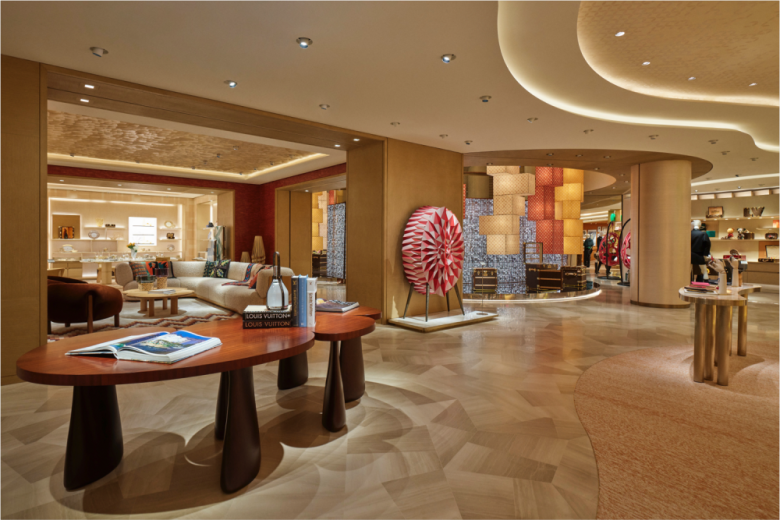
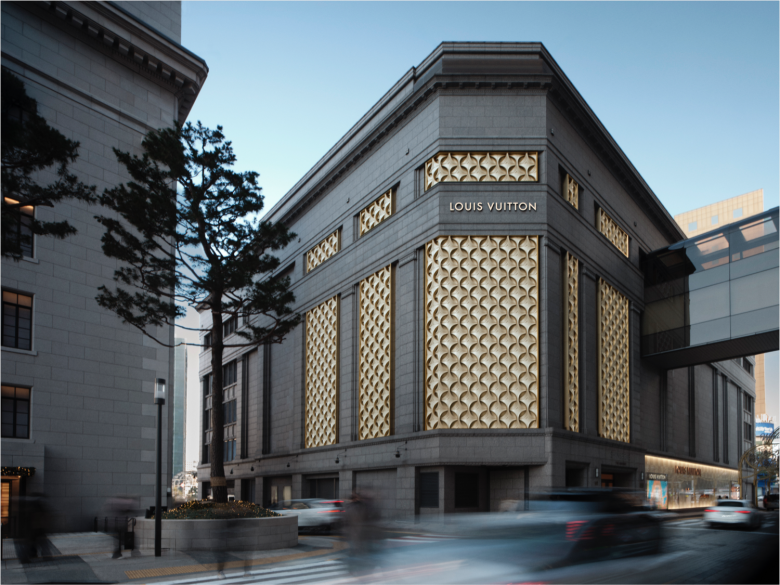
Following the opening of Le Café Louis Vuitton last September, the luxury behemoth once again ups the ante in Seoul with a new retail spectacle. Dubbed Louis Vuitton Visionary Journeys Seoul, it’s an immersive narrative devoted to Louis Vuitton’s heritage of travel, craftsmanship, and innovation. Spanning three floors of Shinsegae The Reserve, the rebranded main building of the high-end department store, the showcase sees a scenography created in collaboration with architect Shohei Shigematsu of renowned Dutch architecture practice OMA, and it’s presented as a progression through themed rooms that trace Louis Vuitton’s evolution from a visionary trunk maker to an influential global cultural entity. The experience begins in the Trunkscape room, where visitors enter a tunnel lined with the Boîte Chapeau, or hat box, setting the stage for Louis Vuitton’s pioneering Art of Travel.
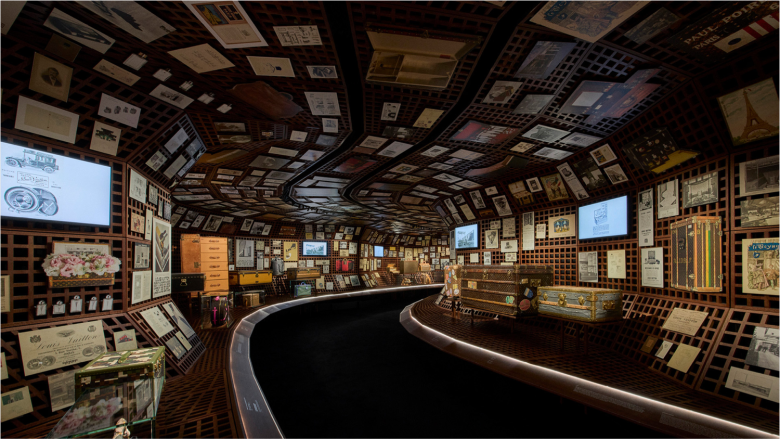
The site-specific installation previews the cultural escapade to follow and leads into the ground floor store. Beyond it, a spiral stair is wrapped in a dynamic LED display, forming a living timeline of craftsmanship while evoking landscapes and motion. The Louis Vuitton Visionary Journeys Seoul showcase continues on the fifth floor with the Origins room, where defining historical moments and evolution of Louis Vuitton are explored in six chapters. The Historical Canvases traces back the evolution of pattern, culminating in the creation of the Monogram canvas in 1896, a code of innovation, identity and artistry. The Packing Fashion section reveals the intimacy between couture and travel, where custom wardrobes and vanity cases translate elegance into motion. Together, these chapters compose a tableau of invention, a reminder that for Louis Vuitton, every new material or silhouette began as an answer to the call of voyage
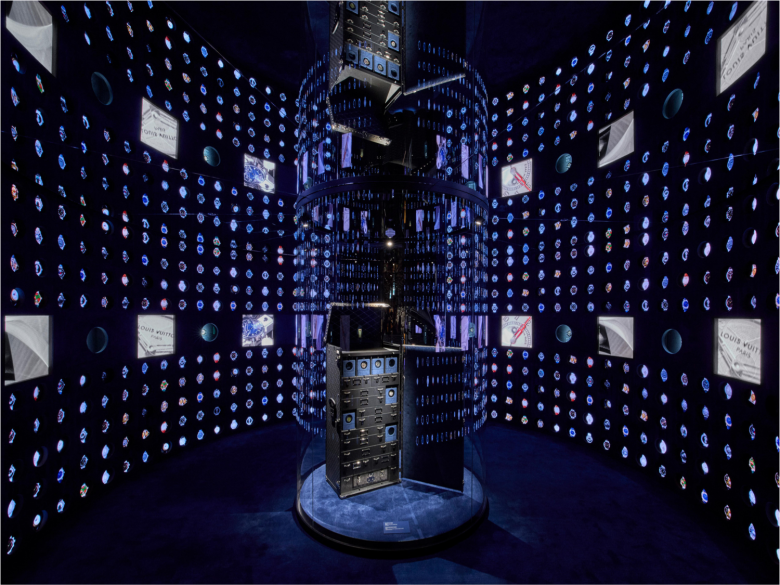
Transports introduces the earliest trunks designed for trains, steamships, and automobiles, very much symbols of a bygone world accelerating into motion. In Expeditions, robust trunks and field gear recall journeys to distant lands, testifying to the endurance of craftsmanship under every climate. A series of Lifestyle rooms celebrate the brand’s expansion beyond travel into the art of living with a panorama of objects that express creativity through sound, reading, and ritual. The Watches room showcases the precision of time and the poetry of form. The Picnic room revisits the elegance of open-air leisure with portable trunks and tableware designed for pleasure and practicality. The Personalisation room has defined Louis Vuitton since its very beginnings, when each trunk was crafted to reflect its owner’s identity through hand-painted initials, distinctive motifs, and bespoke details.
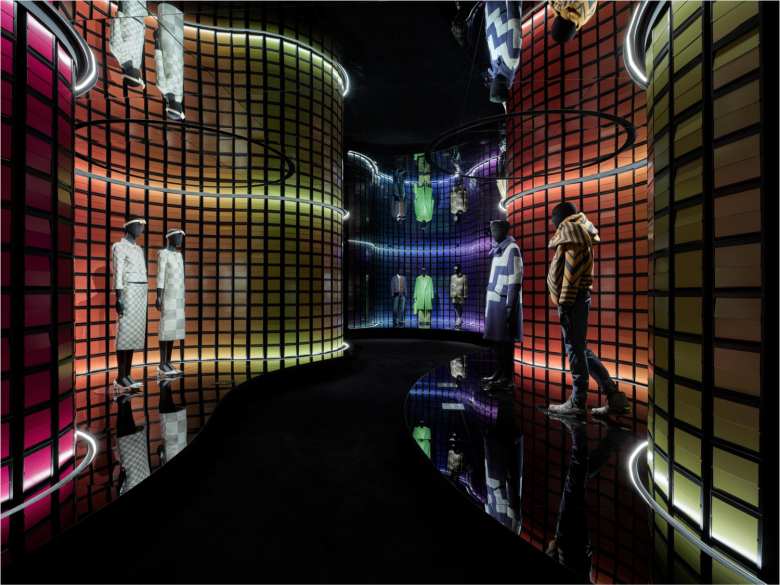
In a space conceived in the ironwork style of the Asnières workshops, the Workshop room immerses visitors in the creative heart of Louis Vuitton. Here, materials become protagonists as supple leathers, polished brass, and coated canvases are displayed alongside patterns and wooden moulds that recall the earliest trunks. The setting is followed by the Testing room, which pays tribute to the machine affectionately named Louise. Symbol of the House’s pursuit of durability and perfection, its quiet choreography illustrates that for Louis Vuitton, craftsmanship is not only artistry but also engineering. In the Icons room, the evolution of the brand’s iconic leather good creations is presented in a kaleidoscopic field of column-like vitrines. Objects within capture the vision of its iconic artistic and creative directors, each leaving their mark: Nicolas Ghesquière, Pharrell Williams, Marc Jacobs, Kim Jones, and last but not least, the late Virgil Abloh.
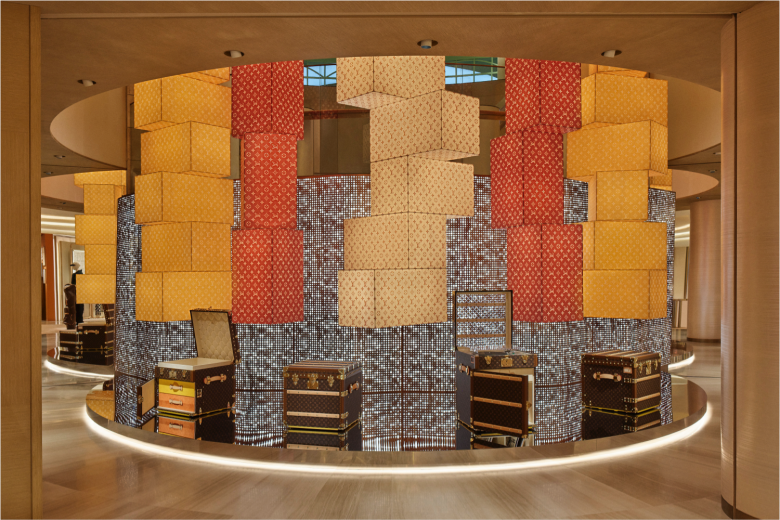
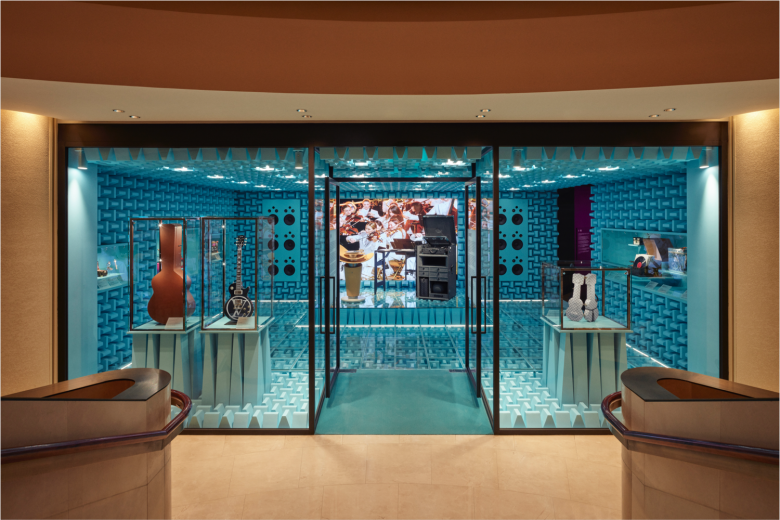
The Monogram room offers a comprehensive overview of the iconic canvas, beginning with an entrance that traces its origins of since 1896. The main space presents a playful array of forms as templates cut out from a floor-to-ceiling Monogram wall. Descending the staircase from the fifth to the fourth floor, visitors witness an Atrium where monumental trunk columns composed of Monogram hanji paper are lit from within, creating luminous lanterns suspended from the ceiling. The Music room unfolds in greater depth in an anechoic-like chamber where custom instrument cases, portable speakers, and DJ boxes are artfully juxtaposed with everyday objects like an iPod cover. The Collaboration and Fashion rooms are back-to-back rooms that benefit from ever-changing backdrops that convey the diverse creative output and infinite possibilities through the distinct visions of creative directors and artists who collaborated with the House.
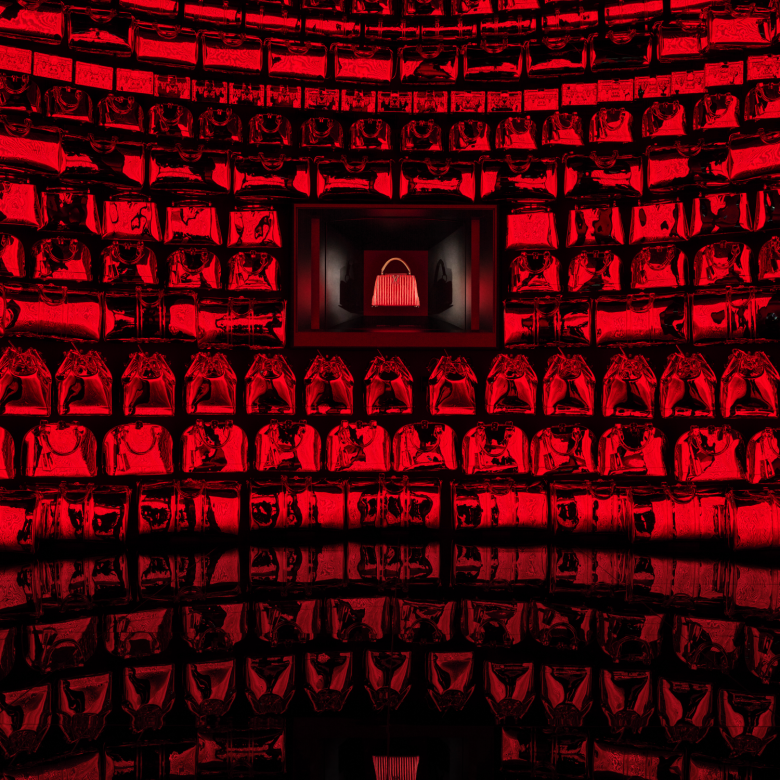
Artifacts and ready-to-wear are displayed, spanning historical collaborations with designs from Marc Jacobs, Kim Jones and Virgil Abloh along with creations of Nicolas Ghesquière and Pharrell Williams, with emphasis on travel and the House’s connection to South Korea. For the Collaboration room, the bags rotate on a carousel as their canvas are projected onto a screen, the image mirrored across a wall of reflective bags creates a fully immersive experience. The Fashion room playfully employs a split-flap display (as used in airports and train stations) exploring the evolution of Louis Vuitton’s collections and fashion shows. Links to South Korea can be found in both rooms through for instance the Artycapucines bag designed in collaboration with artist Park Seo-Bo or Look 1 from the Women’s Pre-Fall 2023 Show staged on Jamsugyo Bridge in Seoul. © superfuture
Add to collection