



Add to collection
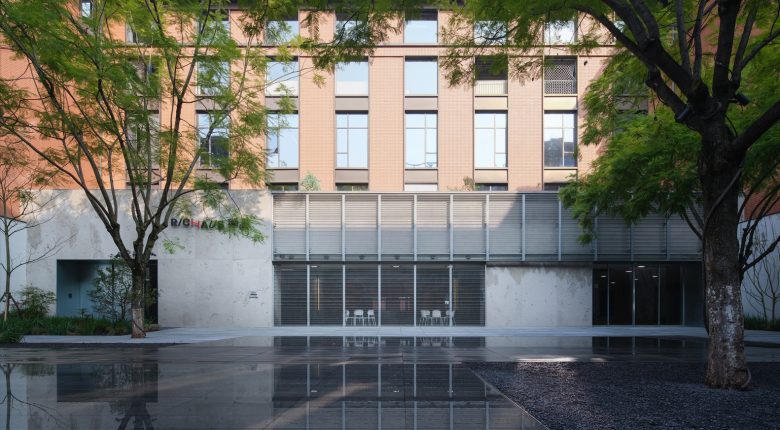
Nested within the layered folds of this mountain city, RICHAUS inserts itself as a contemporary geometric volume engaged in a dialogue with nature, embedded into the vast, complex terrain of Southwest China. Throughout the design process, Vari Architects persistently explored how to create an interlaced condition between architecture and nature, and among people—essentially, a relationship and an interface—within the context of urban regeneration. Through a new architectural order, we aimed to reinvest significance into an overlooked office building within the urban fabric, transforming it into a public cultural hub that connects culture, community, industry, and commerce—thereby pointing toward a more open, abundant, and continuously evolving community center.
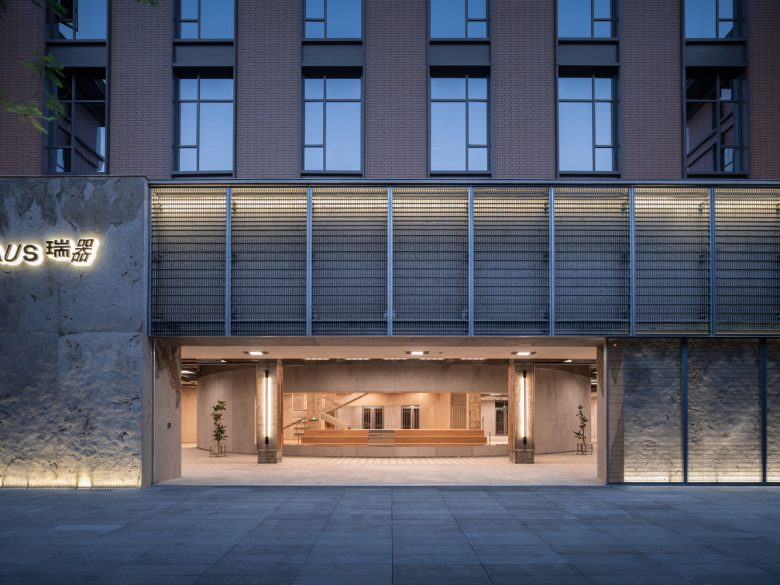
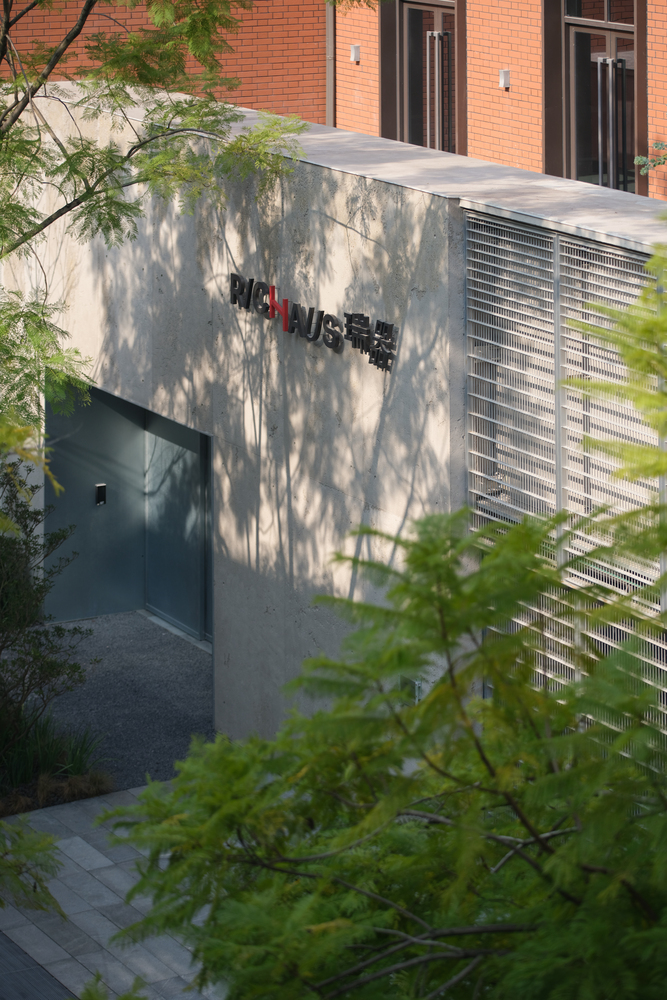
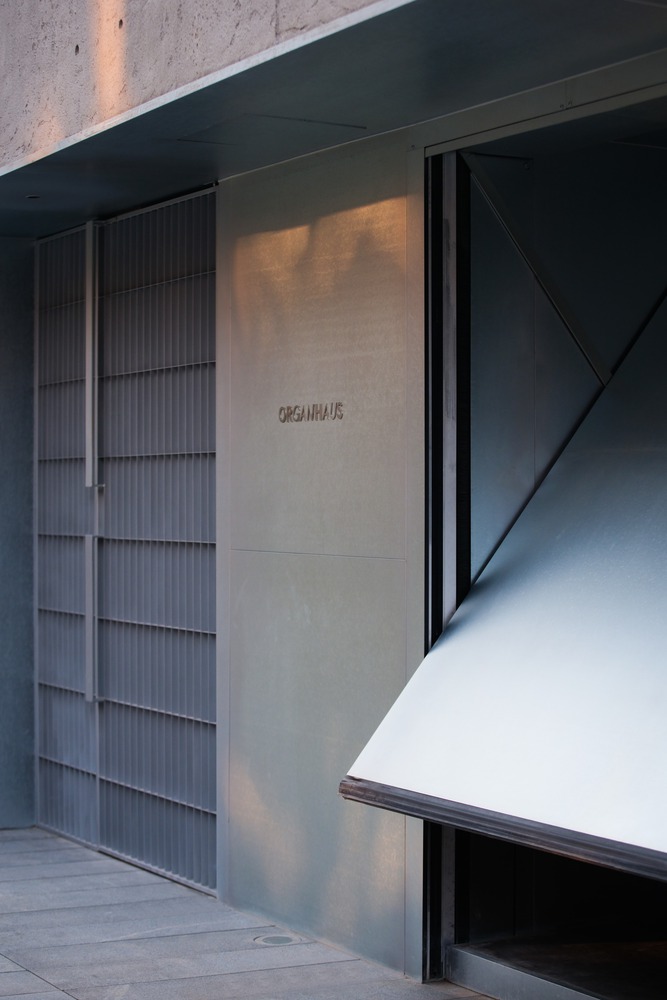
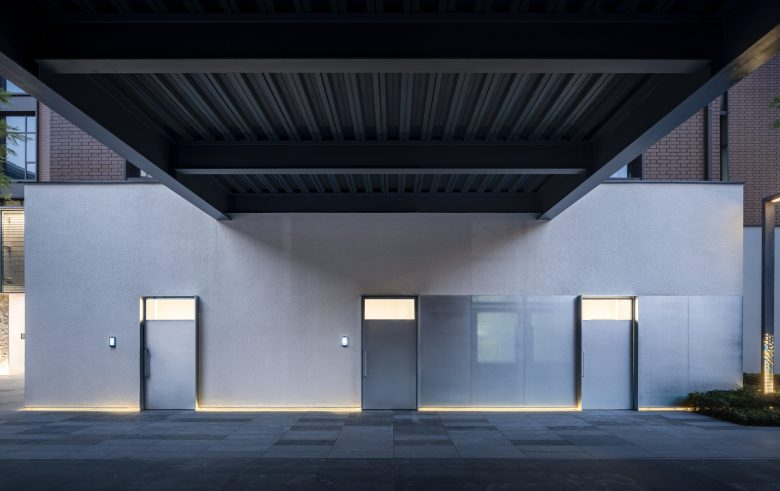
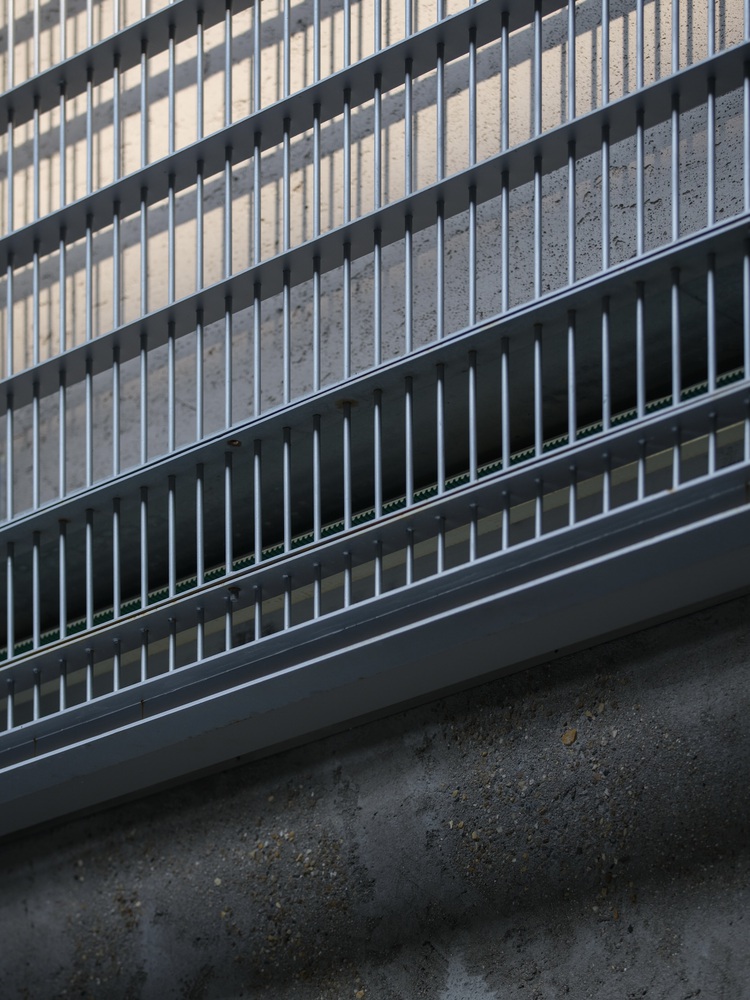
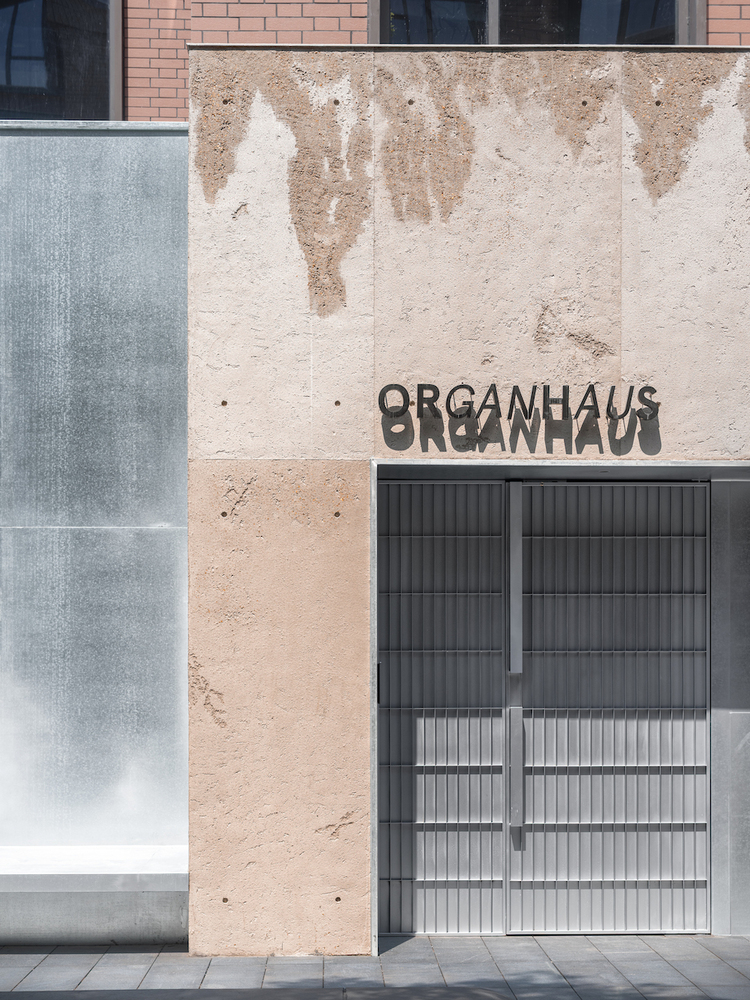
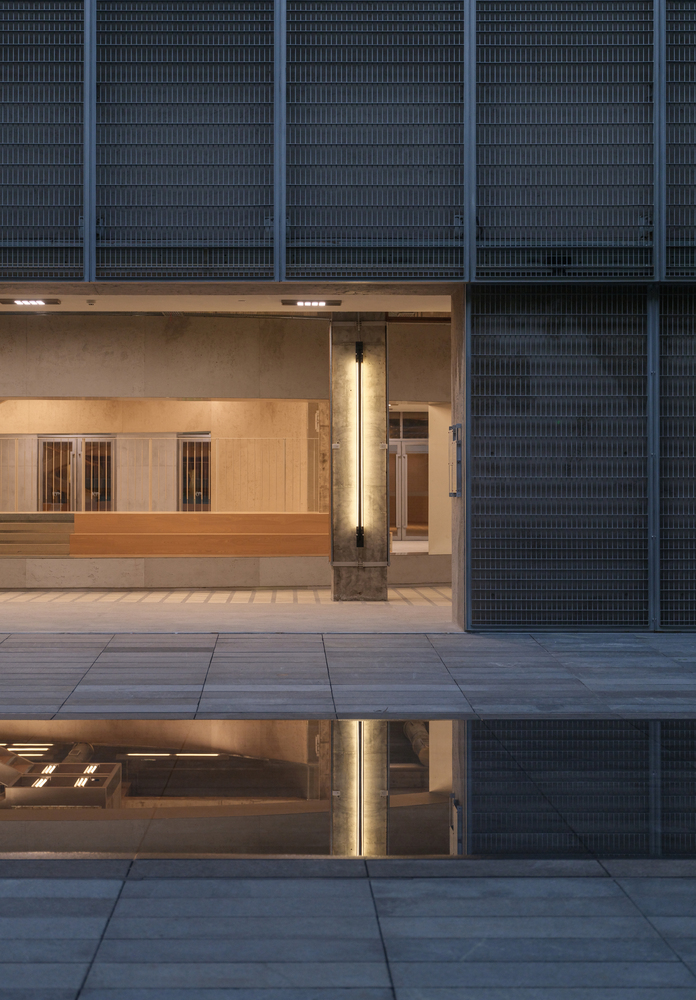
part 01. An Interface — We cloaked the building in a pioneering metal curtain—a bounded veil that opens a dialogue with its surroundings. At the entrance, a sliding metal door alternates between transparency and solidity, allowing nature to permeate the threshold. On the opposite side, the custom made metal gate for Organhaus follows a gridded, mechanical logic—a foldable entrance that continues Organhaus’s spirit of artistic experimentation, resembling a hangar door embedded in the mountain city, open to artists and creators. Dense silent gravel, flowing water features, and lush landscaping are woven into a mountain interface. The warm, humid climate of the Southwest naturally seeps into the building’s fabric, creating a “limite perceptive”—a perceptual boundary that asserts a contemporary presence within the existing industrial campus.
At RICHAUS, we aimed to foster efficient interaction among the public, commerce, and work—providing an environment capable of holding multiple languages and ways of working for avant garde brands, architecture and design studios, emerging content creators, and creative agencies. As exhibitions, forums, live events, and other public programs continue to unfold, RICHAUS has gradually become a generative site for cultural and social life in the mountain city. The interior space is no longer a mere rational stacking of functions, but approaches an interconnected interactive structure: people flow, communicate, and collaborate within it, gradually forming an organic ecosystem. Thus, RICHAUS completes its transformation from a singular architectural entity into an urban “social interface.”
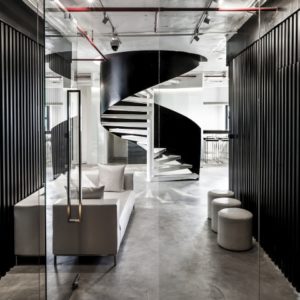
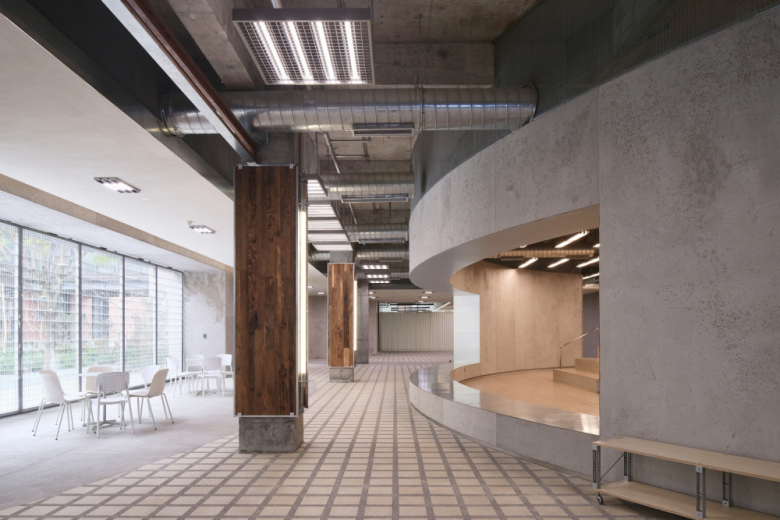
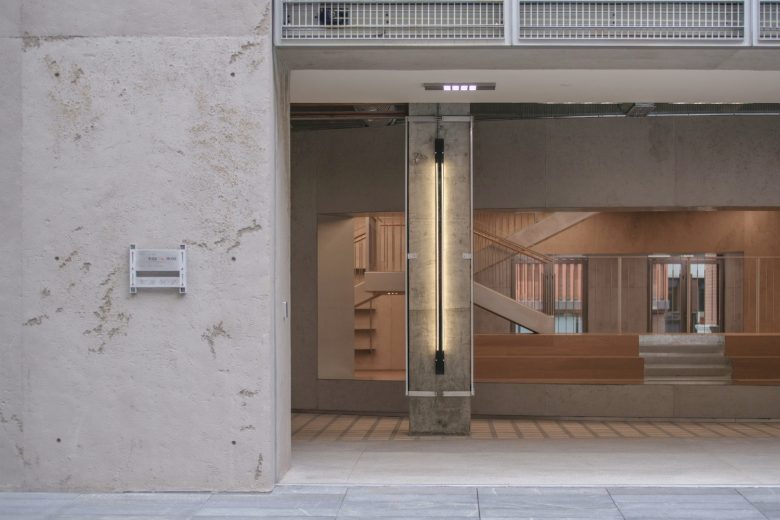
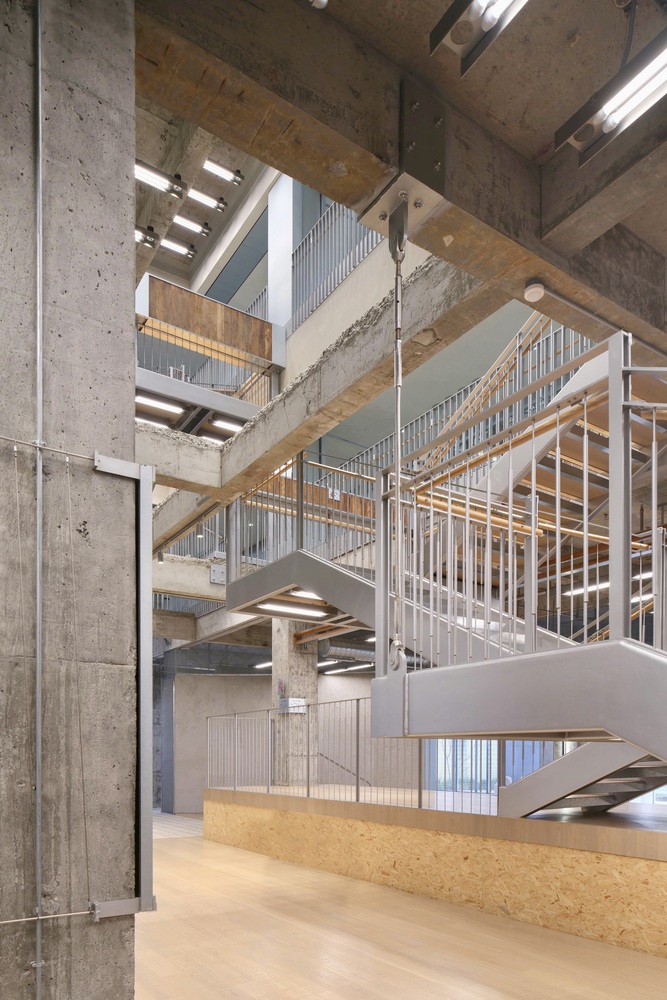
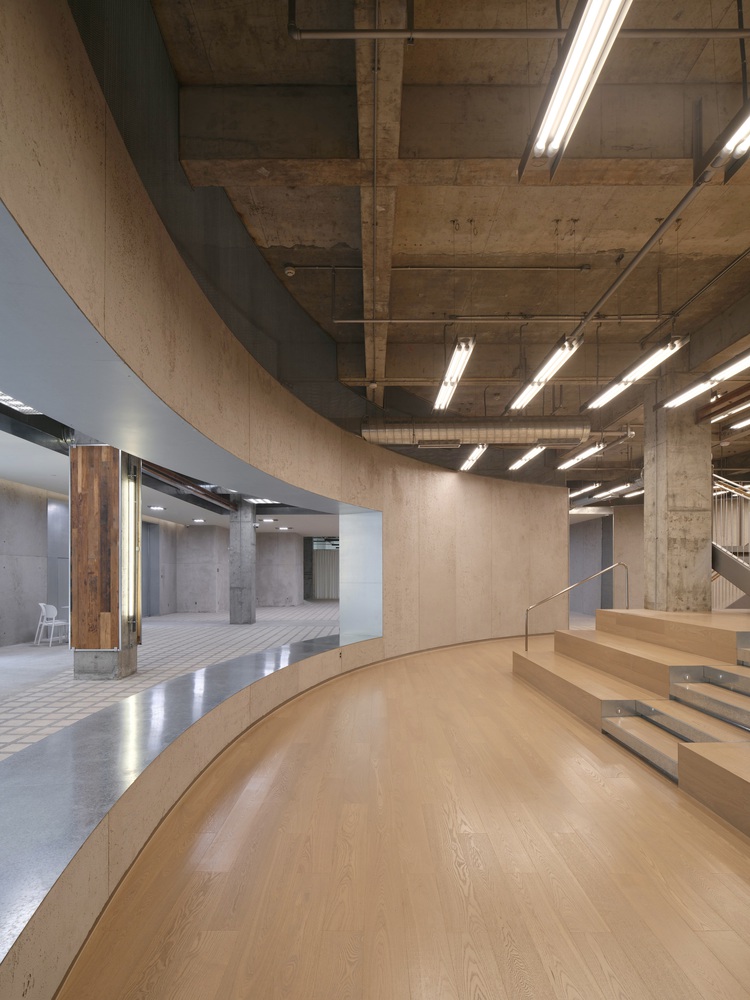
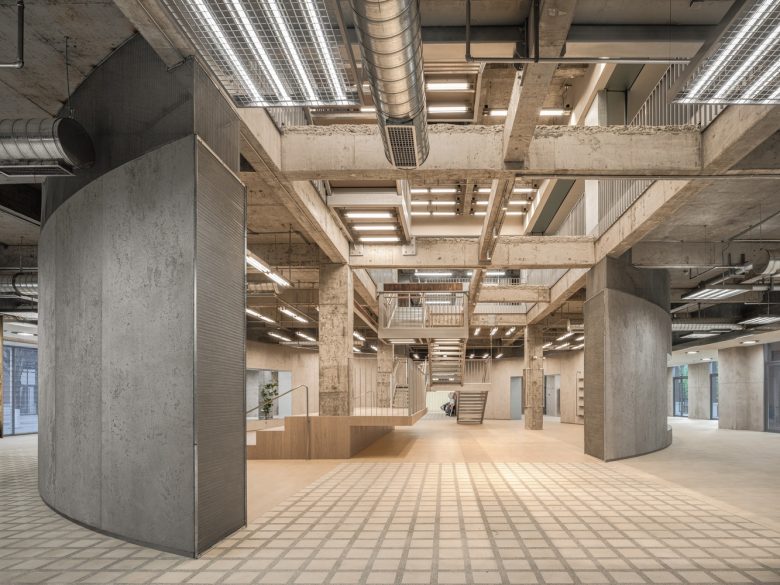
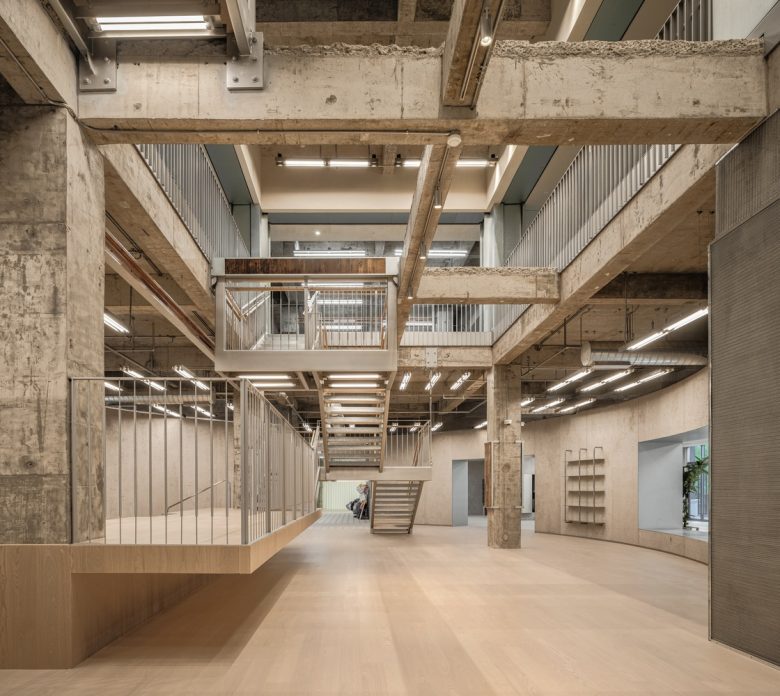
part 02. A Relationship — Inside, we deliberately preserved a sense of “unfinishedness,” openly exposing the raw textures of beams and columns, the exposed routing of pipes and conduits. Using a light, natural mode of construction, we orchestrated the traces of growth and the logic of making—keeping everything in a gentle state of flux and redefinition. Through honest revelation, what returns is the closeness and freedom of being welcomed.
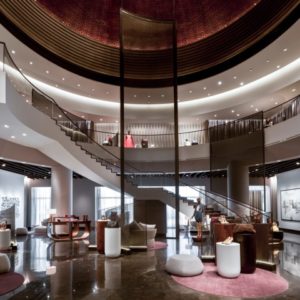
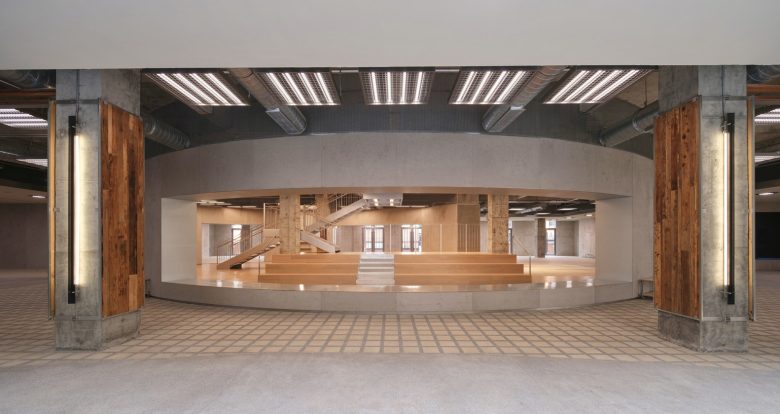
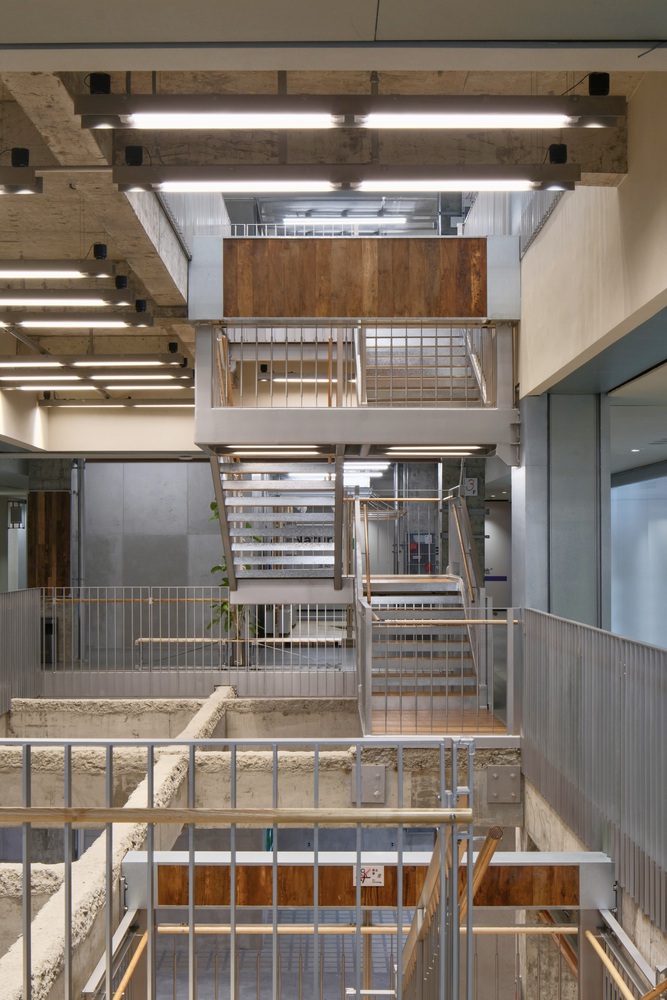
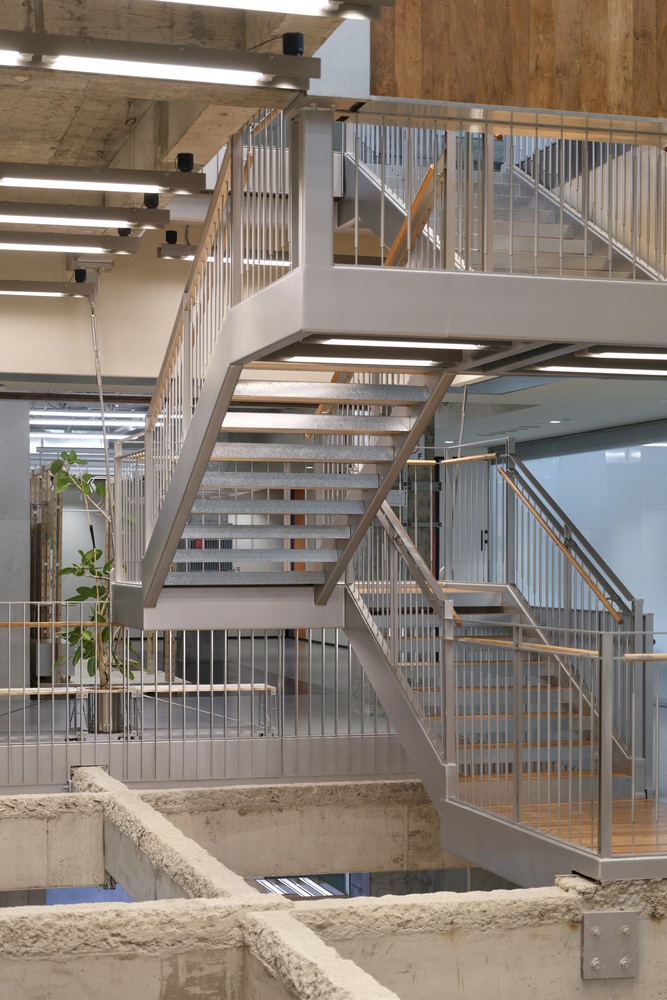
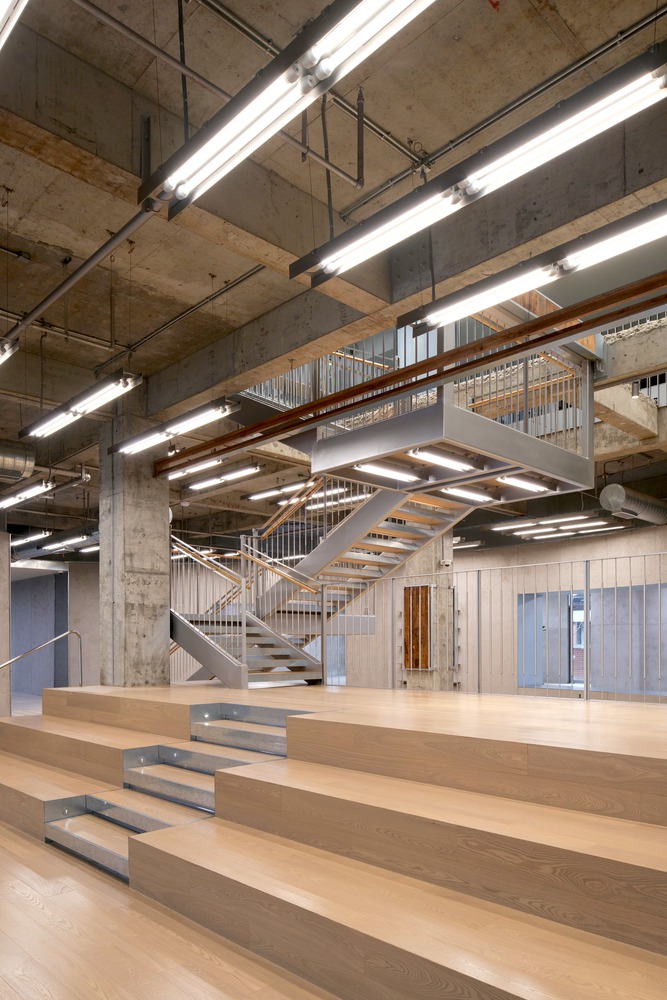
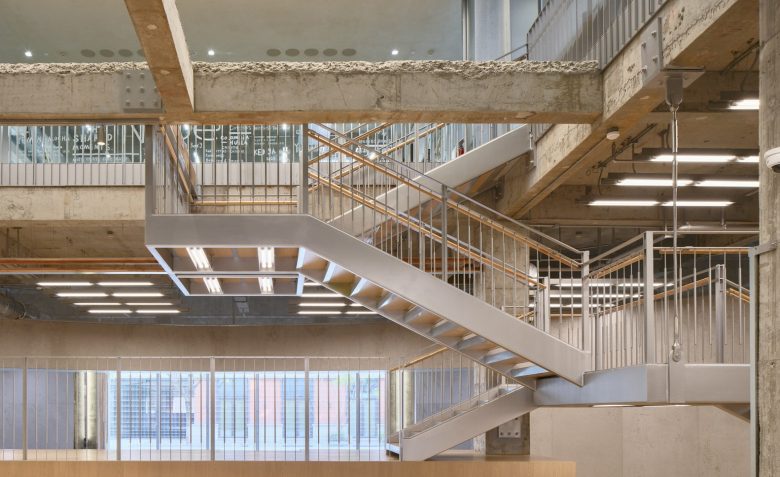
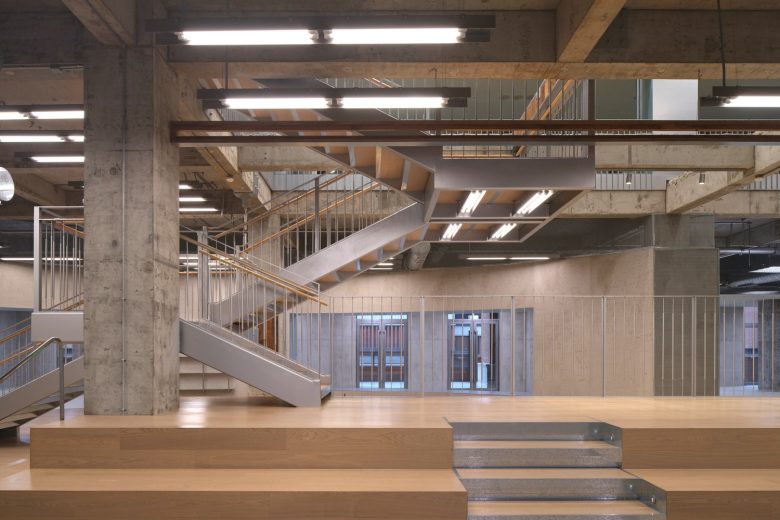
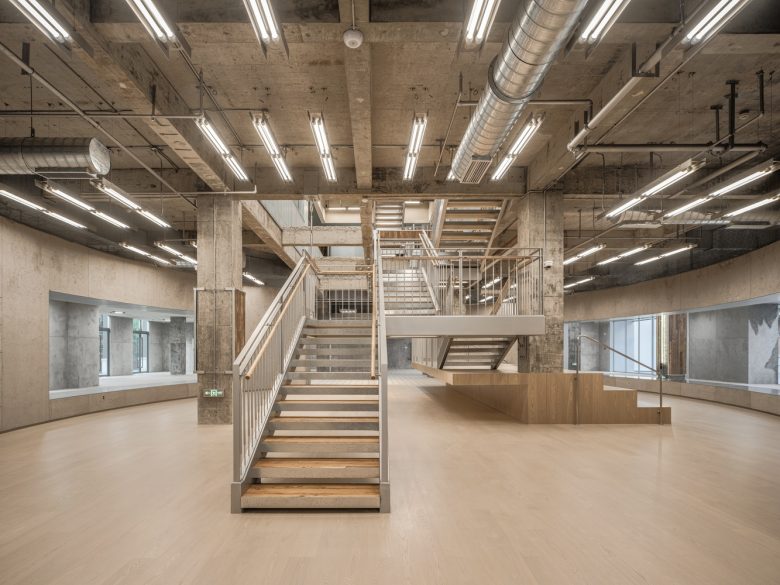
Our interpretation of “local character” begins from the perspectives of geography, culture, and public life, seeking an appropriate way to respond to local memory and warmth. Stairs are the connective tissue linking Chongqing’s upper and lower urban layers. We removed sections of floor slabs to create a central atrium, and introduced a three story public staircase as the primary communal node—a direct response to the city’s unique “climbing slopes and navigating steps” relationship between people and terrain. Through playful expansions, turns, and landings, multiple cross level interactive platforms emerged. Thus, the stairway, originally serving a singular circulatory function, transforms from mere functionality toward an experiential and communal public dimension.
The three level stair installation, “Climbing Stair Party,” threads together a multi layer social ecosystem: including the new Organhaus space on the 2nd floor, offices and flexible exhibition areas on the 3rd and 4th floors, and the Southwest style aa market on the 5th floor. The long staircase acts as a familiar, trusted emotional ligament. In those lively moments of “dropping by,” we cease to be strangers on another level, rediscovering the neighborly kinship of the past.
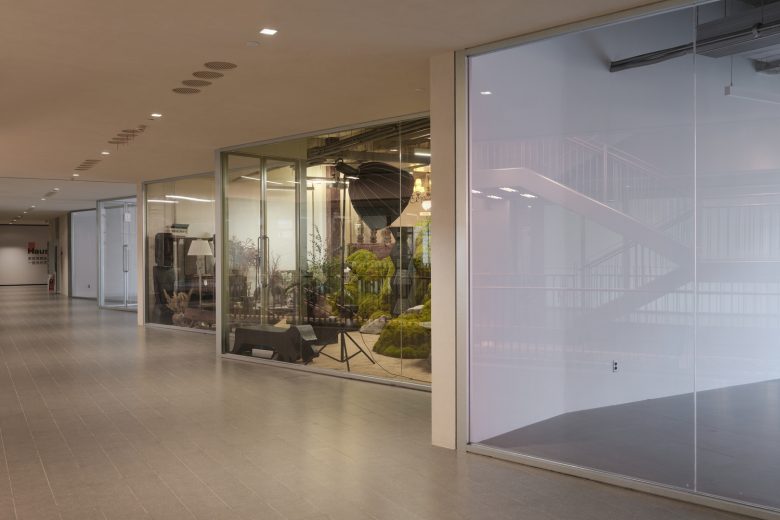
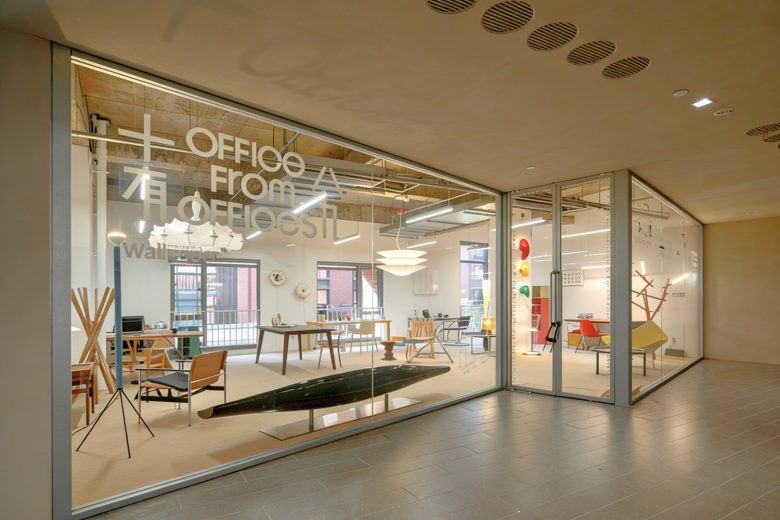
When design intervenes in storytelling, we also ventured beyond the routine. The sawtooth shaped shopfront interface transforms office space into an interactive public scenario, becoming the most vital content within this relationship. As Harari reminds us, “we forget to live in the name of efficiency.” Hence, we orchestrated playful turns and detours—starting from enhancing visual appeal and commercial display effectiveness, then moving toward deeper possibilities of interaction between people and space, and among people themselves.
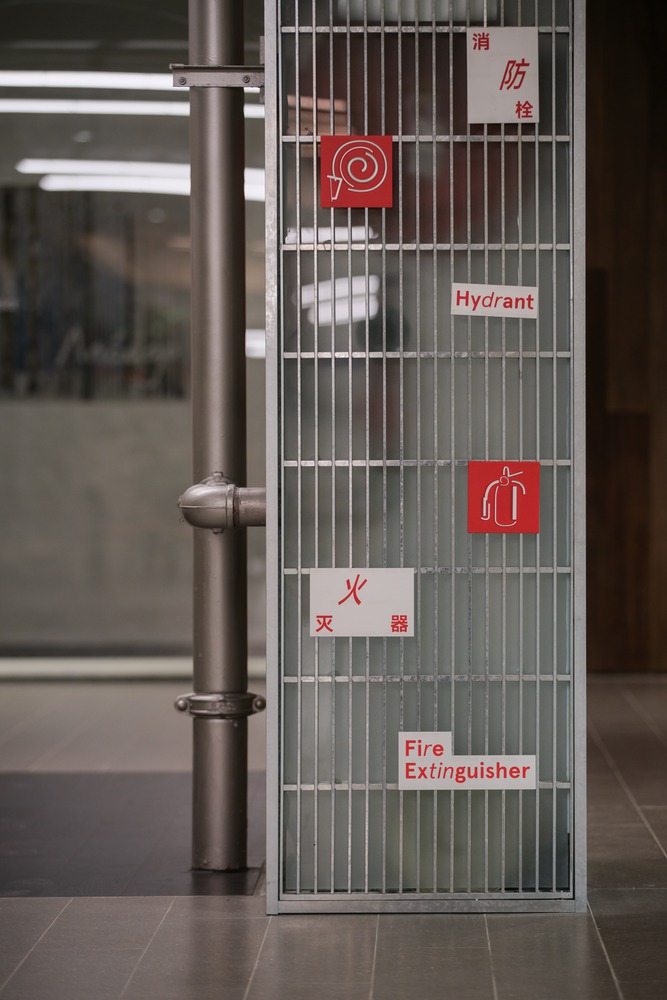
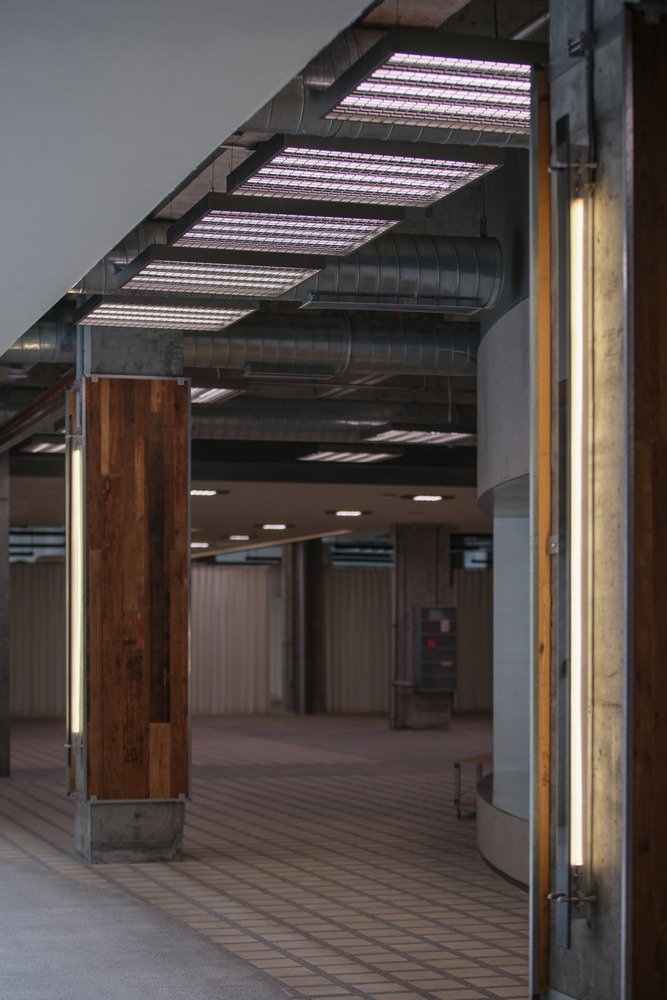
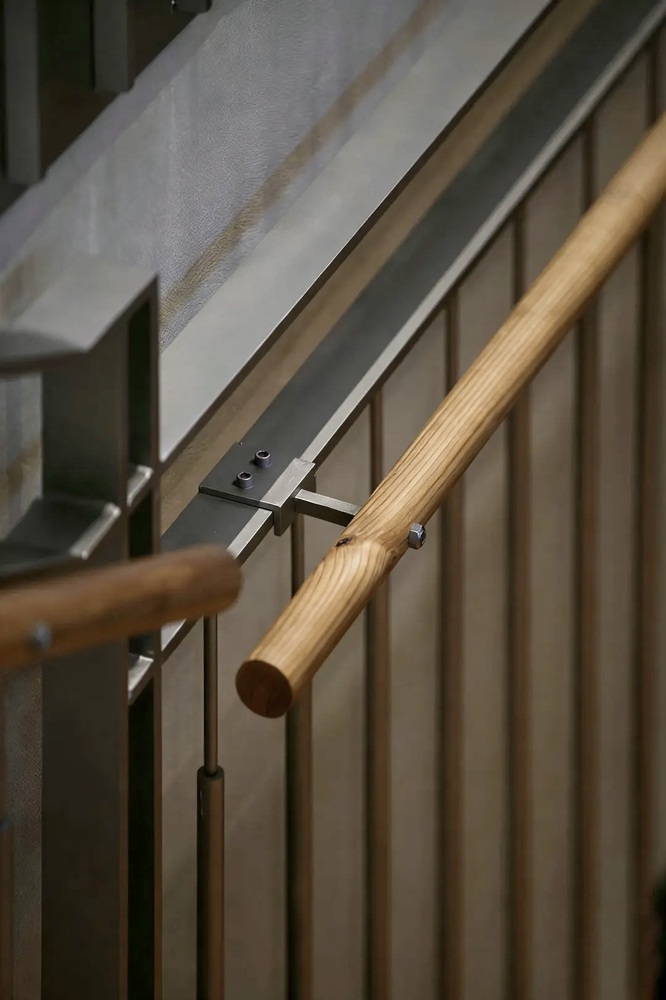
At the same time, we transformed overlooked details—light fixtures, fire hydrants, railings, stair handrails—from passive elements into active components, integrating them into the space as deliberate installations. RICHAUS grows from the city’s plural relationships and needs. It offers an opportunity to forge and renew human connections, allowing us to speak again—here—of collaboration, creation, and sharing.
part 03. Material Vocabulary — Beyond spatial narrative, the construction of materials also shapes RICHAUS’s distinct purity. Concrete—honest and utilitarian—has always accompanied the act of building. Thus, we allowed this unequivocally concrete materiality to express the vessel’s resolute stance. Different textures collide: raw, rough, smooth, unrefined—setting the space apart from the highly flattened, uniform office tower.
Wood carries the warmth of the Southwest’s local fabric. We wrapped parts of the structure in reclaimed elm boards—here, the expression of “traces” itself becomes an Eastern lyricism. We aimed to integrate the lighting and display systems as essential components of the public realm. Silver expanded metal mesh hangs from above—cool, precise. Galvanized silver light fixtures are arranged in sequence; galvanized steel tubes and exposed conduits combine to form a distinctly contemporary apparatus.
There is the spirit of urban generations in the act of building. Whether it is steel rolling off 19th century industrial lines or timber drawn from the earth, they form the baseline of human dwelling and, through human passion and intelligence, continually participate in the city’s evolution. Perhaps because it is rooted in the Southwest, RICHAUS inherits the inherent tolerance and abundance of this land—where natural roughness coexists with refined order, shaping a unique vessel for urban life.
Architects: Vari Architects
Principal Architects: Qi Fan, Jiang Yinan
Project Architects: Xu Feihong, He Zhaolong, Qiu Jingtong, Gu Weiming
Copywriting: Xu Xiaoyi, Wang Liu
Photographs: Qingbo Wu, Wenqiao Zhu
Add to collection