




Aqqu Central Café by Alena Krasatulinа and Vladislav Churikov
posted by retail design blog on 2026-03-16
Almaty
Add to collection
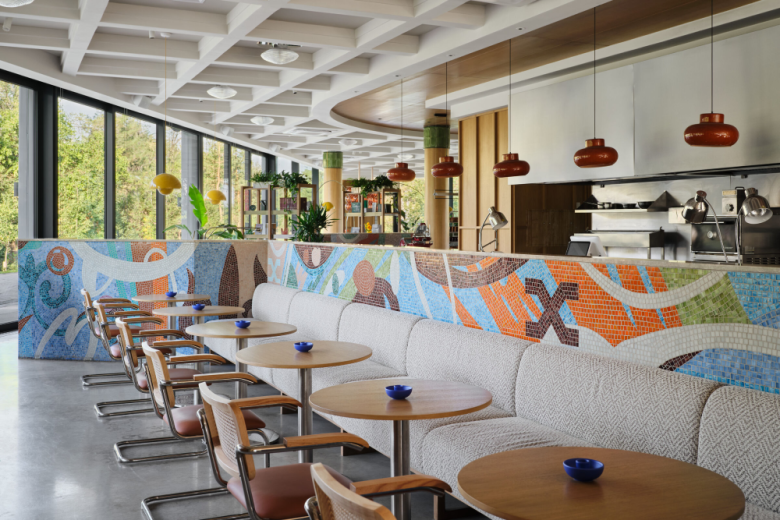
The Almaty-based studio breathes new life into a landmark pavilion, transforming 1960s nostalgia into a bold manifesto for contemporary commercial design.
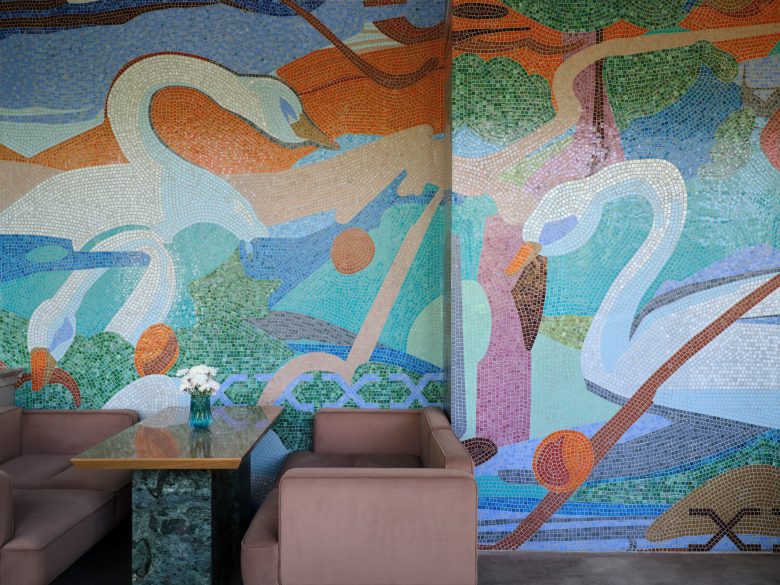
The Aqqu Central Café project is more than just a new opening in Almaty’s prestigious “Golden Square” it is a profound act of architectural reincarnation. In the 1960s, this site in Manshuk Mametova Park was home to the legendary “Aqqu” (Kazakh for White Swan). It was a sanctuary for the city’s intelligentsia, famous for its serene ponds where a pair of swans lived. After the original building was lost to a fire and eventually demolished, the site remained vacant, preserved only in the warm memories of older generations.
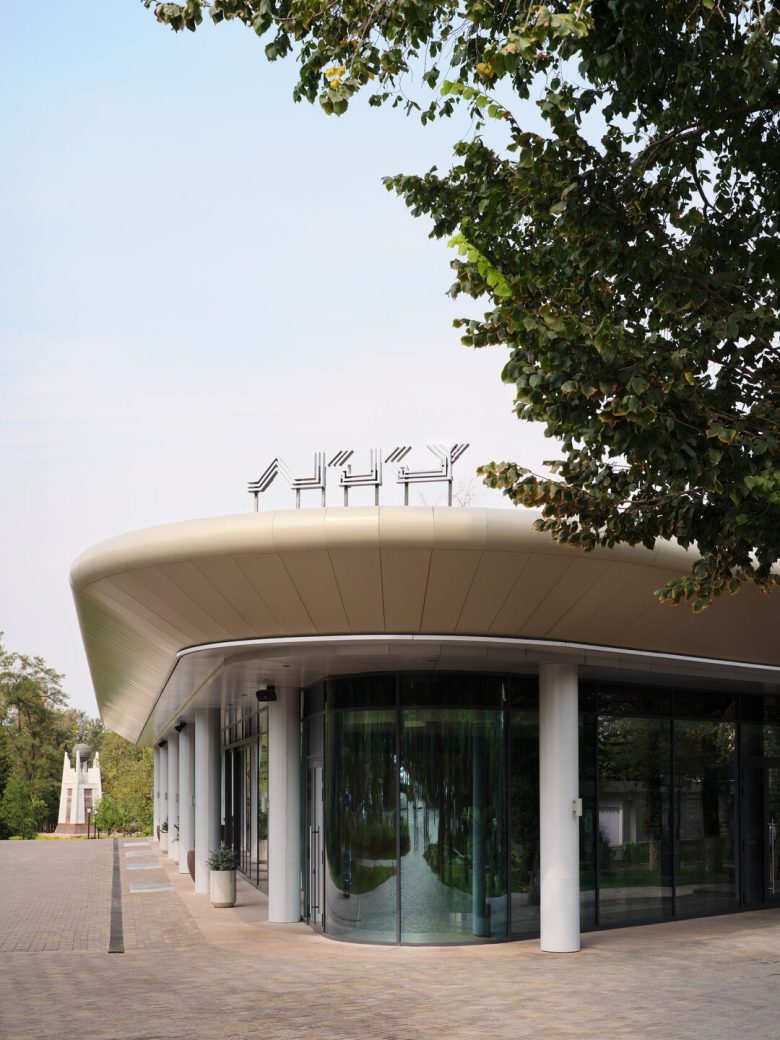
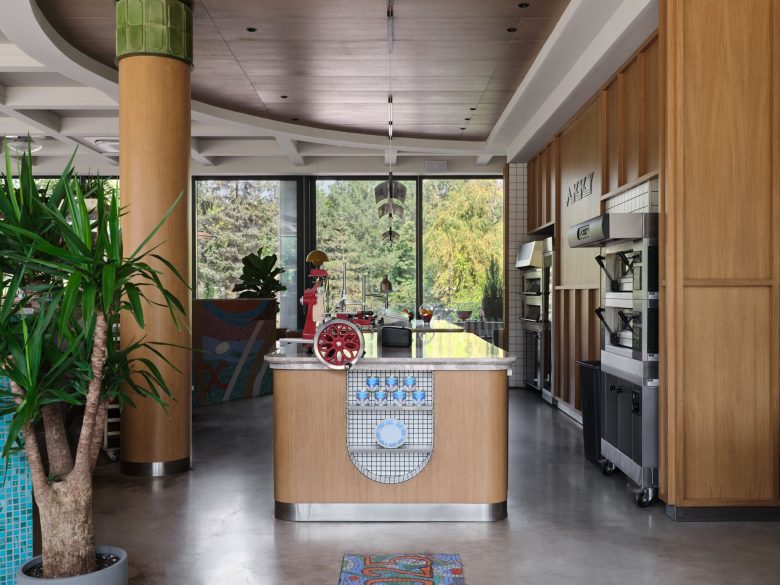
In 2025, Alena Krasatulinа and Vladislav Churikov unveiled their vision for the site: a striking 1,150-square-meter glass pavilion. Spanning two levels (650 sqm on the main floor and 500 sqm on the lower level), the space has instantly reclaimed its status as a premier destination for the city’s residents.
The Concept of “Layered Memory”
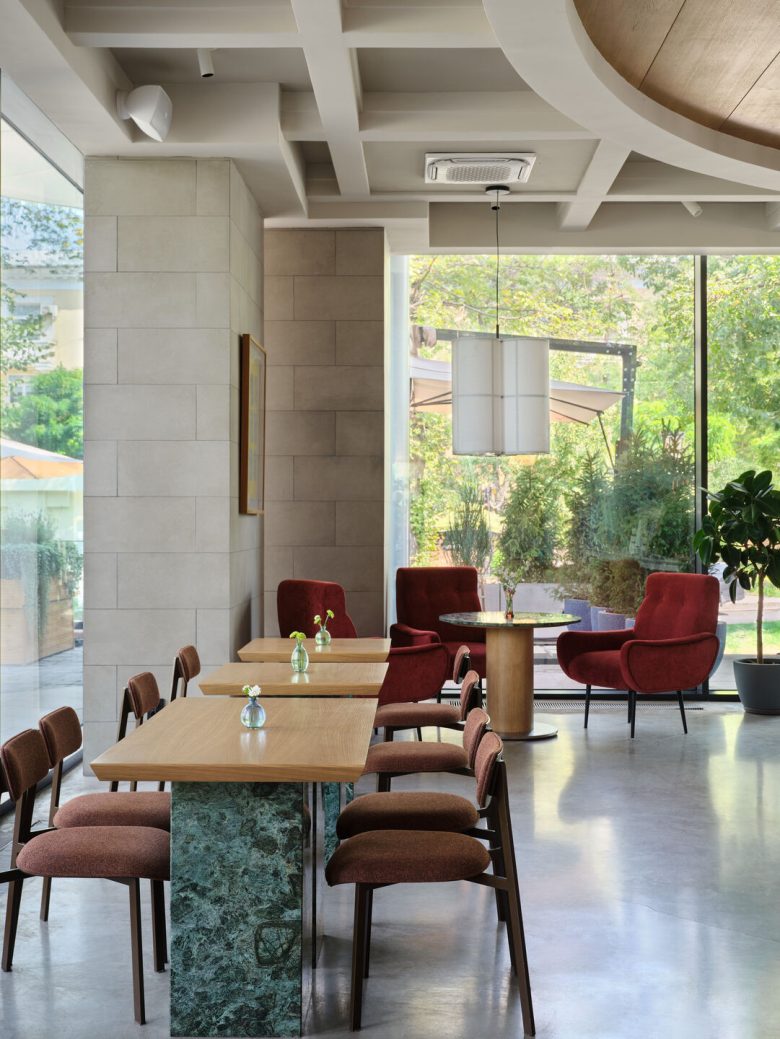
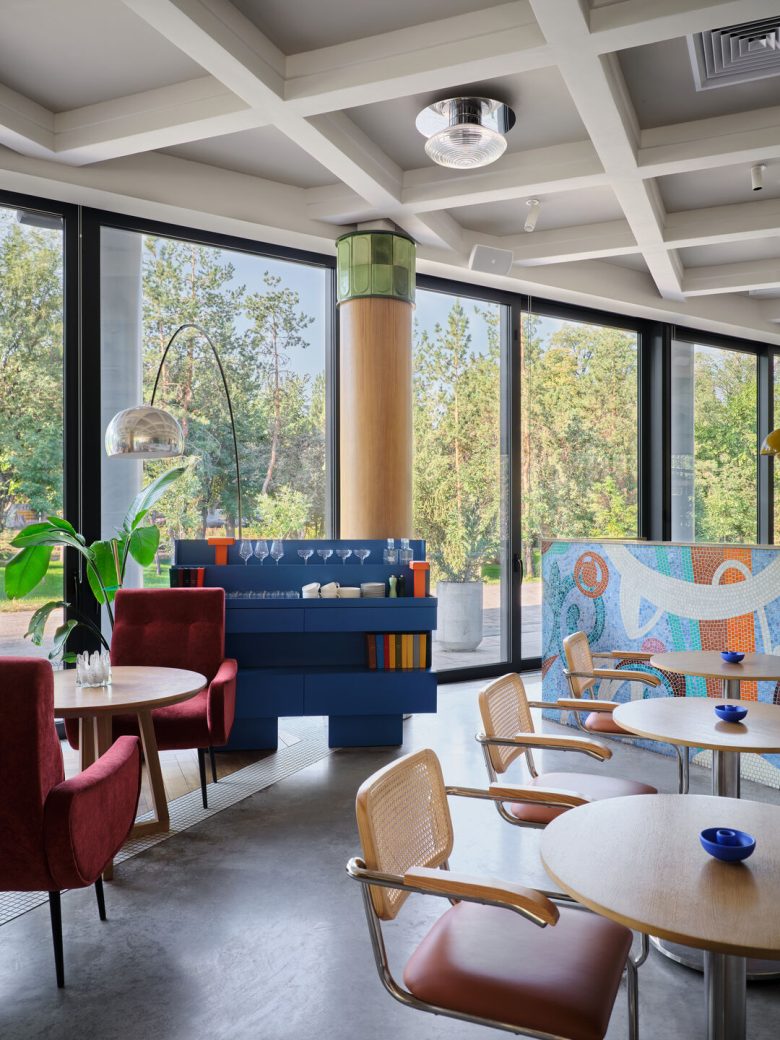
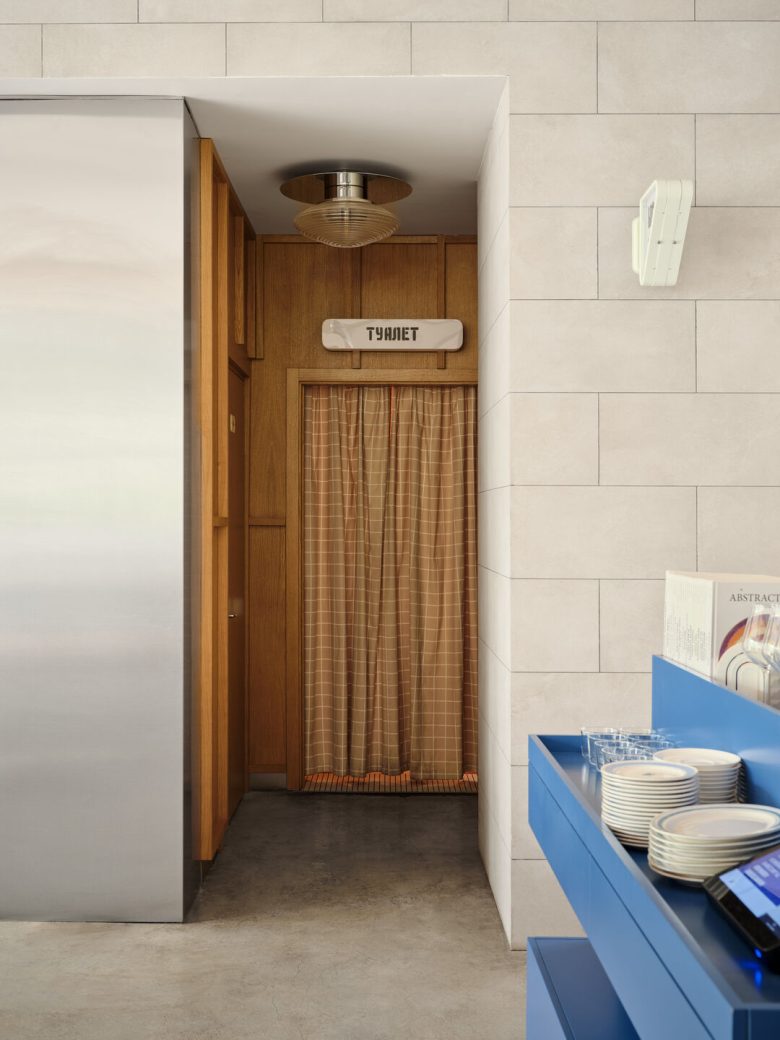
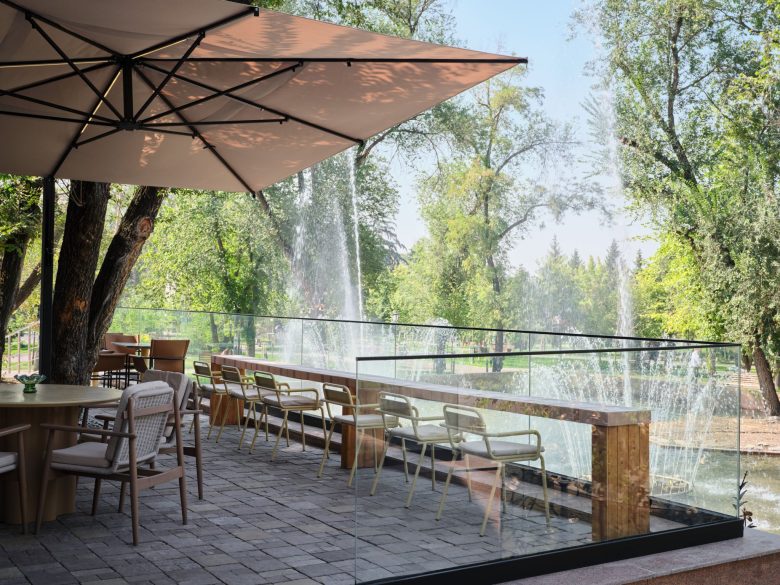
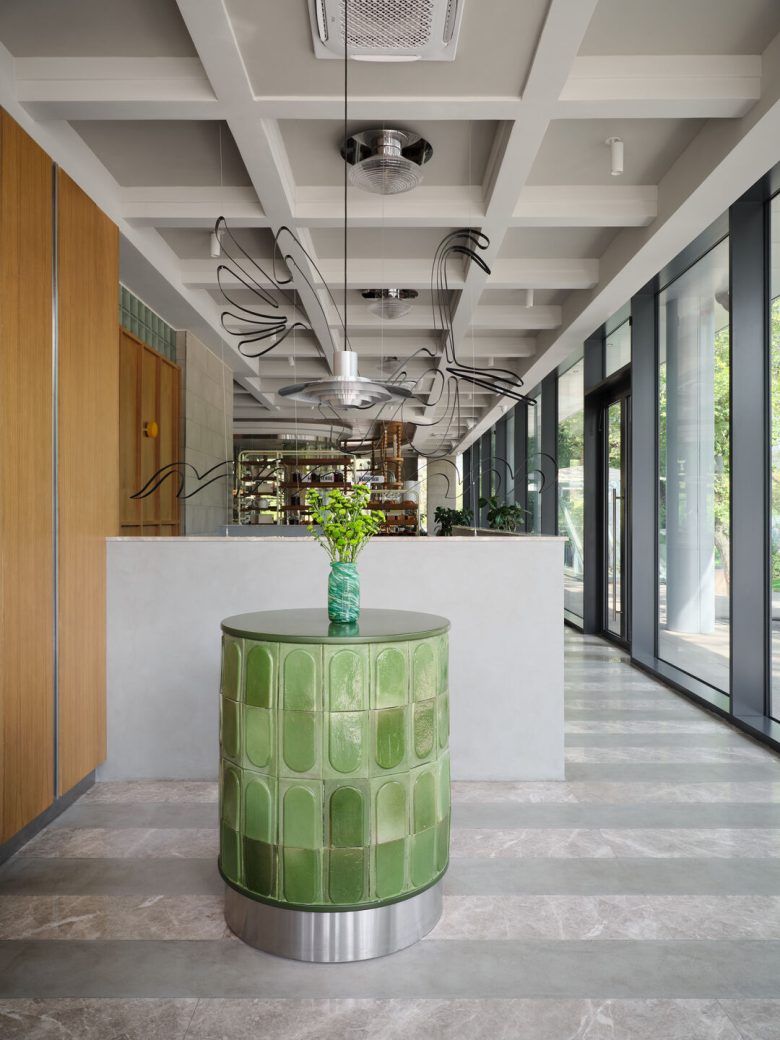
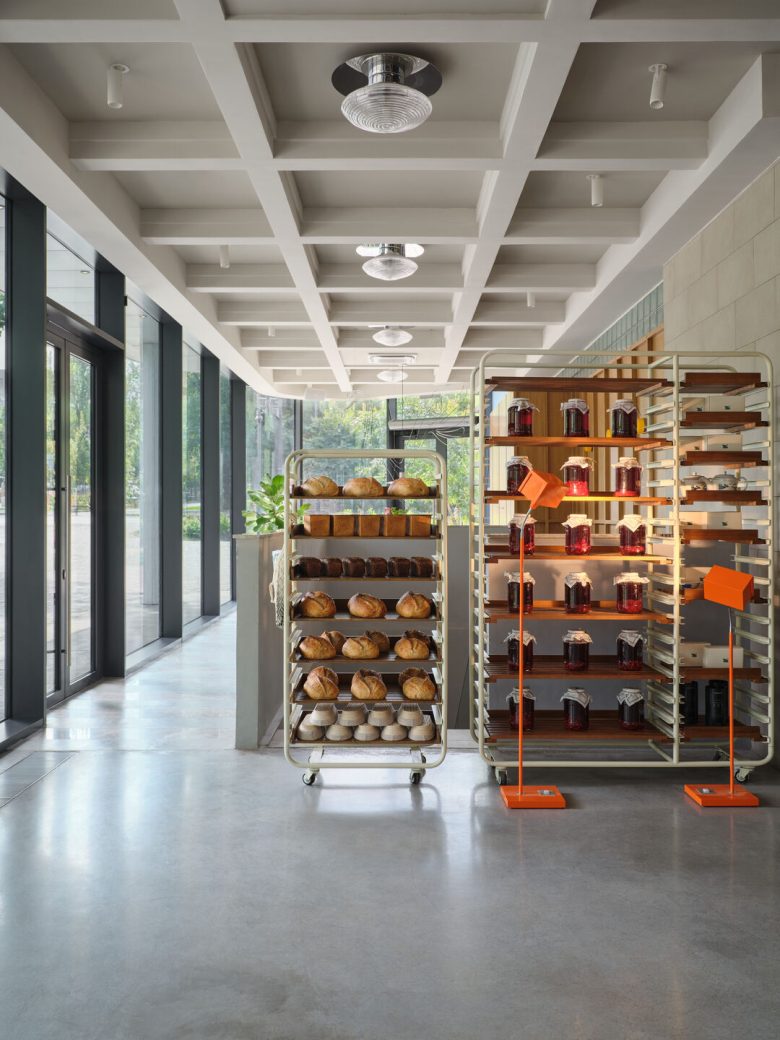
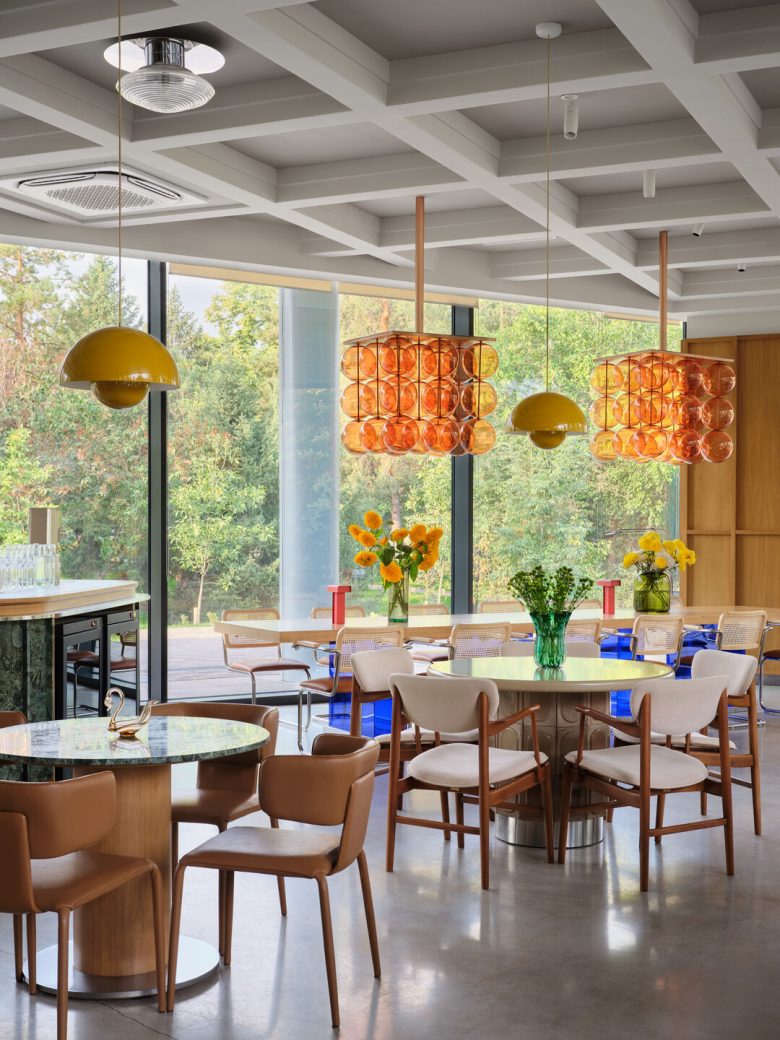
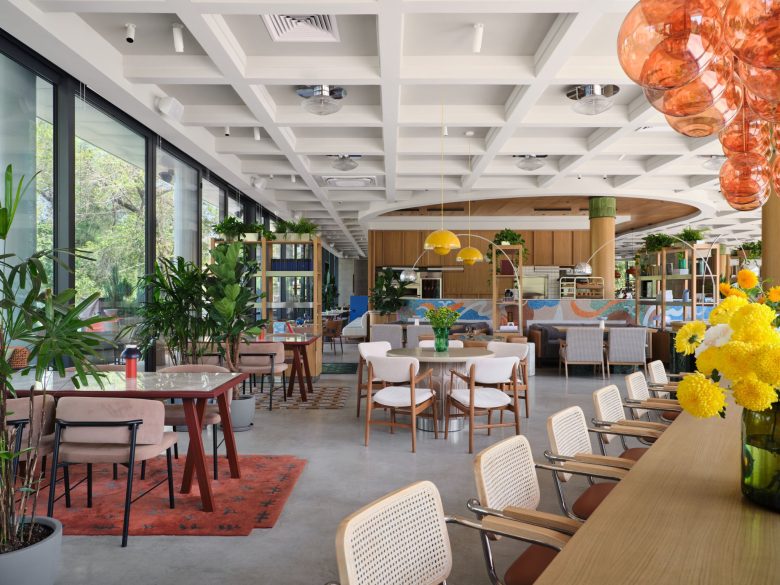
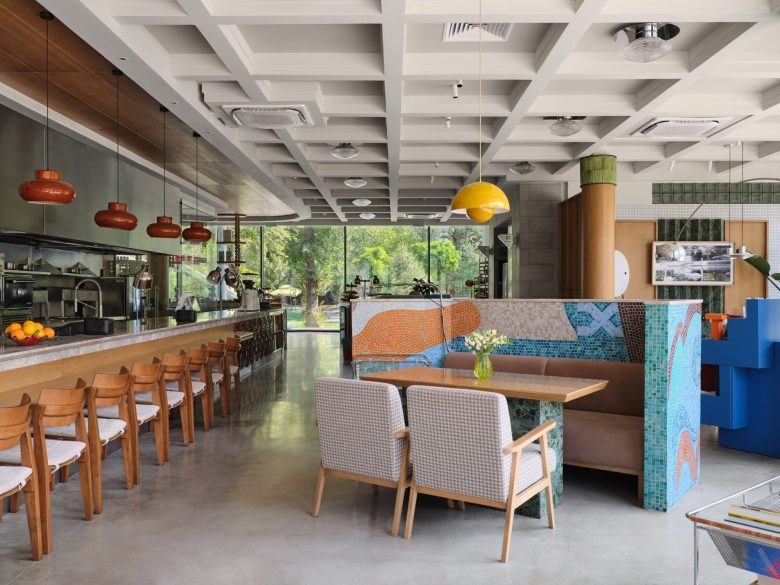
The designers intentionally moved away from a “museum-like” aesthetic, opting instead for a philosophy of “Layered Memory.” The project strikes a delicate balance between total transparency and a deep immersion in the local context. The floor-to-ceiling glass facade blurs the boundary between the interior and the park, allowing the surrounding trees to become silent protagonists in the design narrative.
“We aimed to create a modern space that echoes the Almaty of the 50s and 60s vibrant, welcoming, and inherently cozy,” the designers explain.
Color and Mosaic: The Interior’s Heartbeat
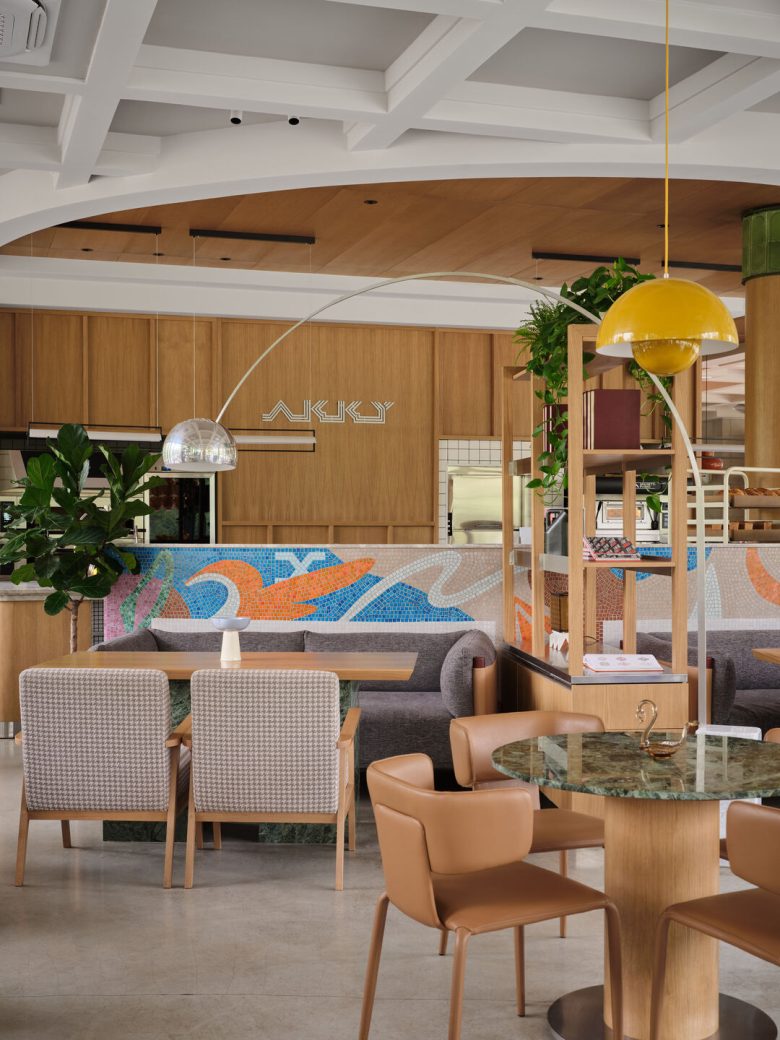
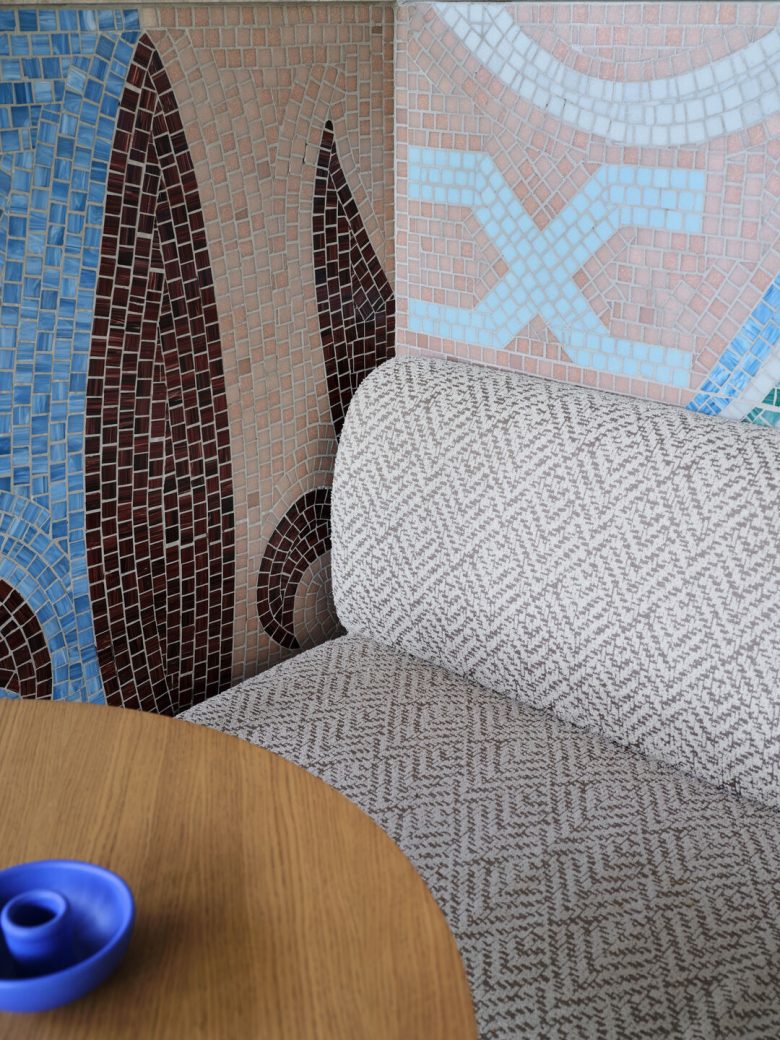
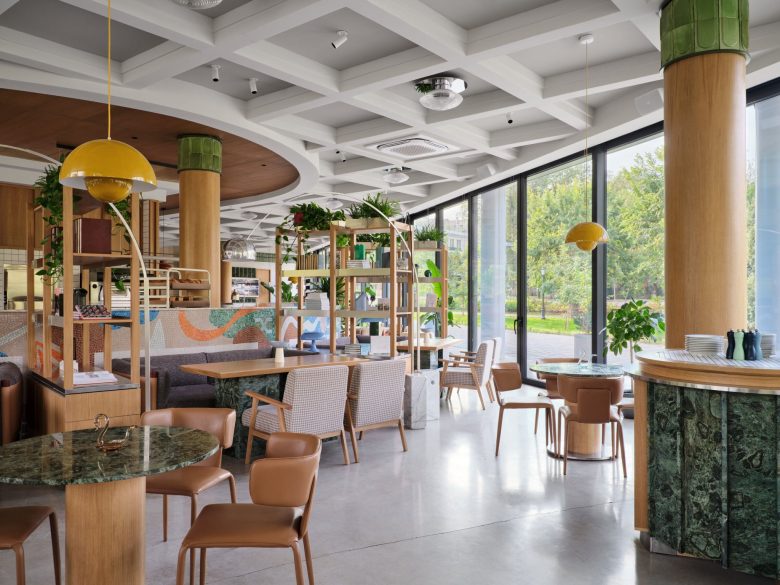
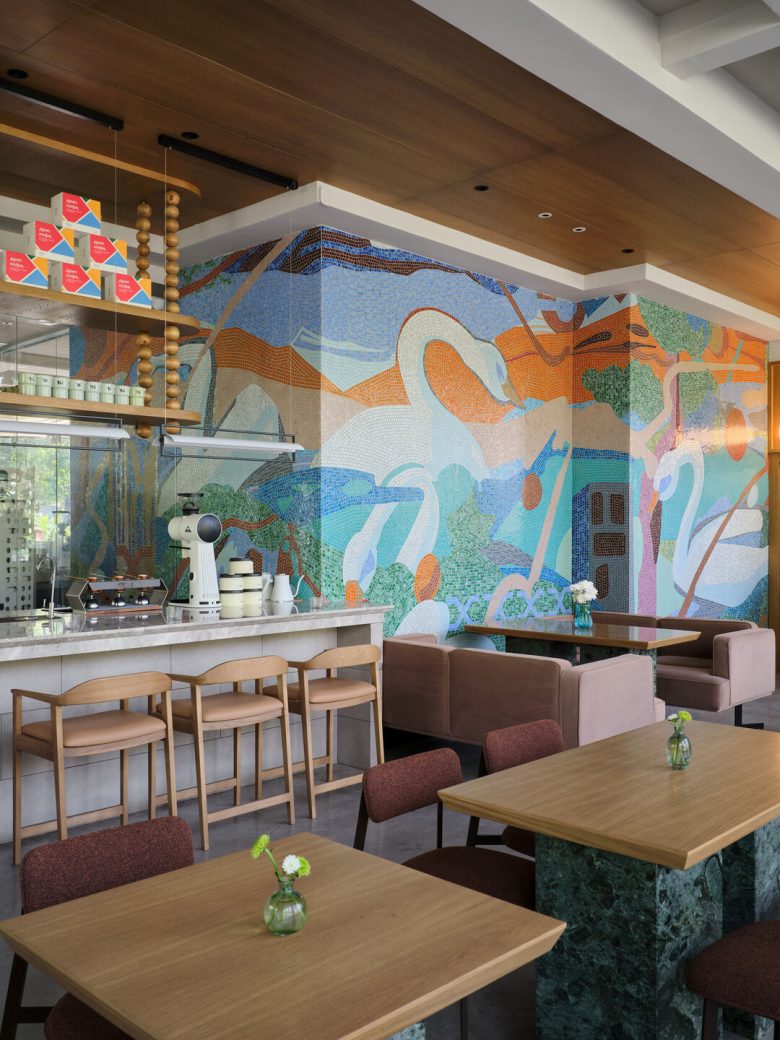
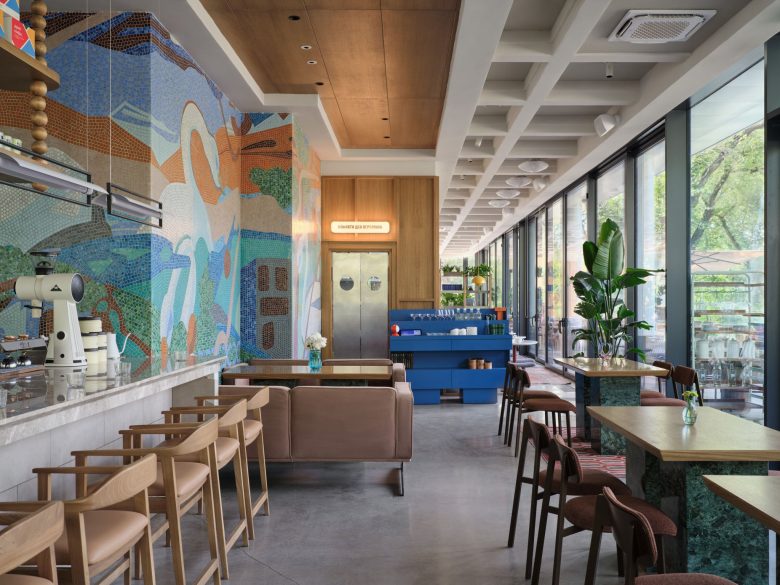
The central axis of the design is a large-scale, Soviet-style mosaic created by local artist Anastasia Zharko. This piece served as the catalyst for the interior’s joyful palette: saturated shades of blue, yellow, red, and terracotta.
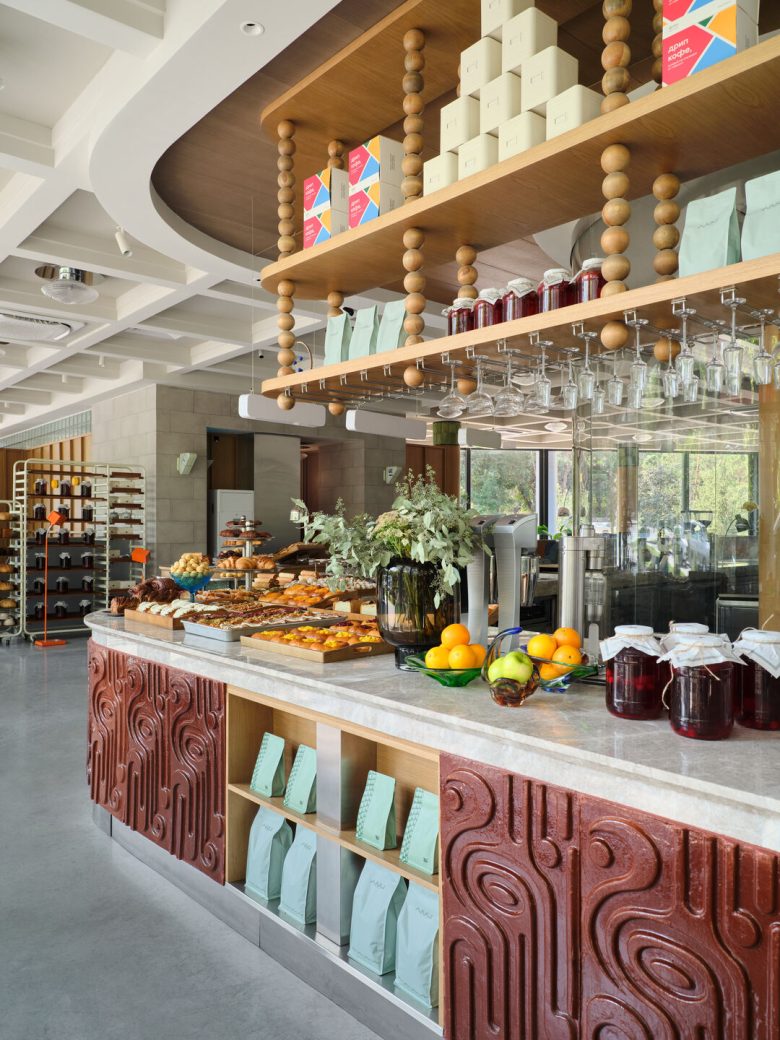
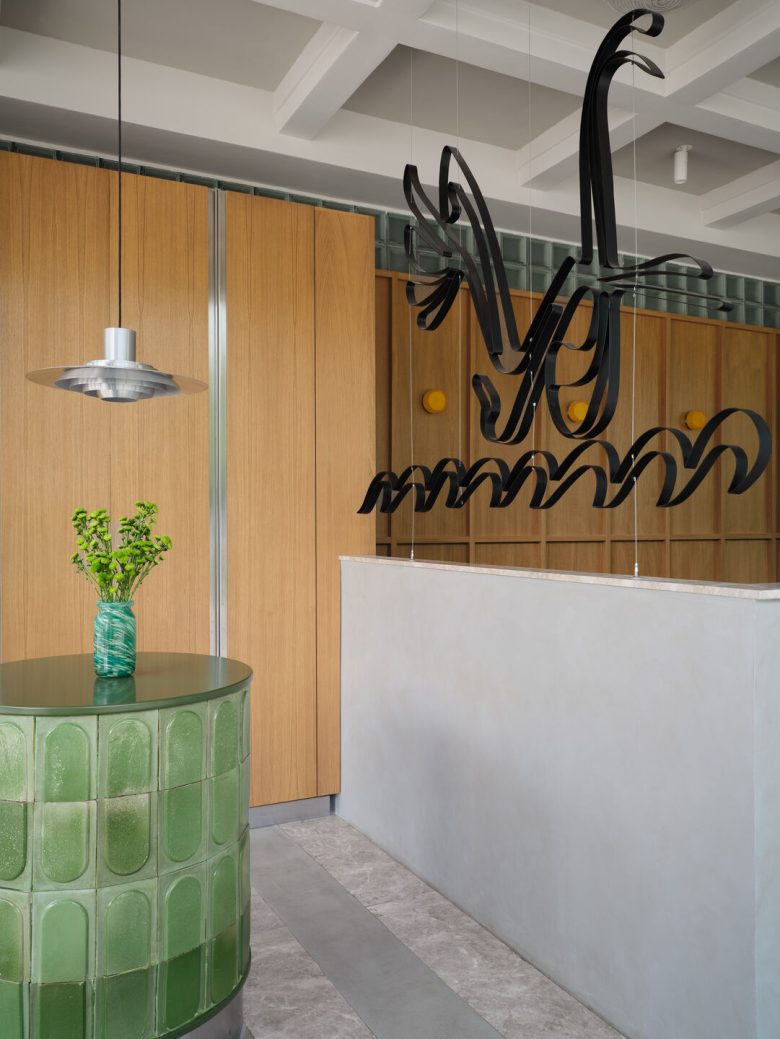
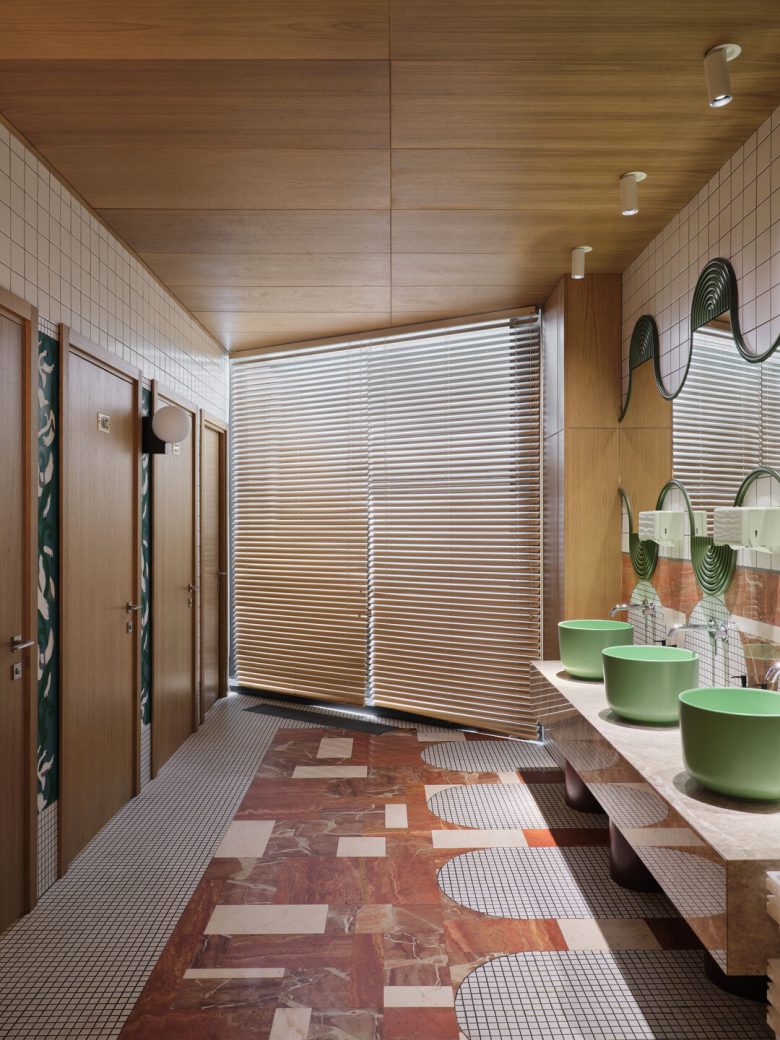
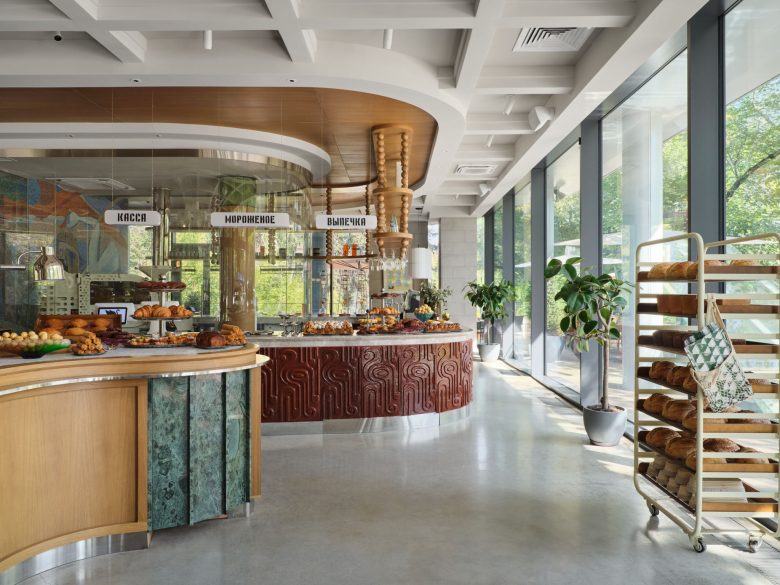
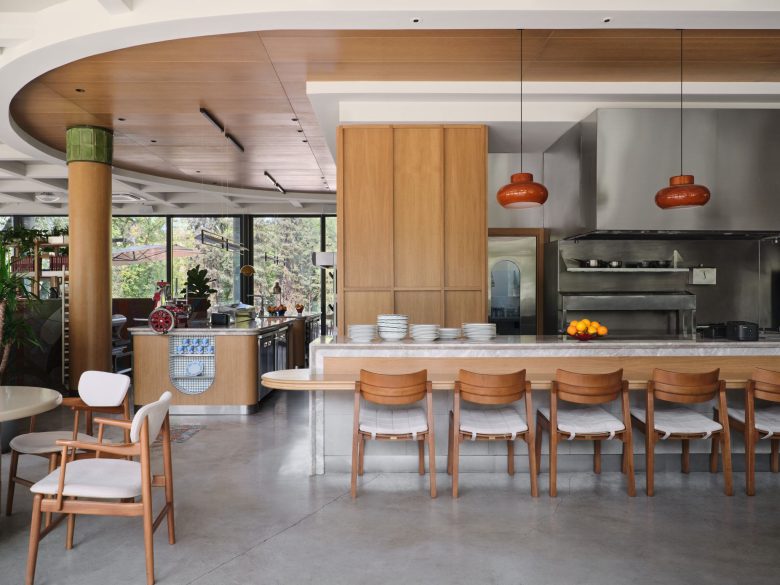
Great care was taken to weave the city’s “architectural DNA” into the details. The burgundy ceramic panels wrapping the bar handcrafted by the Faski workshop feature a geometric pattern inspired by the iconic concrete balconies of Soviet-era Almaty apartment blocks. Similarly, the bespoke reception desk translates historical motifs through the lens of modern craftsmanship.
A Dialogue Between Global Icons and Local Craft
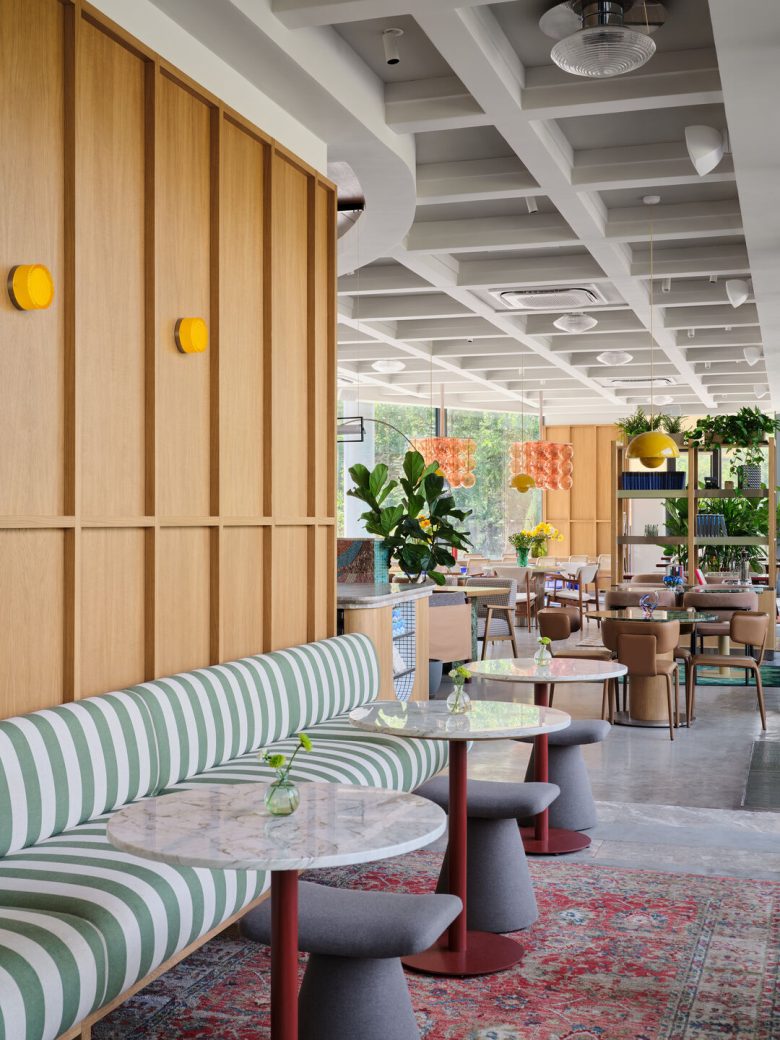
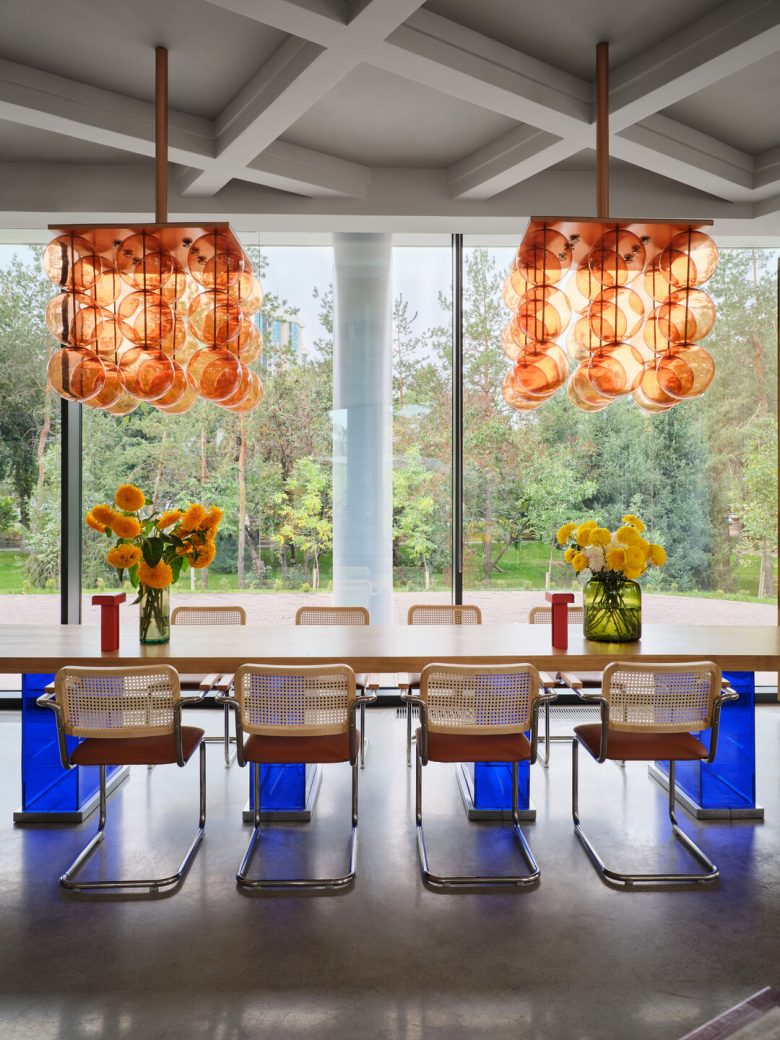
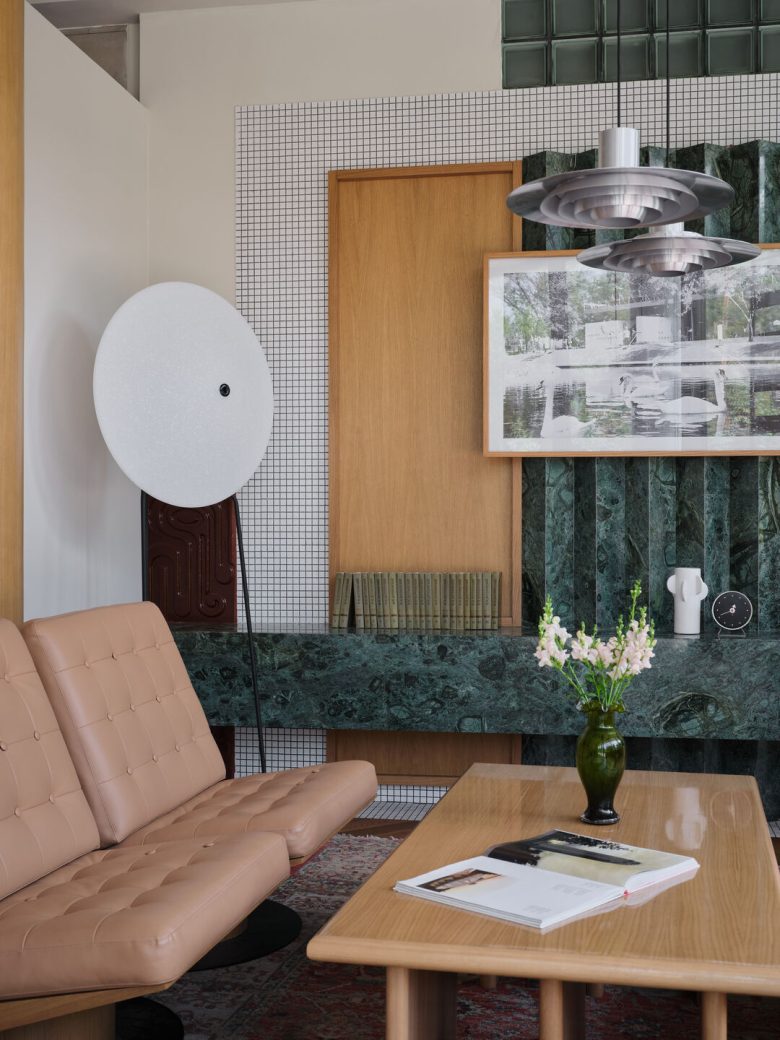
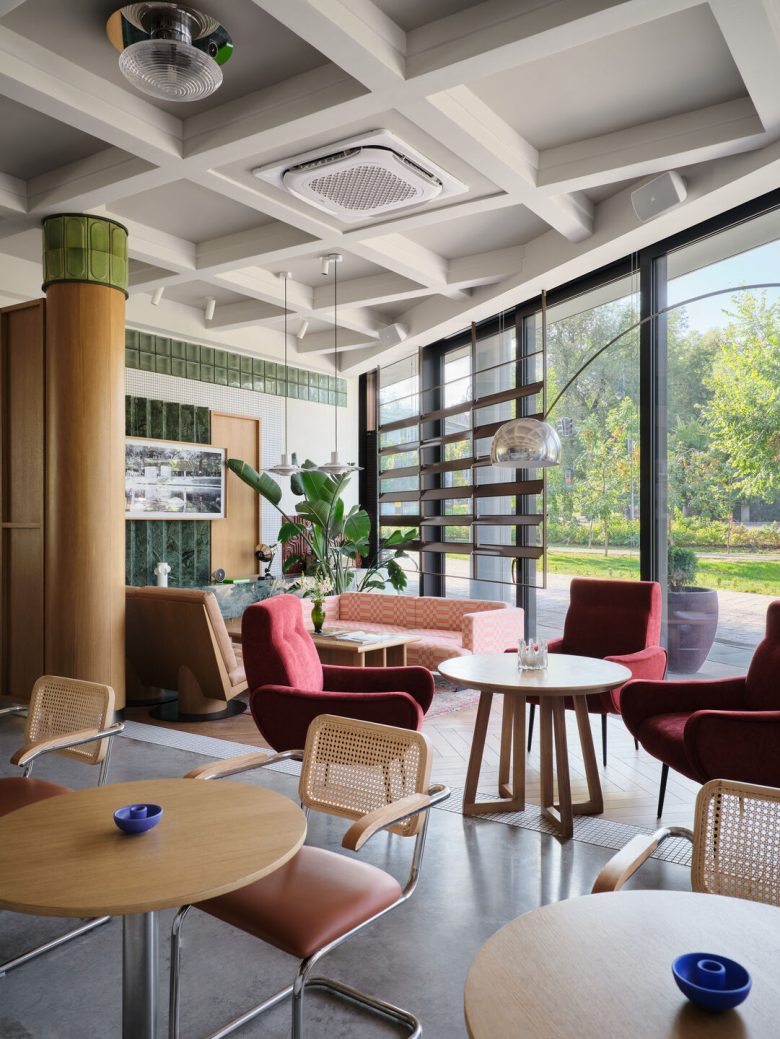
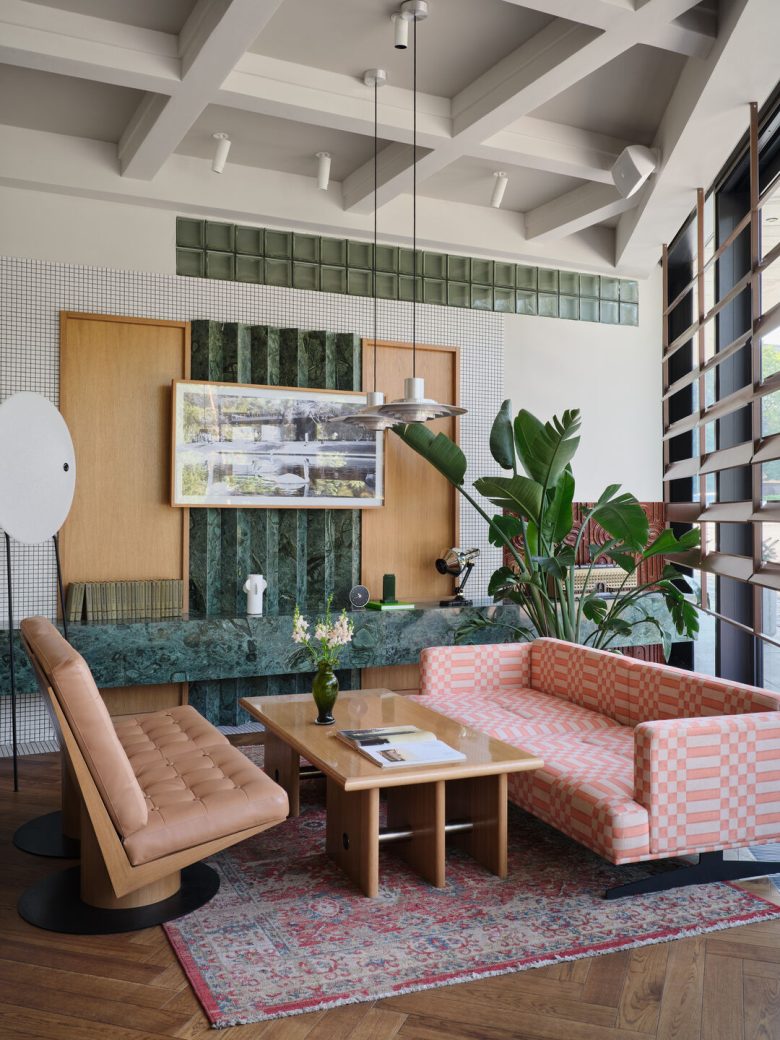
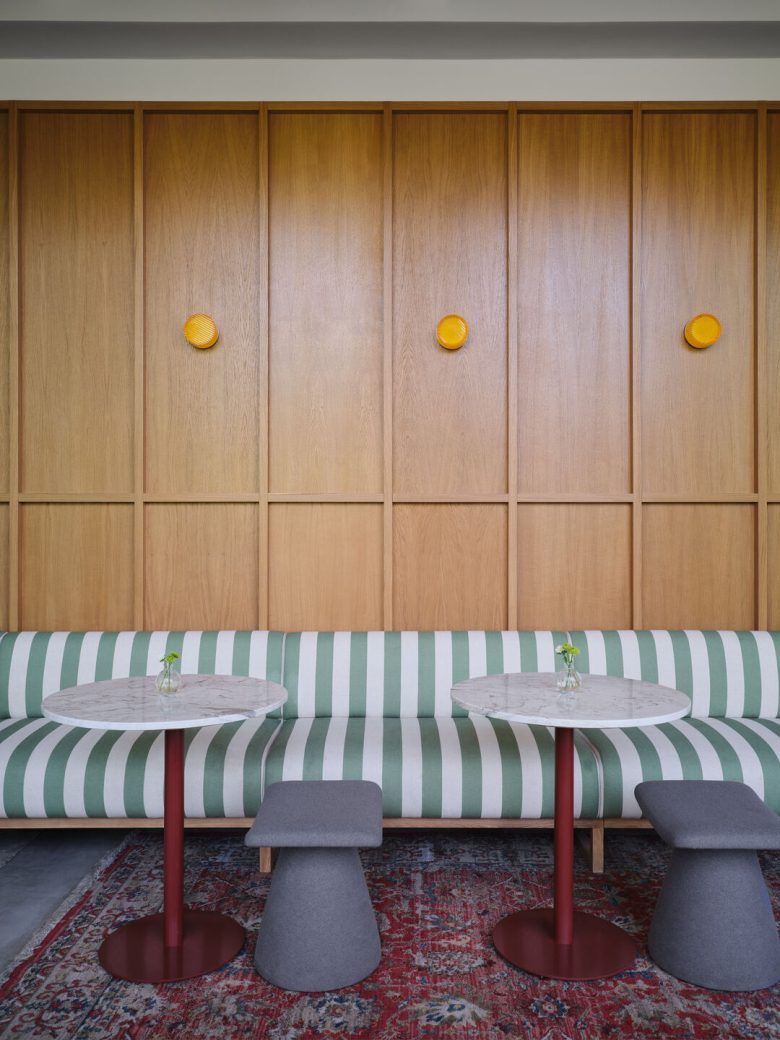
The interior of Aqqu Central Café is a masterfully curated dialogue where mid-century global design icons meet custom pieces by Vladislav Churikov and local artisans.
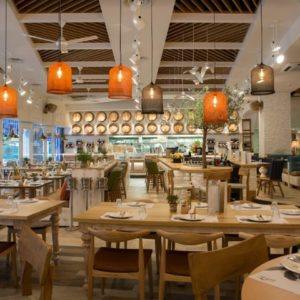
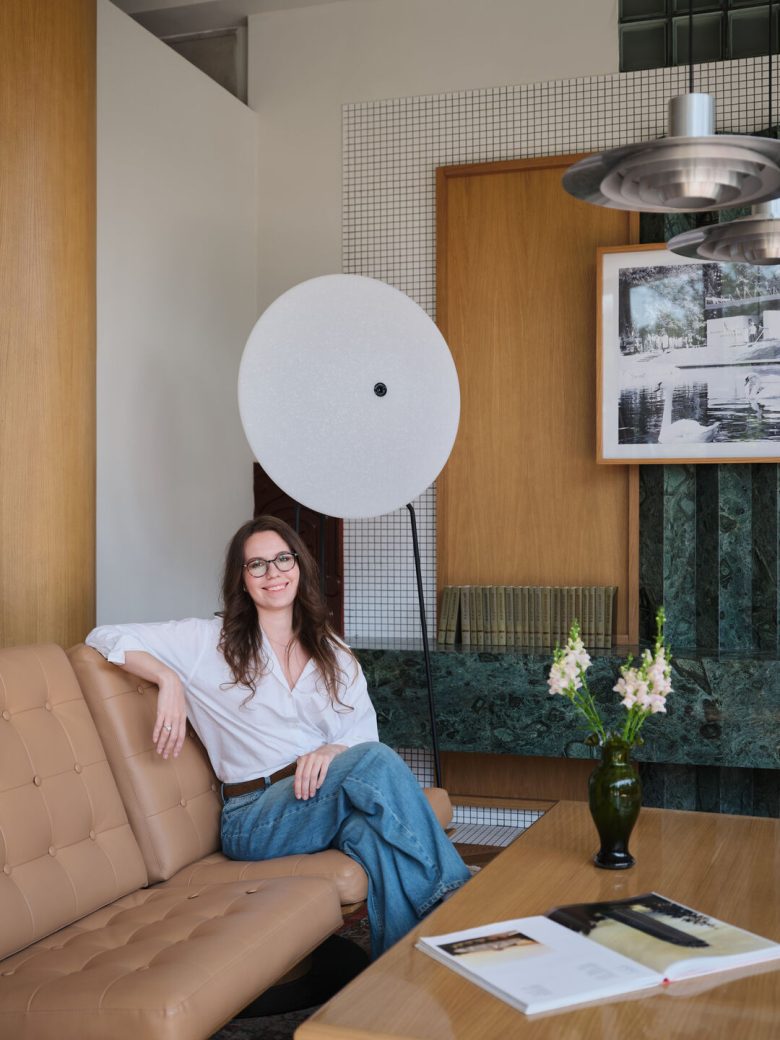
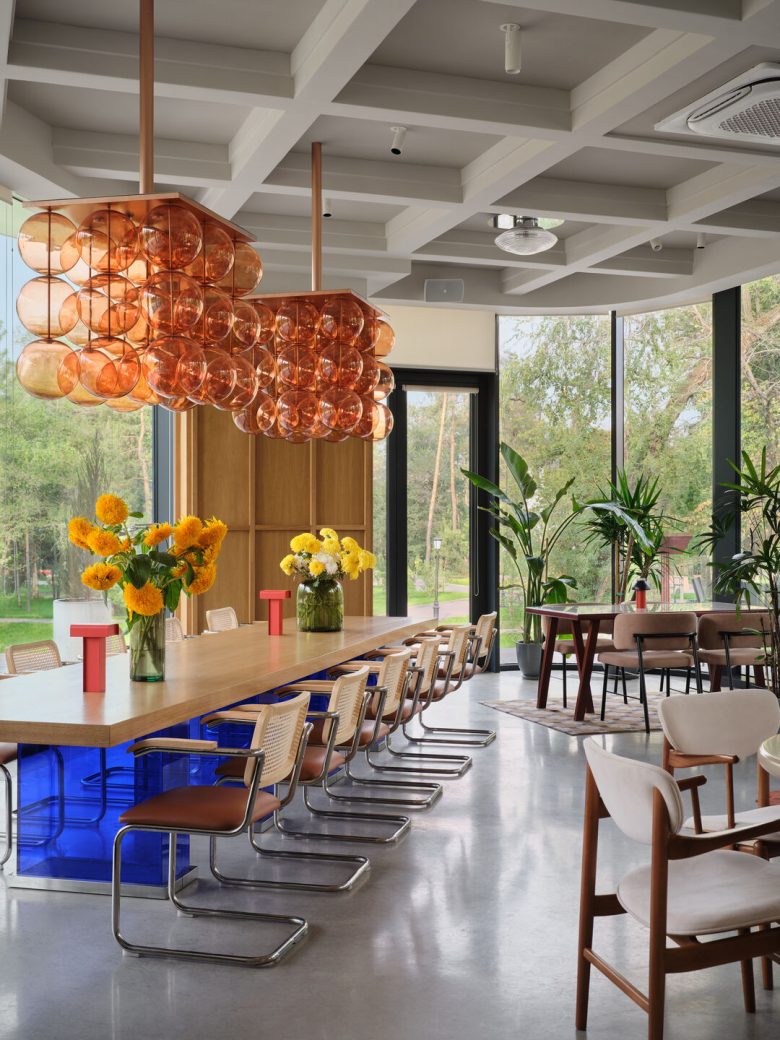
Global Classics: The space features the iconic Flowerpot lamps by Verner Panton (1968) and P376 pendants by Kastholm & Fabricius, both reinforcing the modernist spirit. The Arco floor lamp by Flos (1962), with its massive marble base, acts as an indoor interpretation of a park streetlamp.
The Local Manifesto: Much of the furniture was designed in-house and produced by local workshops. The Burkit, Arai, and Turanga chairs (produced by Jana Cara and Qaragash Furniture), alongside custom metal blinds and coffee tables by Vladislav Churikov, showcase the high caliber of Kazakhstan’s furniture industry.
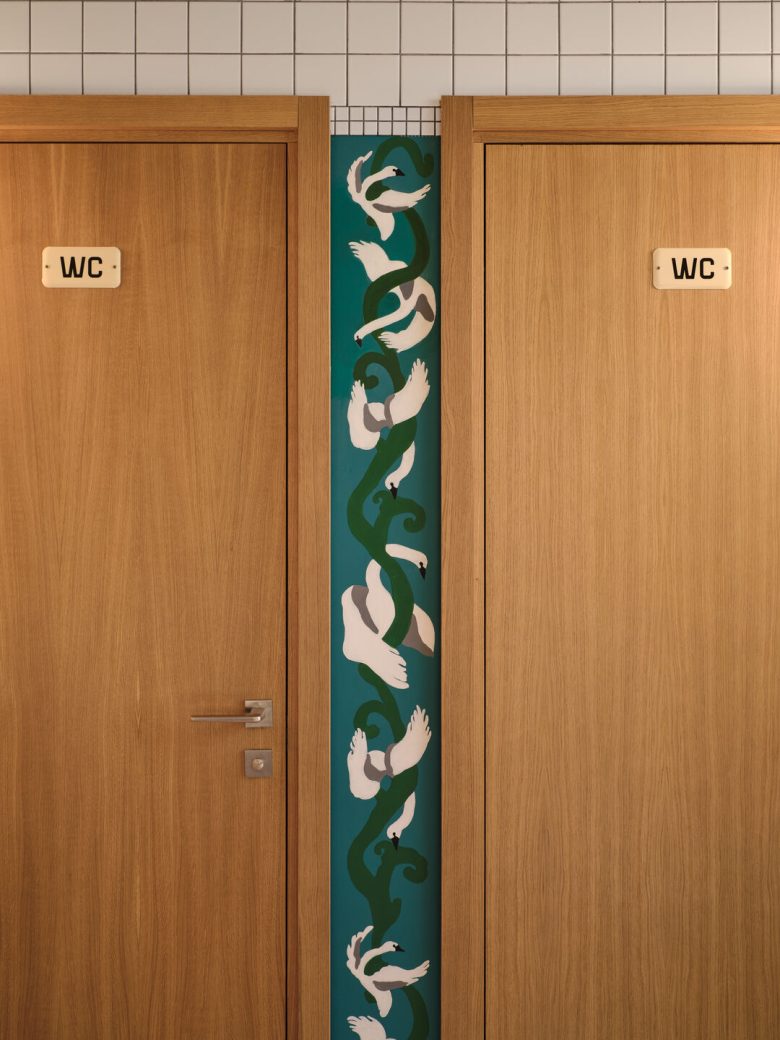
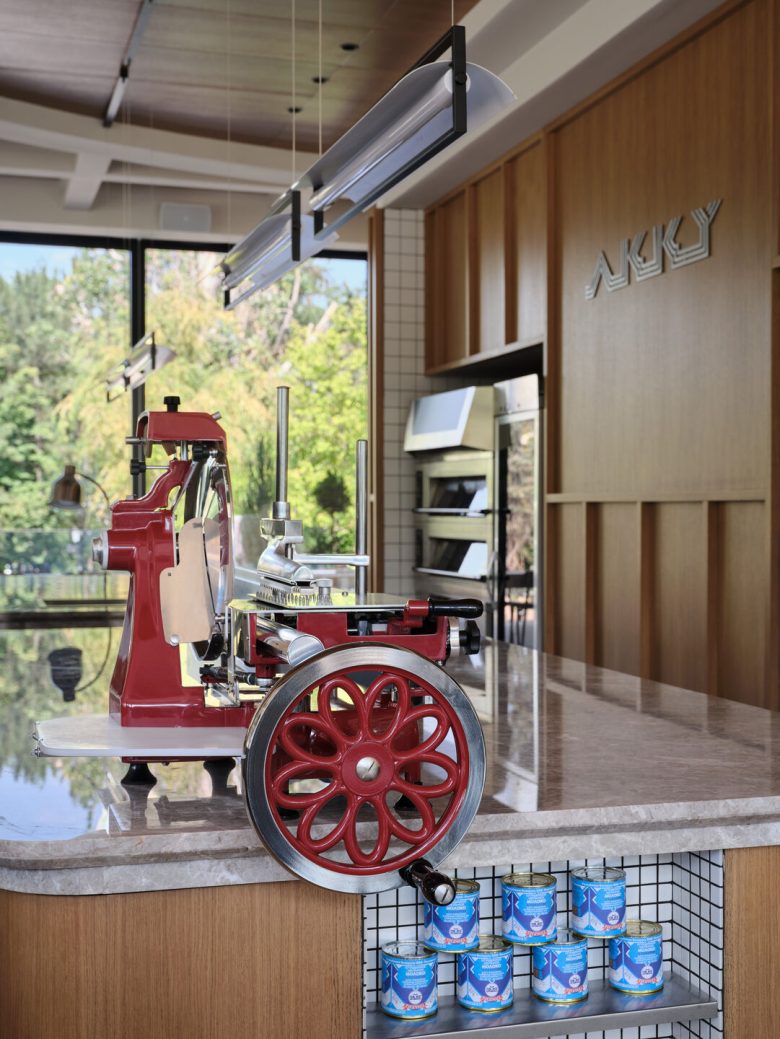
A Symbol Restored: The “Aqqu” swan logo was meticulously recreated from archival photographs by the Art Guild of Almaty, closing the circle between the past and the present.
Why This Project Matters
Aqqu Central Café sets a new benchmark for public architecture in Central Asia. The designers have demonstrated that a commercial project can become a significant cultural experience when built on a foundation of historical respect, ecological sensitivity, and a fearless use of color.
Designed by Alena Krasatulinа and Vladislav Churikov
Photography by Damir Otegen
Add to collection