




Chengdu Shude Experimental Middle School Library by Modum Atelier
posted by retail design blog on 2026-04-13
Chengdu
Add to collection
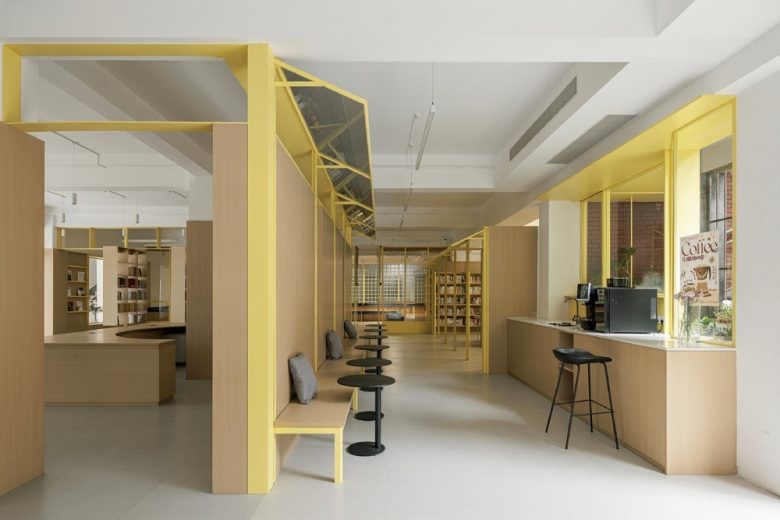
Design Approach: Generating a Strategic Prototype – The renovation of the library at Chengdu Shude Experimental Middle School faces the typical challenges of updating an old school building. Located on the ground floor of a building constructed in the 1970s–80s, the structure has undergone multiple renovations and ownership changes, leaving its original design unrecorded. Within this orthogonal grid space, the school requires not only reading functions but also multi-purpose uses including meetings, flexible teaching, teacher preparation, and exhibitions.
Against this background, we aimed to fulfill functional needs while creating a campus space characterized by fluidity, interaction, and exploratory delight. We drew inspiration from urban “pocket parks,” where fitness equipment beloved by residents is scattered freely across the site — independent of the main building, fostering spontaneous participation in a relaxed, unrestrained manner. These images of play and public interaction inspired us to shape the library into a campus “playground.”
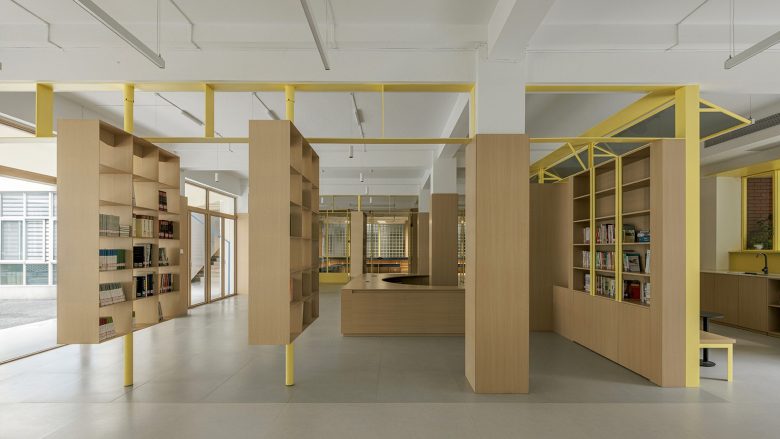
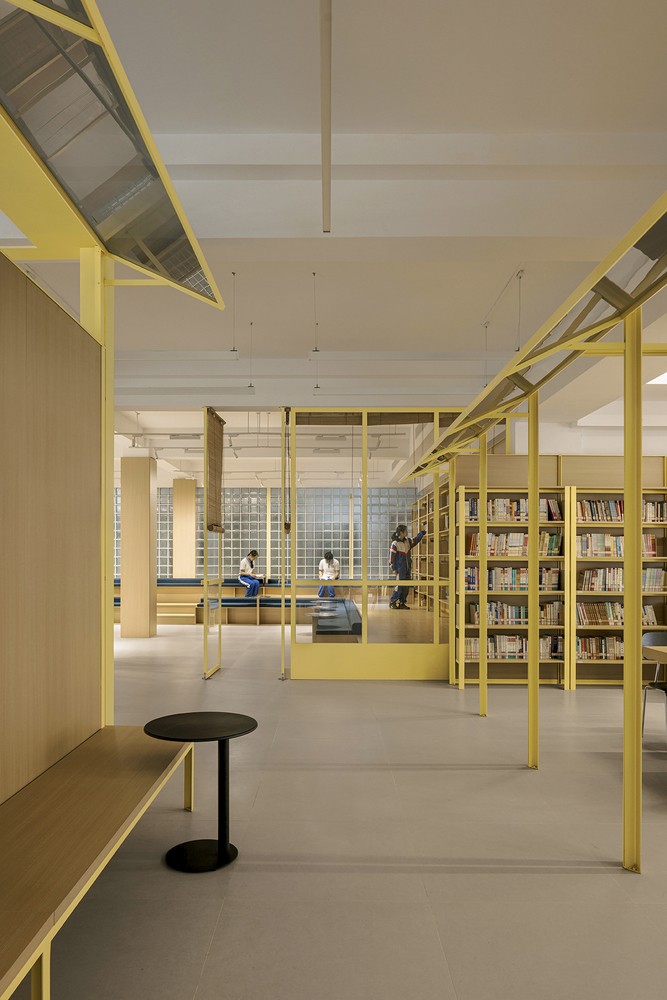
Inserting a Plug-in System – To achieve free interaction, the design adopted a “detached” strategy: inserting a fully self-supporting plug-in system directly into the interior. Resembling oversized “fitness equipment,” these components do not rely on the original walls, minimizing unpredictable structural risks of the old building. Through simple rotation, combination, and reconfiguration, they adapt to diverse usage scenarios at different times.
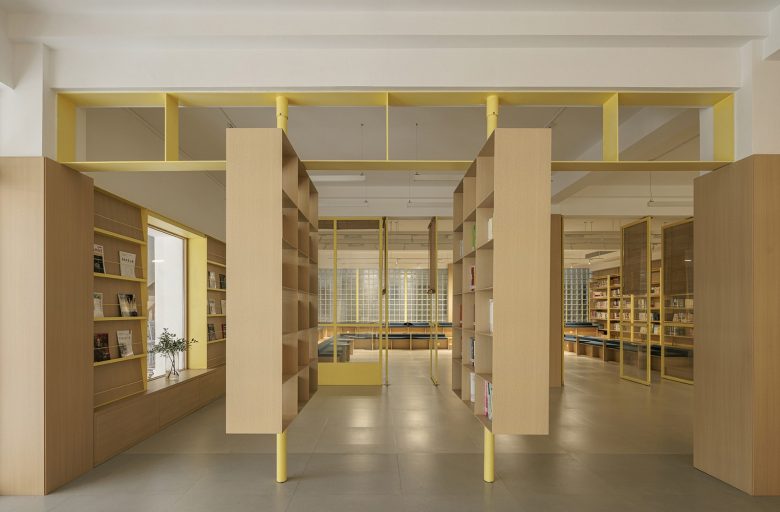
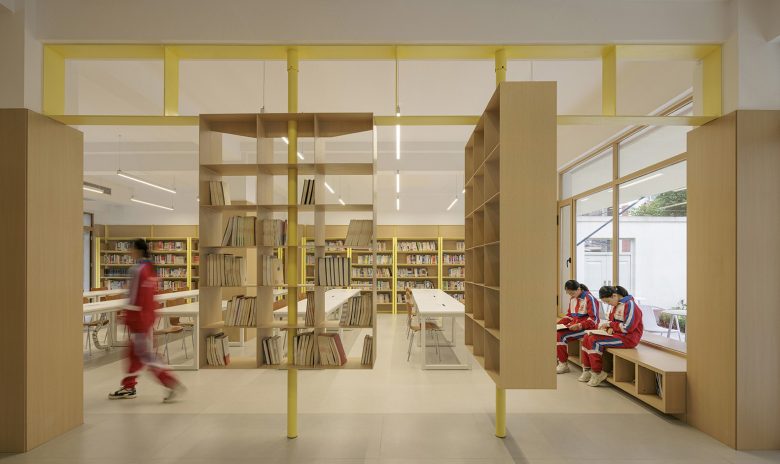
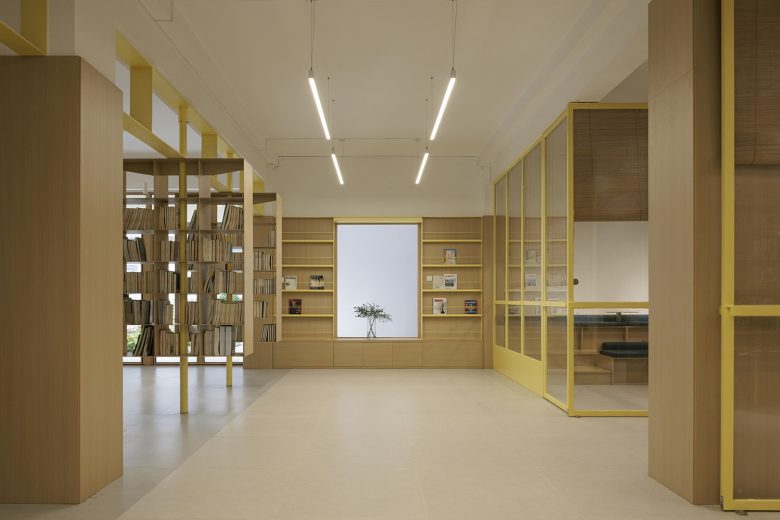
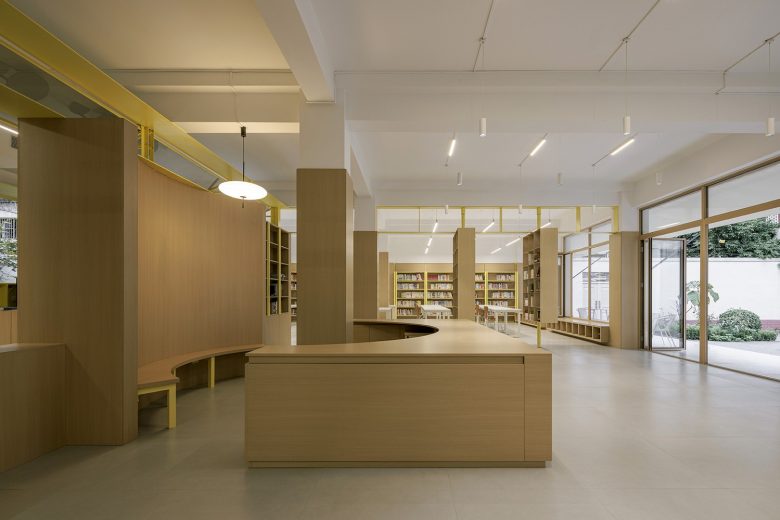
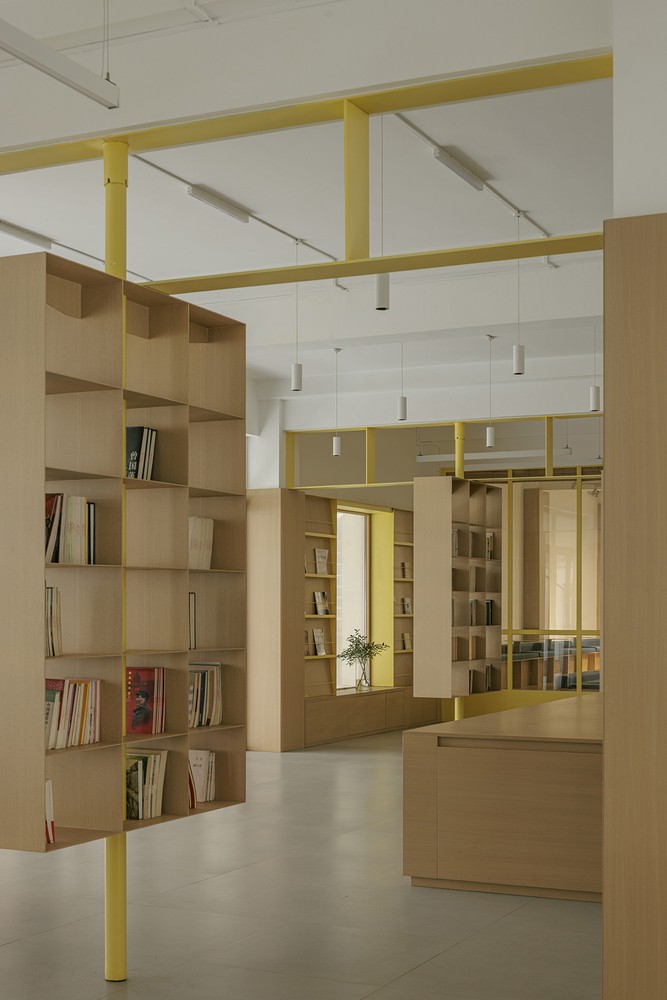
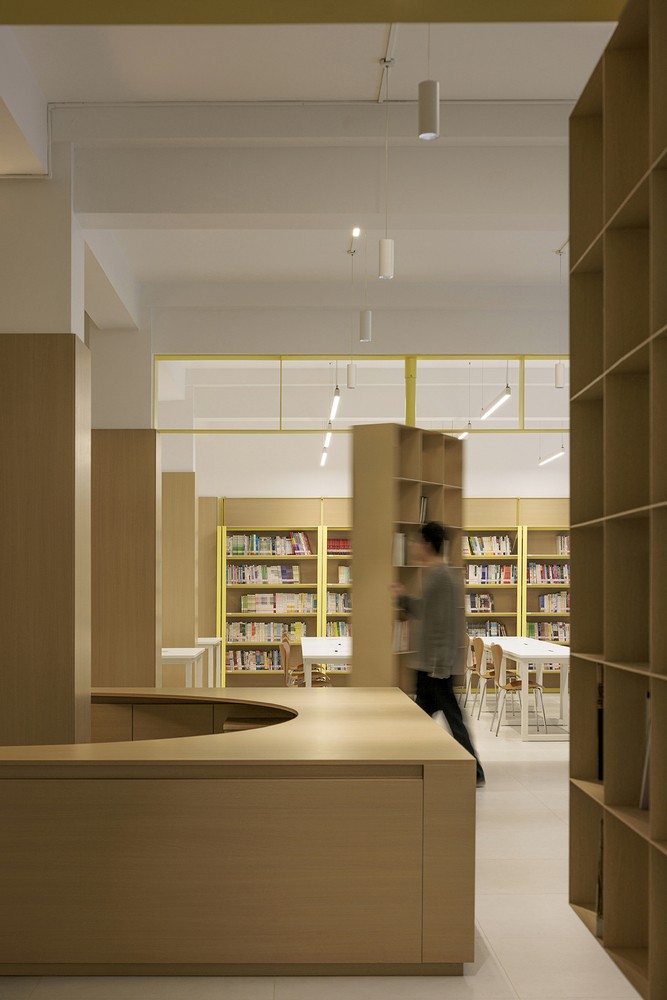
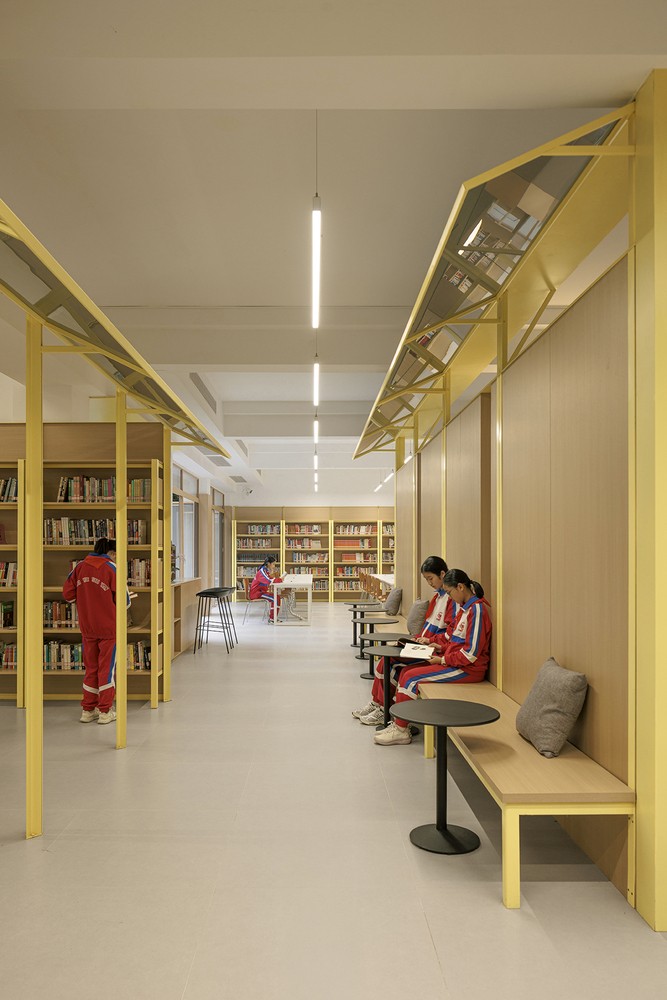
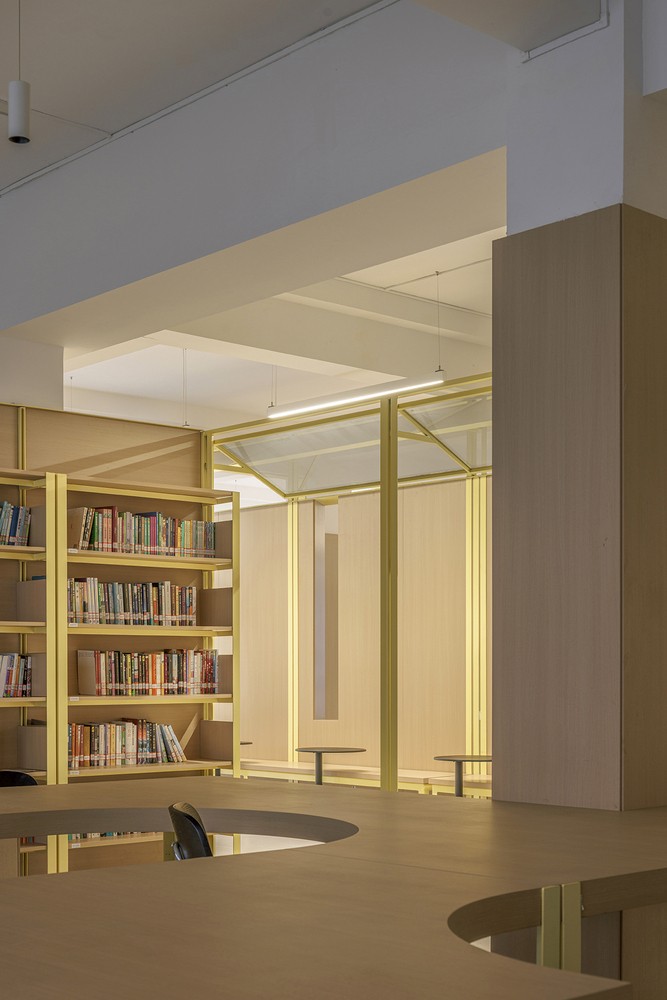
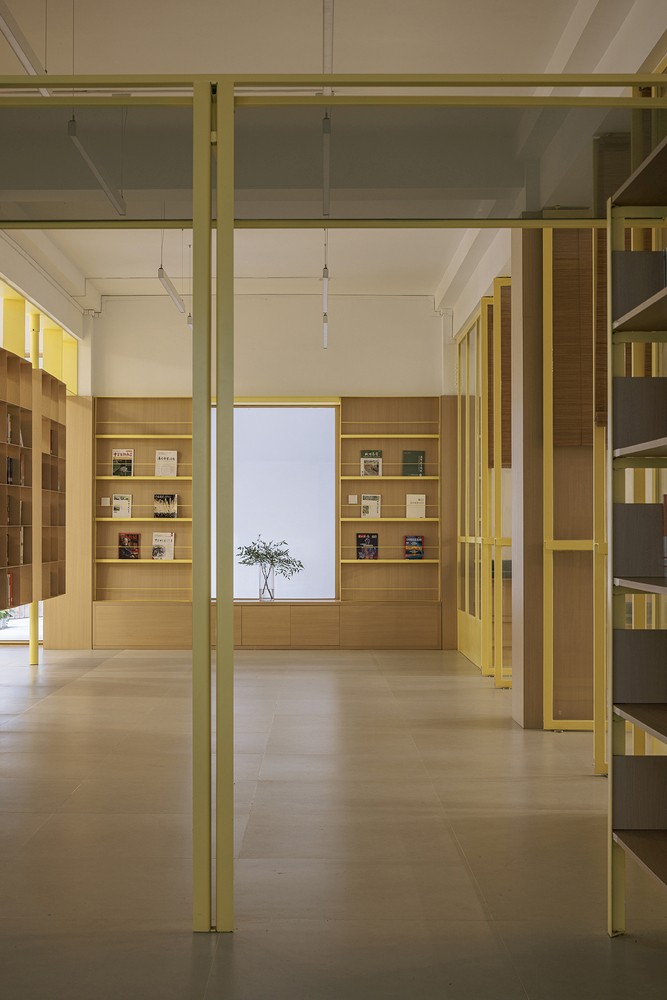
In the flexible reading area near the entrance, rotating bookshelves act as dynamic “mechanisms” transforming the space. When fully open, the library expands like a plaza; the angled elements break the rigid orthogonal order of the old building, enabling free roaming. When zoning is needed, the shelves close to subdivide the space, ensuring independence for adjacent functional zones. This system establishes a decentralized, freely traversable circulation. Instead of physical partitions, zone boundaries are defined by changes in flooring materials. Students can move and browse books as if walking in a park, transforming the once passive corridor into a fluid public activity zone.
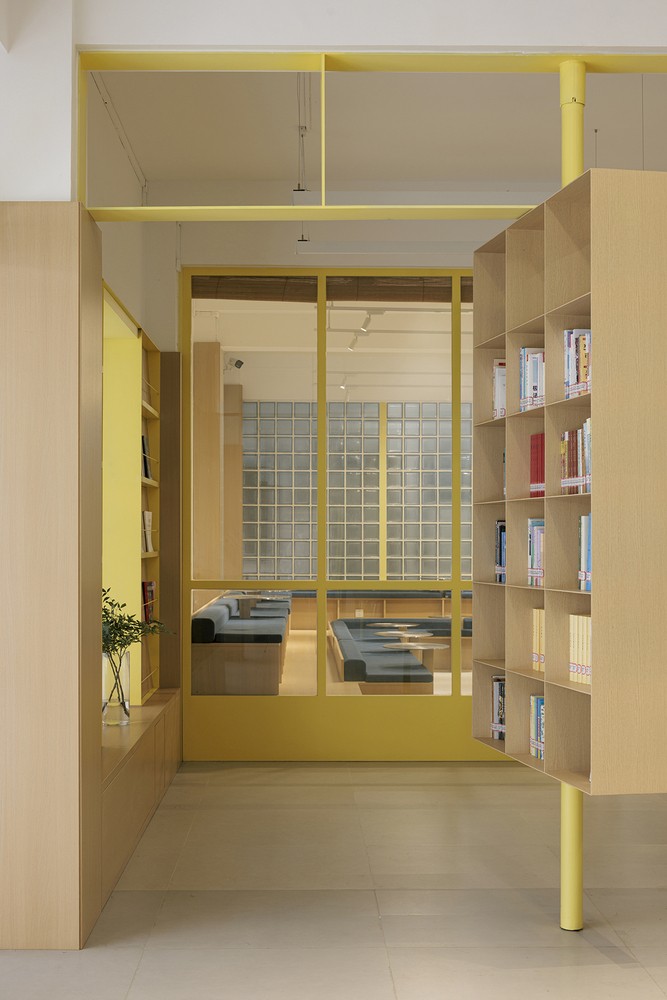
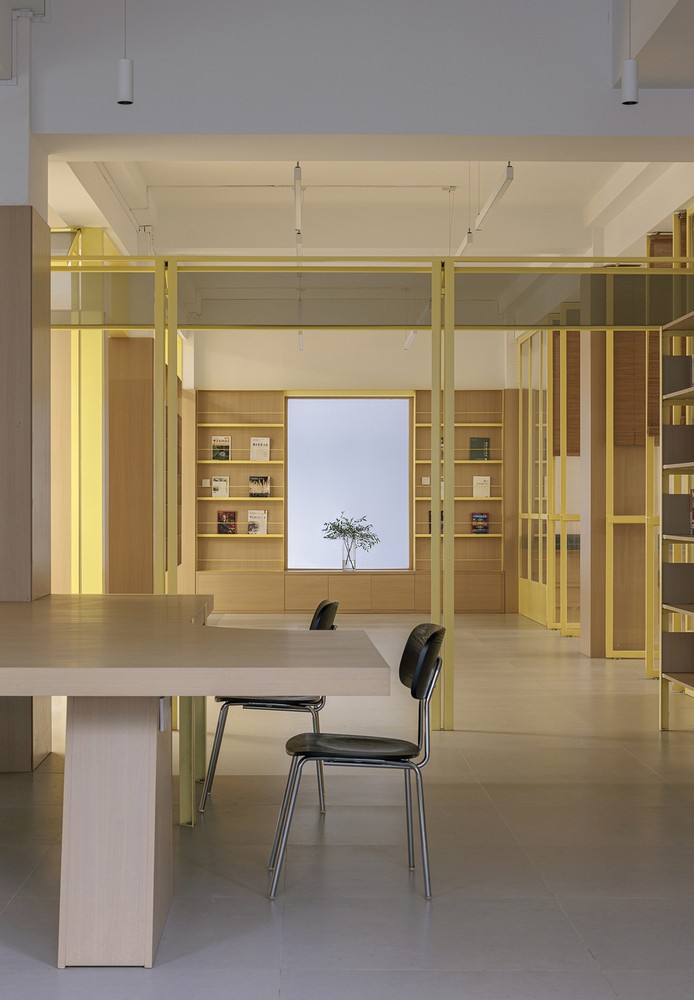
Atmosphere and Interface Naturally Emerging from Construction – We avoided excessive surface decoration, allowing spatial atmosphere to “grow” organically from the lightweight construction logic. Components combining steel frames and timberwork resemble scattered “fitness devices” as well as familiar urban structures such as newsstands and bus stops. They deliver concrete functions while serving as collective memory symbols of public spirit, representing everyday “life scenes.”
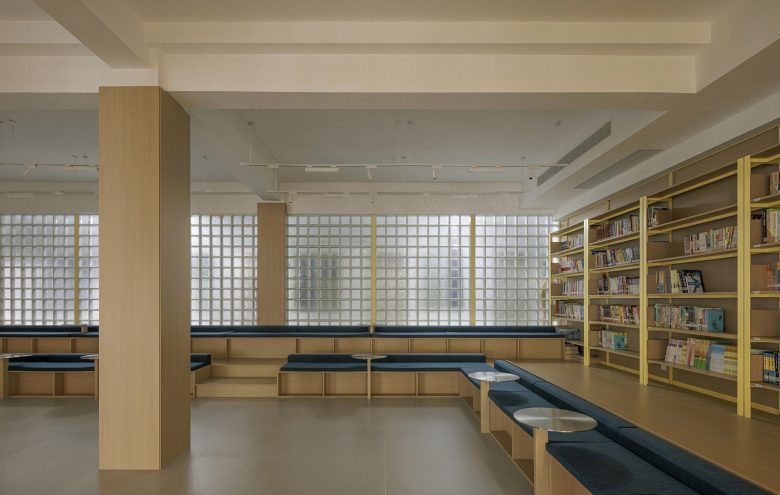
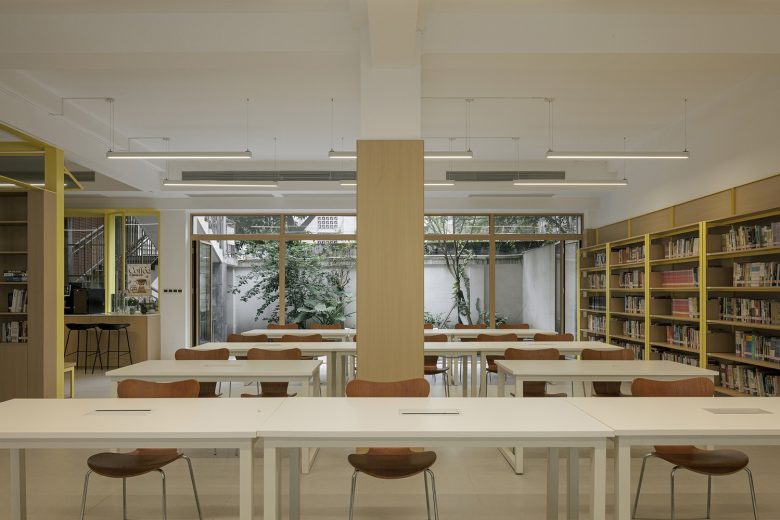
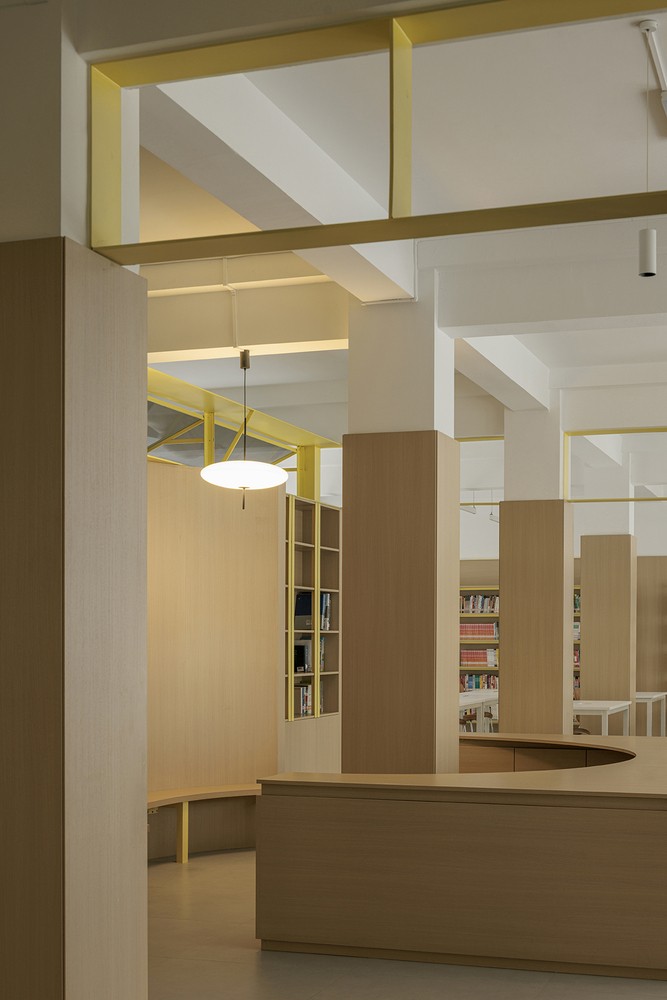
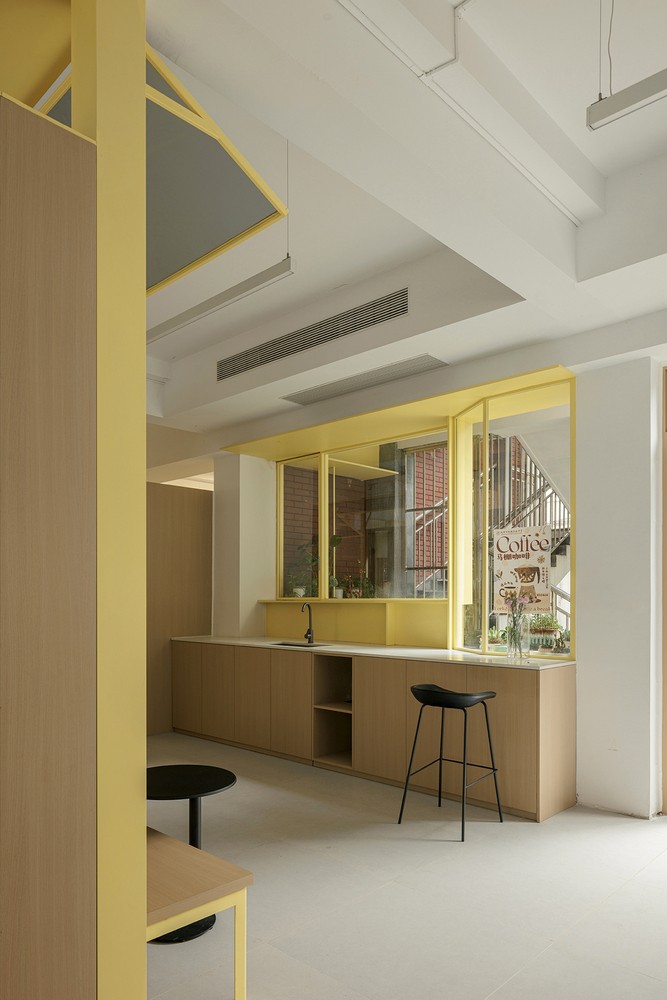
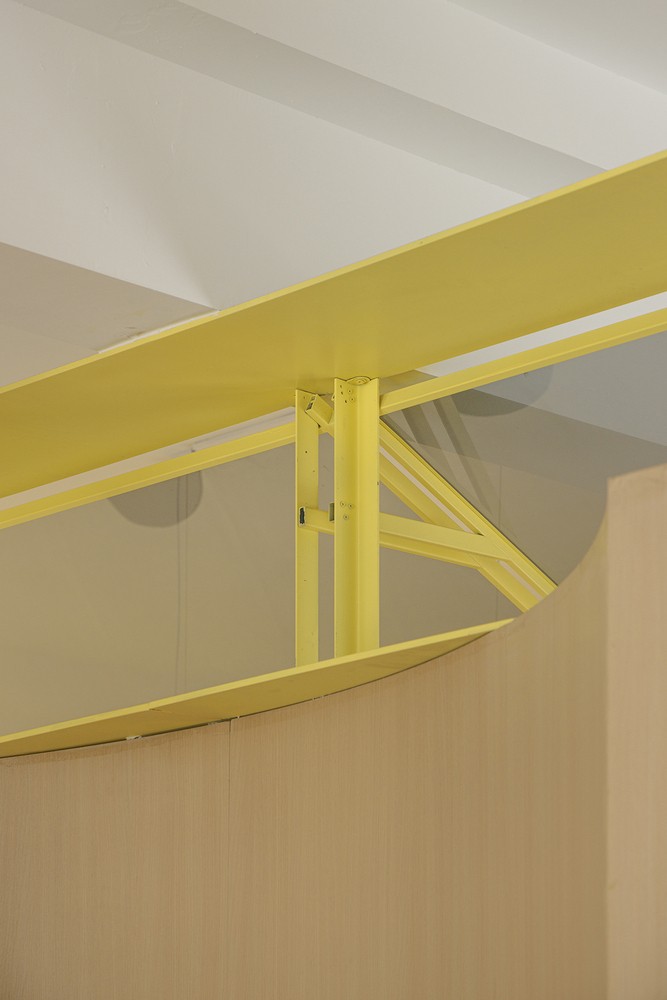
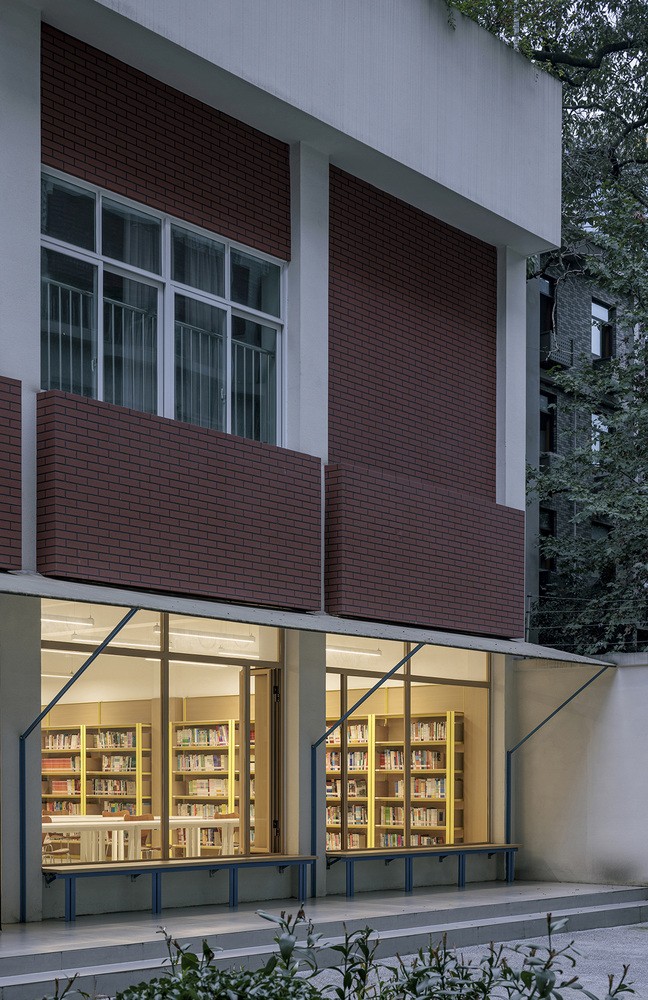
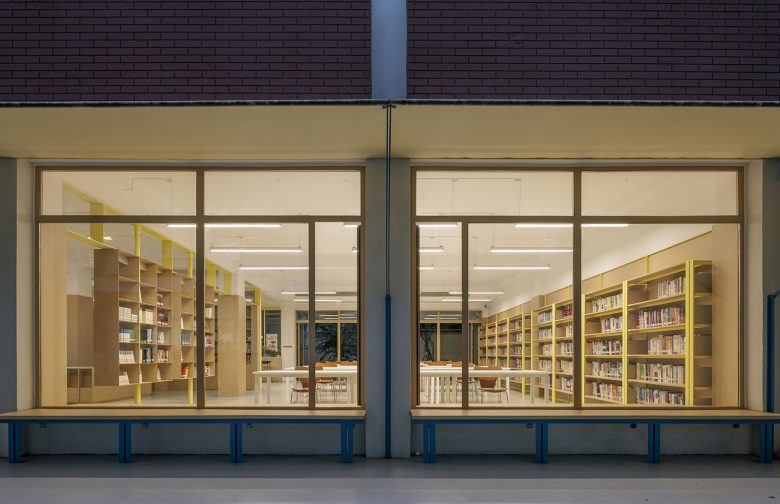
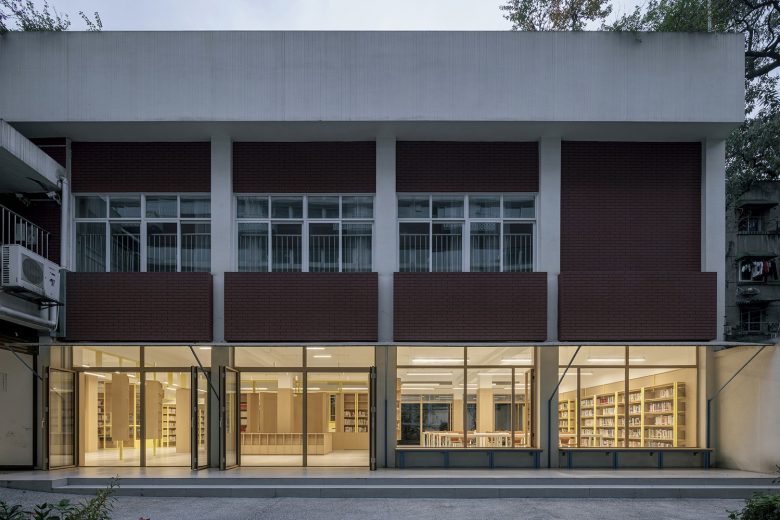
Authenticity is also expressed through sectional dimension control. Ceilings are lowered in areas housing air-conditioning units to create a sense of enclosure, while most spaces expose beams and columns for openness. Extensive timber bookshelves are left unadorned. Timber cladding wrapping columns stops at a consistent height line, disconnected from slabs and beams, with prominent yellow steel frames providing transition. This “non-ceiling-attached” treatment creates clear vertical visual layers, emphasizing the independent relationship between the lightweight “plug-in system” and the original building. The construction system extends outward. While preserving the original facade structure, the ground-floor perimeter is opened to the greatest extent. An external retractable canopy extends the array rhythm of the interior plug-in framework outdoors. The formerly enclosed, dull ground floor becomes transparent and welcoming, maximizing the introduction of precious natural light from Chengdu into the interior.
Conclusion – The renovation of old educational buildings represents a small yet significant topic in contemporary urban renewal. Such projects are often constrained by complex practical conditions and limited budgets, leading to compromises focused purely on functional fulfillment. We sought a playful, relaxed attitude to achieve impactful results with minimal intervention — responding to the project’s challenges through a highly integrated “plug-in system.” Beyond meeting basic requirements, we used architectural thinking to enrich spatial experience. Creating freedom for public life within constraints may be the most genuine value of such renewal projects.
Architects: Modum Atelier
Lead Architects: Zhou Ruizhe,Yang Junbo
Design Team: Zhou Ruizhe, Yang Junbo,Wen bifu, Liao xin, Li xiner
Photographs: Guowei Liu
Add to collection