






Los Nogales Preschool by taller de arquitectura de bogotá
posted by retail design blog on 2025-12-08
Bogotá
Add to collection
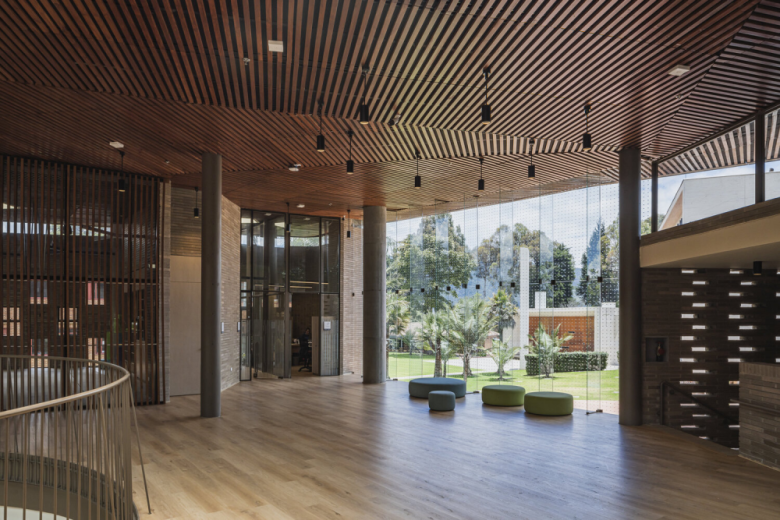
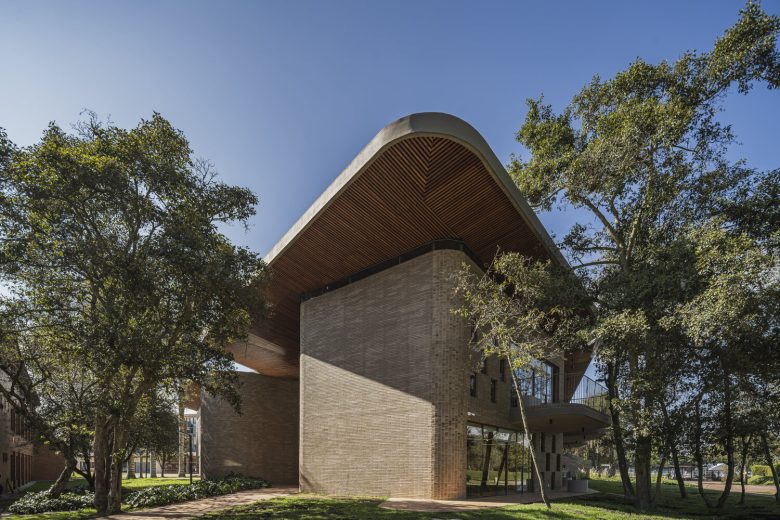
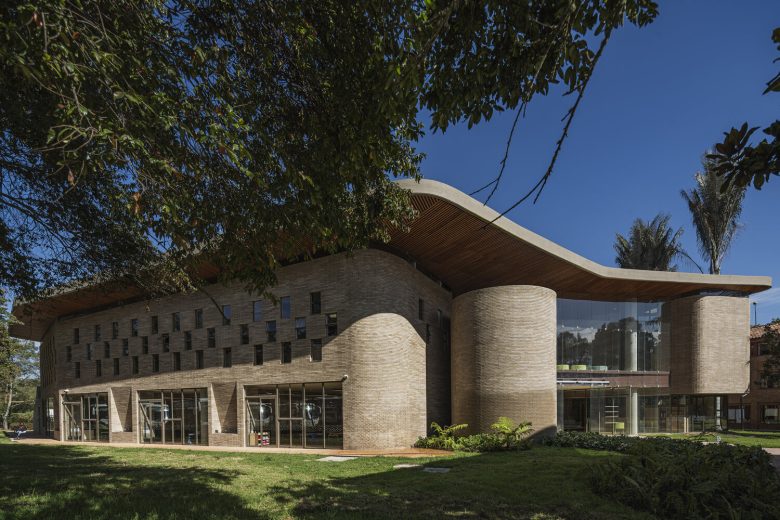
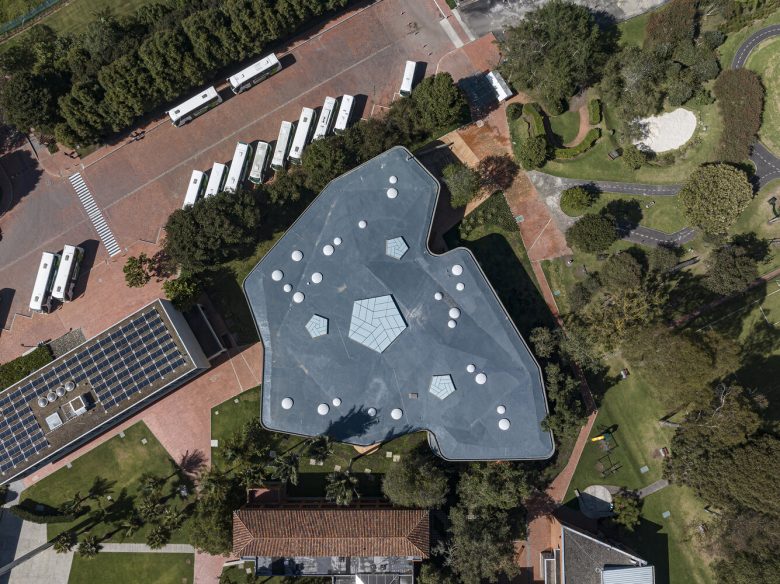
The preschool is a two-level building that originates from a configuration of three autonomous bars organized in a triangular shape, allowing for three connections to the campus: one for entry, another leading to the library, and the third toward the Park of Wonder or preschool park. The architecture is created with organic shapes that aim to avoid straight edges in favor of curves, giving fluidity to the space.
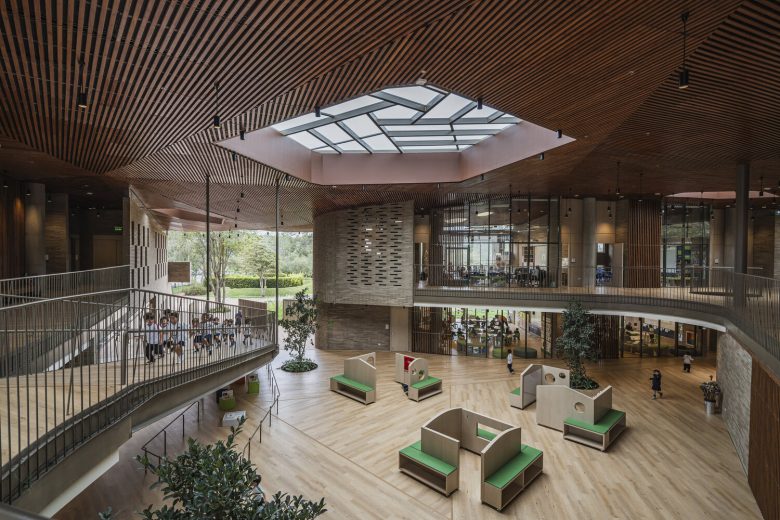
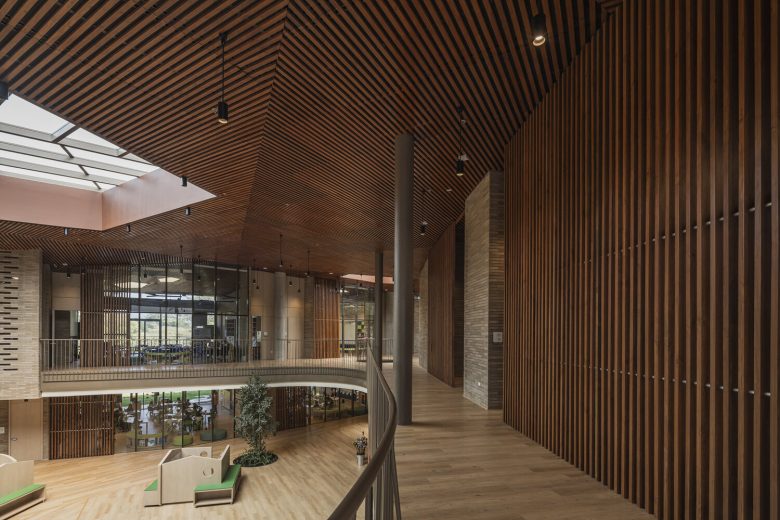
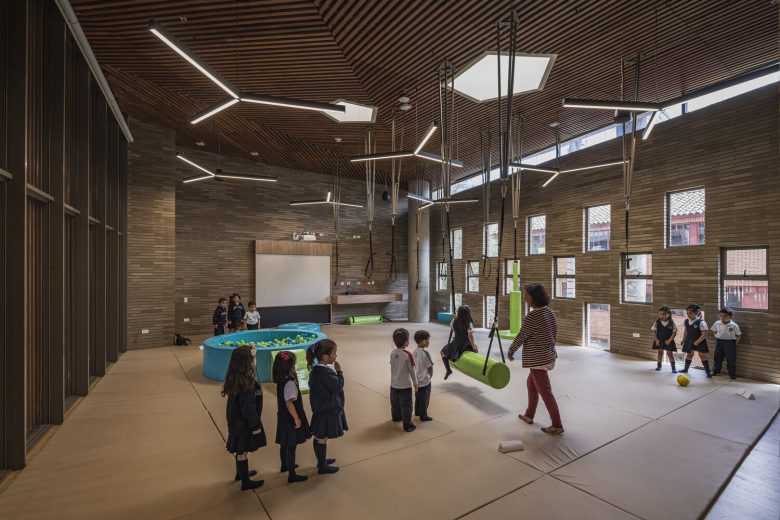
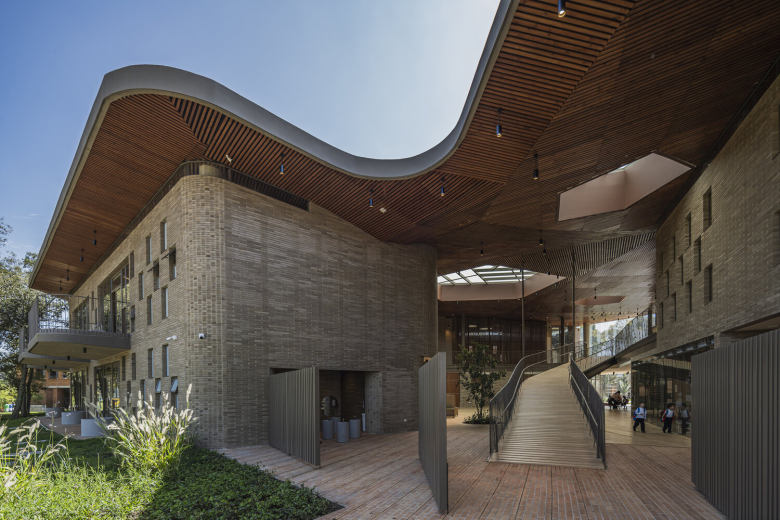
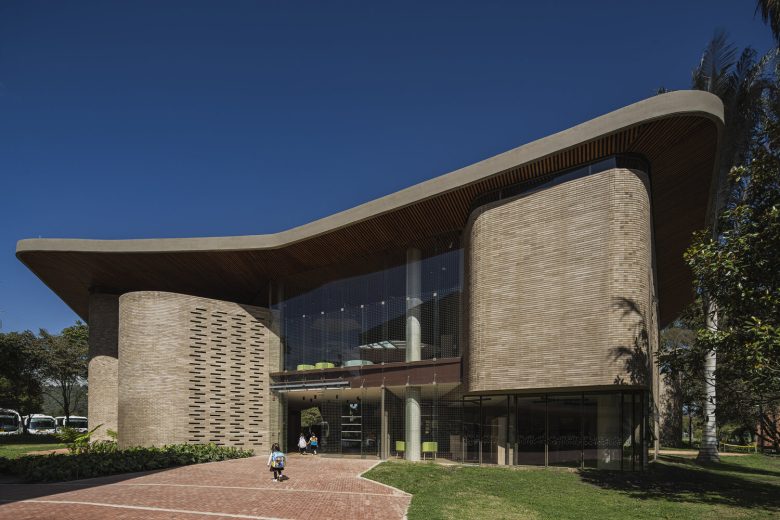
These three volumes contain the classrooms for pre-kindergarten, kindergarten, and transition, as well as service areas for teachers and support areas for academic activities. These spaces are connected by a large folded reinforced concrete roof. The folds add richness to the interior space and are consistent with the spatial quality generated by the angled walls.
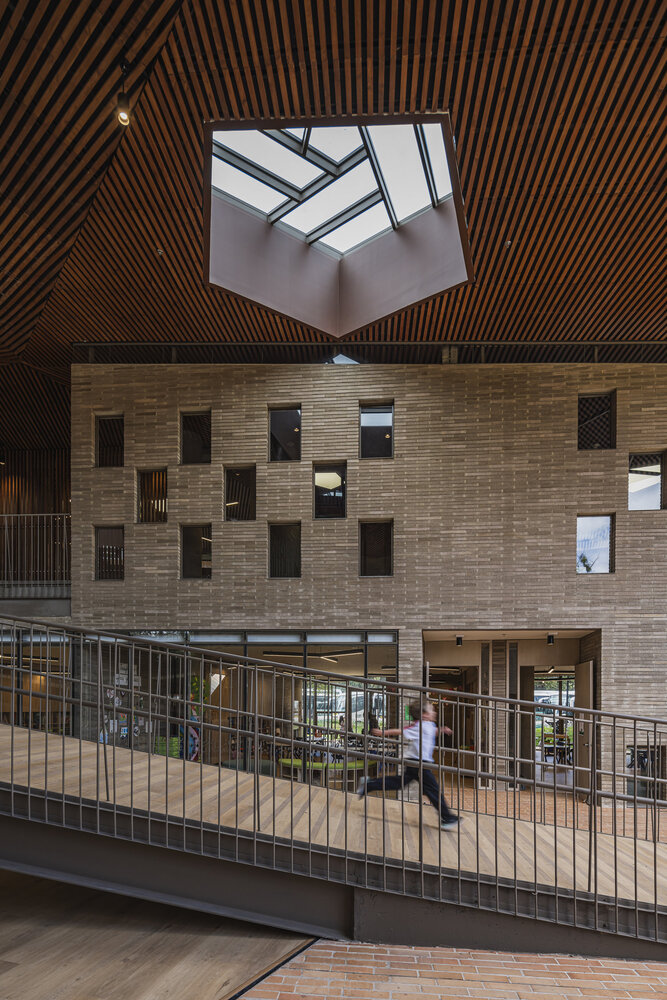
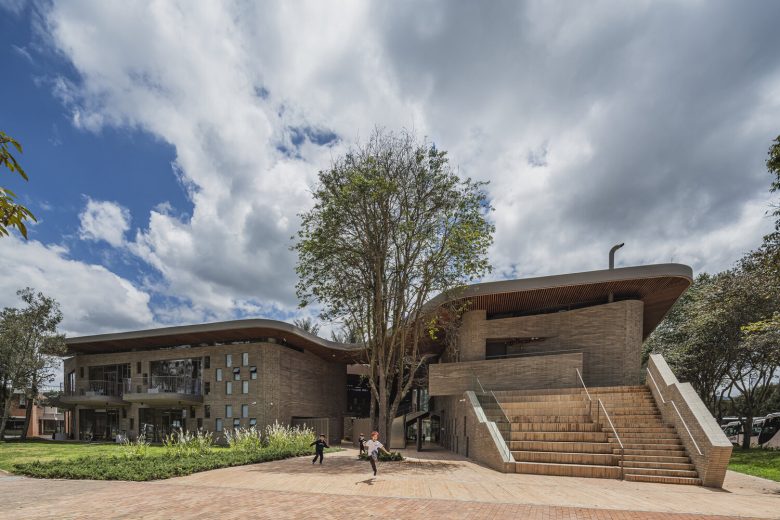
In elevation, the building is composed of two parts: a base made of brick volumes and a top made of a glass expansion and the folded roof. The access points connecting the entrance and the library are characterized by double-height windows, which maintain thermal comfort conditions, while the access to the park is completely open to ensure continuity between the exterior space and the building’s agora.
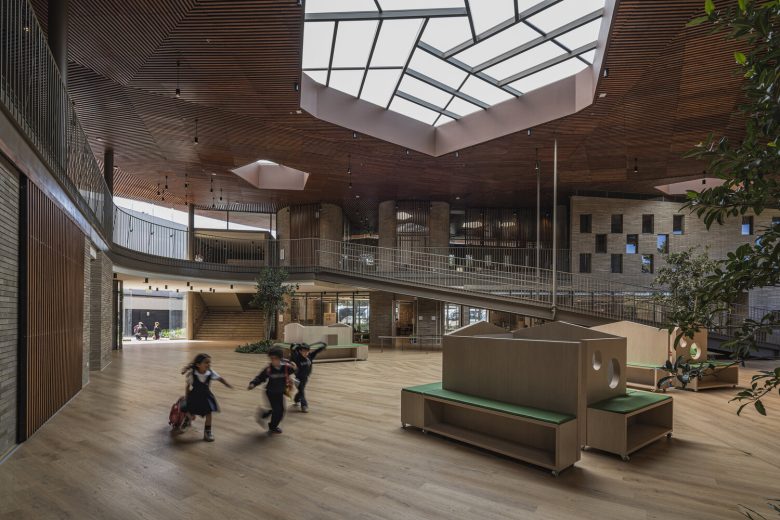
The circulation paths and walls were conceived so that the children’s experience of using the building would be characterized by surprise and the ability of the architectural elements to invite play. For example, a ramp suspended from the roof interrupts the central courtyard, serving as the element that allows children to ascend to the second level more easily. Its steep incline invites users to run while using it.
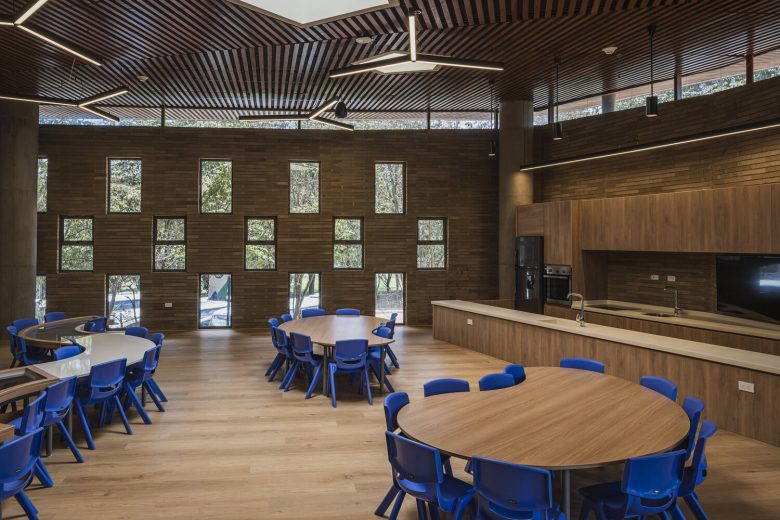
As a pedagogical and operational premise, a large central space is established: an agora for collective gathering, protected from the rain and surrounded by classrooms, a place that stimulates interaction and community. This central space is surrounded by a system of perimeter circulations around the triangular courtyard that provide access to the classrooms.
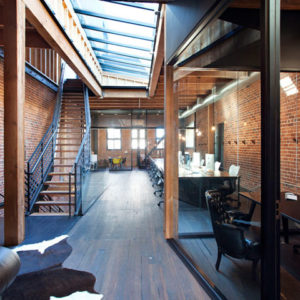
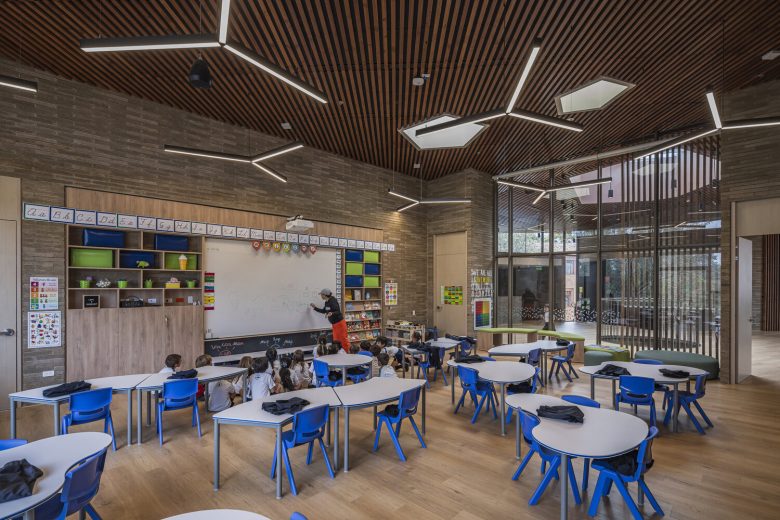
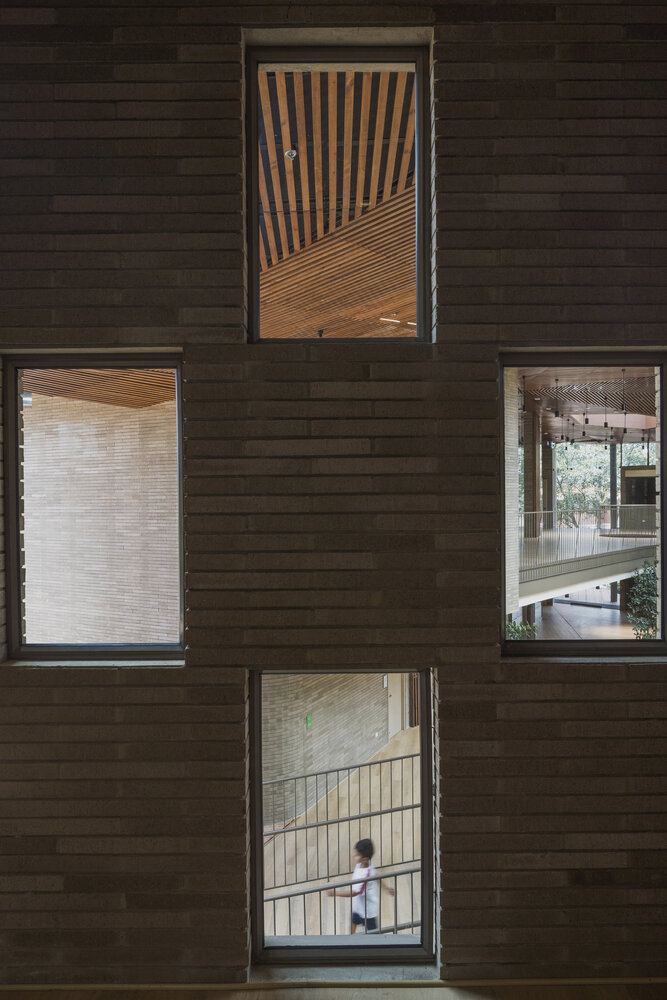
The material is the sum of the sandy-colored clay of the large-format brick, which combined with wooden ceilings and floors promotes a homogeneous and welcoming color range. As a complement, accent colors are used in furniture, in a measured way, to avoid the chromatic overuse that is so common in school buildings for young children.
The mixed structure of reinforced concrete and some metal columns consists of a series of circular-section columns, which allow for the complete separation of the walls from the structure, thus generating a stretched envelope of the roof, expressing the individuality of the architectural elements.
Architects: taller de arquitectura de bogotá
Architects In Charge: Daniel Bonilla, Marcela Albornoz
Collaborators: Daniel Bonilla, Marcela Albornoz, Laura Gutierrez, Mateo Franco, Santiago Ballen, Andres Gutierrez, Laura Bermudez, Manuela Amado
Photographs: Alejandro Arango
Add to collection