





Add to collection
Building on the success of the second branch located in front of Jungang-dong’s iconic 40 Stairs, this third location is set near Busan Station, in the heart of a district densely lined with office buildings. By day, the street is alive with the flow of commuters, but once evening falls, it becomes strikingly still. As the bustle of the day recedes and the place seems to lose its vitality, the sudden quiet leaves us with a lingering sense of emptiness. It was from the question, “Could a space hold on to its warmth even after everyone has gone?” that this project began.
“DEMER” comes from the French word meaning “of the sea” or “from the sea.” We explored ways to translate the image of the sea into the space and chose to center our concept on light. Think of the warm glow sinking beneath the cold, shadowed waters, or shards of light scattering across a rippling surface. The light embraced by the sea is rich and profound. It is more than simple refraction. It carries the emotions once captured in someone’s gaze, the longing that comes from staring out at the sea, and fragments of hope felt at the edges of life. It is a warmth that goes beyond the scene before your eyes and settles deep within. Through these images of light within the sea, we sought to fill the space with that same warmth, and our approach unfolded as follows.
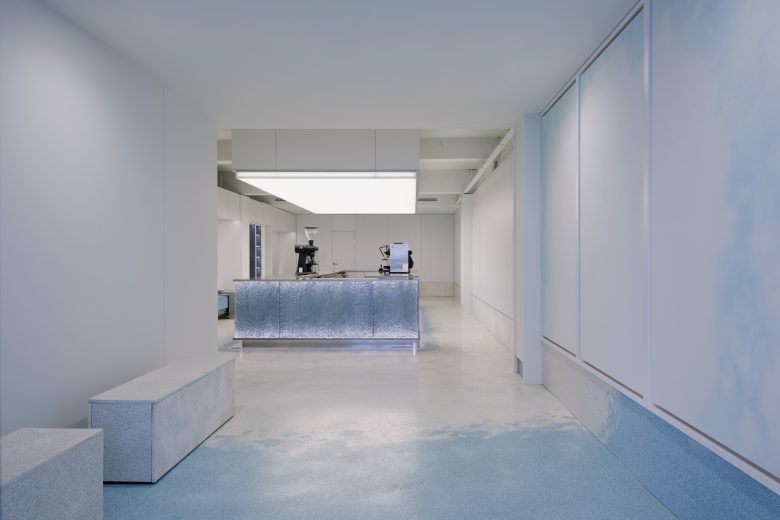
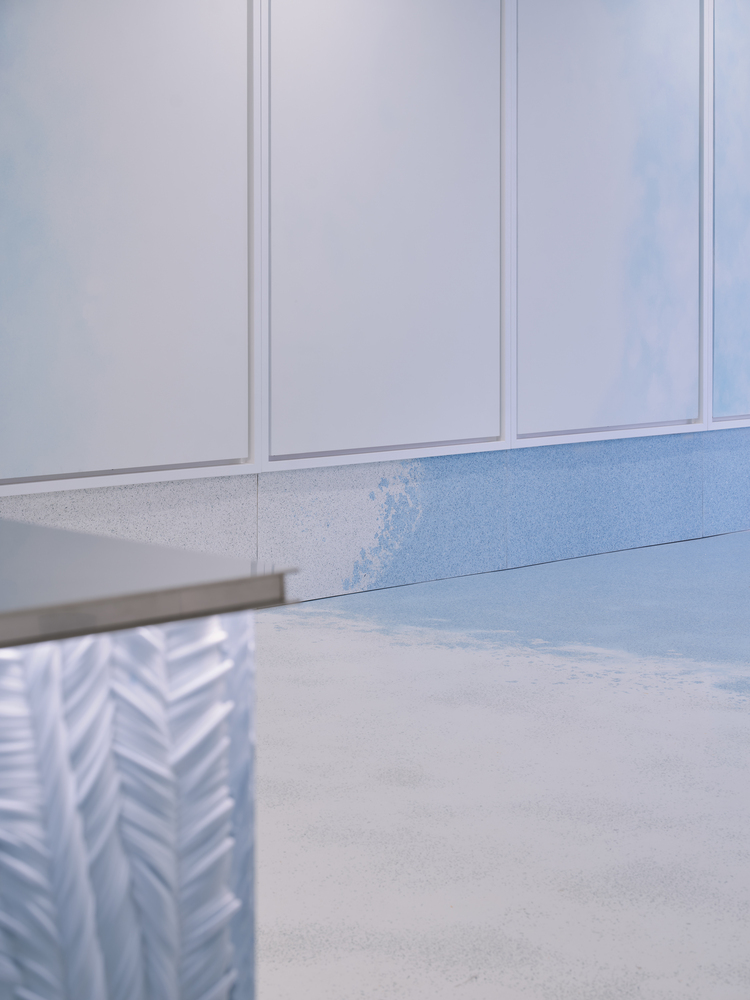
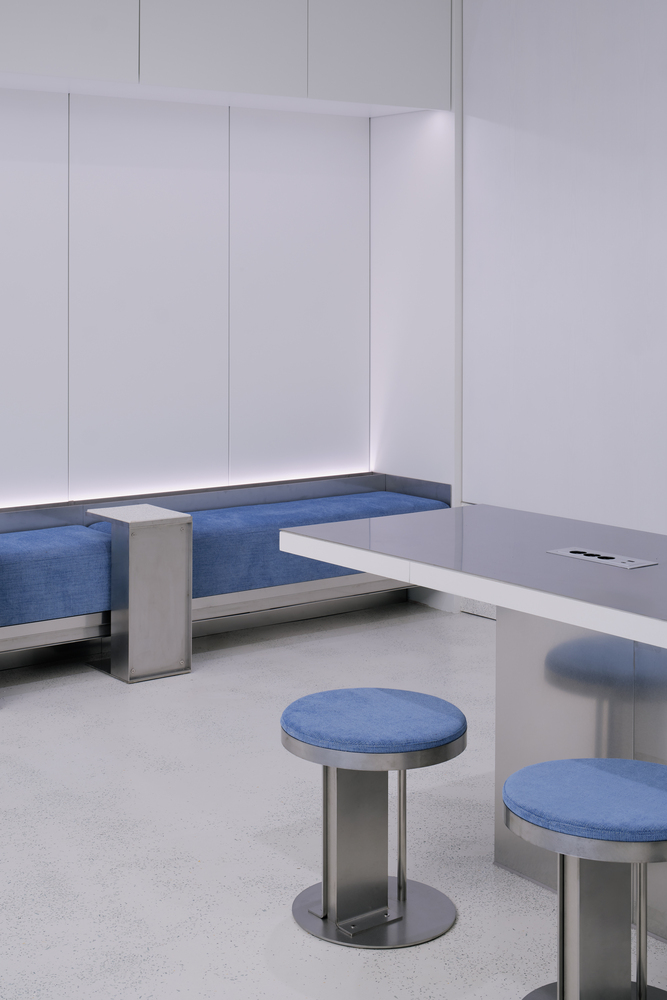
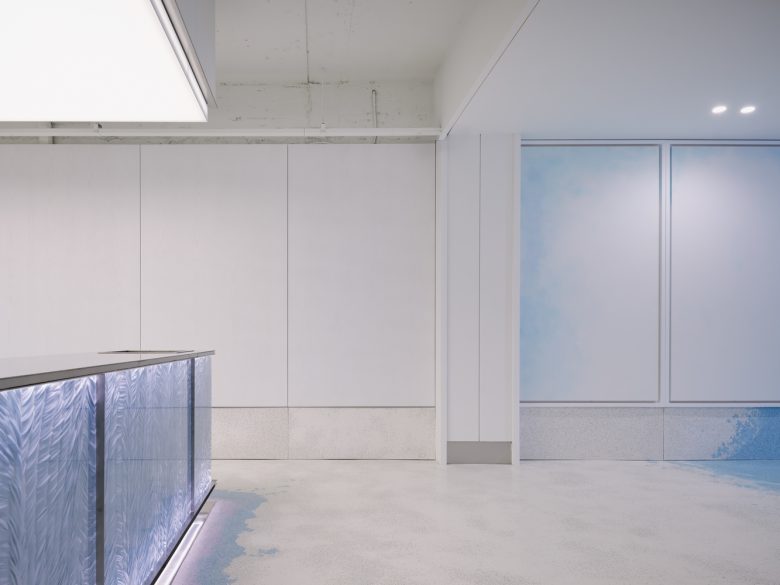
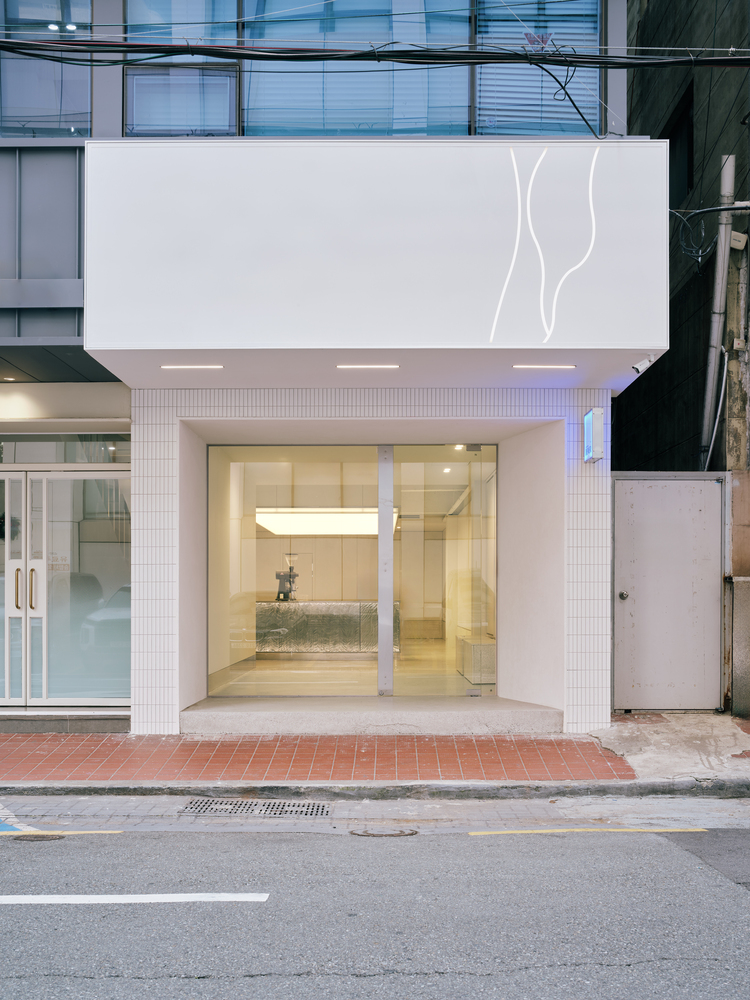
The overall color tone of the space follows the same white base as the second location. The exterior combines white-toned mosaic tiles with a special paint finish, while the interior layers paint finishes, wood veneer, and epoxy terrazzo to bring a richness of texture and depth within a single tonal range. At the entrance, both the flooring and parts of the wall feature epoxy terrazzo and paint finishes in the same custom-mixed color. This approach was intended to visually carry the flow of light and the sea into the space, drawing that sense of movement naturally from the exterior to the interior.
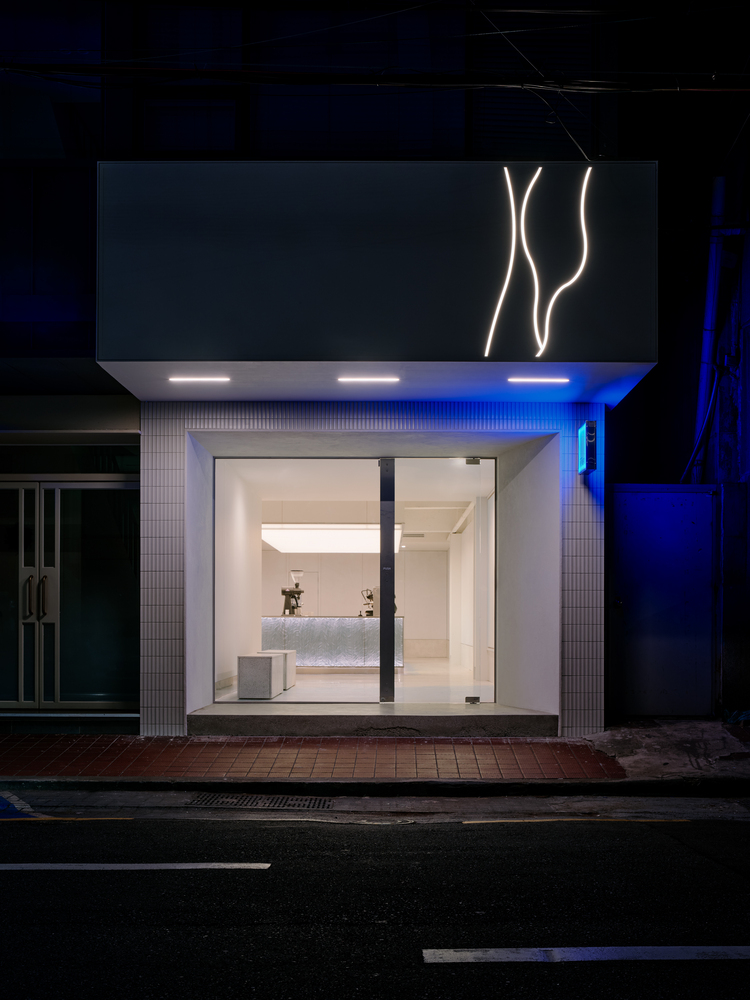
The interior and exterior mass of DEMER COFFEE ROASTERS’ third location is organized around straightforward, linear forms rather than curves, a deliberate choice aimed at accentuating the image of light gracefully flowing through the space. The facade is finished in a crisp white tone, with the wave-inspired DEMER logo softly illuminated against it, creating a clear and refined contrast. This composition guides the eye naturally to the logo, leaving a strong and immediate impression of the brand’s identity. For the exterior wall surfaces, elongated rectangular mosaic tiles were selected. Aligned with the horizontal flow of the facade, the concave shape of the tile surface suggests the shimmering surface of the sea, capturing the essence of the ocean even before one enters the space.
The entrance handle is crafted from flat metal, designed so the door can be opened with an intuitive gesture, removing the need to think about whether to push or pull. By making the handle only wide enough for a single palm, the design reduces the act of pressing a hand against the glass to push the door and instead guides the user experience toward a cleaner and more refined interaction.
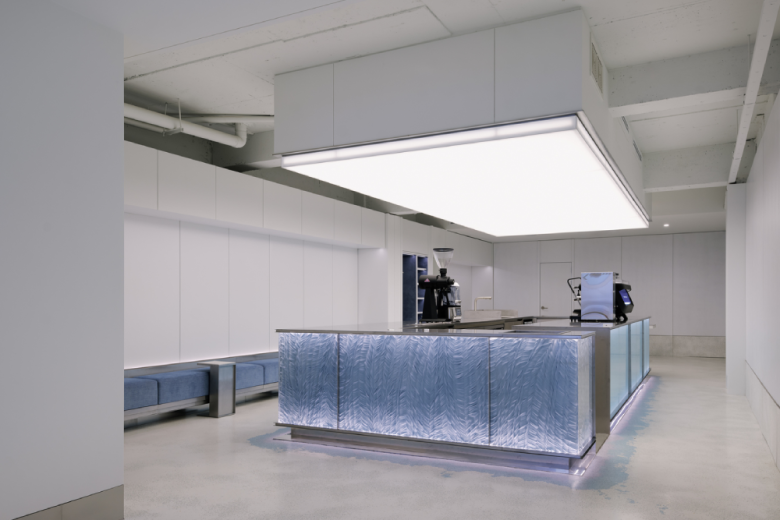
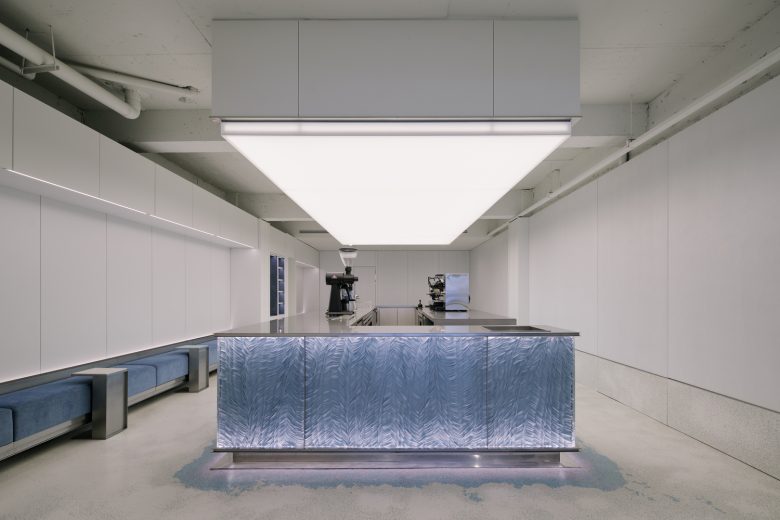
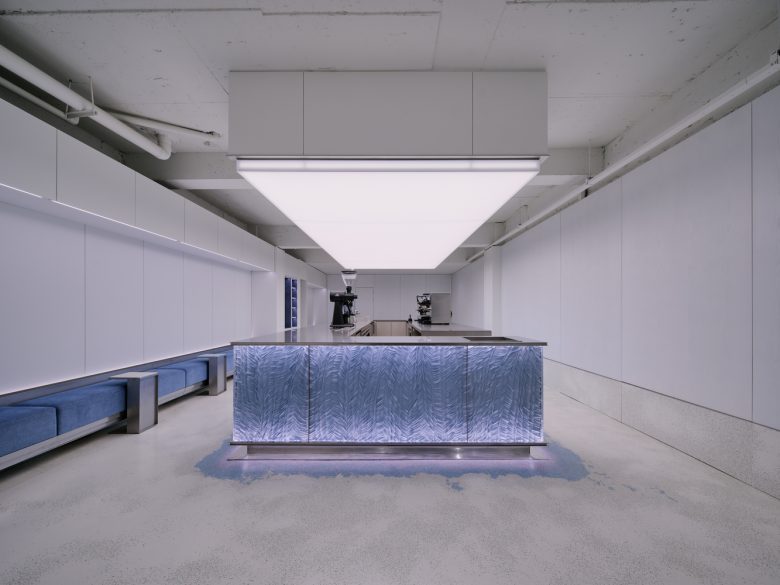
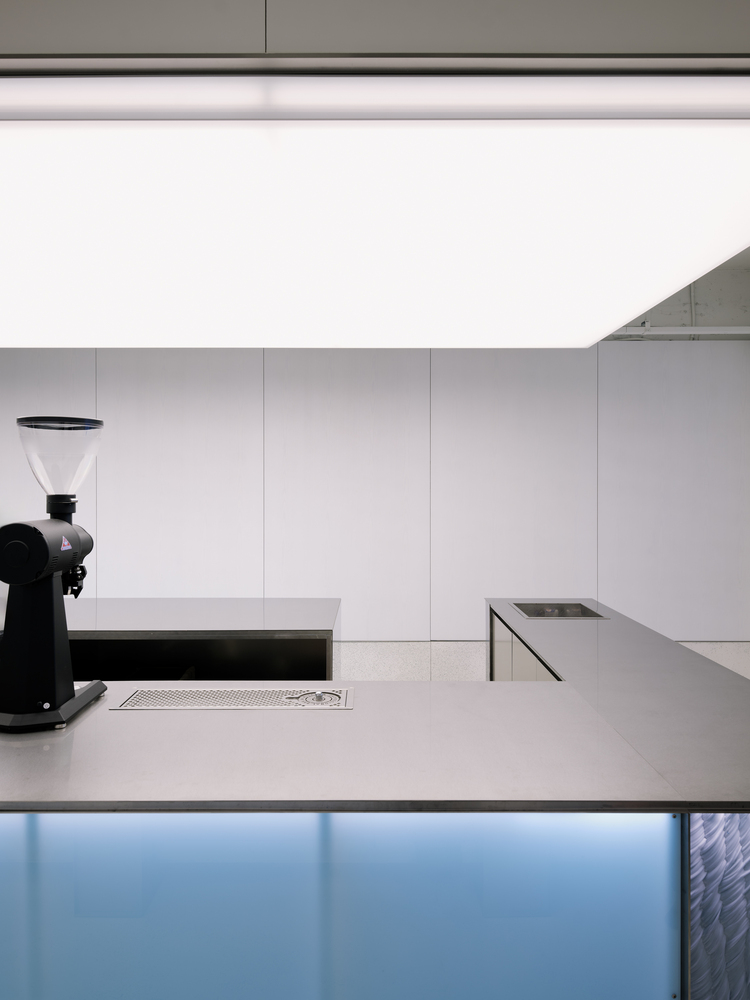
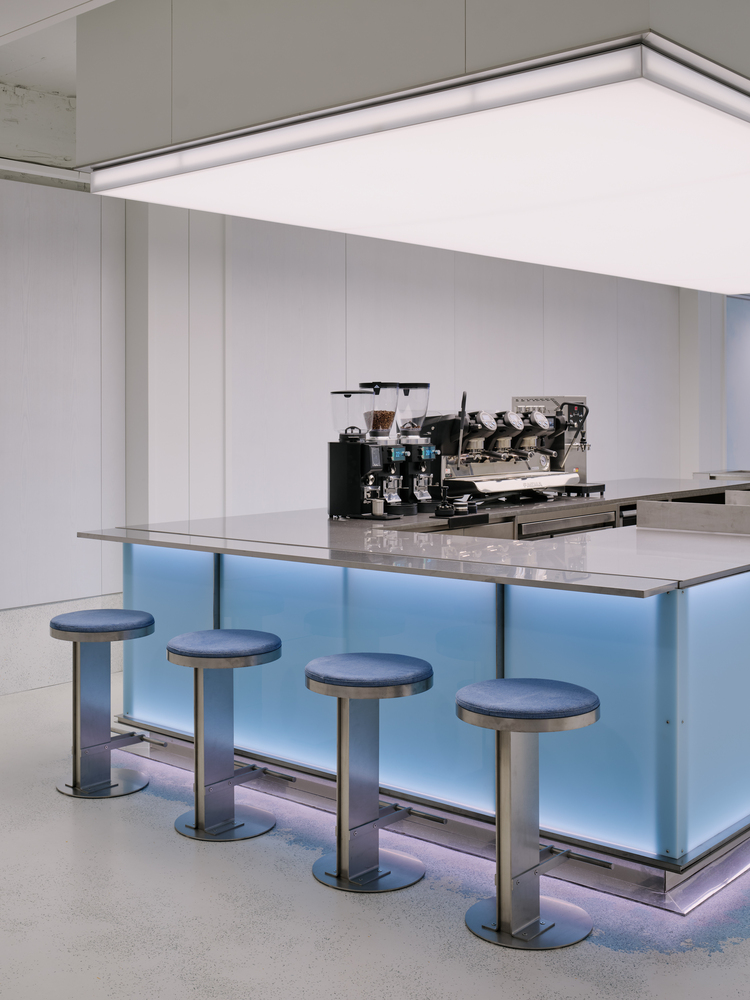
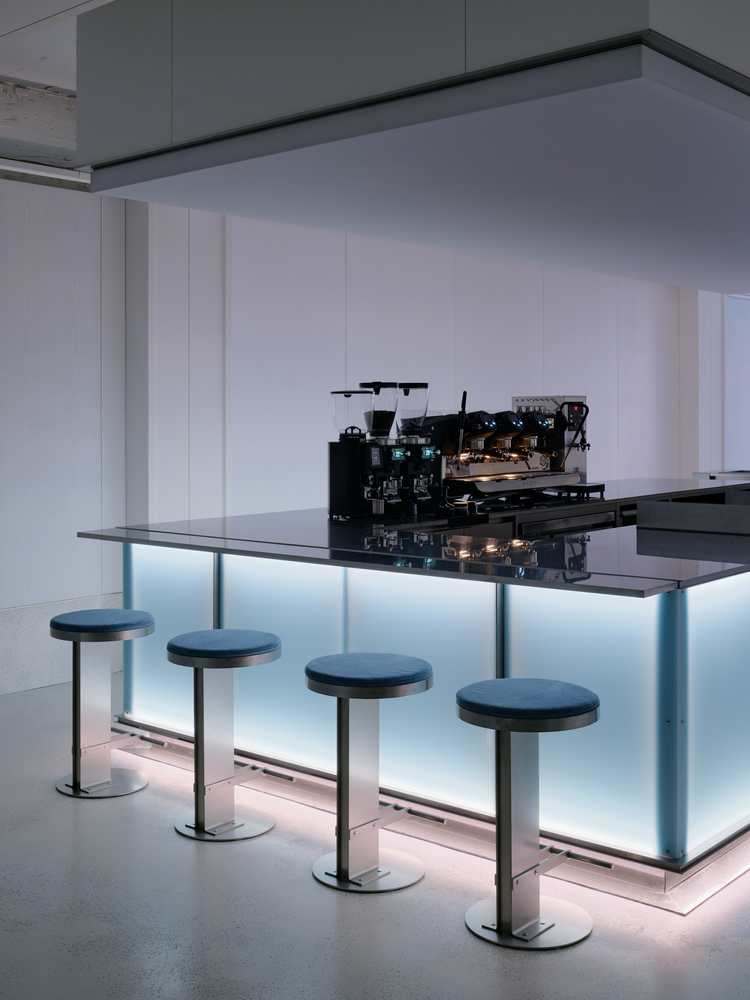
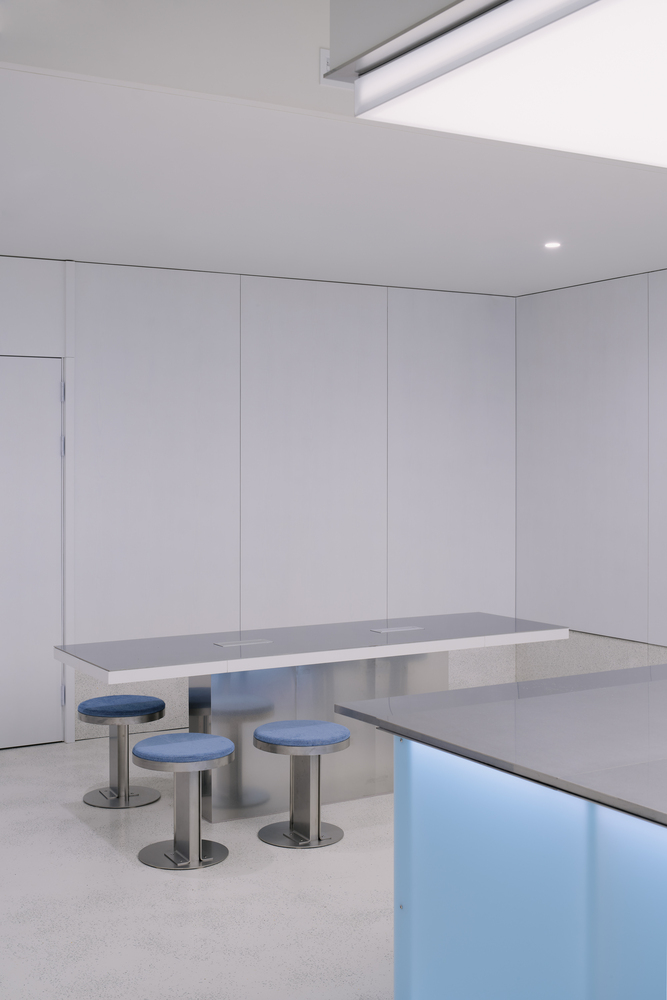
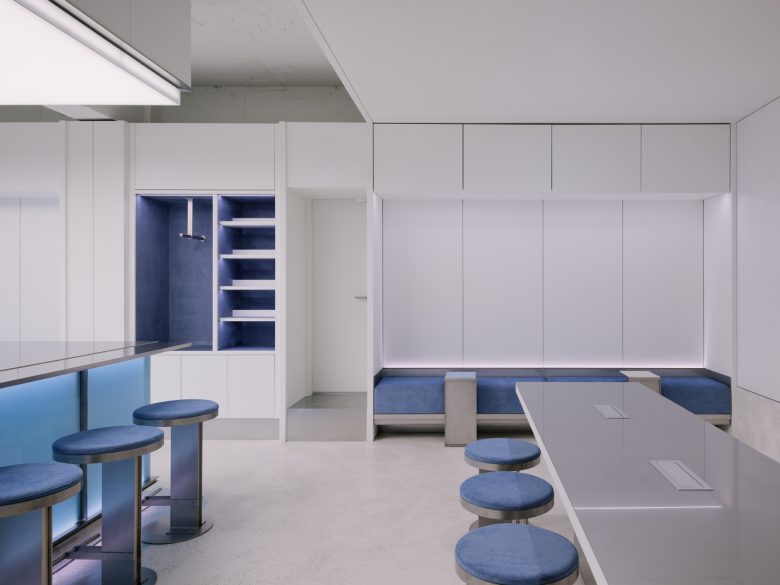
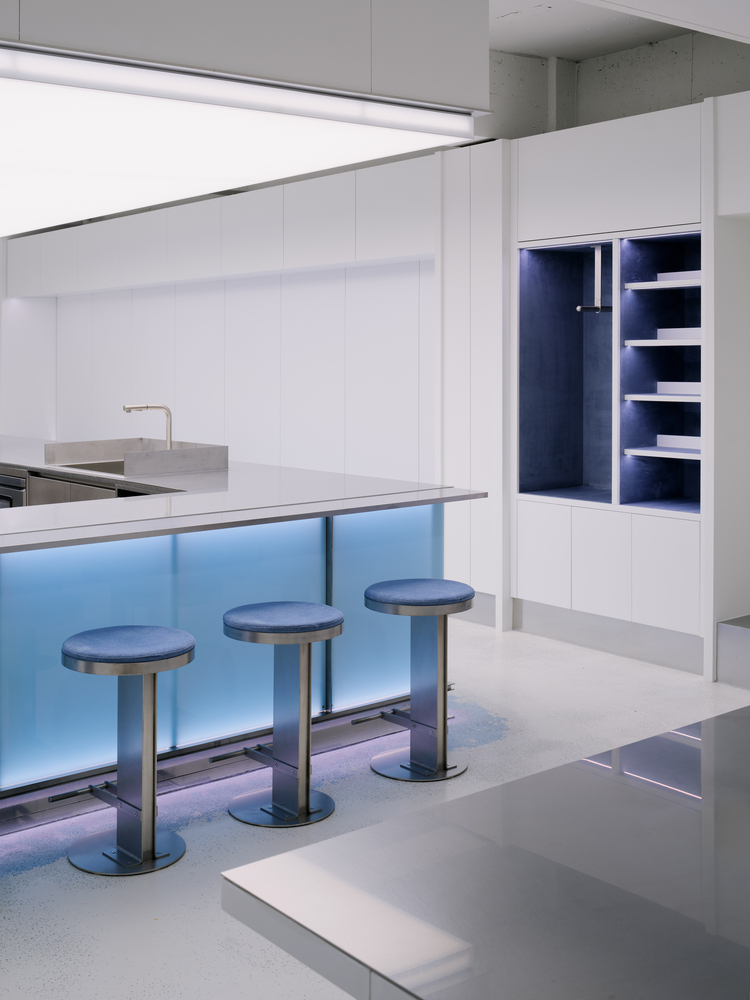
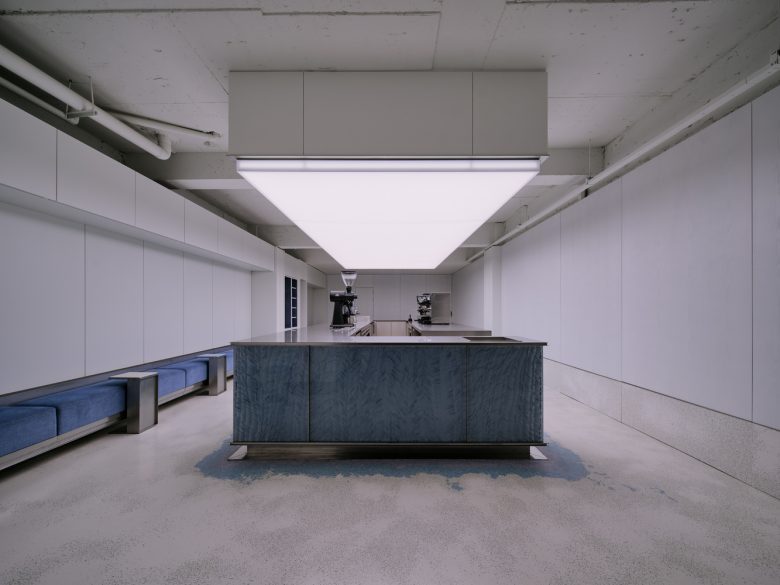
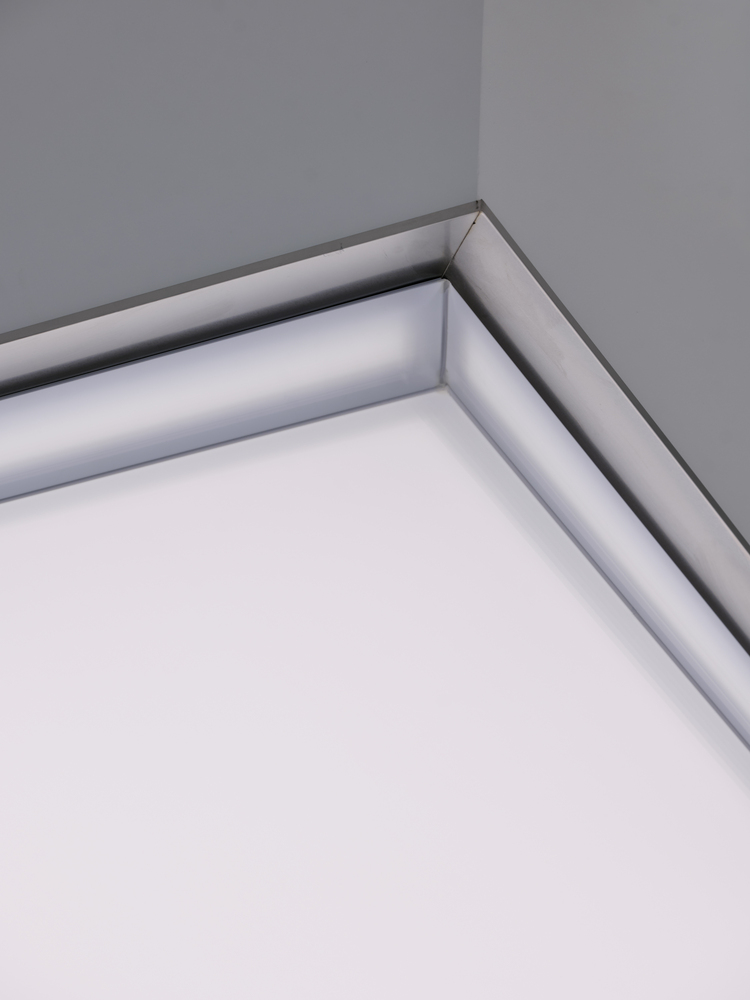
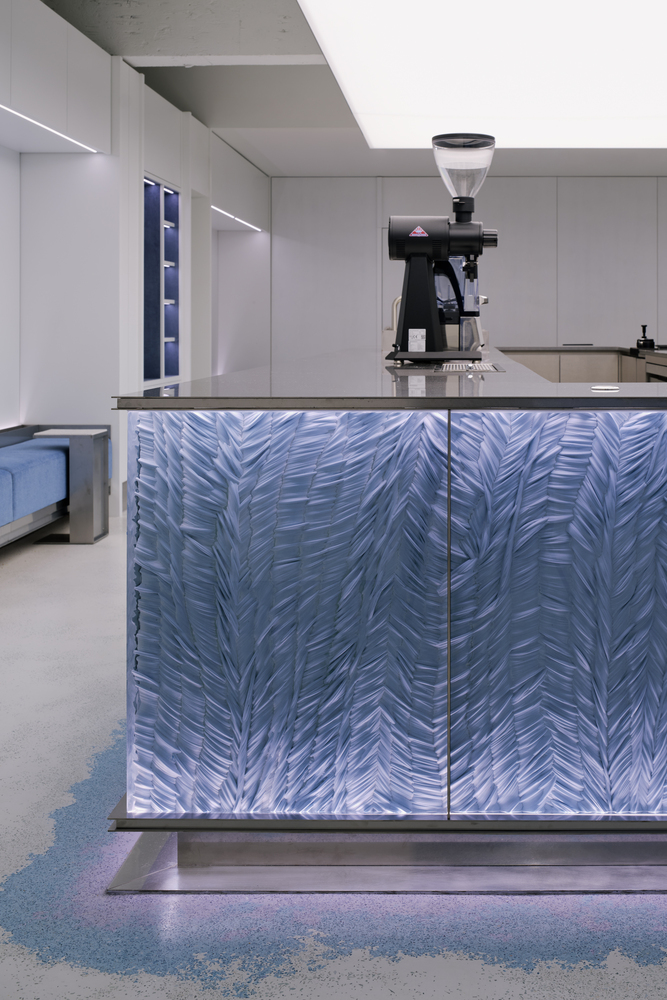
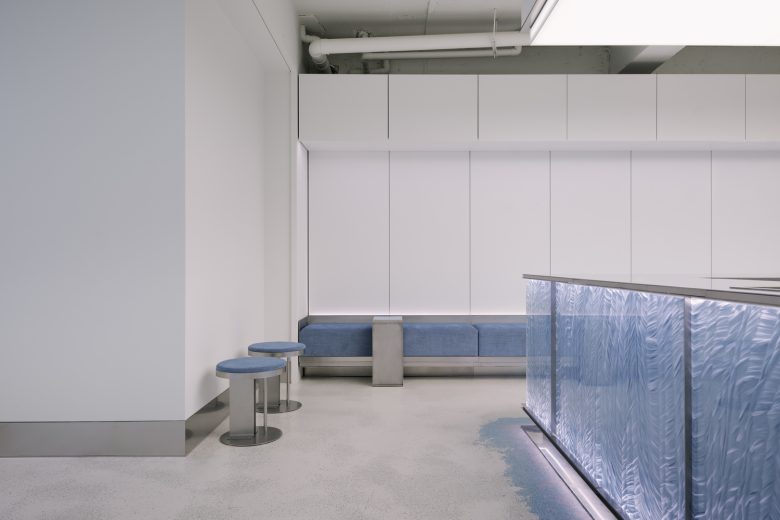
First, the protruding Barrisol fixture suspended above the main bar was conceived to resemble light filtering down beneath the surface of the sea. From this centerpiece, a soft glow radiates outward, filling the entire room and subtly highlighting the barista preparing coffee at the heart of the café. By allowing light to diffuse from both the underside and the sides of the Barrisol, the design conveys to every visitor that this is where the experience of the space truly begins.
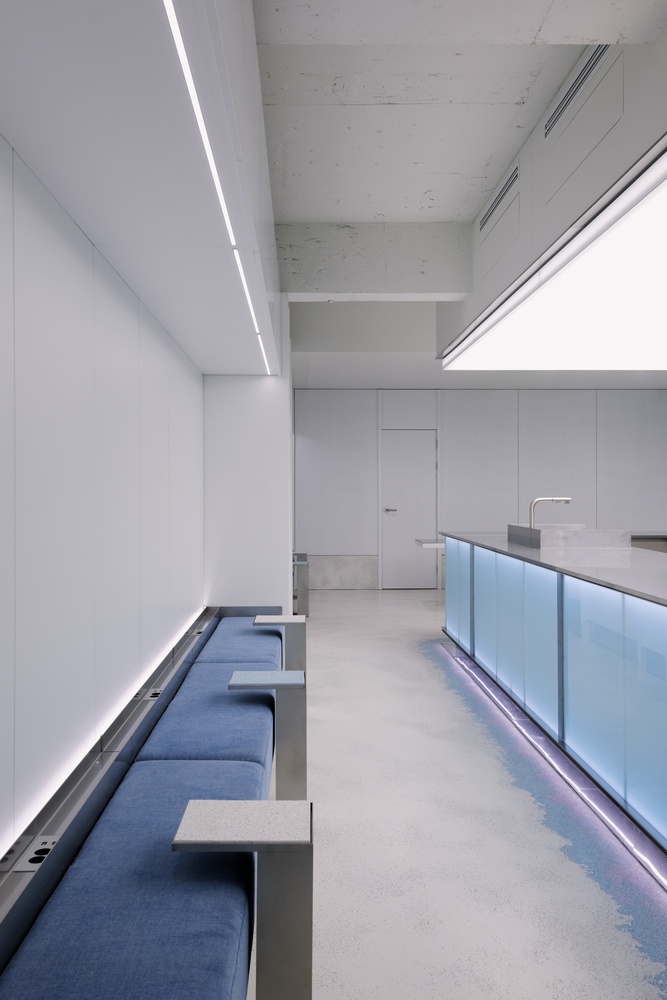
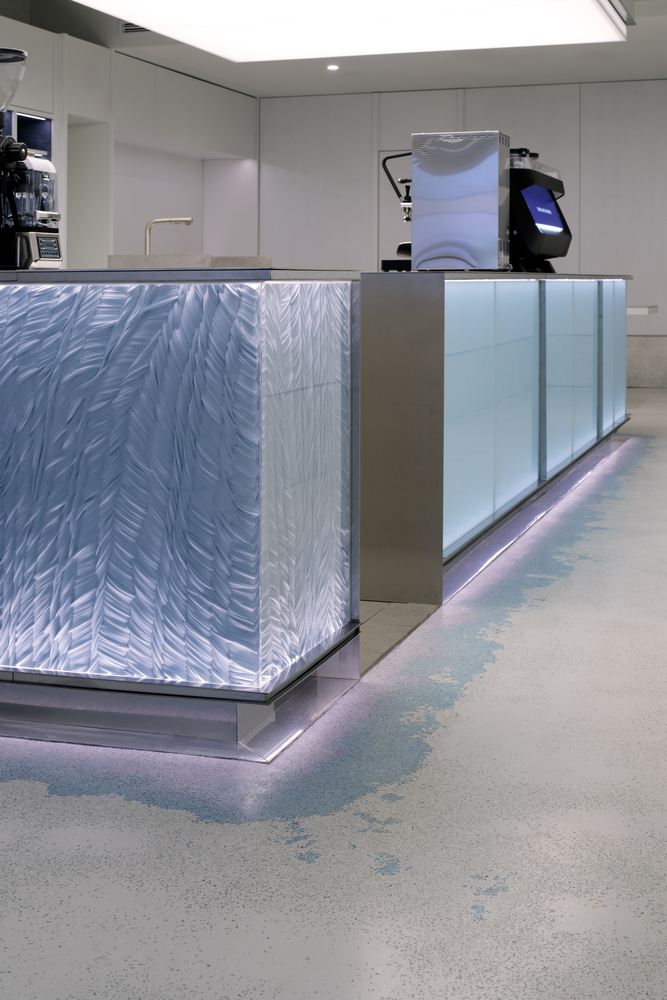
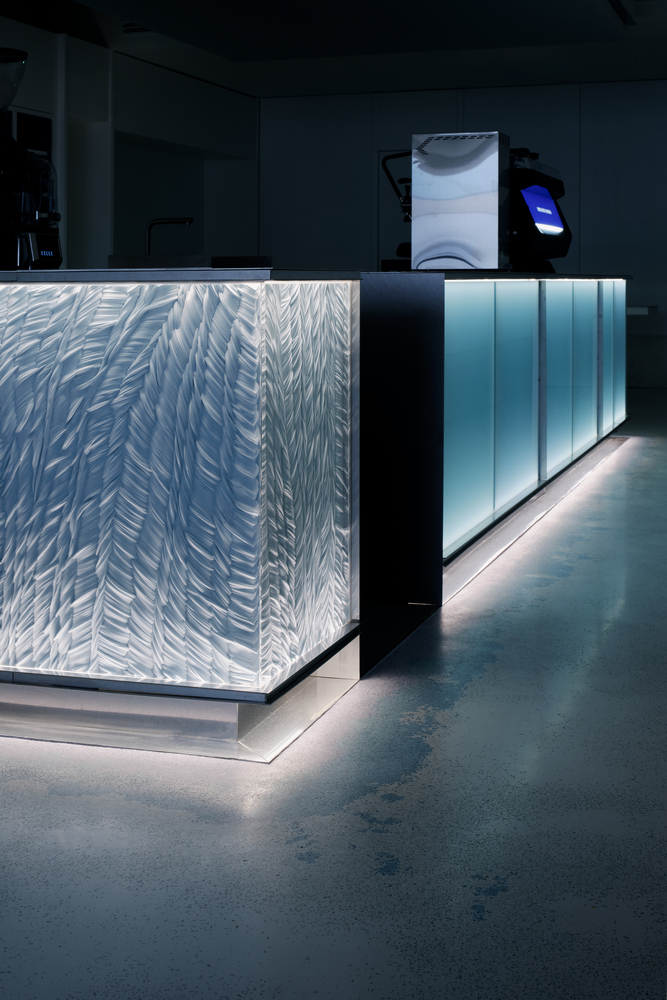
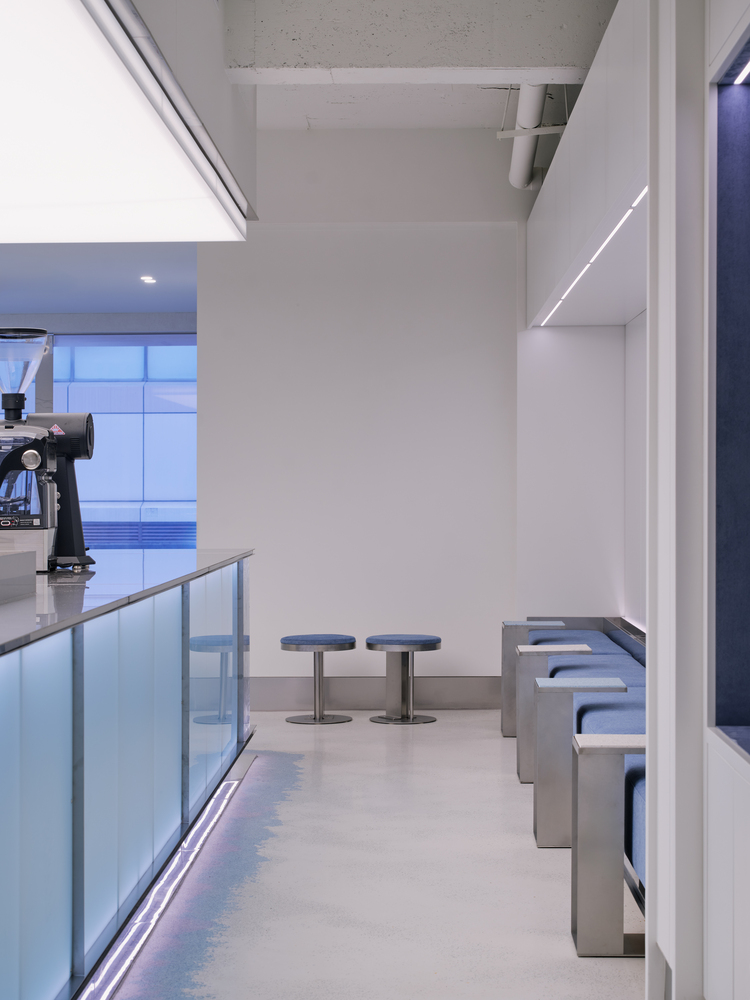
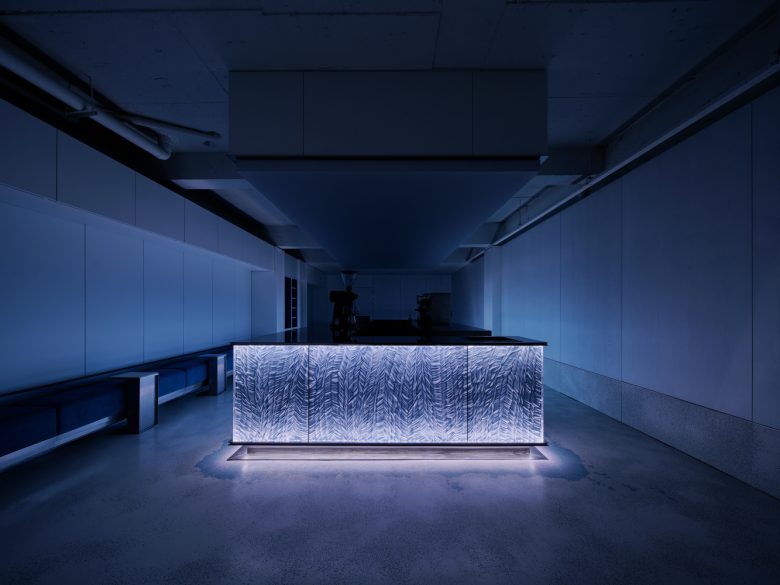
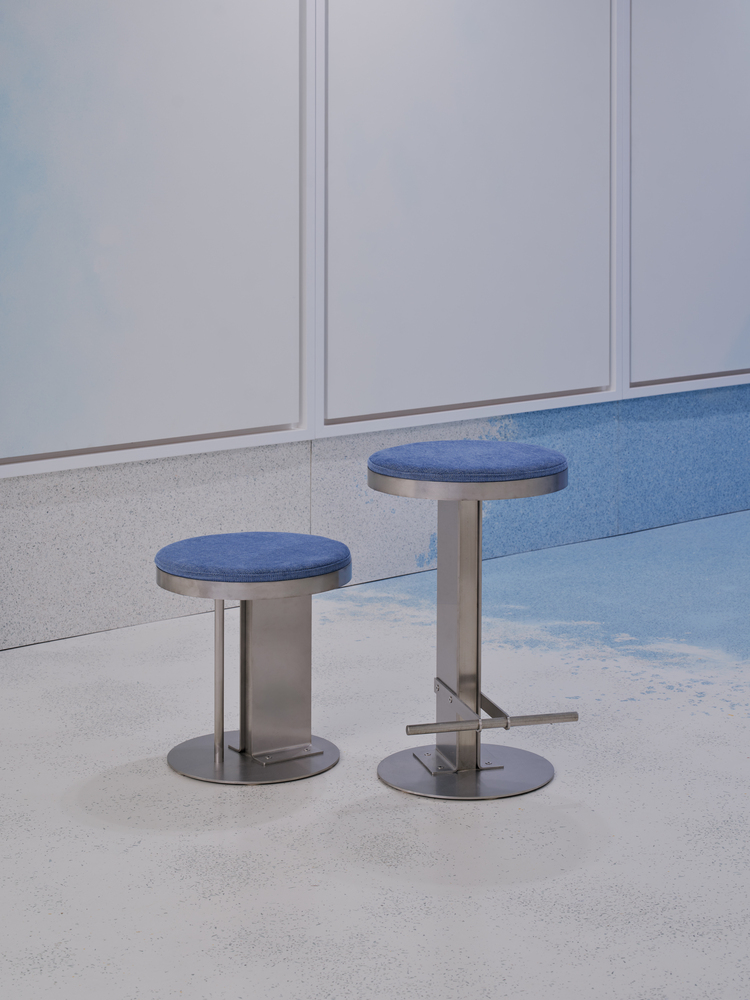
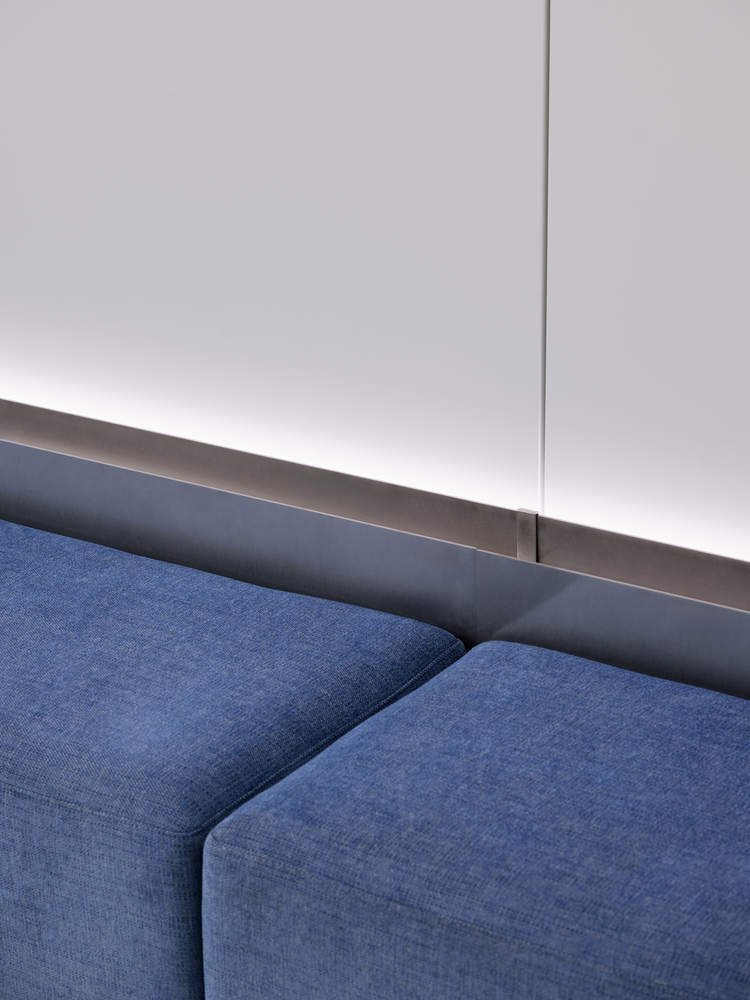
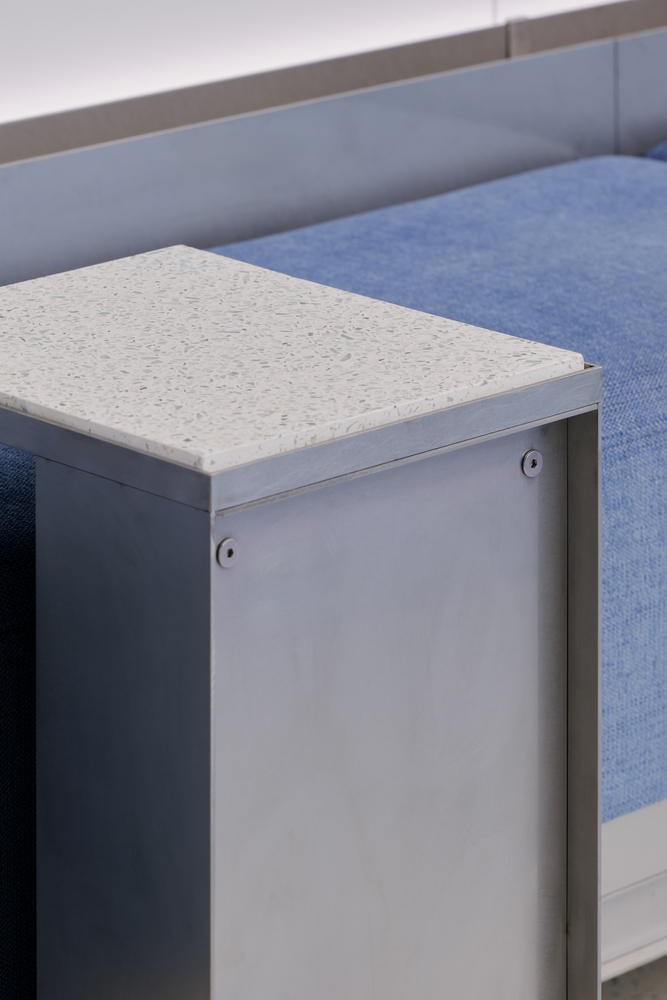
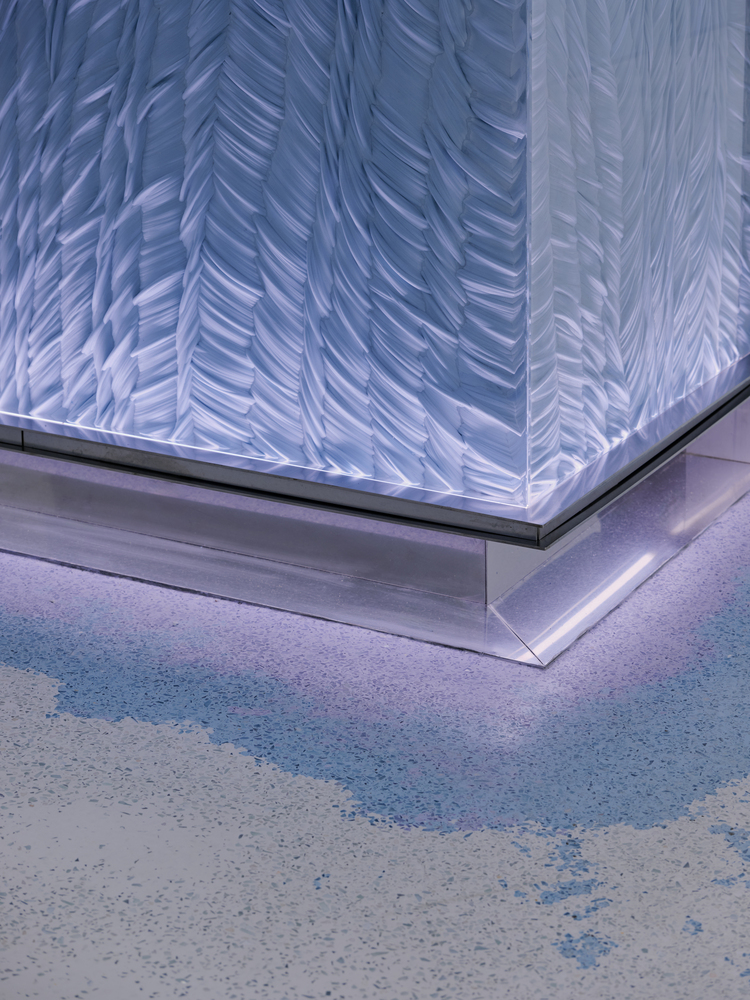
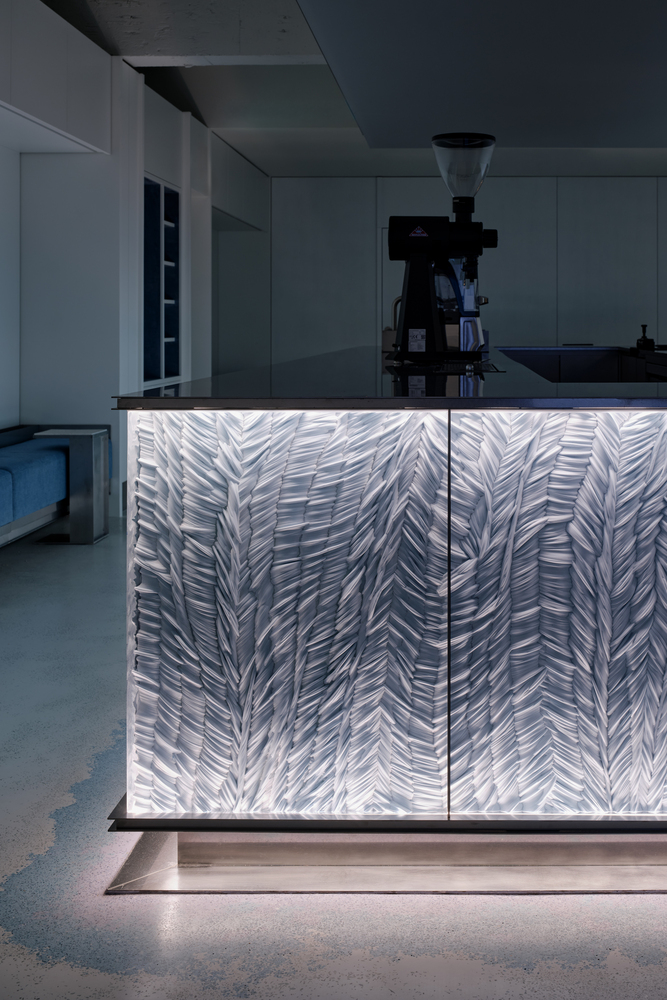
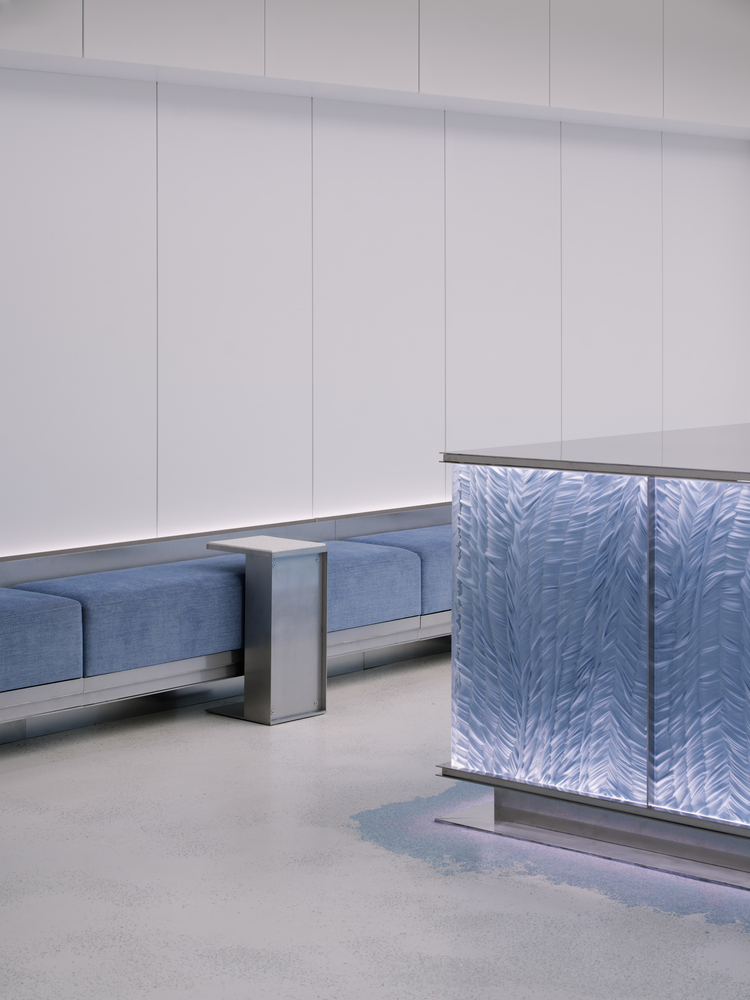
Second, the gentle light cascading from the Barrisol extends onto the front and side panels of the main bar. Crafted by pairing acrylic with Jesmonite, the front surface suggests the luminous surface of the sea holding light, while the addition of satin acrylic introduces both depth and a nuanced vibrancy to the space. Metal finishes are applied to areas other than the acrylic, emphasizing the barista’s sense of professionalism and reinforcing the main bar’s solid, grounded presence.
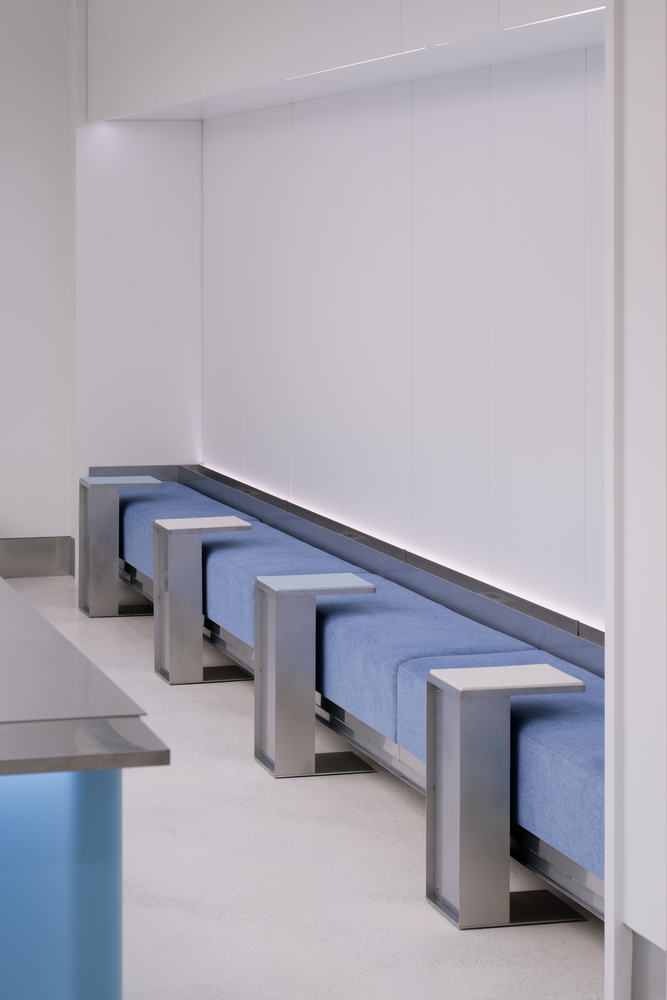
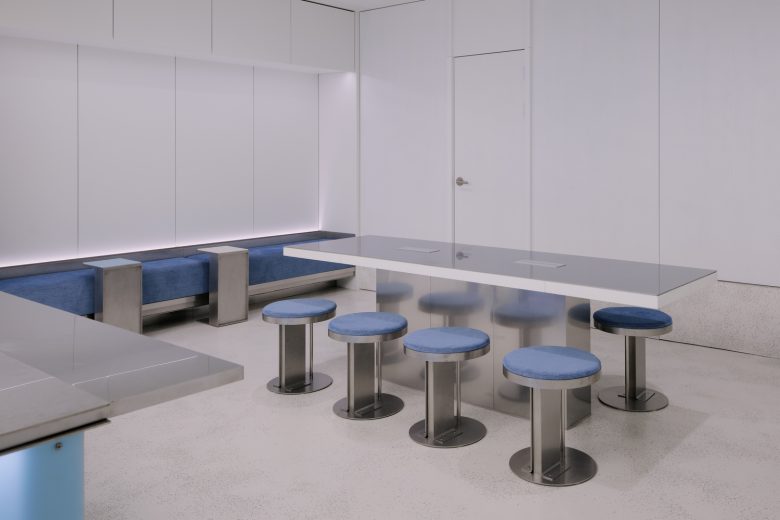
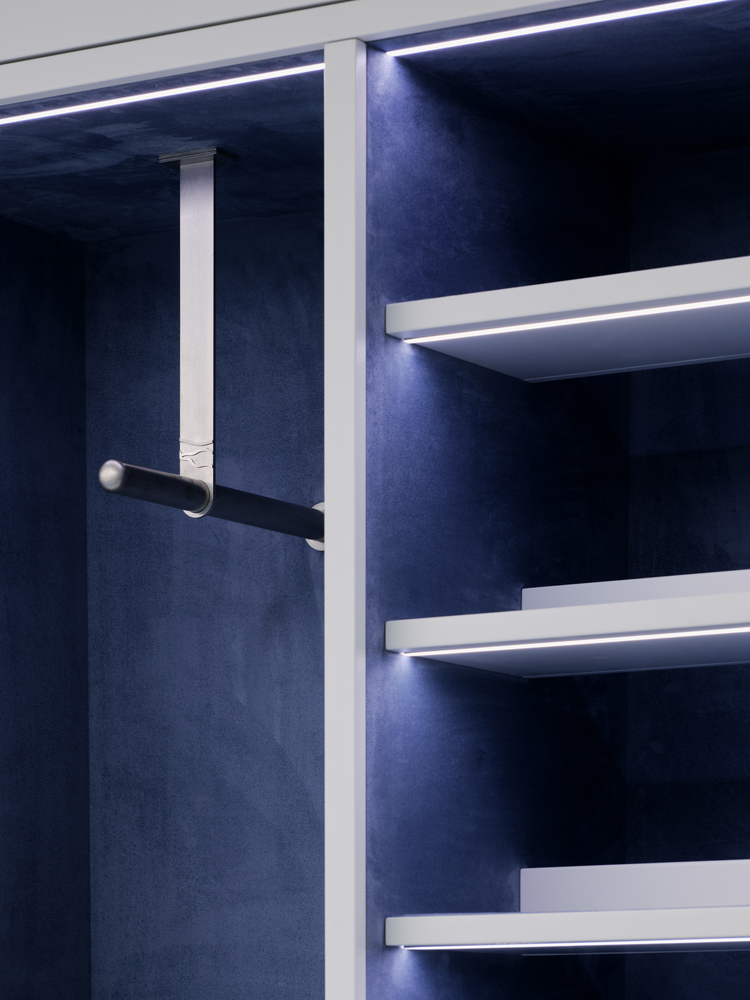
Third, the light emanating from the Barrisol travels along the surface of the main bar, gradually diffusing into the entire space. As these fragments of light blend with the emotions of those who enter, they are transformed into a gentle warmth that penetrates deep into the room. This warmth is more than illumination. It lingers like an emotional afterimage, subtly filling the space with a quiet, enveloping glow.
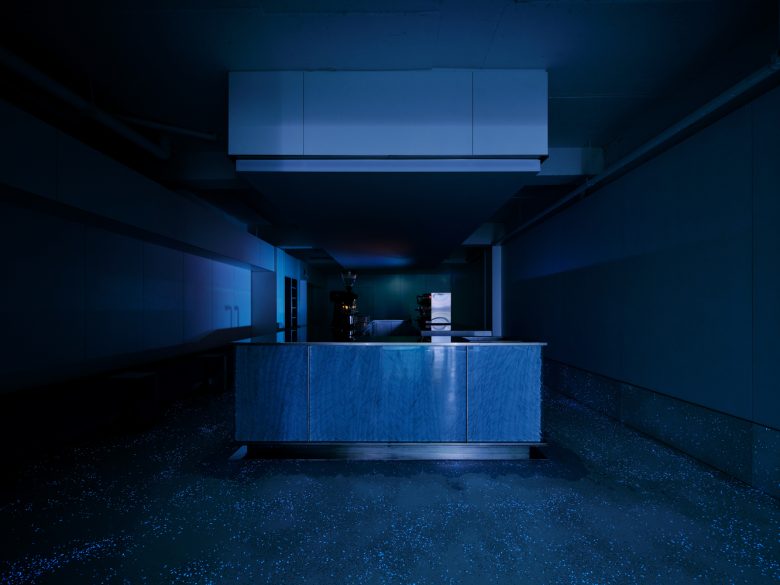
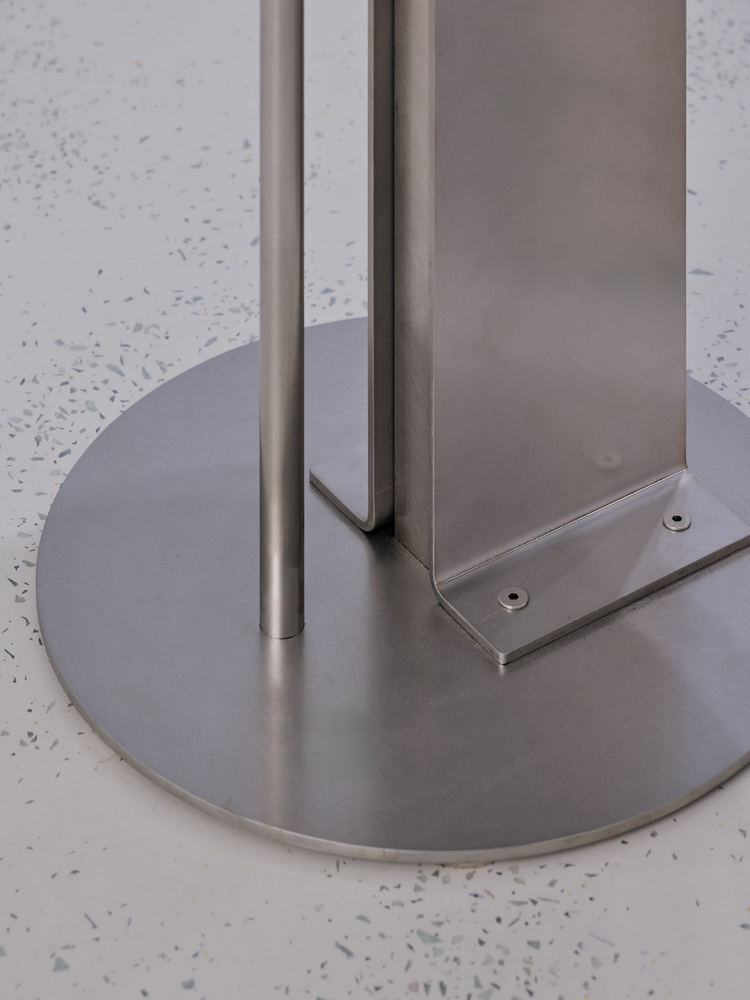
Fourth, the warmth formed within the space finds its way to the epoxy terrazzo floor, where it is held inside the fluorescent chips embedded in the surface. Long after the crowds have gone, the space continues to hold light because that warmth has sunk beneath the floor, allowing it to exhale a gentle warmth even in its most silent hours.
Architects: design by 83
Design: design by 83 / Minseok Kim
Photographs: Donggyu Kim
Add to collection