





Add to collection
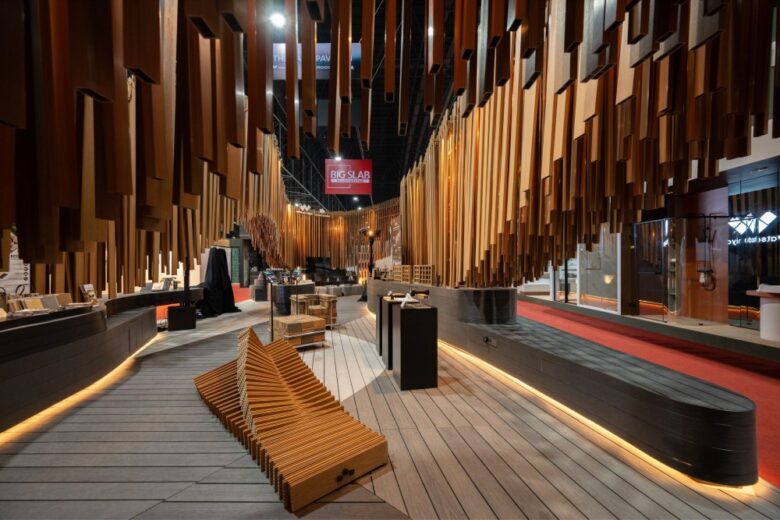
Conceived for ASA Architect Expo ’69, the Watsaduniyom Thematic Pavilion (The Tenth Light Pavilion) begins from a premise often ignored in temporary architecture: that a pavilion should not end as debris. Rather than treating the exhibition as a singular moment of spectacle, the project frames it as a reversible episode—an assembly designed to return, intact, to the economic and material life from which it came.
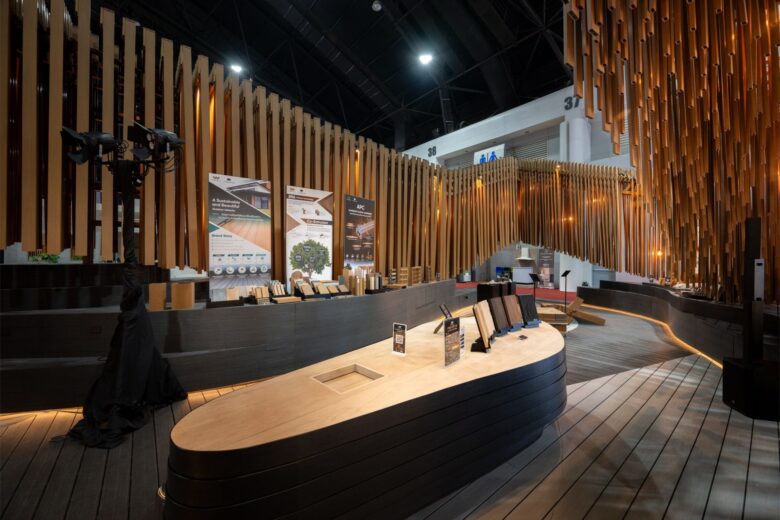
The brief was therefore clear, if demanding. Beyond branding and visibility, the pavilion was required to preserve its components for reuse after the event. In response, the architects chose to work exclusively with the company’s own primary products: APC (Aluminium Plastic Composite) and WPC (Wood Plastic Composite), both recyclable materials already embedded in Watsaduniyom’s supply chain. The pavilion’s architectural language emerged directly from this decision. Instead of introducing foreign finishes or bespoke fabrication, the project relied on the disciplined repetition and orchestration of standard units to produce spatial effect.
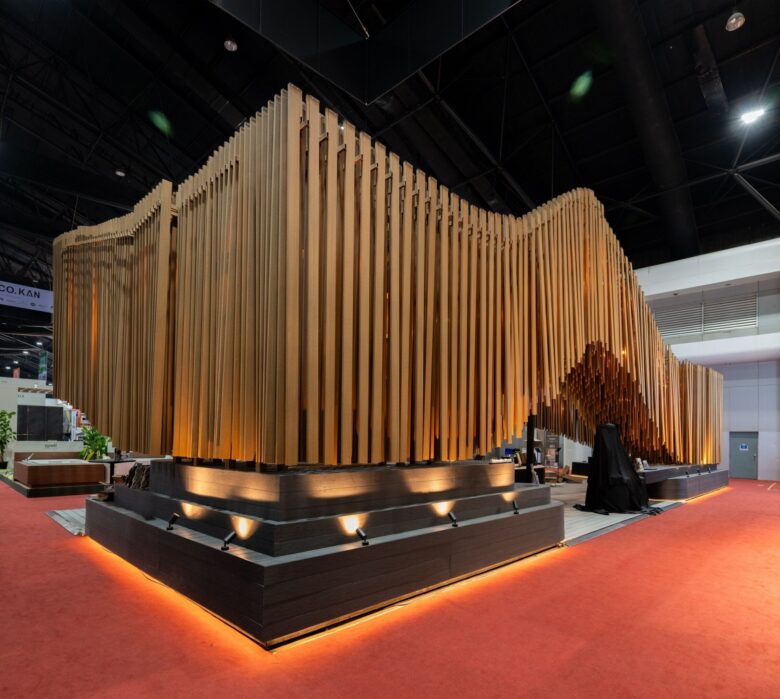
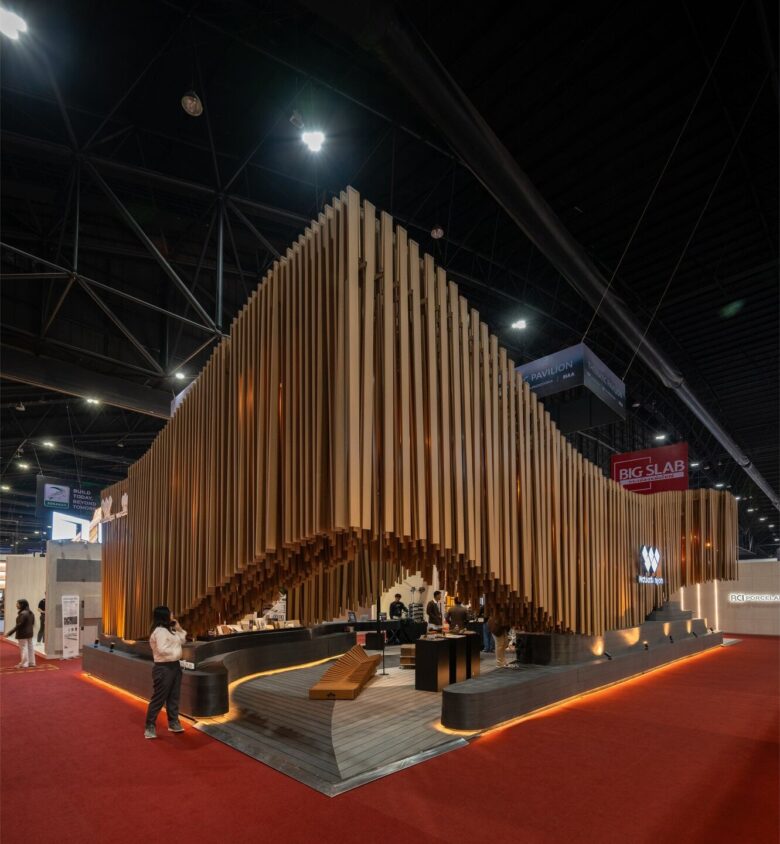
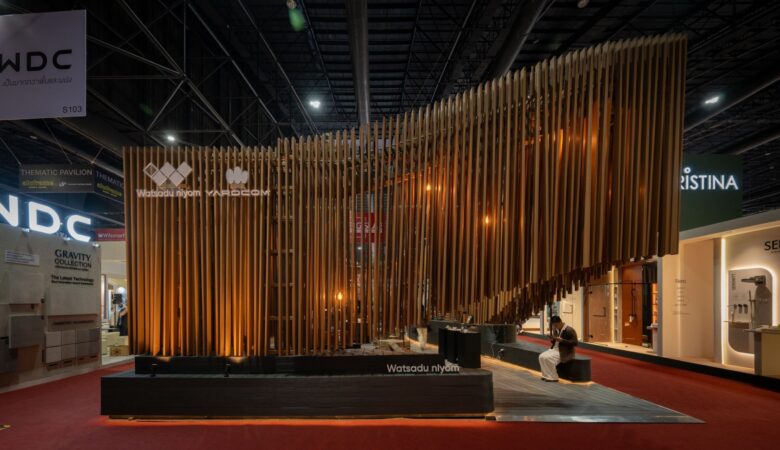
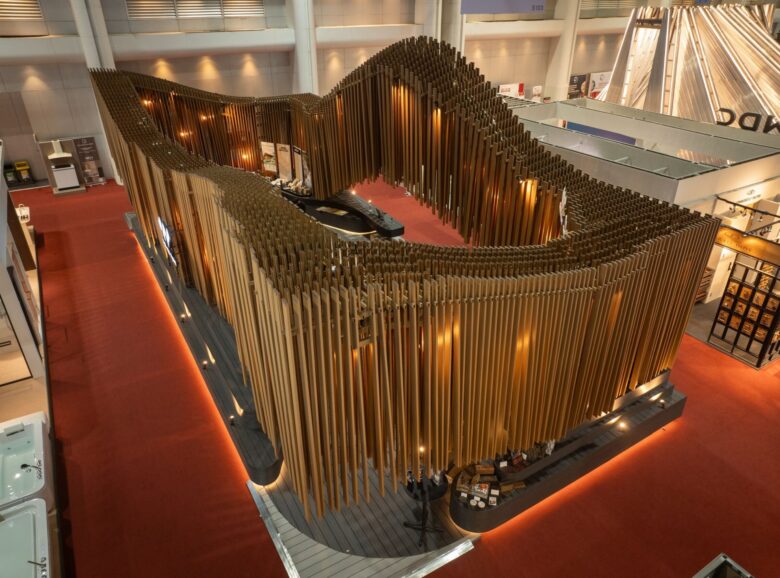
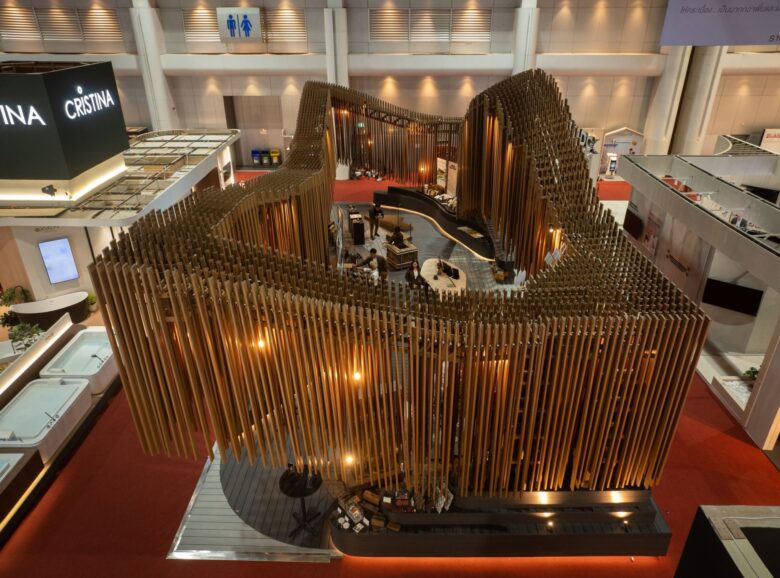
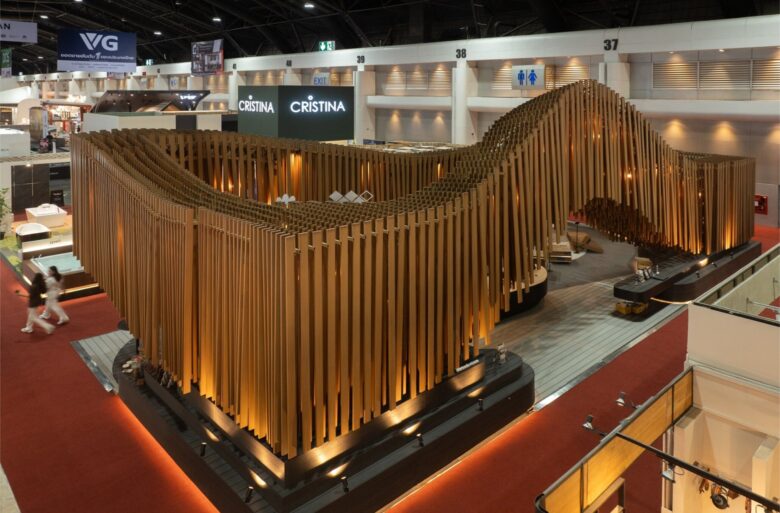
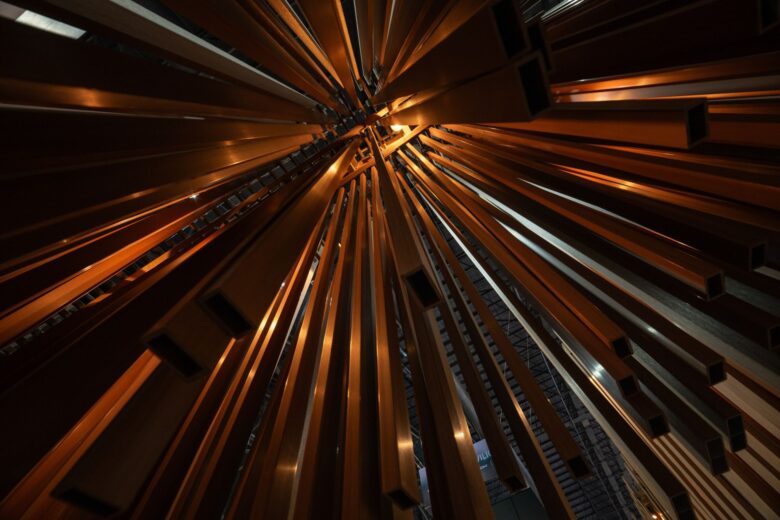
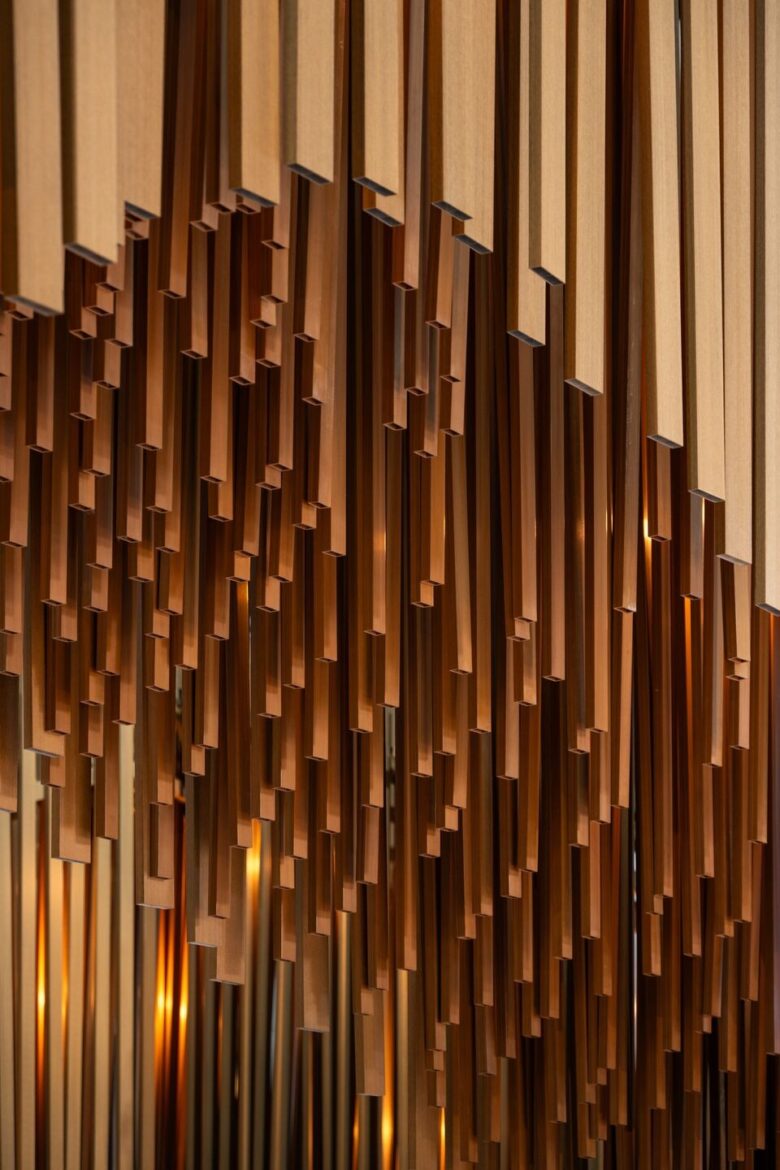
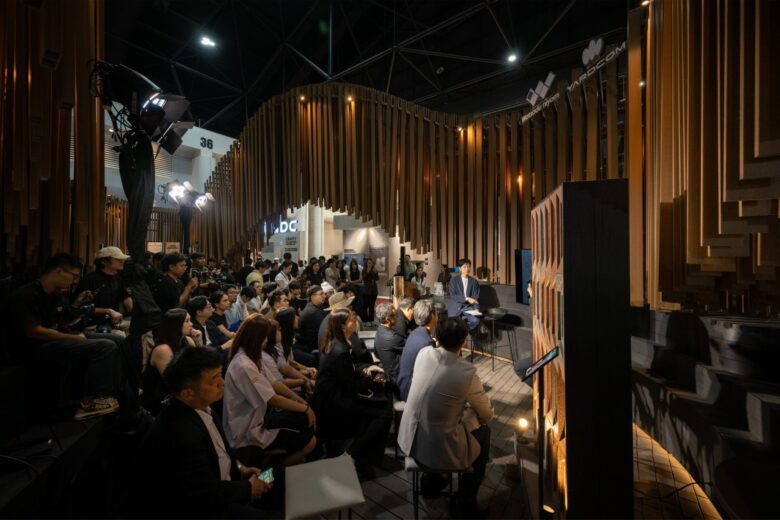
A total of 2,751 elements—621 APC pieces and 2,130 WPC pieces—were suspended in a hanging system, forming an overhead structure that defines enclosure without resorting to heaviness or permanence. The resulting space is neither fully inside nor outside; it is a calibrated threshold of filtered light, shadow, and movement. Here, architecture operates through atmosphere rather than mass, achieved through a tectonic logic of assembly, disassembly, and recovery.
The pavilion’s silhouette recalls a drifting luminous curtain—an image later aligned with the brand’s tenth anniversary and the marketing narrative of aurora-like phenomena. Yet the more consequential resonance lies not in metaphor, but in method: the project demonstrates how architectural expression can arise from the ethics of material continuity. Once the event concludes, the components are not discarded or degraded. They are dismantled, preserved, and returned to circulation—capable of being sold and used again as ordinary products.
In this sense, the Watsaduniyom Pavilion proposes a quiet but radical proposition for contemporary : that temporality need not imply waste, and that a pavilion can be both spatially memorable and materially accountable.
Designed by HAA STUDIO
Photography by Rungkit Charoenwat
Add to collection