


Palace Coffee by Kerry Kounnapis Architecture Practice
posted by retail design blog on 2026-06-18
Melbourne
Add to collection
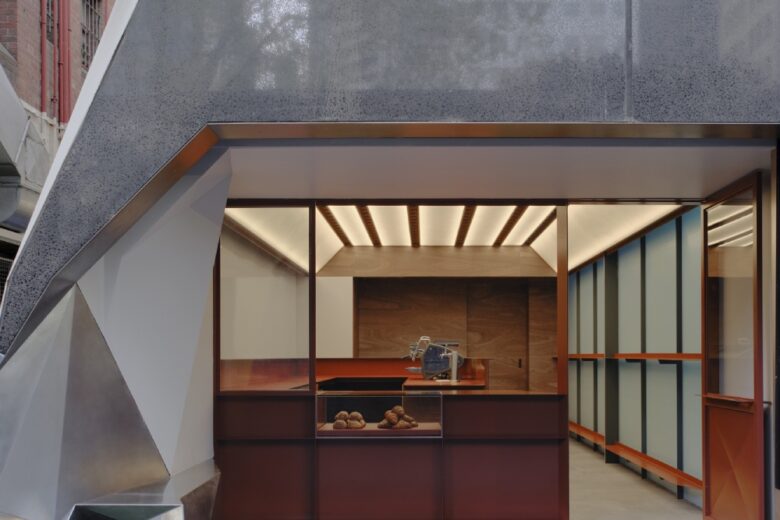
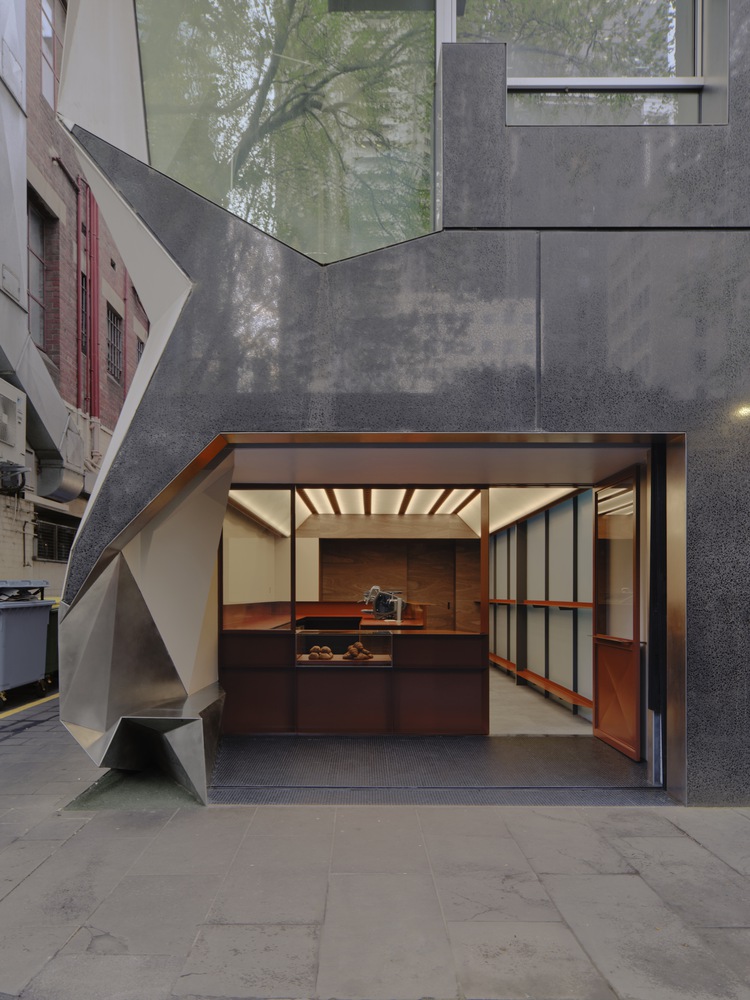
Blink, and you’ll miss it. It’s 8:25 am on a Thursday, and there’s a line of people pouring out of Palace Coffee. Located down a Melbourne laneway at the base of Monaco House, it faces the Melbourne Club’s fortress-like brick wall. It’s an espresso bar, no seats, standing room only.
The architecture is recessed from the street, offering patrons a space to wait, a space to chat. It’s an intentionally devised threshold between the boundary of the urban laneway and the interior architecture; the people waiting become the symbol for passers-by, to capture their curiosity and lure them towards Palace Coffee. The spaces bleed into one another, supercharging the laneway with people.
The espresso bar opens only on weekdays, offering a moment of joy, a moment of pause from the mundane 9-5 working day. Although only small in footprint, it’s known to serve 800 cups of silky-smooth coffee each day; for a space so compact, it punches above its weight.
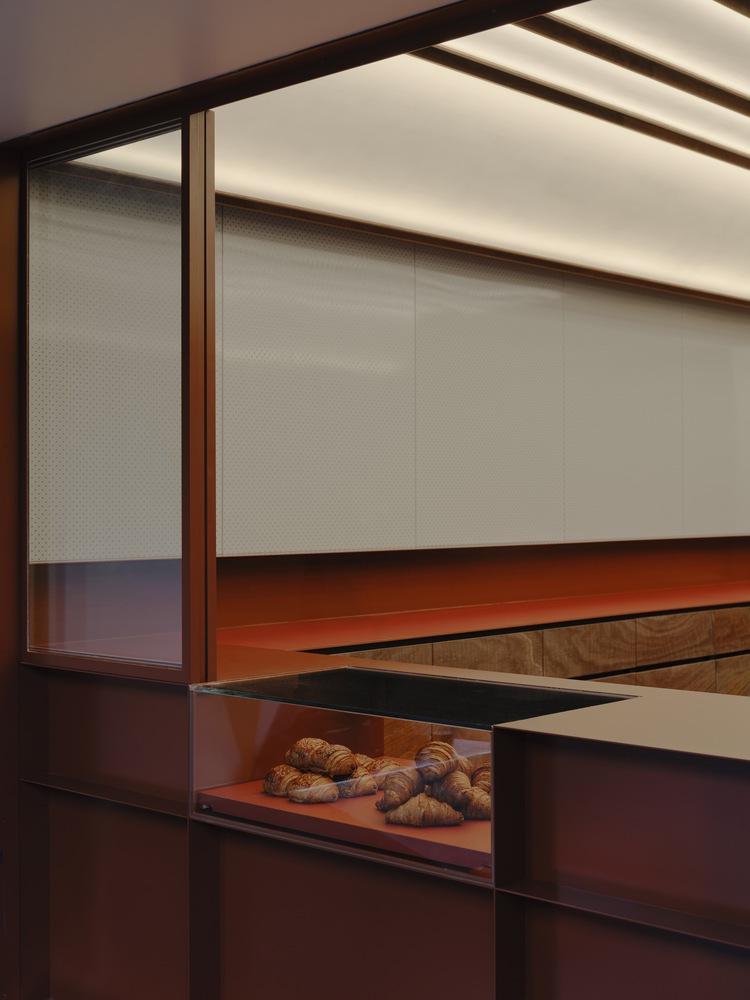
The sculptural serving window is both façade and worktop; its vitrine filled daily with golden pastries naturally becomes the serving spot for takeaway; its sliding glass doors create a large opening to the street, intended as the first interaction between staff and caffeine-craving customers. Detailed like a Donald Judd sculpture, the bench is seamless between the interior and exterior, a common design device adopted by the practice.
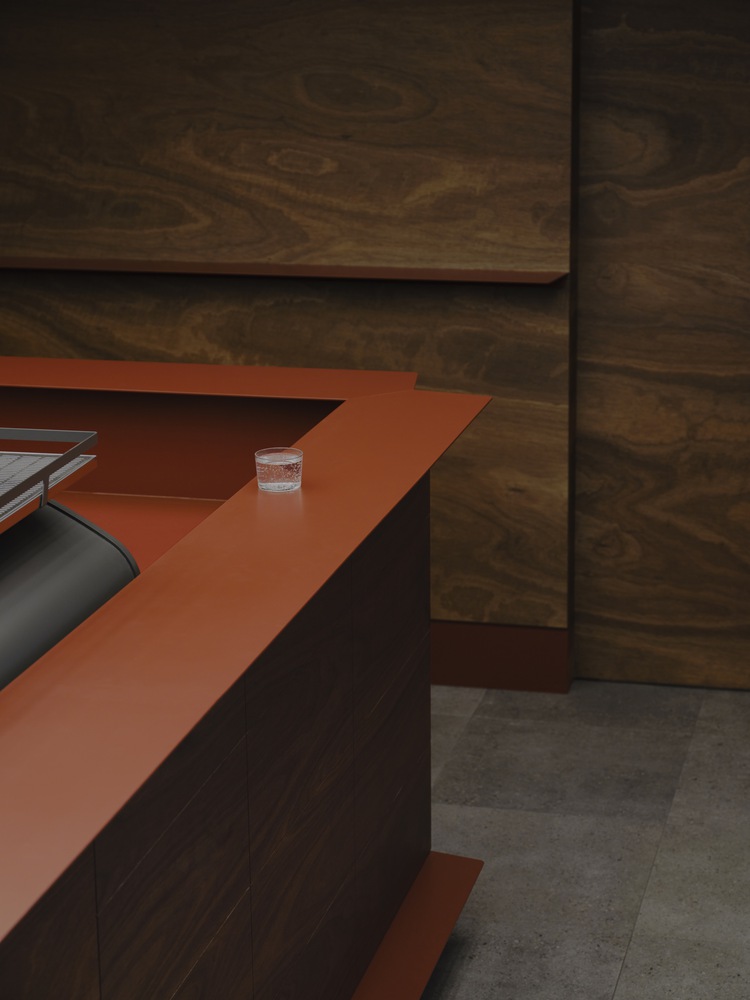
If you have your coffee in, it is served to you on the higher benches with a glass of sparkling water. Walking by, you’ll see it filled with office workers getting a quick fix, an elbow on the bench, and a shoe on the footrest; an idea synonymous with Milanese espresso bars, it’s in and out.
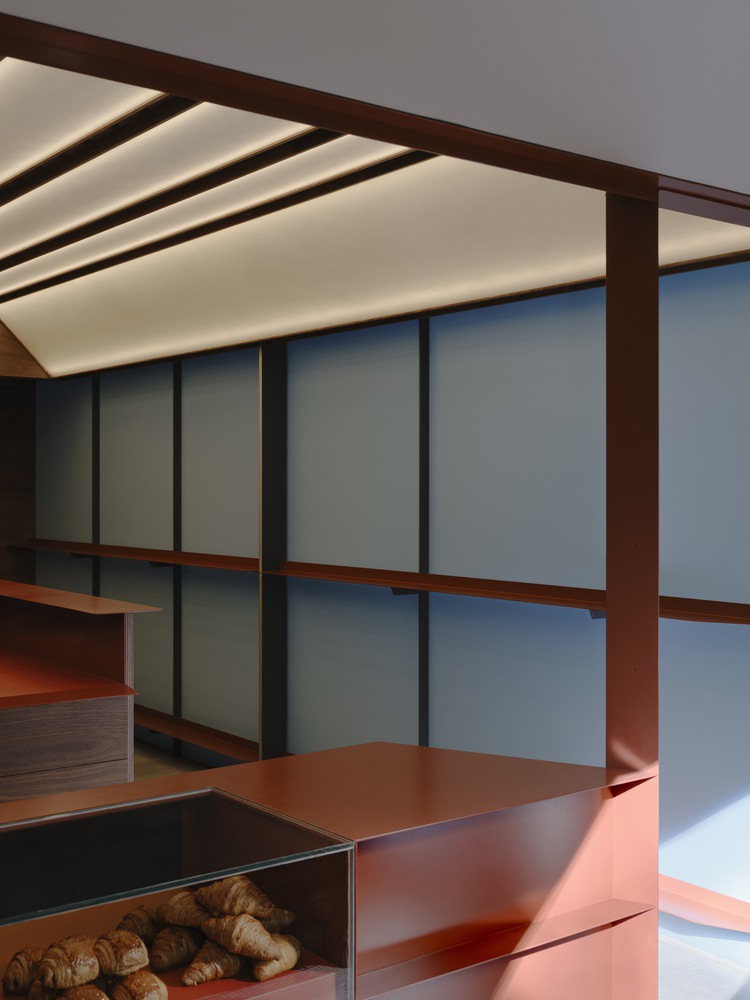
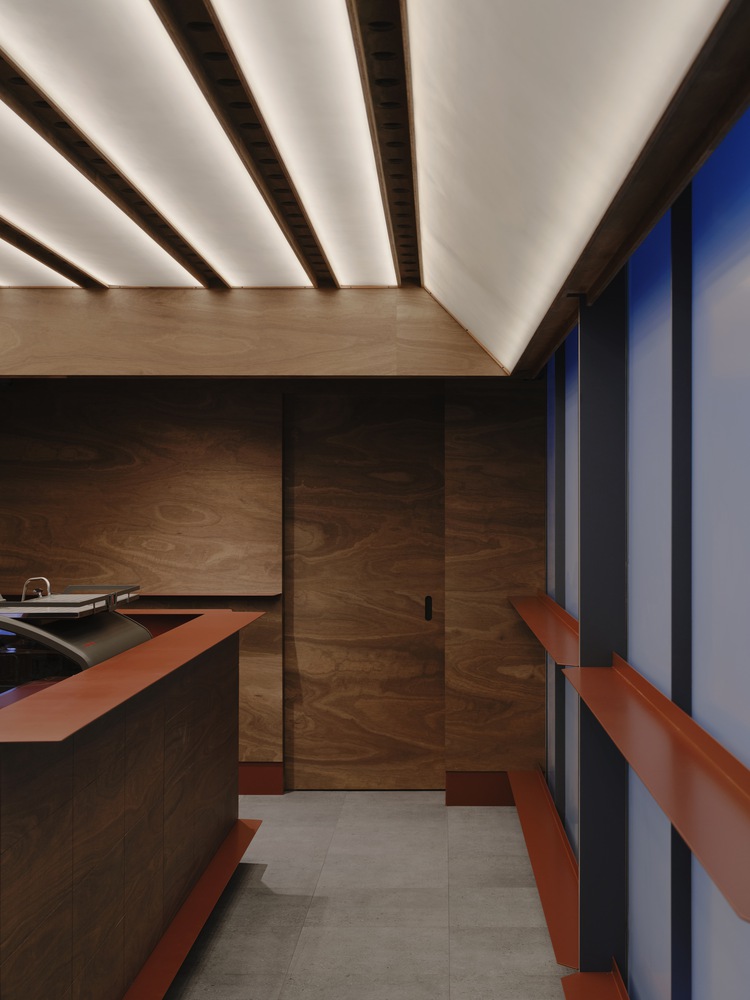
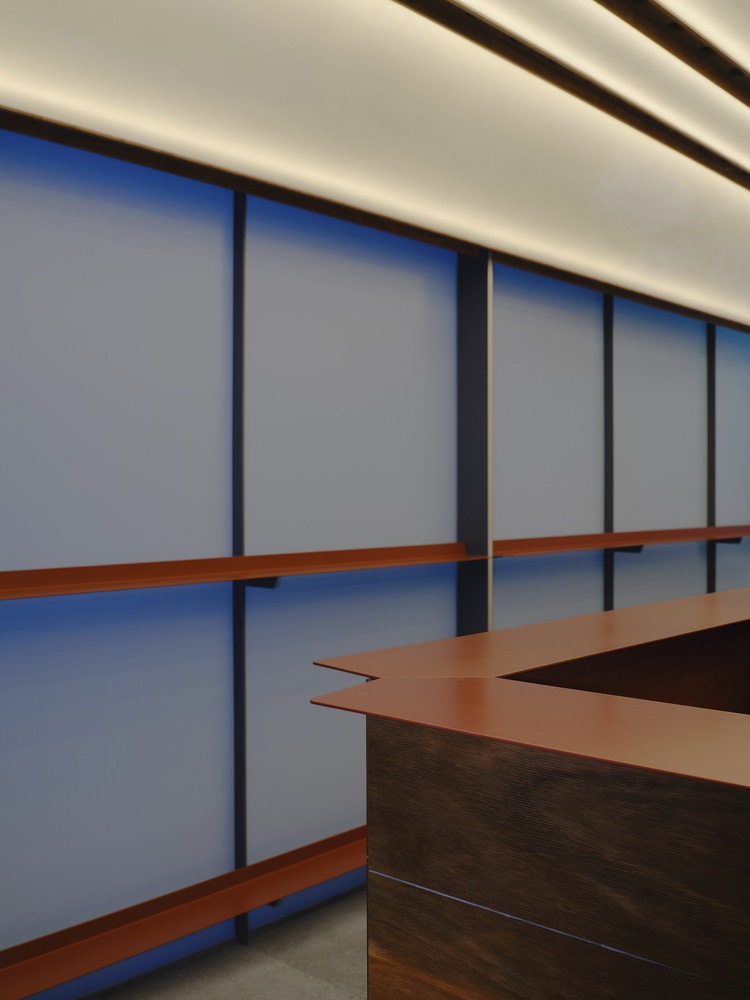
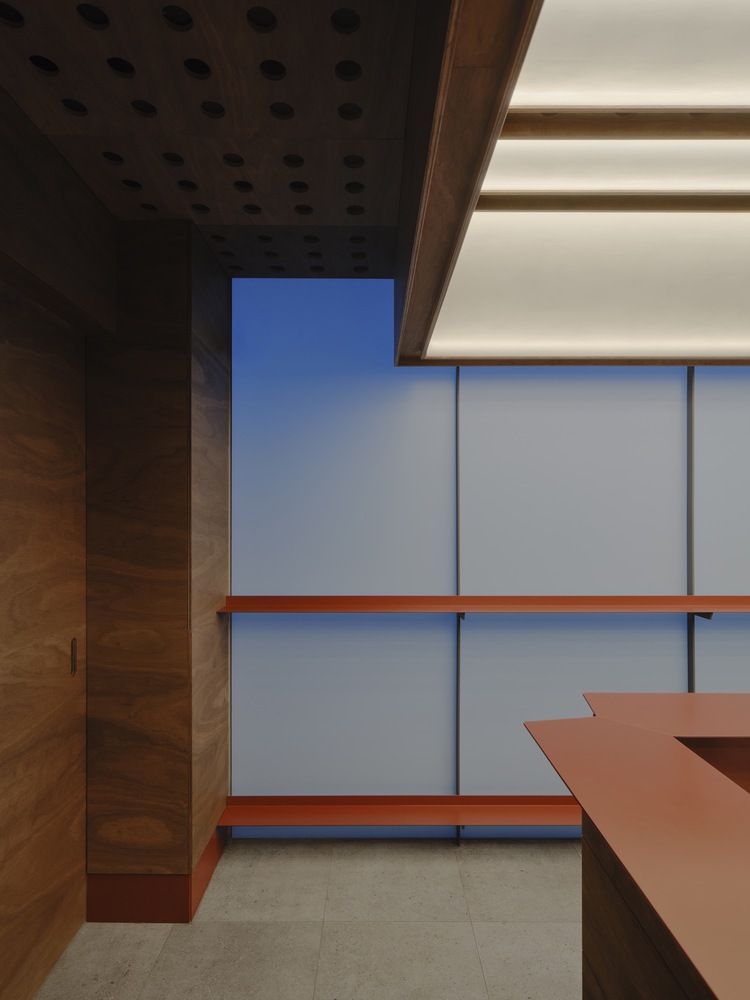
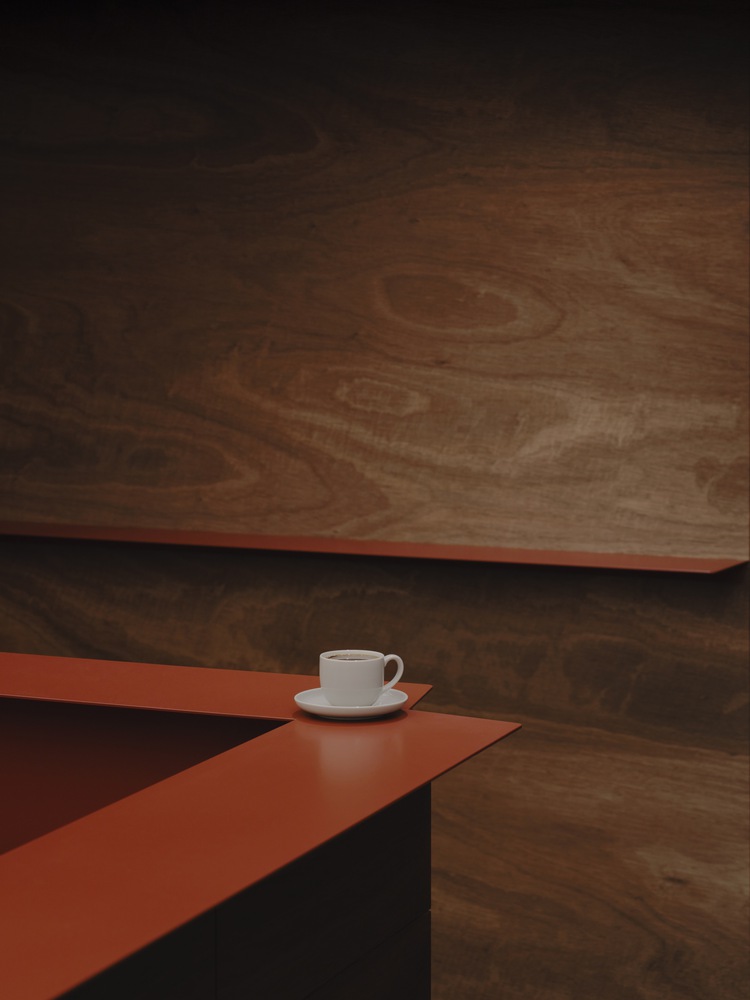
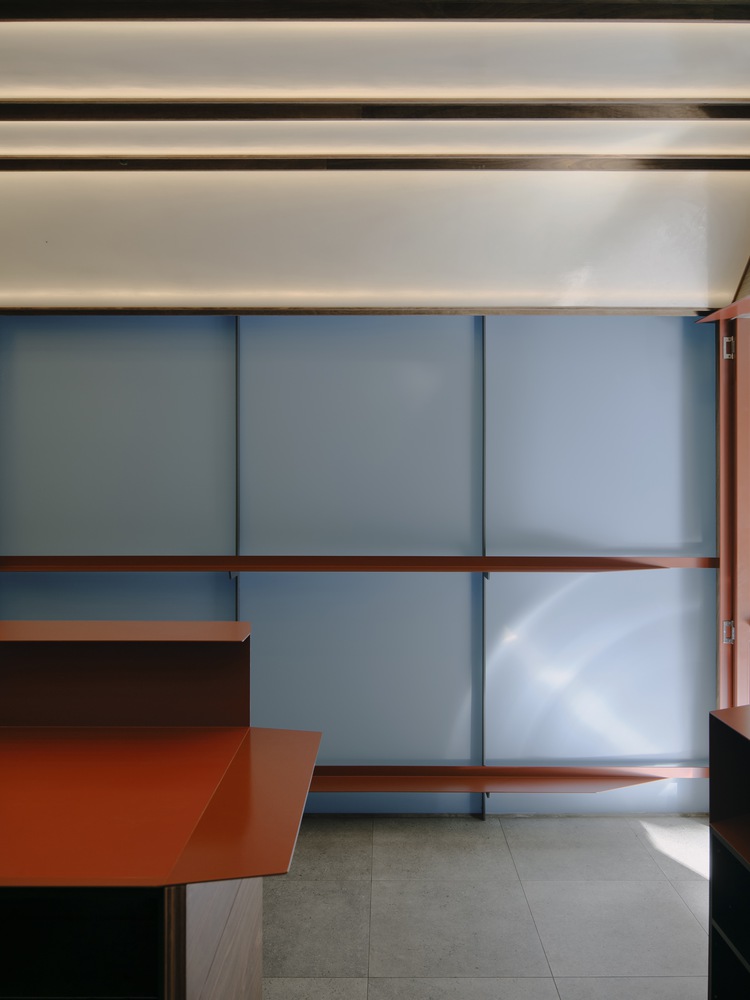
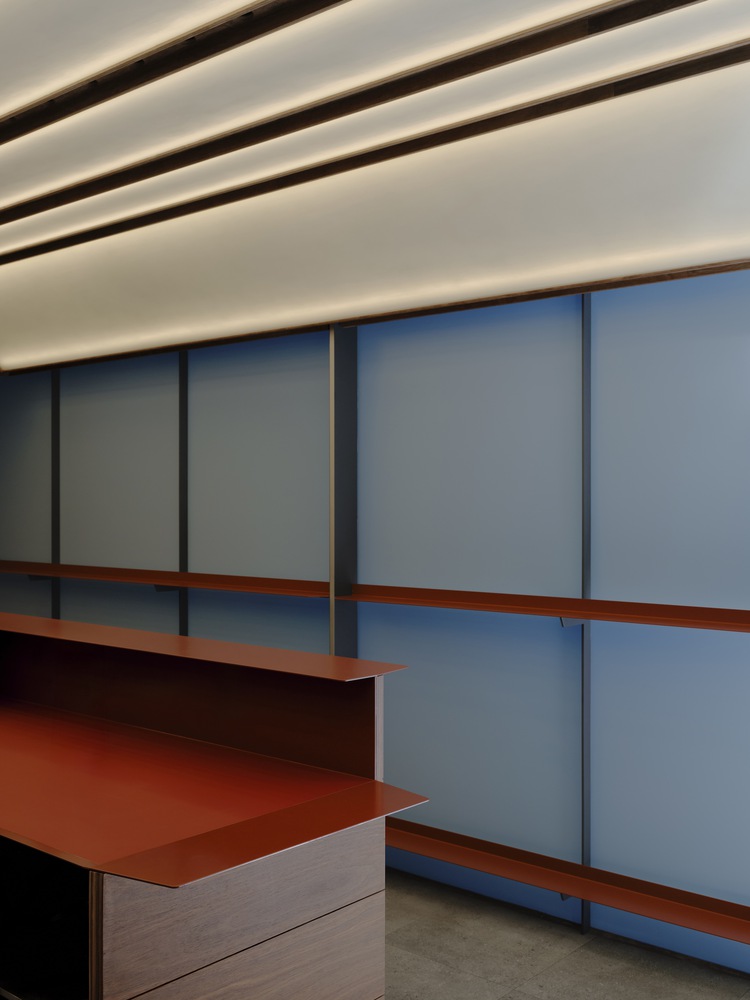
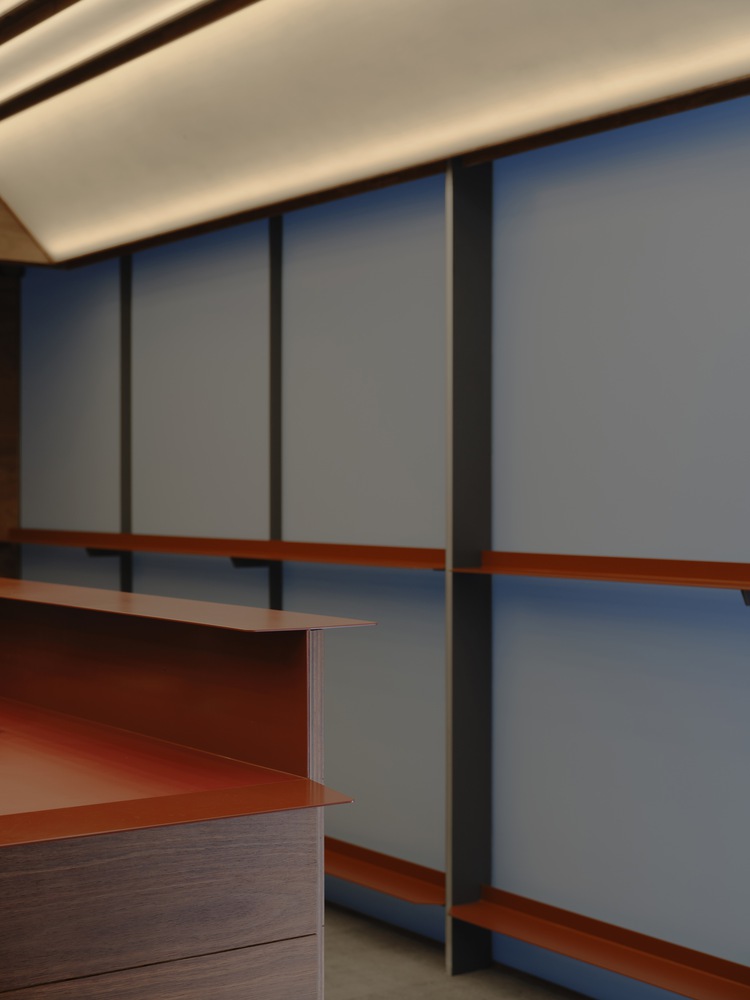
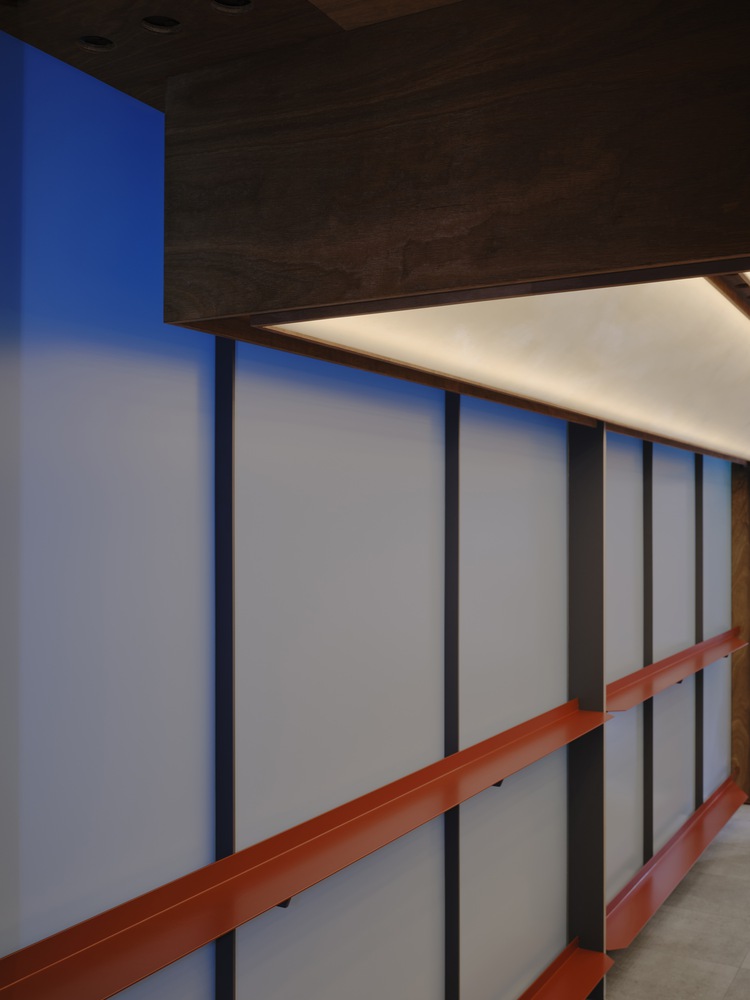
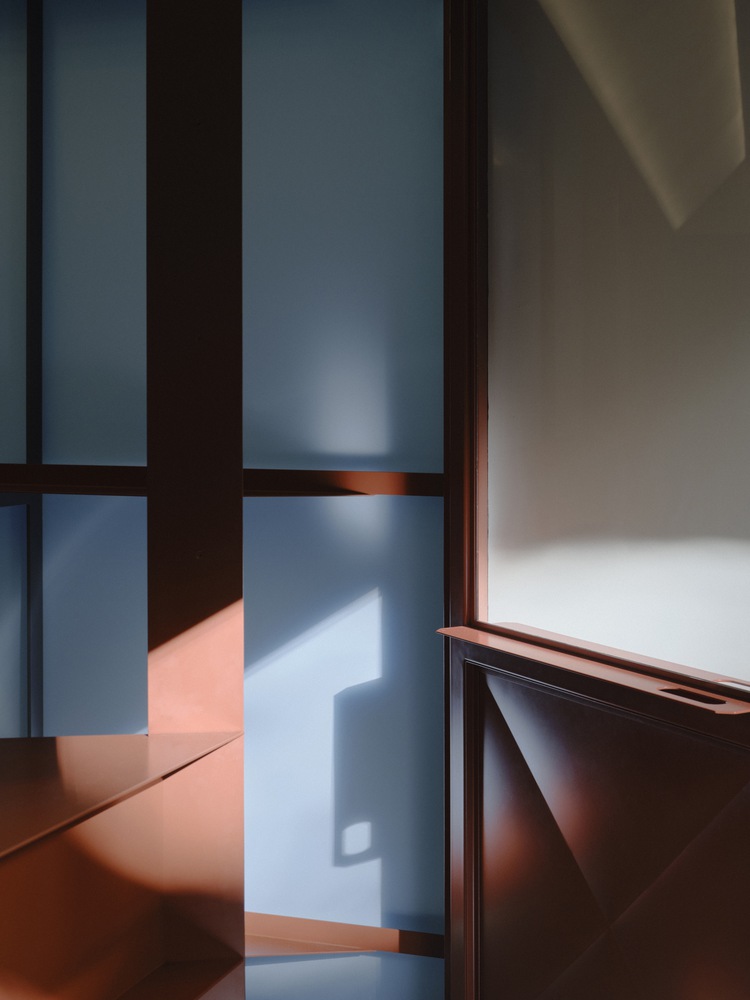
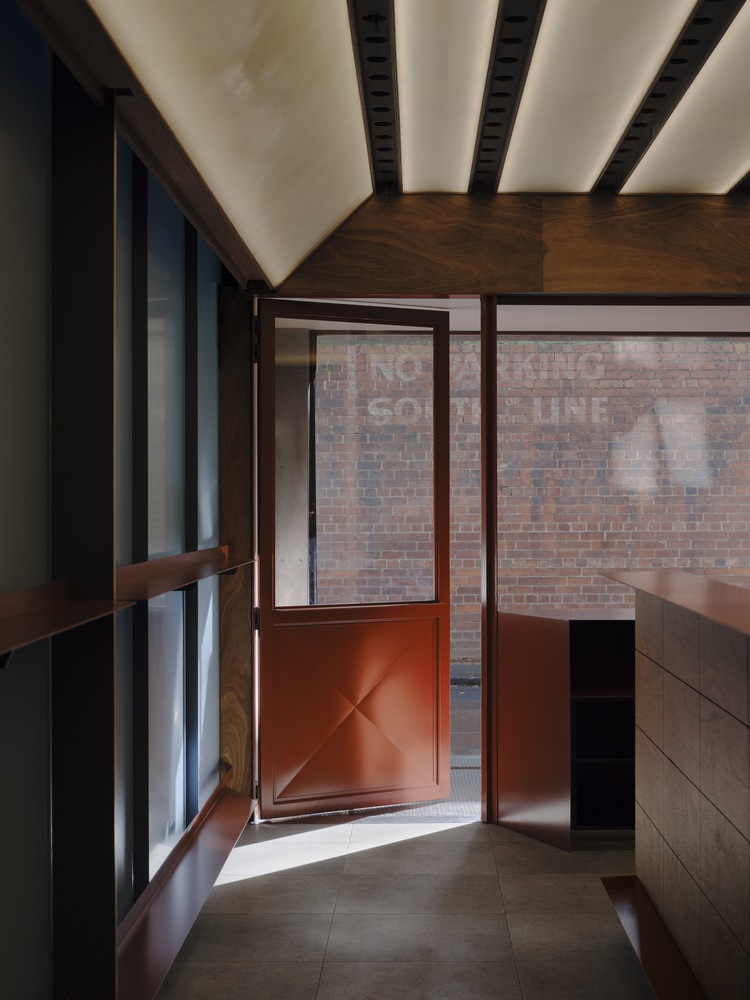
The materials and compositions are borrowed from the study institutions of the city. The oxide-red steel and spotted gum timber interpreted from Pellegrini’s, the back-lit fibreglass ceiling from the Nicholas Building’s arcade, and a powder-blue wall unique to the site.
The back-lit fibreglass ceiling warms the interior, and the perforated spotted gum strips offer modulated form while allowing for concealment of building services. The built forms are intended to be familiar, as a direct reference to an unfolded box, so familiar in the everyday operations of this space.
If you happen to be walking by and catch a glimpse of the space, it’s certain that it may embed itself in your memory for the next time that caffeine urge hits. The operators, well, it’s not their first rodeo; they started Burnside coffee in Fitzroy, arguably one of Melbourne’s most iconic hospitality offerings. The service is smooth, the coffee even smoother, the person taking your order is likely to remember your name and order when you next return, and if they forget the second time, it’s guaranteed they’ll memorise it by the third visit – that’s hospitality and that’s what builds community. The architecture has been designed to support and facilitate that. That’s the impetus of Palace Coffee, 22 Ridgway Place, Melbourne.
Add to collection