





PANE MixC Shenyang Flagship Store by say architects
posted by retail design blog on 2026-10-02
shenyang
Add to collection
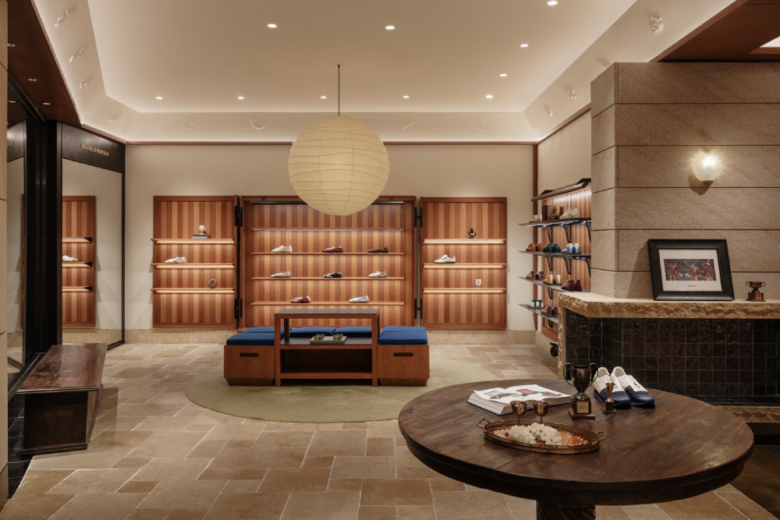
PANE folds the rationality of ancient Greece and the spirit of the East into a pair of everyday shoes, shaping enduring pieces that bridge the classical and the contemporary. So when it arrives farther north, say wants it to carry not only the brand, but also the memory of this city. Shenyang’s memory is layered from the old and the industrial. Here stand Western-style buildings left from the 1920s, alongside the heavy industry that later rose with a roar—hard, cold, carrying the blunt weight of machinery. Yet shoes are meant to be tried slowly, seated. How can a brand that does not wear time upon itself enter an industrial city? So say did not move a new city into Shenyang. Instead, it invited Shenyang’s own time into the store.
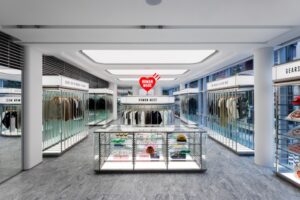
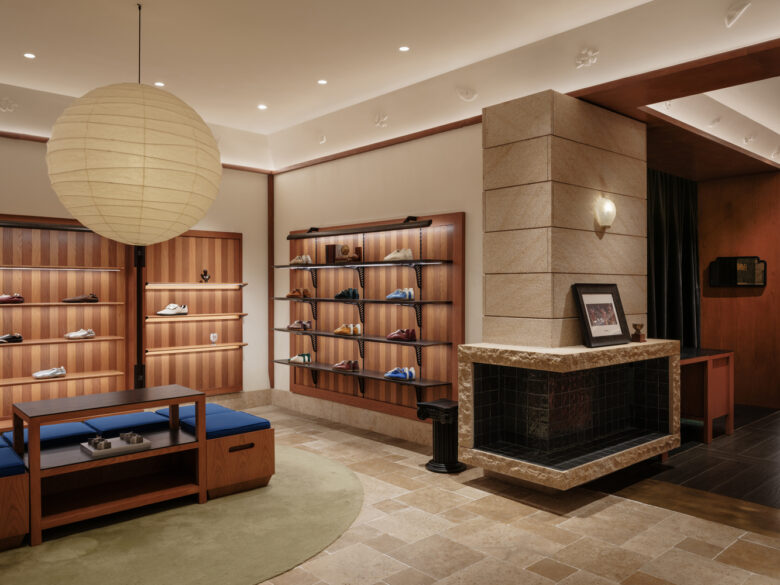
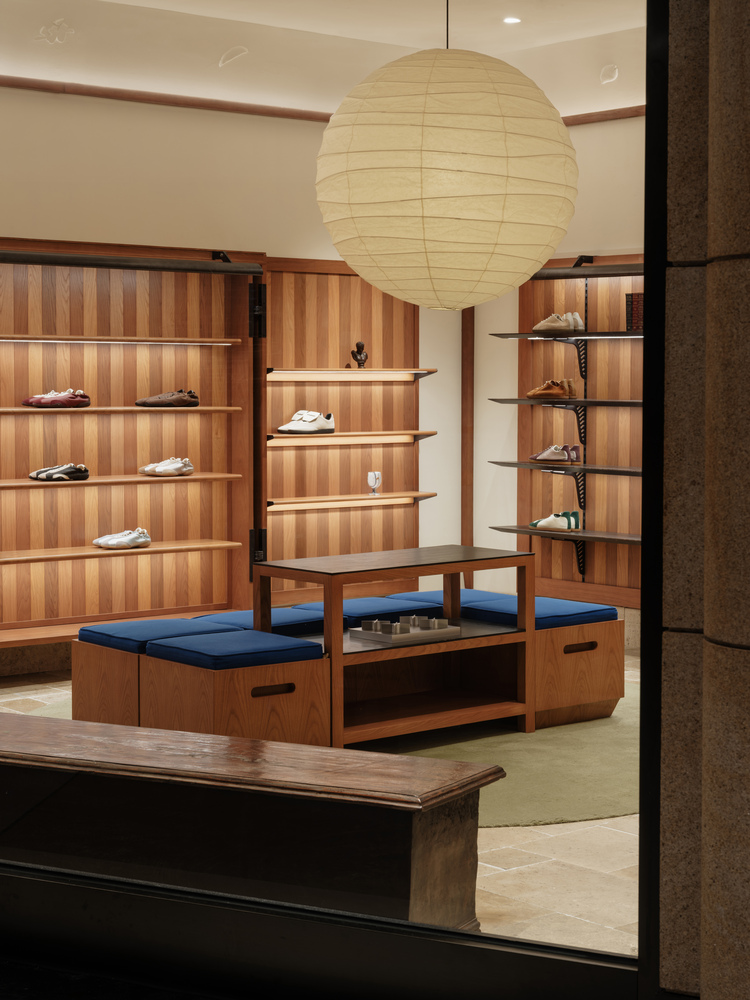
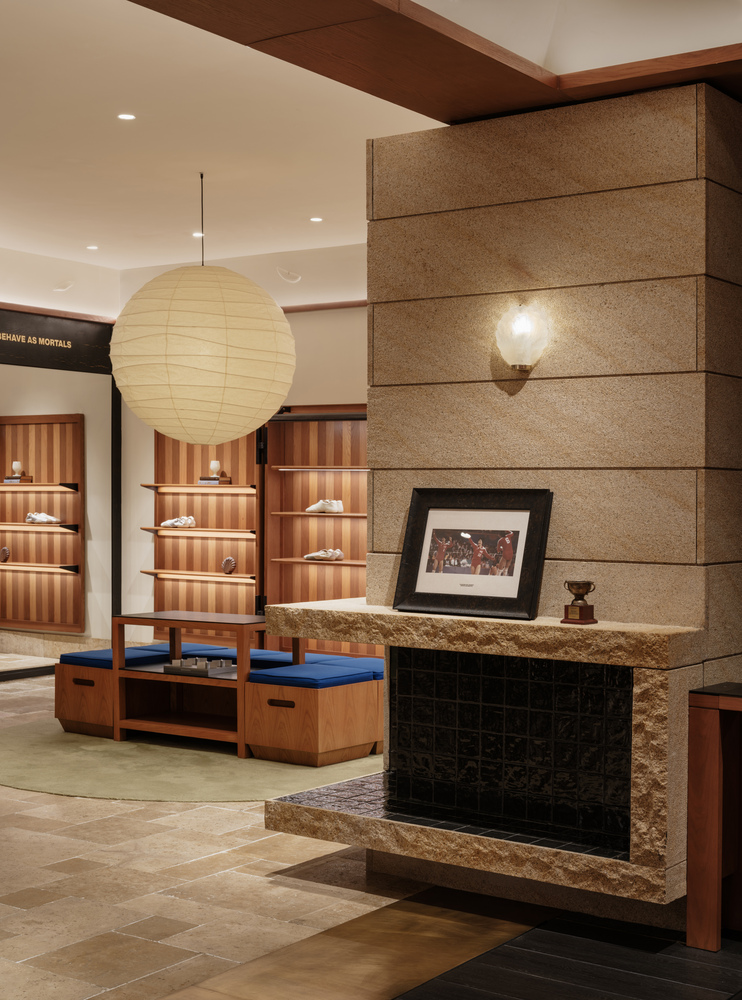
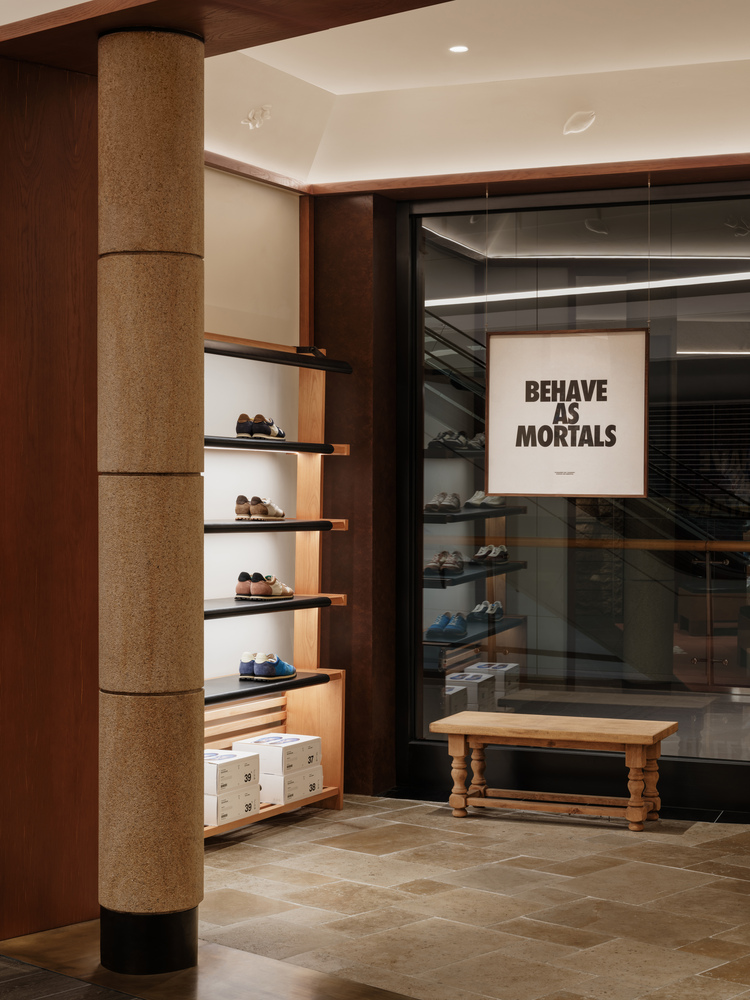
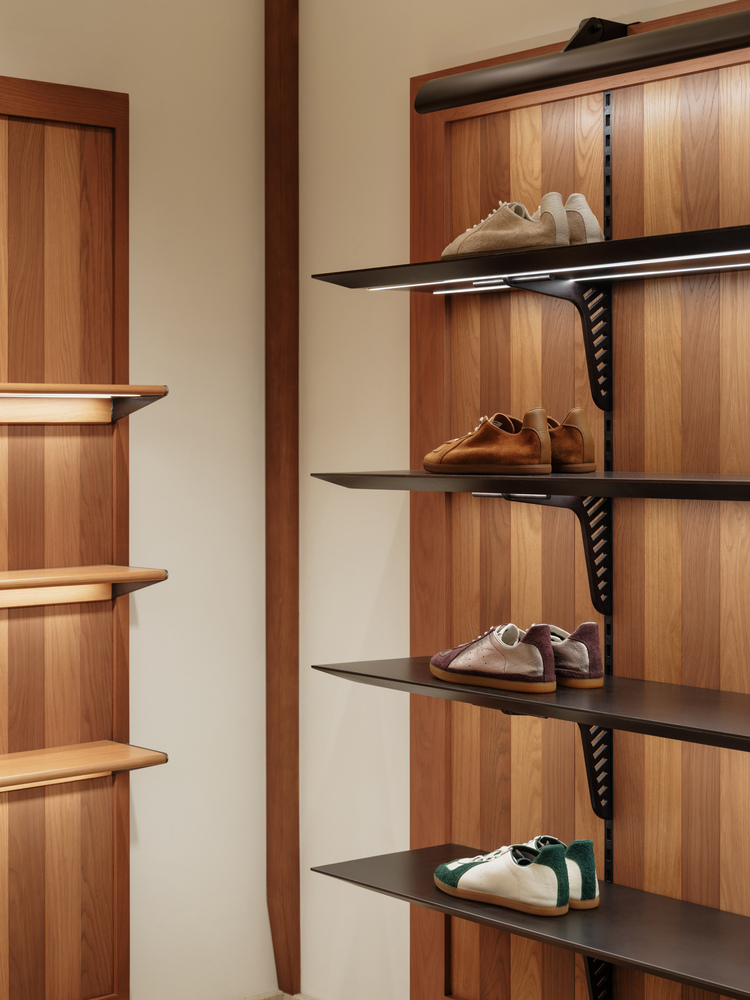
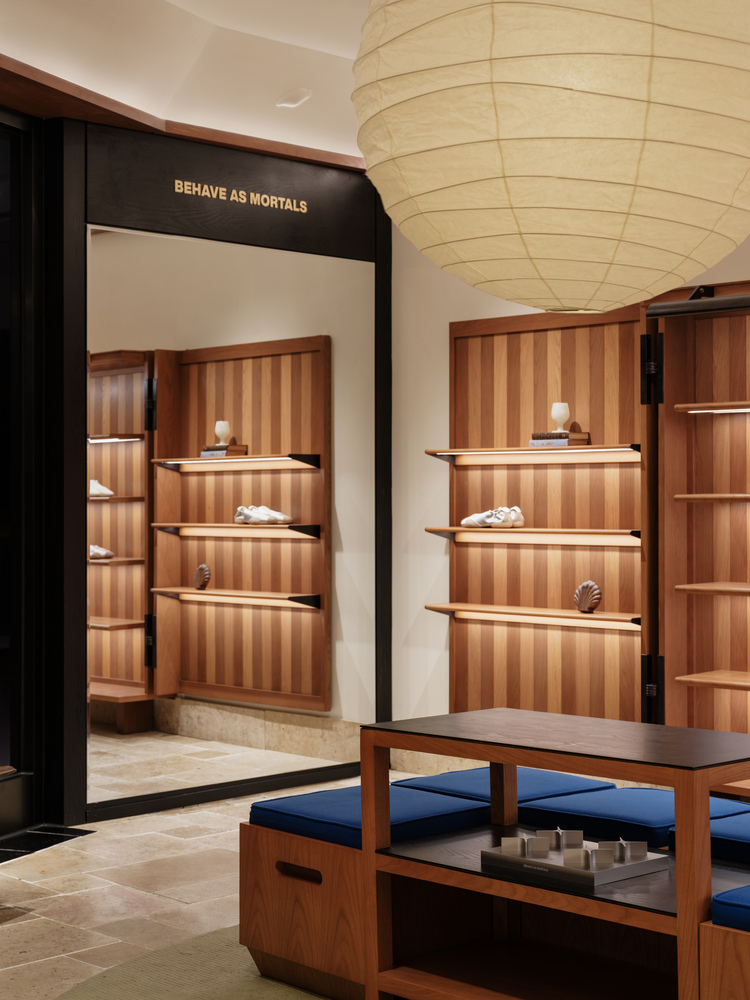
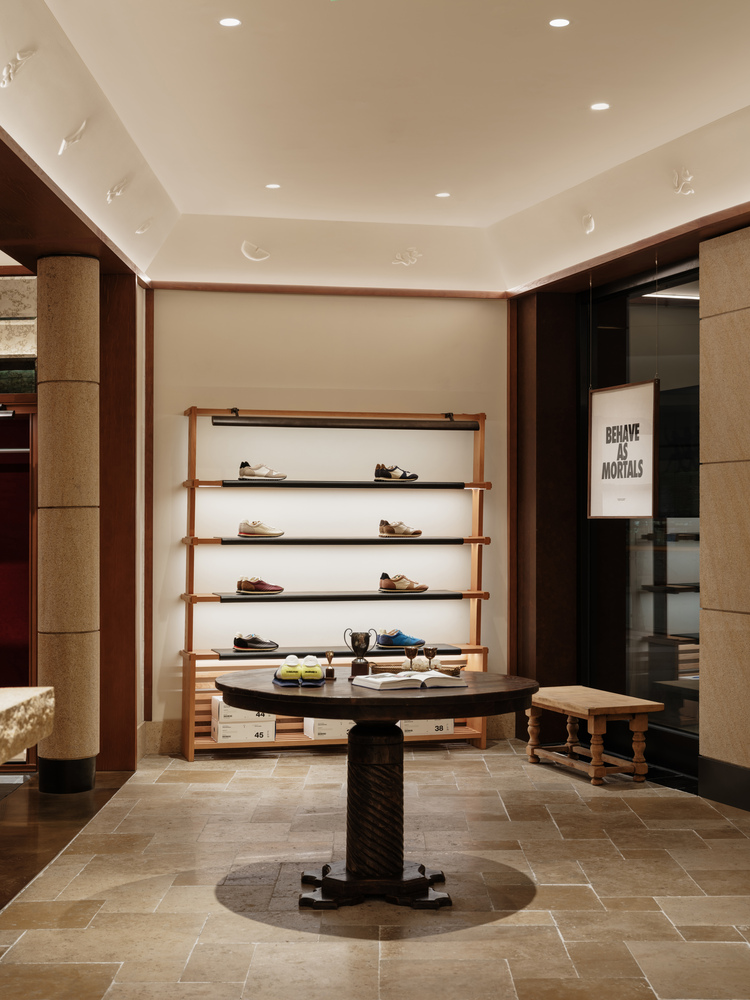
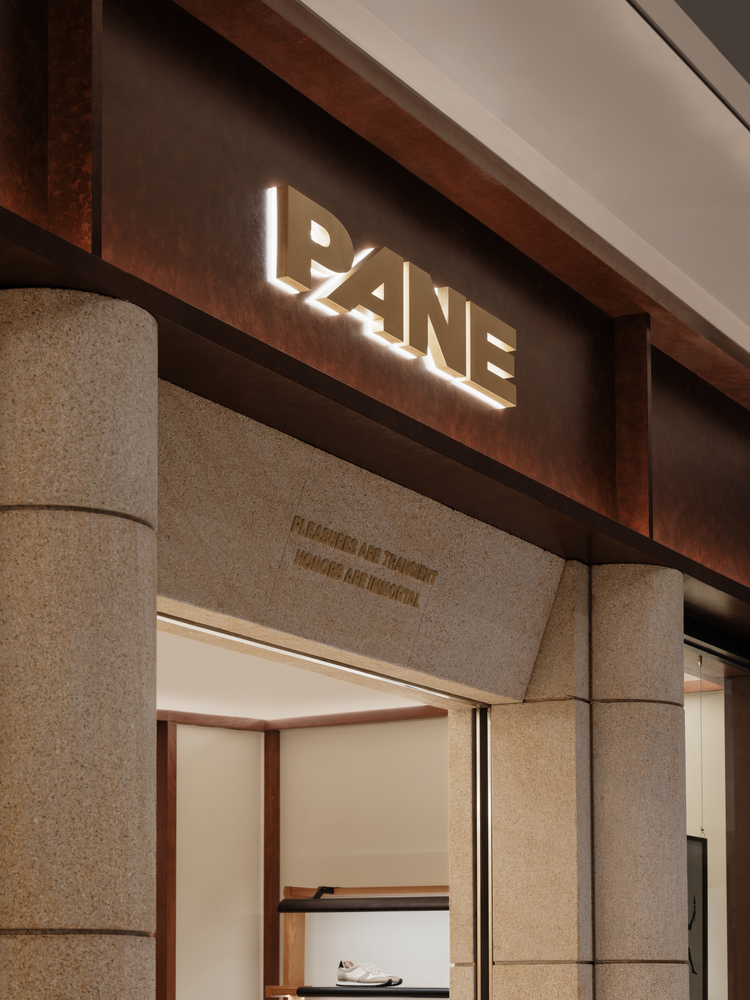
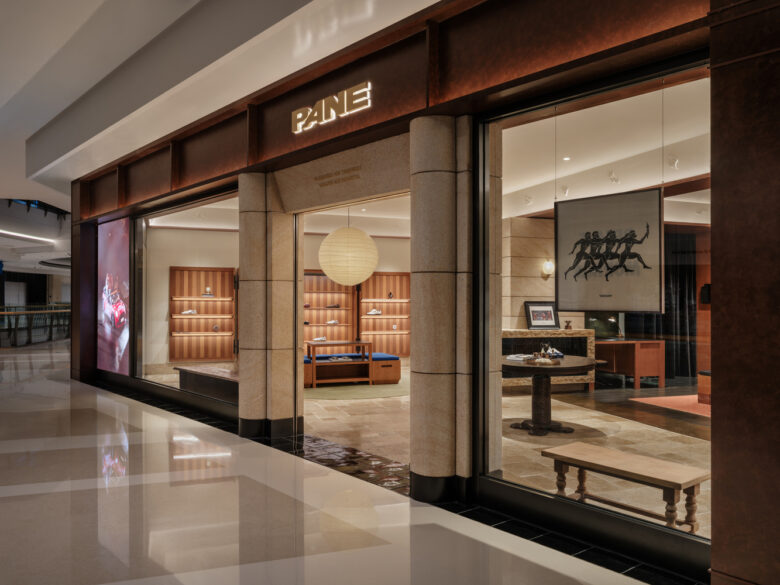
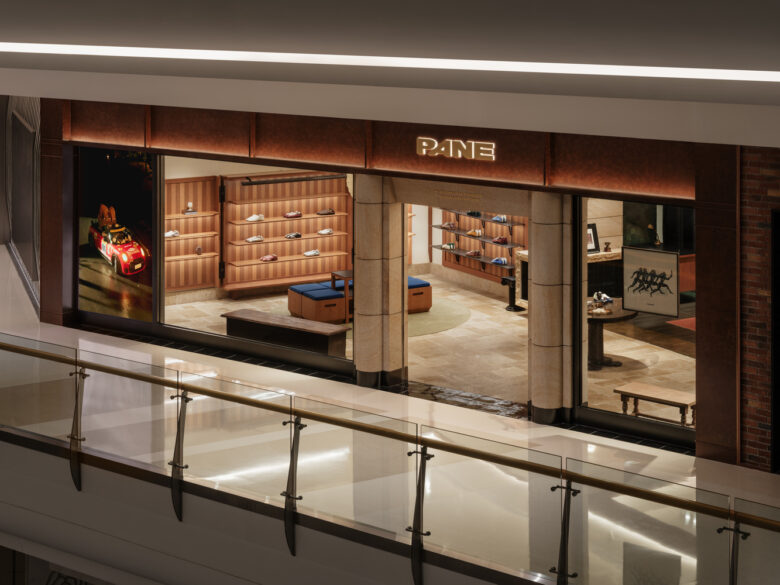
The storefront responds to the undertone of this heavy-industrial city with weathering steel—a steel that slowly oxidizes with time and eventually takes on a brown rust; here, cold, hard industry is warmed by the years. A beige granite column stands at its side, as if the city had been the first to say hello. An olive-green circular rug lies in the front area, encircling a group of shoe-changing stools and a distressed bench. Wooden chairs with blue cushions wait for people to sit and try shoes at leisure; vertical-grain wood display cabinets and floating metal shelves present footwear in tiers.
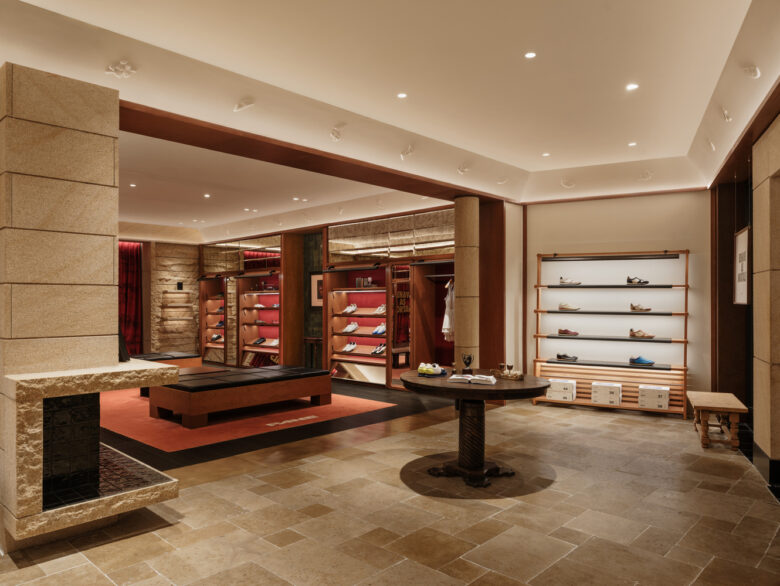
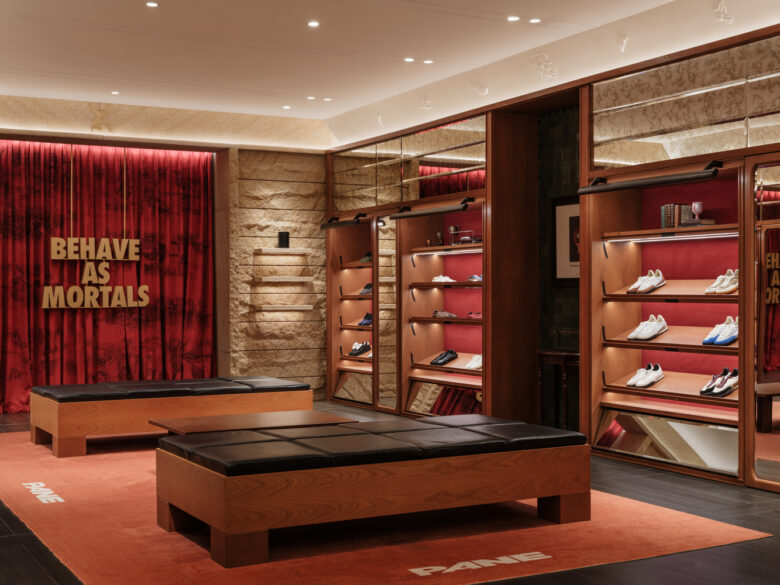
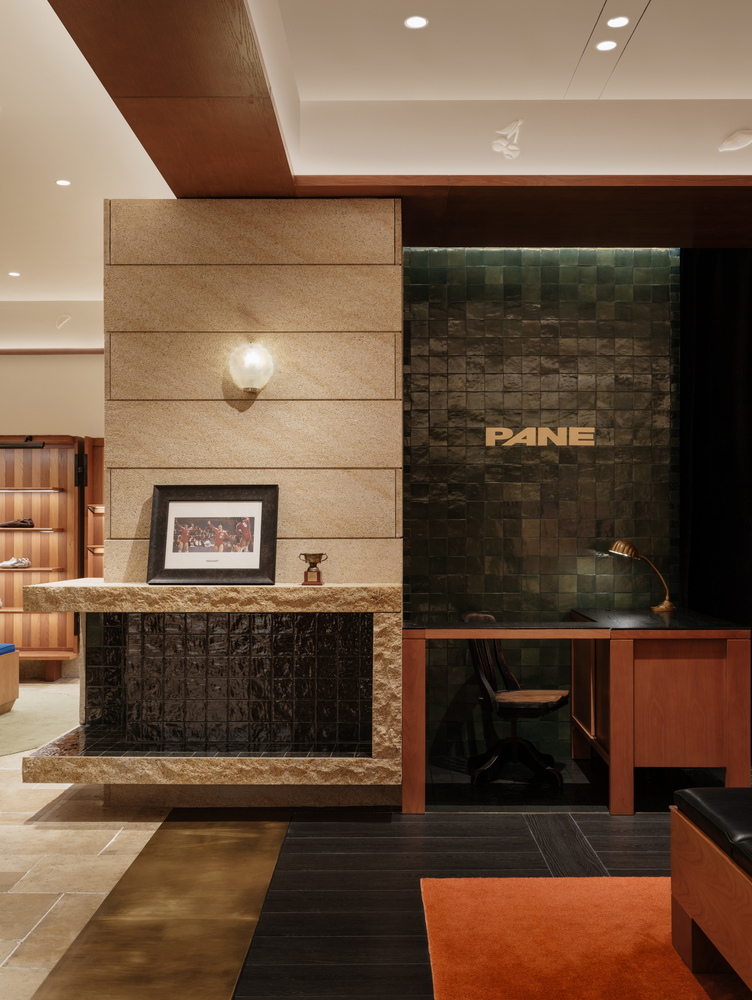
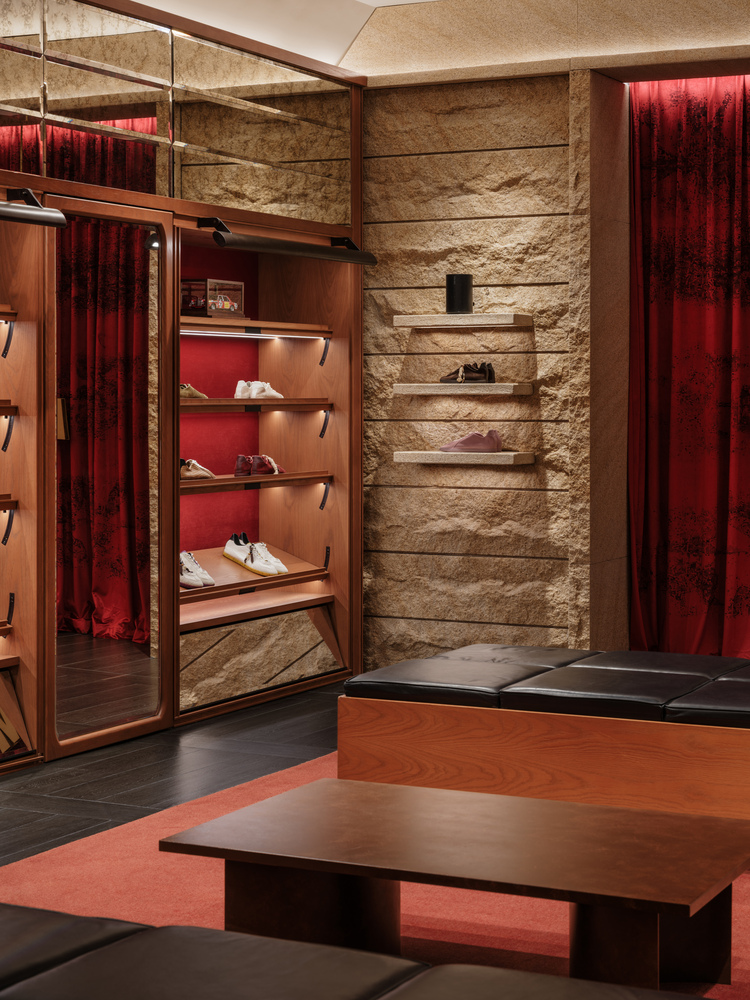
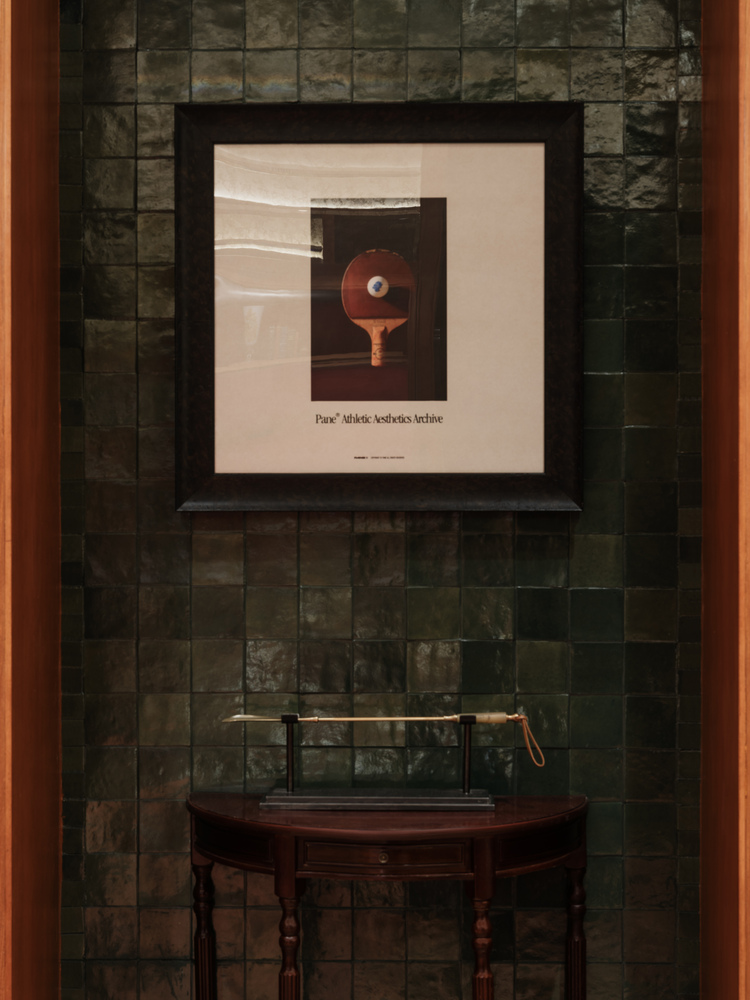
Moving inward, the door of time truly opens. say visited old Shenyang buildings preserved from the 1920s—door frames surrounded by green checkered tiles, meander moldings, and terrazzo floors—recording their traces and bringing them into the store. Walls and plinths are therefore clad in deep ink-green glazed handmade square tiles, preserving the original laying pattern of the Liaoning Hotel; here and there, low-saturation crimson tones interweave. Ink green and crimson collide in warm and cool, recreating the urban heritage of old Shenyang. The “old” of time and the “hard” of industry are thus placed side by side.
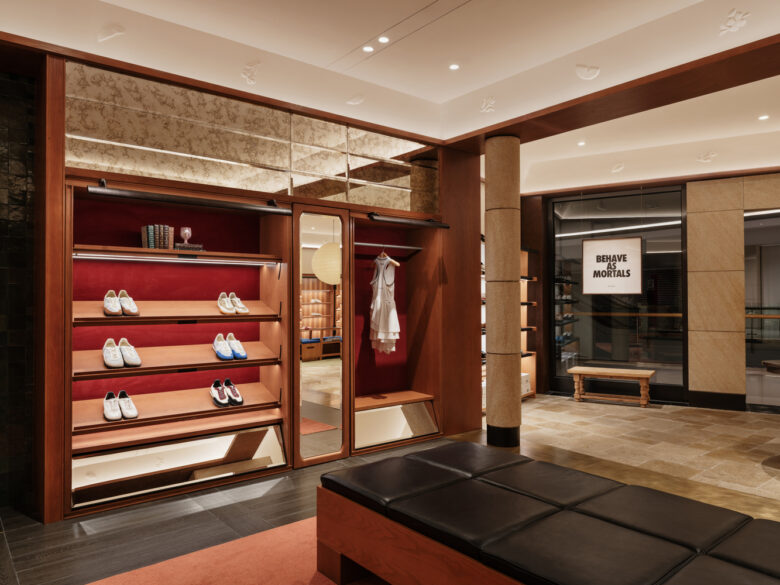
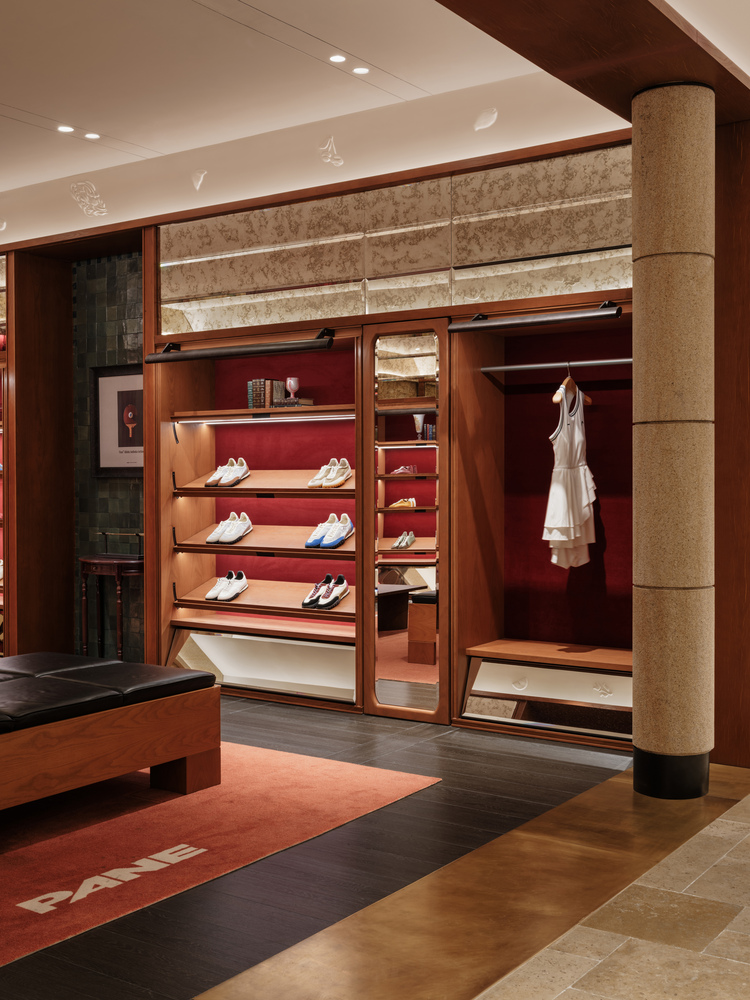
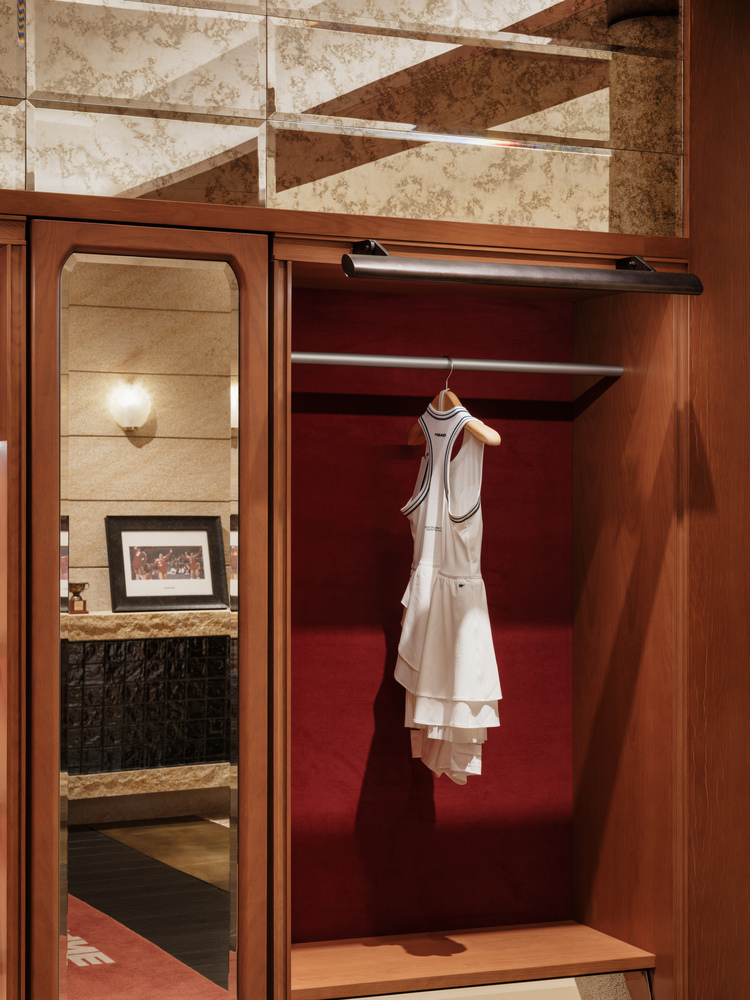
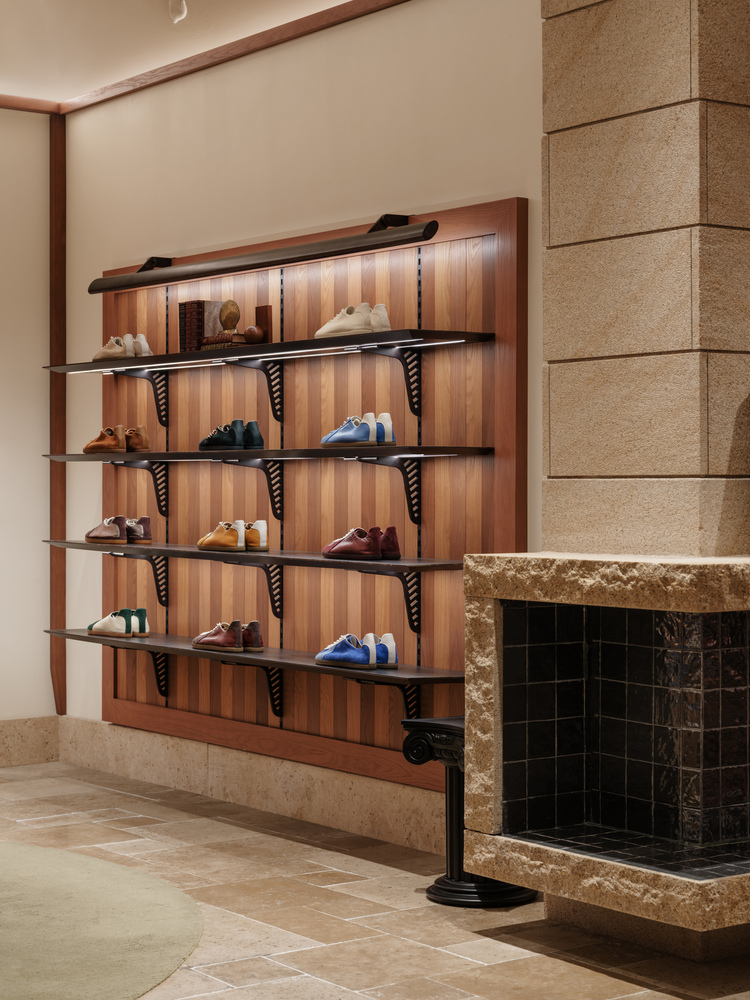
At the center stands a fireplace, threading through the front and rear areas and drawing all paths around it. Full-height walnut-framed glass display cabinets, warm light strips, and mirrored extensions display shoes in layers, balancing display with transparency.
A registration slip rests beside the fire. An intimate table forms a reception space with the feel of a hotel check-in: a brass desk lamp, a vintage hotel key rack, retro sculptures, and trophies arranged at intervals. Warm, soft light falls across the tabletop and old objects, like a corner where a hotel front desk and an old living room overlap. “Checking in” replaces “shopping,” dissolving the distance of commerce—as if one has entered a hotel and first stops at the front desk to sign in.
People are willing to pause for it. The bricks were laid one by one through the night; time was bought with the speed of urgency. To make the store slow down, such speed was exactly what it took. And so it became a hotel of time: green tiles are walls that have passed through a century, and the fireplace is a corner where winter wants to linger.
Interior Designers: say architects
Lead Architects: Zhang Yan, Shan Jianan
Design Team: Fan Yawen (Senior Associate Partner), Xiao Yao, Hu Qiheng
Photographs: Wen Studio
Add to collection