






Add to collection
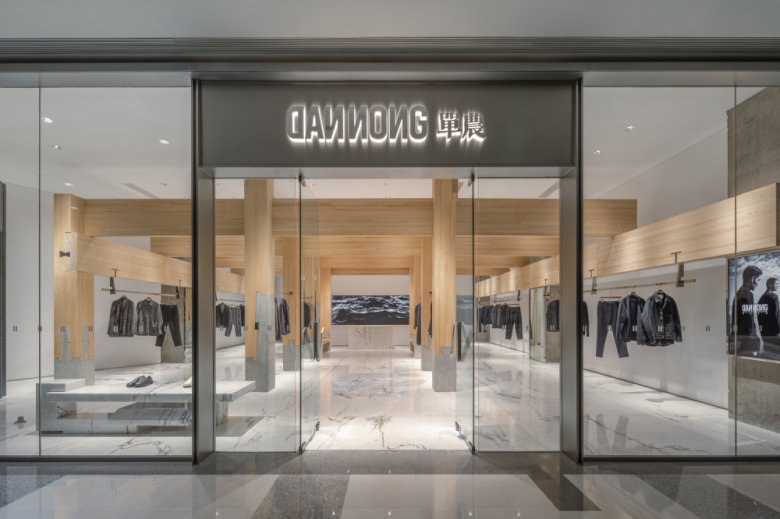
The orthogonal timber frame has long been the primary structural prototype for nearly all functional building types in the East—from halls and temples to dwellings. Shanxi, as one of the most important regions for the preservation of ancient Chinese timber architecture, retains many precious examples such as Nanchan Temple and Foguang Temple. These surviving entities embody the deep cultural lineage of traditional Eastern architecture. DANNONG, a clothing brand grounded in an inner Eastern sensibility, already operates many stores. Yet in the capital of Shanxi, how should garments be presented in space? How should the store grow in resonance with the region’s architectural heritage? These questions became the starting point of the design.
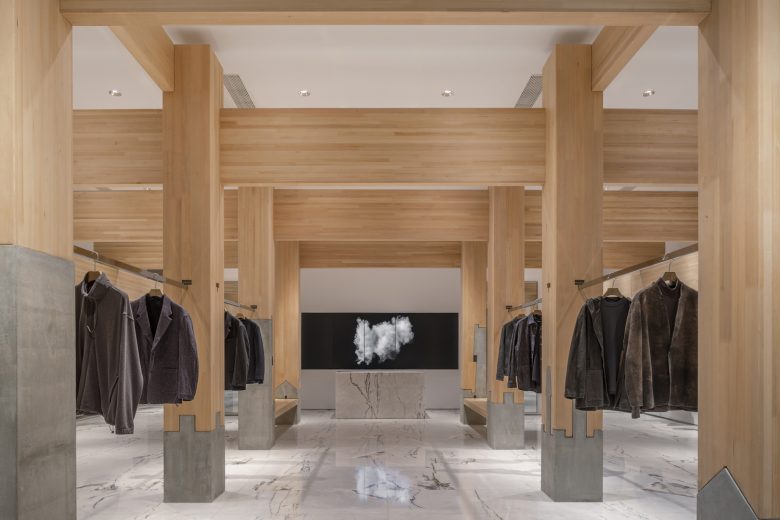
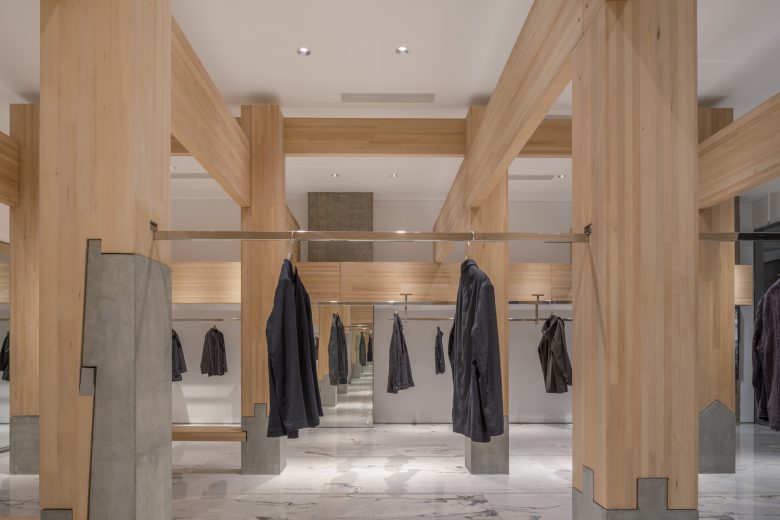
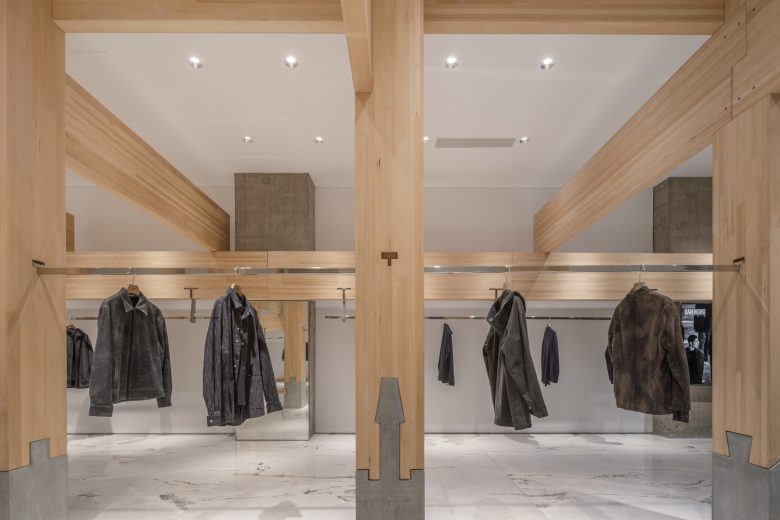
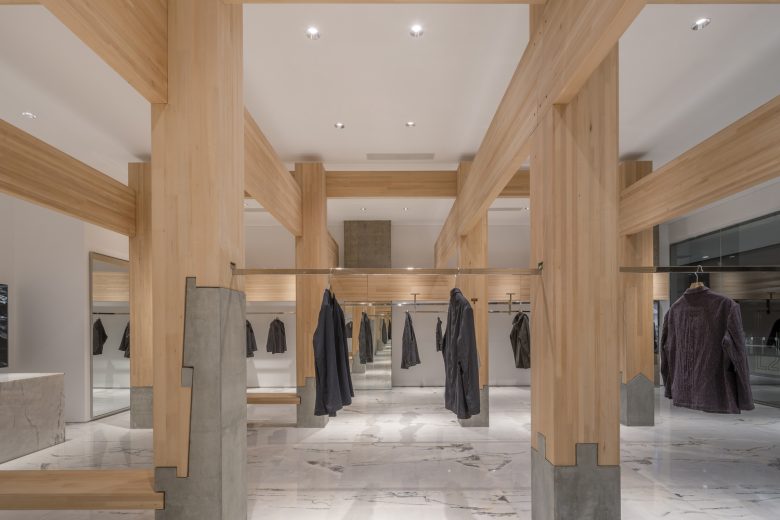
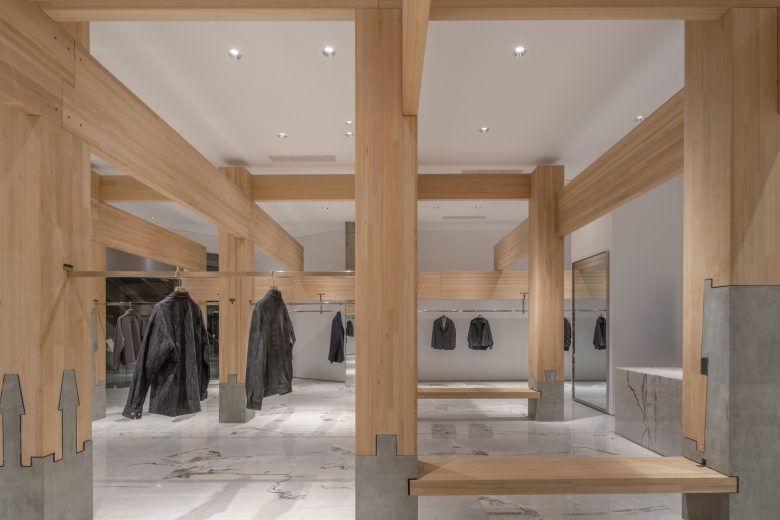
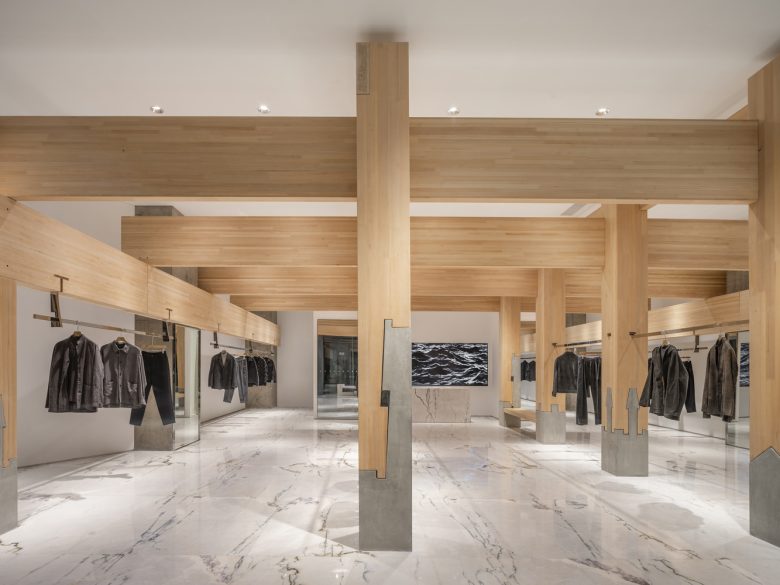
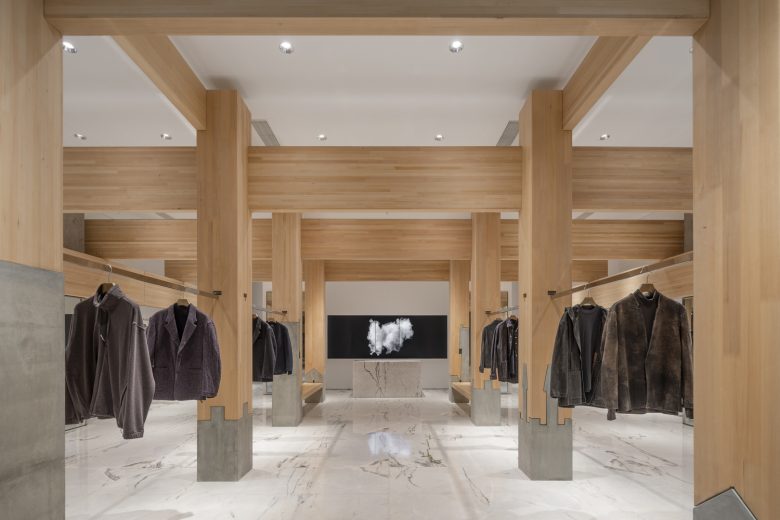
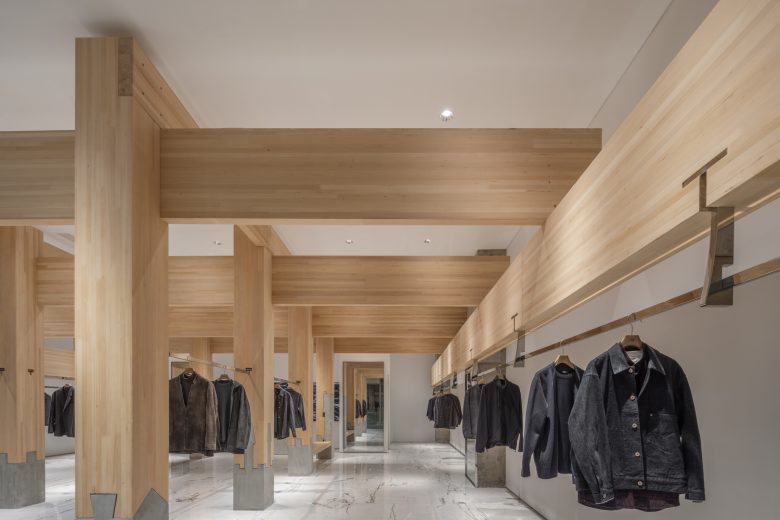
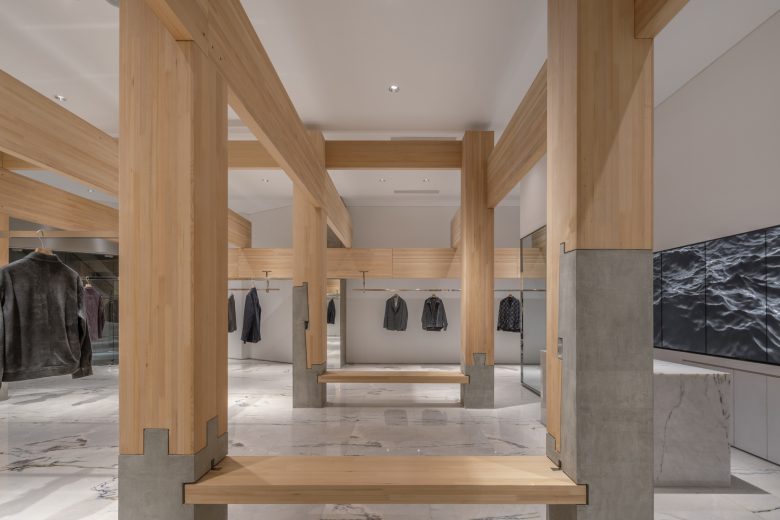
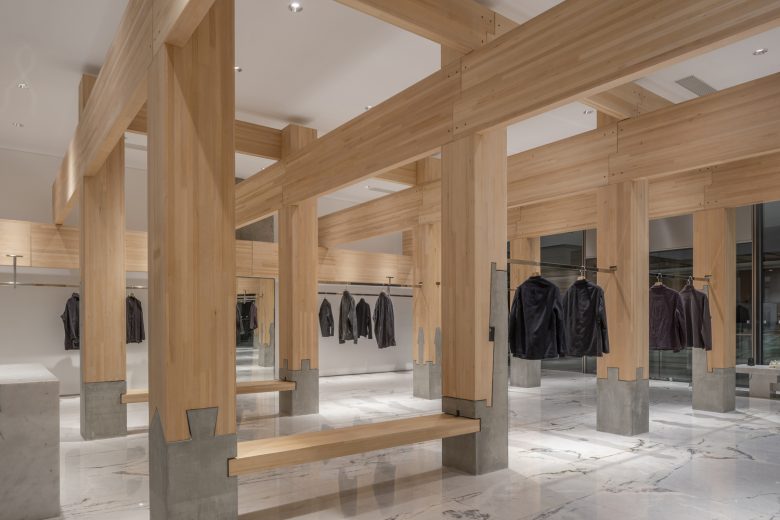
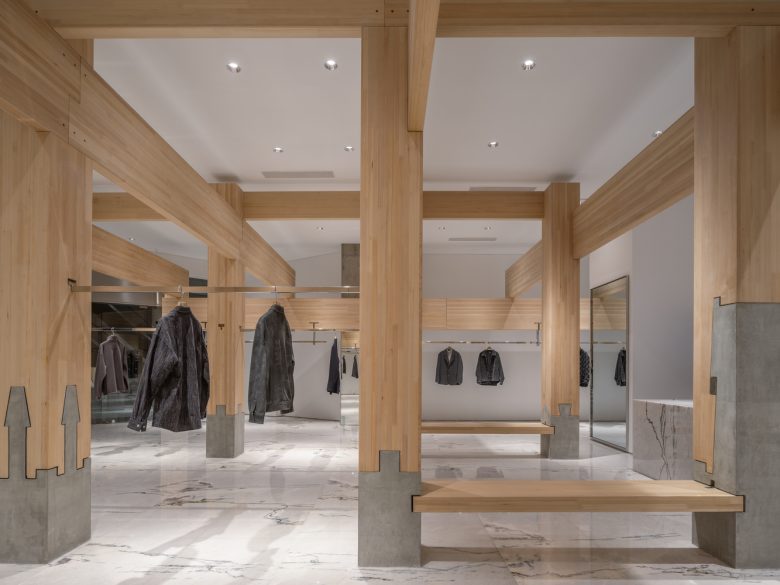
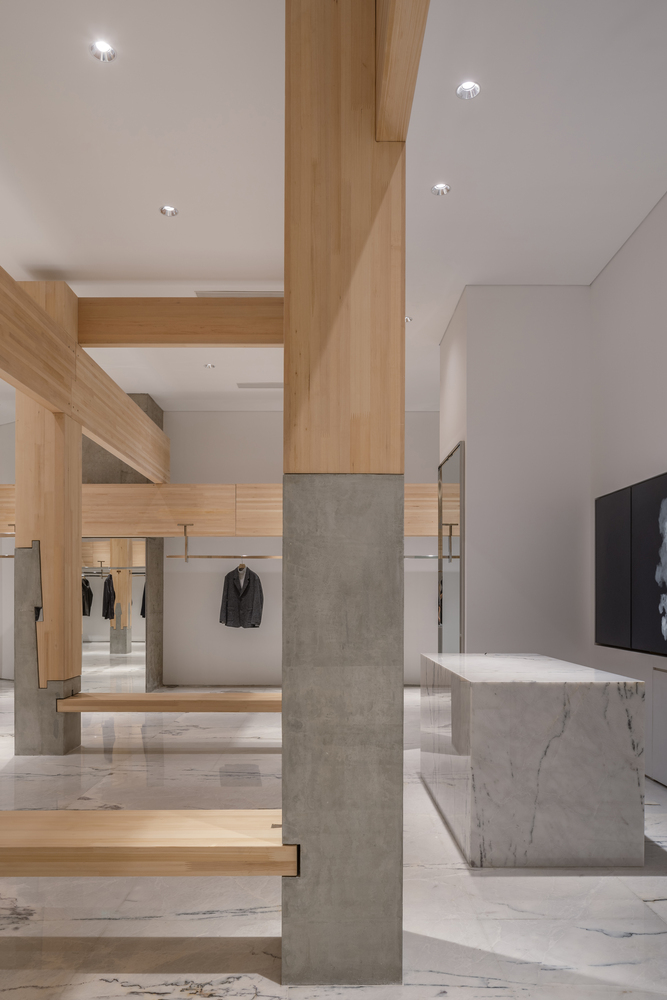
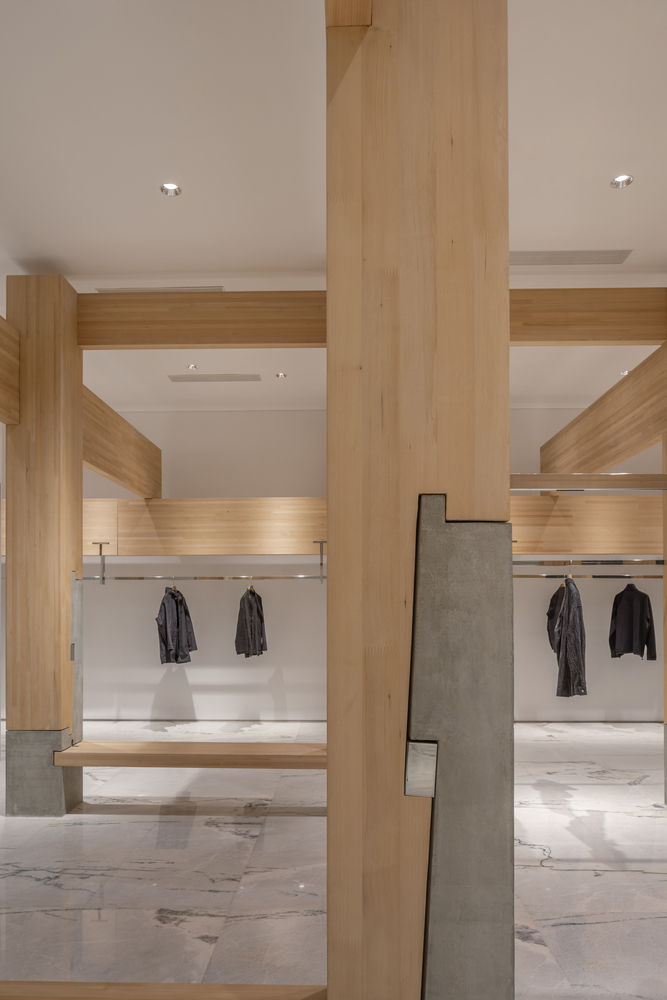
Frames and Garments: Weight and Lightness — In plan and section, traditional Eastern timber frames often unfold in a rectilinear, orthogonal order; in graphic terms, both the vertical and horizontal members are “lines.” Garments are likewise suspended through a system of “lines.” In this sense, the two possess a high degree of conceptual alignment. The project is located within a contemporary commercial complex, whose building structure is a reinforced-concrete frame. Within this industrialized system, a traditional timber frame is grafted to evoke the lineage of Shanxi’s wooden architecture in a contemporary retail setting. Based on the store’s existing structural grid, a “three-bay, four-span” composition is adopted. The central bay naturally generates an axial sequence for the entrance, seating zone, cashier, and main visual backdrop, while the two side bays host long hanging rods for displaying garments. The suspended clothes further emphasize the linear qualities of the beams and columns.
The traditional timber structures of Shanxi—exemplified by Nanchan and Foguang Temples—are known for their robust mass and heavy timber proportions. Following this principle, the project selects thick square timbers to echo the regional architectural vocabulary. Beneath the weighty beams lies the softness of textile. The contrast between the heavy and the light—between coarse timber and delicate fabric—heightens the material presence of each. As if “massive beams suspend fine objects,” the composition aligns subtly with DANNONG’s spirit of “crafting with meticulous attention to the smallest detail.”
Craft of the Mortise-and-Tenon — The mortise-and-tenon joint—an iconic manifestation of Eastern intelligence and craftsmanship—held not only cultural significance in pre-industrial times but also structural necessity. Its “flexible” connections demonstrate remarkable resilience in earthquakes; in small-scale joinery, various mortises effectively accommodate humidity-driven expansion and contraction.
At Nanchan Temple, the northeast corner column of an exterior wall, damaged by insects, was repaired after the Tang dynasty (reportedly in the Song) using a “praying mantis” mortise. Simulations show that its unique form allows lateral insertion, making it ideal for corner repairs—an example of the ingenious logic of mortise-and-tenon mechanisms.
In this space, the design seeks to embody the “craft of the mortise-and-tenon” through the following strategies:
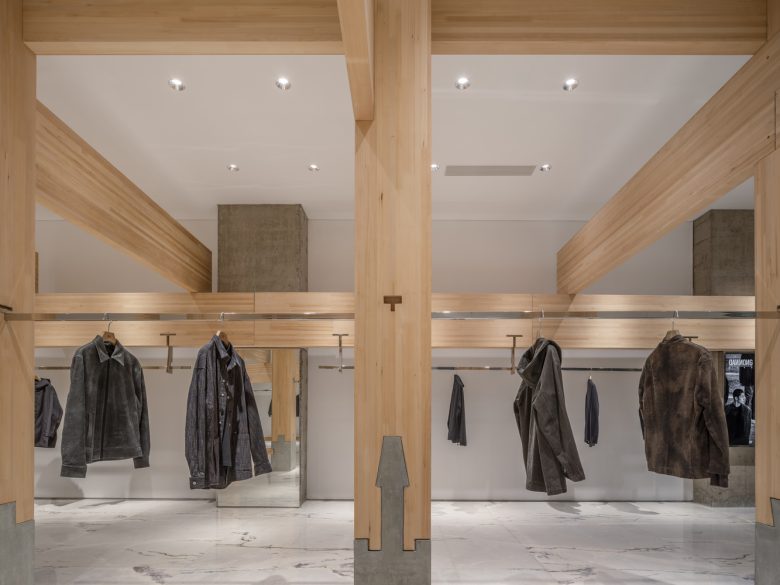
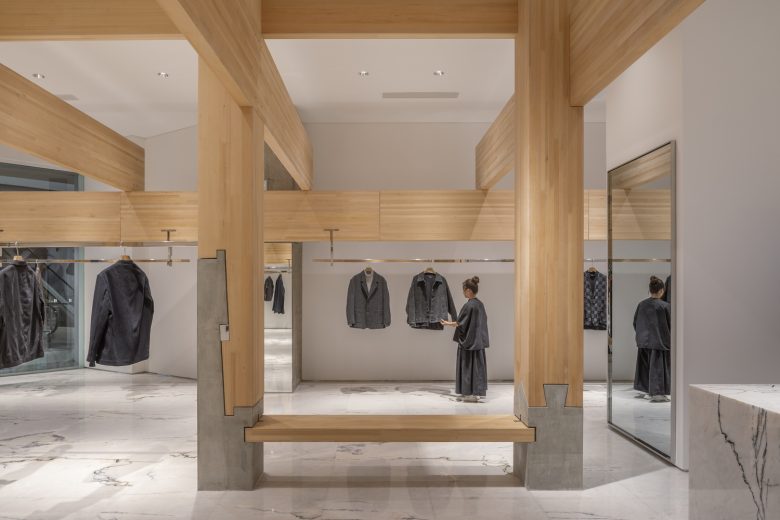
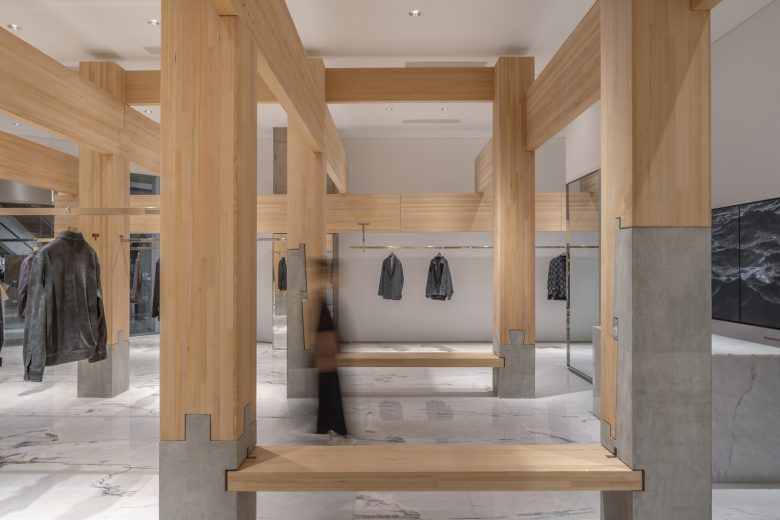
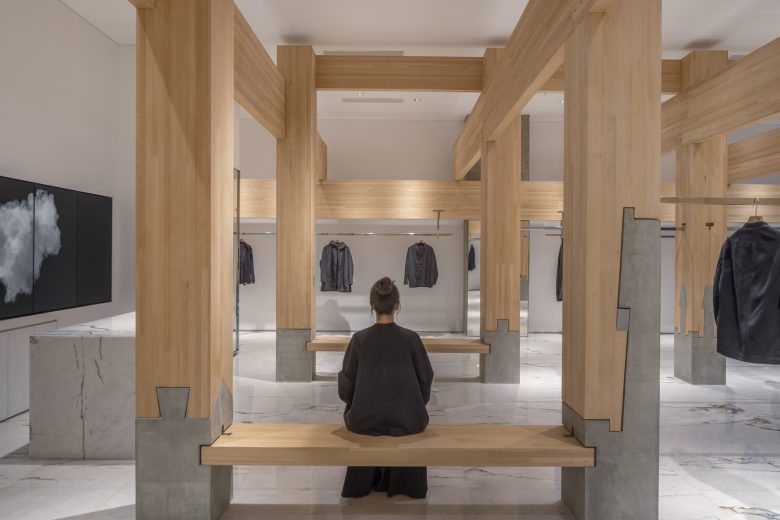
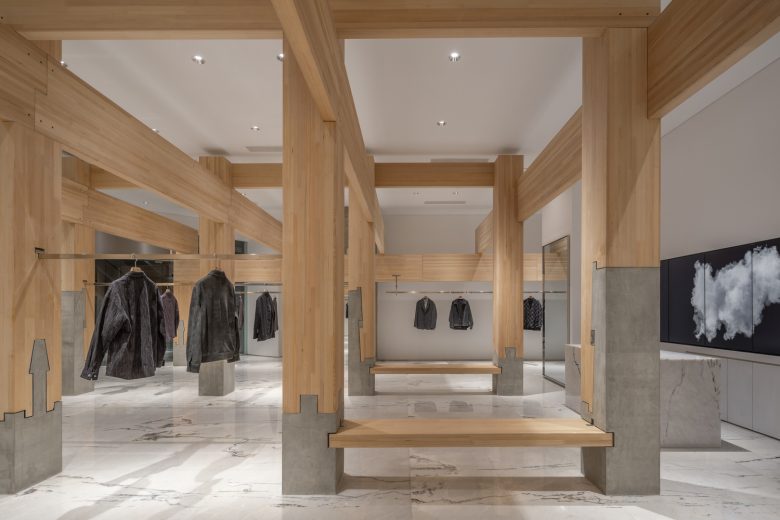
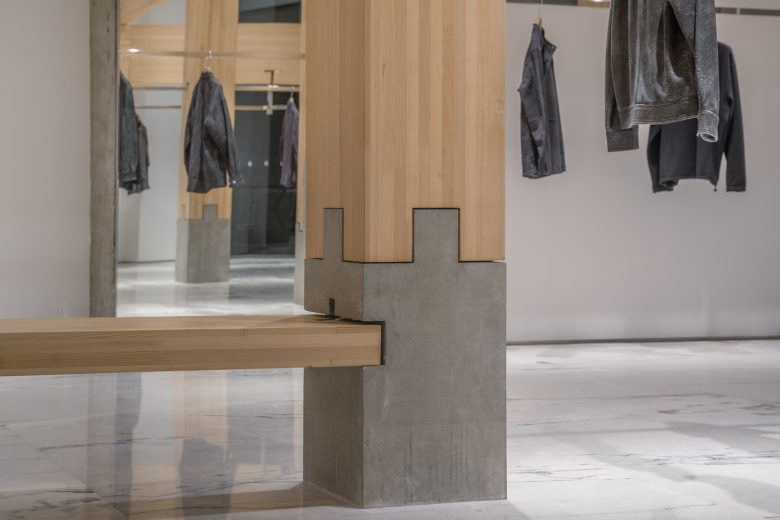
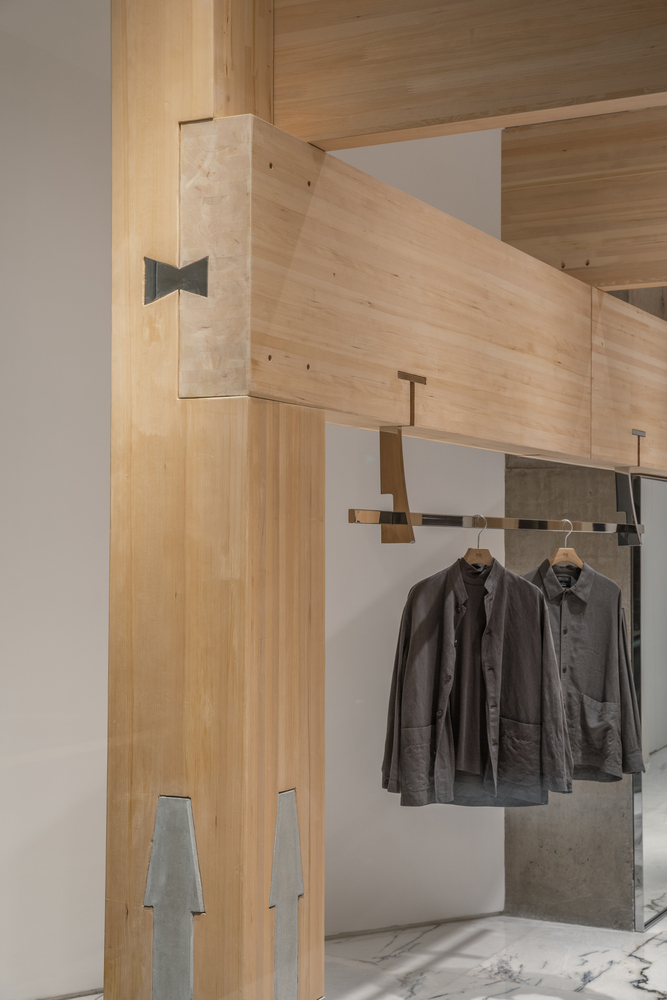
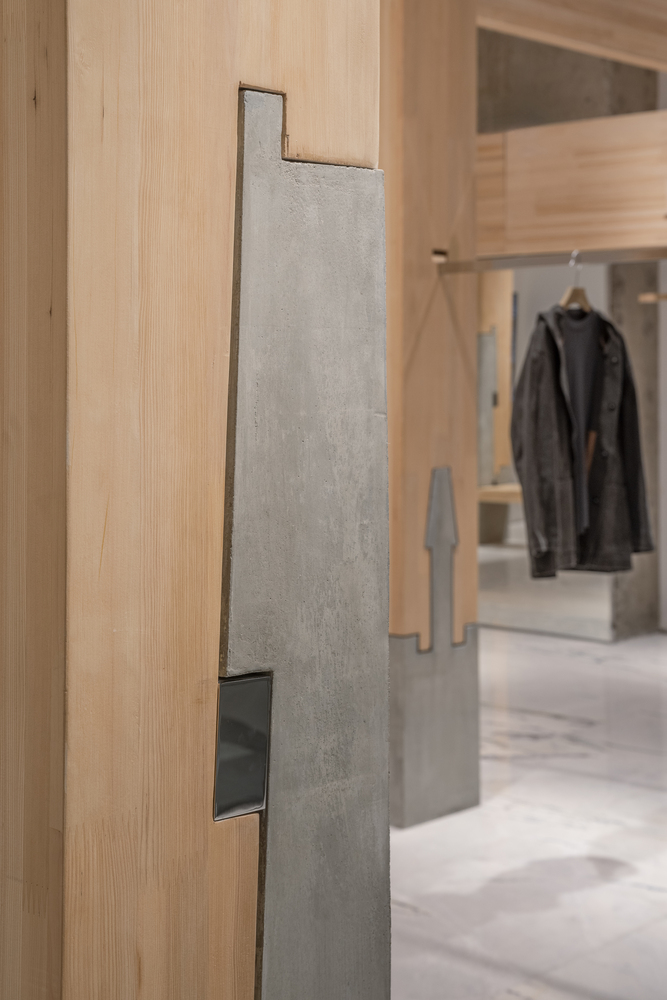
1. Column Bases and Joinery Inserts — After extensive research and model studies of various joinery systems, four types were selected: the lateral-sliding “praying mantis” mortise from Nanchan Temple; a low, vertically interlocking cross mortise; a taller center-pinned palm mortise; and a more complex piece requiring a 45° spatial insertion path. These four systems differ in form, logic, and installation sequence, contributing to a rich layering of craftsmanship.
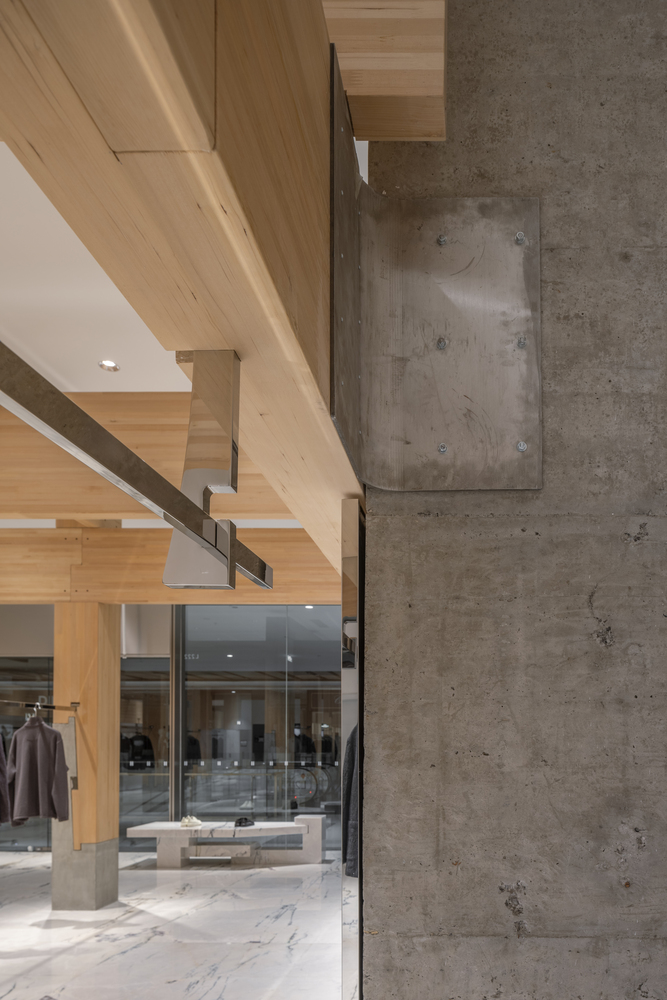
2. Joinery Between Columns and Beams — Although traditional “tie-beam” structures typically refrain from using mortise-and-tenon joints between column and beam, this project adopts semi-lapped joints to preserve structural coherence. Due to transport and installation constraints, full-length beams must be segmented, and the segment joints are likewise treated with half-lap joinery—making the structure legible while maintaining its crafted integrity.
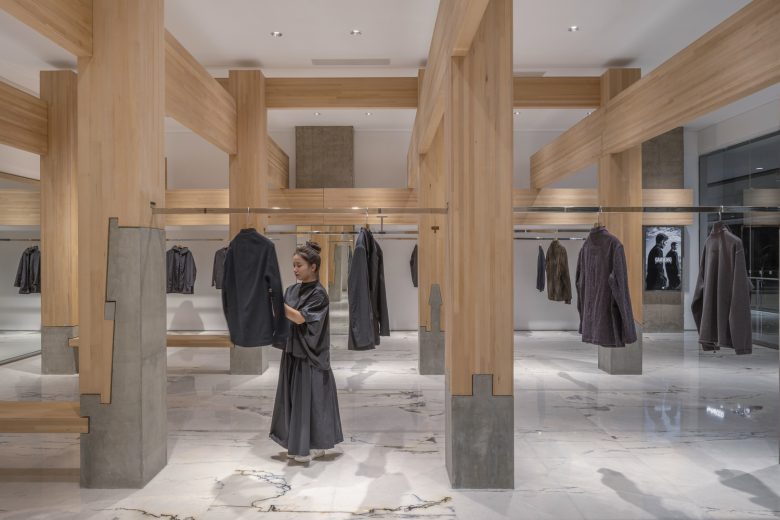
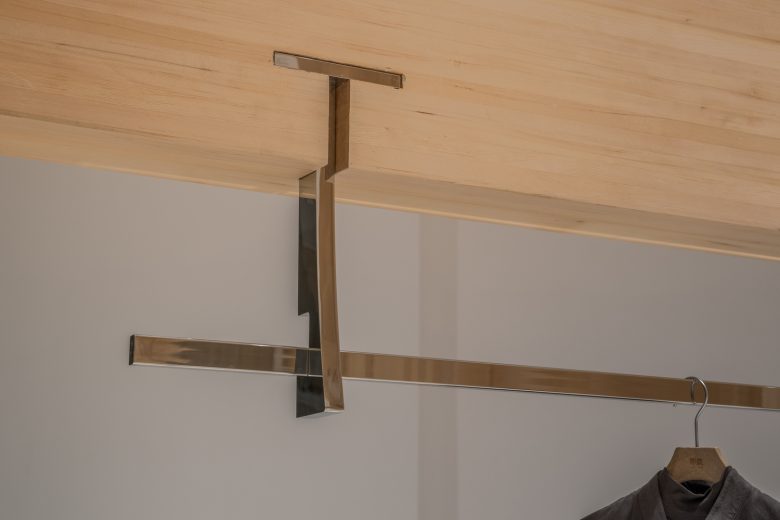
3. Integration of Joinery in Secondary Elements — Traditional Eastern wooden architecture values the unity of furniture and structural logic. In this store, seating elements are joined into the concrete column recesses using mortise-and-tenon methods, becoming part of the structural system. Hanging rods are integrated by pre-cutting mortises at the columns and inserting metal rods through a tenon-like maneuver—creating a consistent construction language from macro to micro scales.
Ritual and Everyday Life — A retail space is ultimately a human space. “City” implies enclosure and gathering; “market” implies exchange—consumption. In the current age of material abundance, “putting on clothes” is no longer merely functional but a pathway from the material to the spiritual. Thus, this space for DANNONG was never intended simply as “a clothing store.” Stripped of all garments, the space should first exist as a contemporary artwork with tangible materiality, order, and spirit—constructed through genuine materials, precise joints, and a restrained rhythm. All materials are treated with respect, echoing the epistemic attitude of traditional timber construction.
People walk through frames, touch materials, observe light and shadow, and form deeper relations with objects, space, and self. In this minimalist but concentrated order, dressing becomes a ritual of living. The brand’s ethos—”earnestness, purity, and order”—is grounded through the space holding the garments, and the garments responding to life. “Clothes, choosing clothes, wearing clothes” becomes a ritual practice of living.
Architects: LUO studio
Designers: Luo Yujie, Hong Lun, Cao Yutao, Liang Jiahui
Photographs: Weiqi Jin
Add to collection