




Add to collection
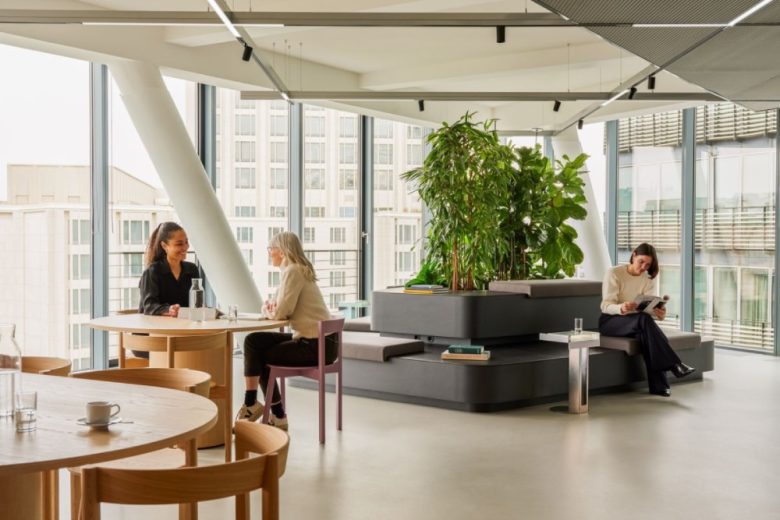
At Das Center in Berlin, Kinzo designs an inspiring workplace for an international consulting firm, harmoniously blending focused workspaces with communal areas, reflecting a commitment to clarity, mindfulness, and sustainability.
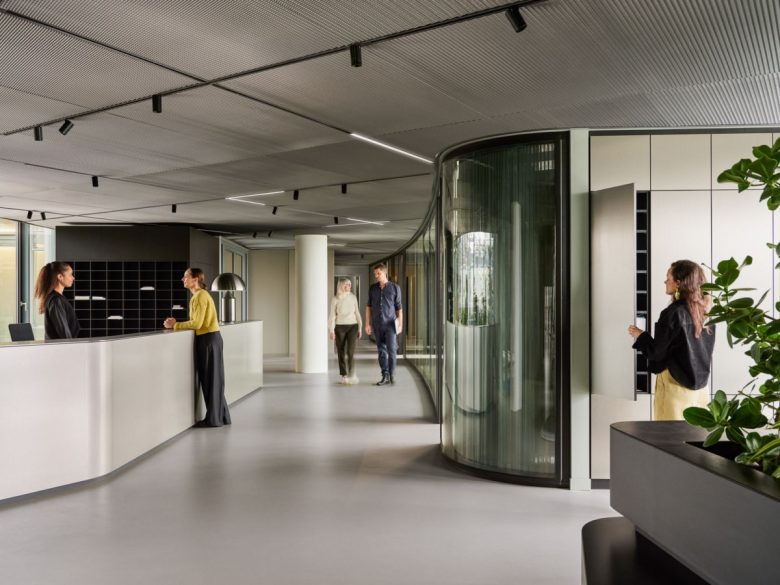
At the newly repositioned Das Center at Potsdamer Platz, Kinzo has created a workplace for an internationally operating consulting firm that generates calm and clarity through precise spatial organisation.
The design forms part of the comprehensive transformation of this iconic site, which has been undergoing a phase of reorientation since around 2021 towards greater openness, humanity and a forward-looking outlook. Within this context, Kinzo has developed a working environment that translates the aspirations of a new work culture into spatial experience. The result is a set-ting defined by a sensitive handling of colour, light and materiality. Spaces that support concentration while simultaneously conveying a sense of lightness. Subtle nuances, fine transitions and a clear spatial order shape the atmosphere: present, focused and calm.
This space was designed for people who drive transformation. Leaders who navigate complex processes and open up new perspectives. Their work is given an architectural framework here: spaces that do not stage leadership, but enable it.
Between concentration and encounter
The starting point of the project was a reorganisation of space and working methods: fewer square metres, higher quality. Not bigger, but better. Alongside classic private offices, a layered working landscape unfolds – balanced in proportion, sensitively composed and defined by a calm material palette.
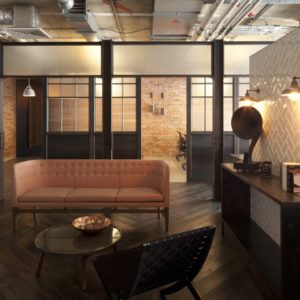
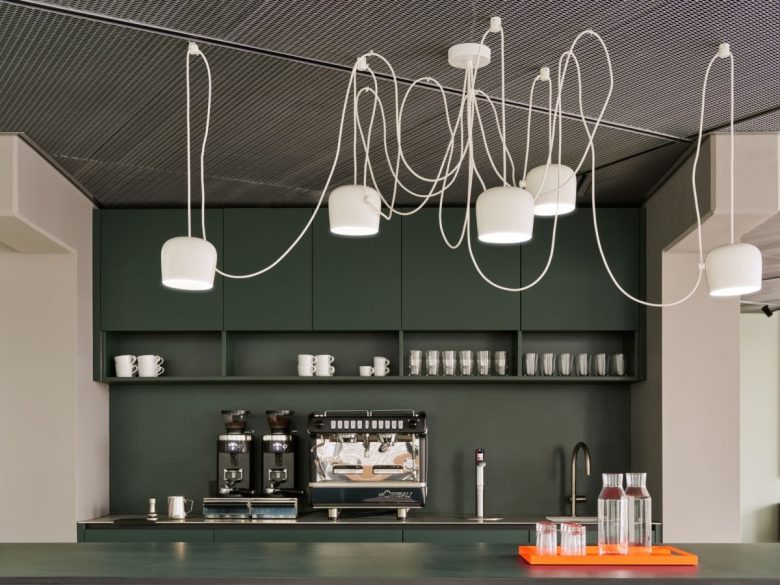
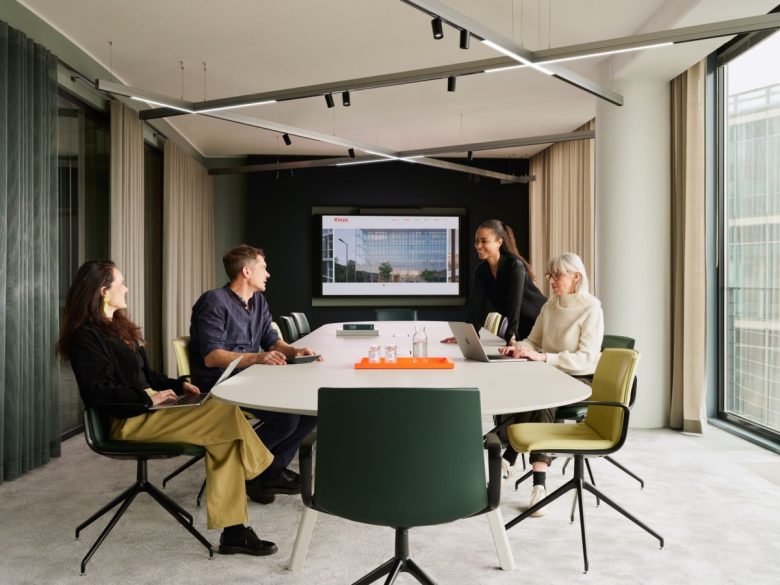
Different zones enable focused work, confidential conversations and spontaneous en-counters. An open kitchen forms the social heart of the office, providing a place for ex-change beyond formal meetings.
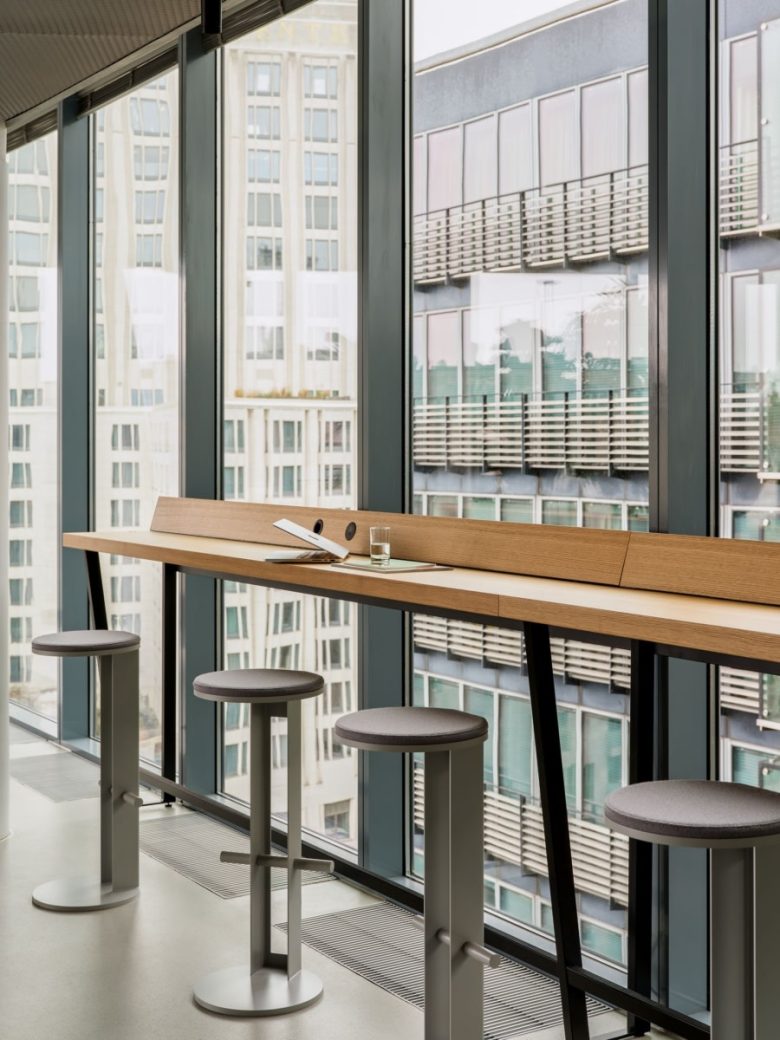
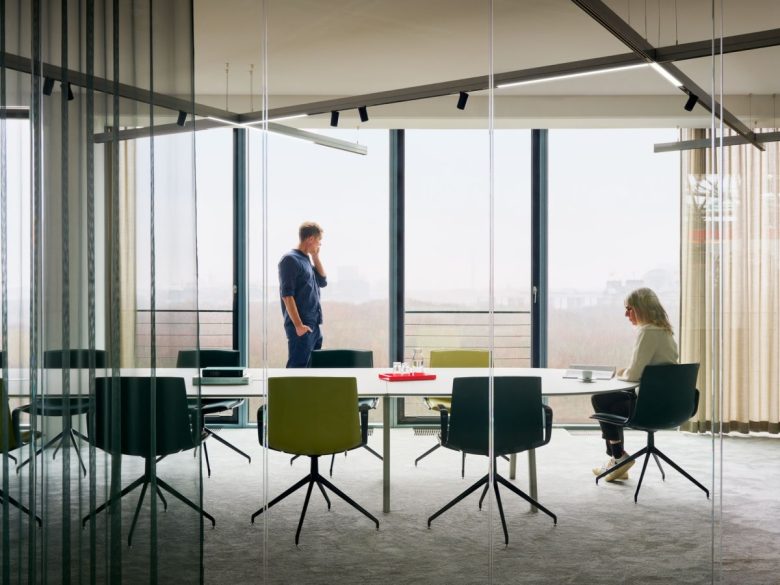
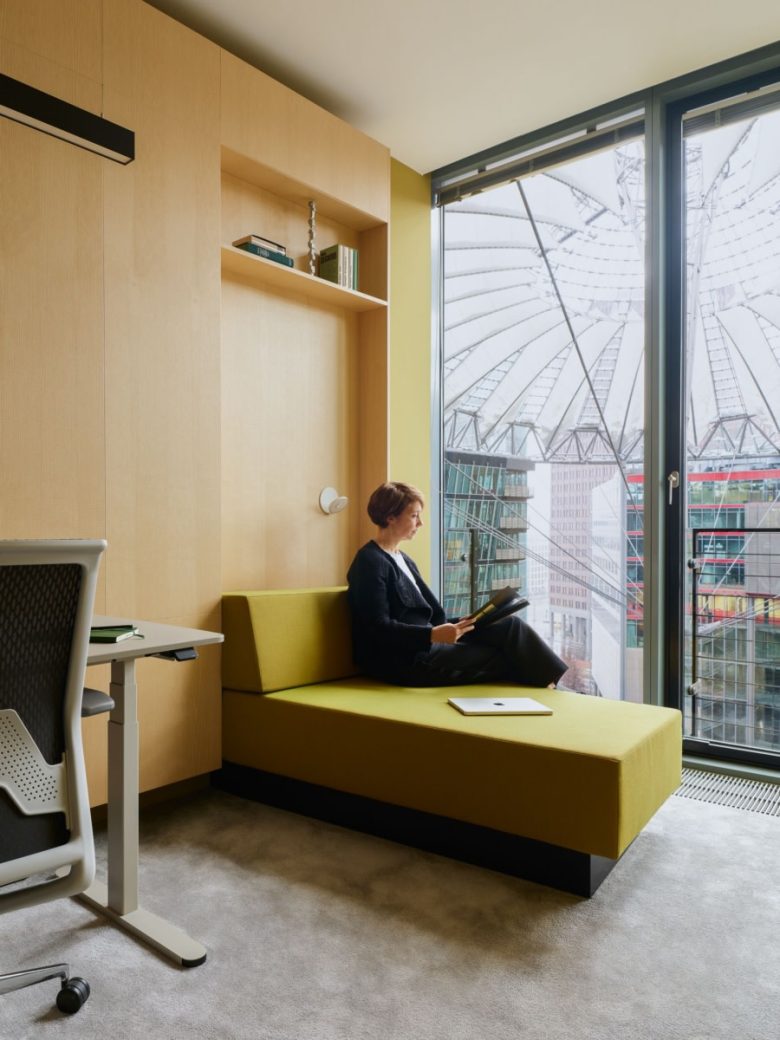
Open lounge areas, hybrid meeting rooms and retreat spaces overlooking the covered inner courtyard, characterised by light, transparency and urban movement as well as sightlines to-wards the Tiergarten and the government district, create an atmosphere that combines professionalism with a quiet, elegant sense of ease.
A dialogue of space, light and material
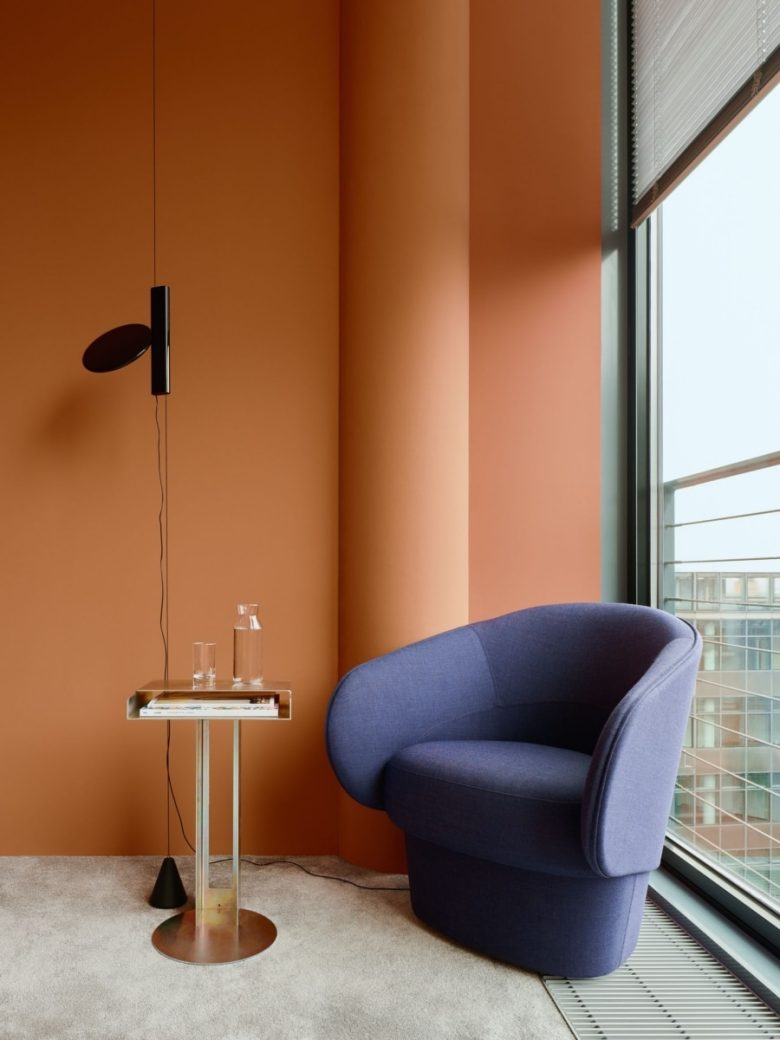
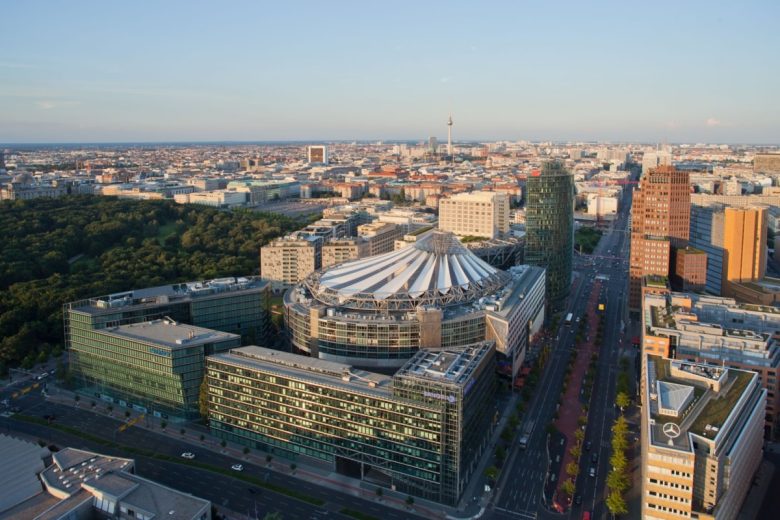
The interior design enters into a dialogue with its architectural context; the glass-and-reflection architecture shaped by Helmut Jahn. Kinzo responds with a warm, tactile materiality that structures the space without dominating it. Wood, textiles and carefully placed colour accents form the stage for focused work.
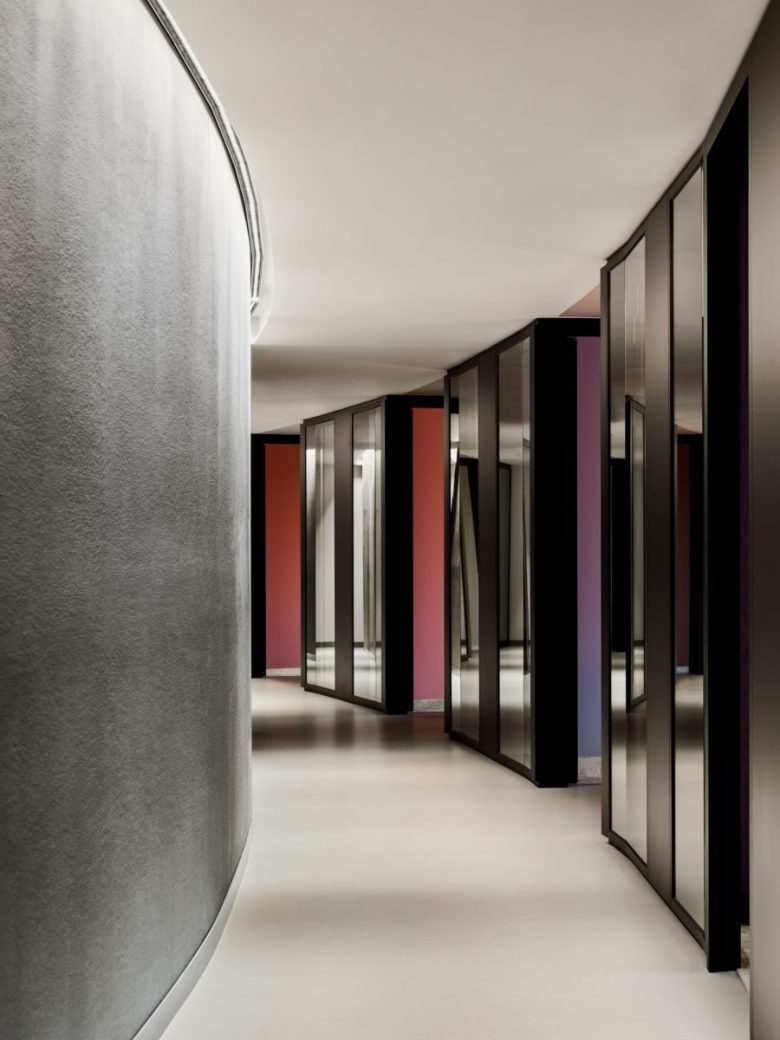
The colour concept reflects the changing light and atmosphere throughout the seasons. Inspiration was drawn from the Berlin sky and the ever-shifting colours of the adjacent Tiergarten. In this way, a subtle connection emerges between interior, place and time.
Change becomes space: Colour gradients and views
The new location at Potsdamer Platz was chosen deliberately. As a symbol of transformation, it aligns with the company’s mindset. The building itself is in a state of transition: Kinzo uses this con-text to create an interior that balances openness with concentration, and representation with confidentiality.
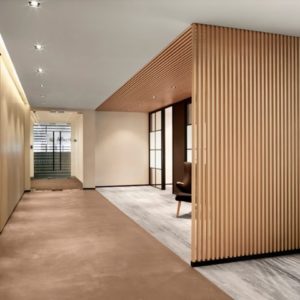
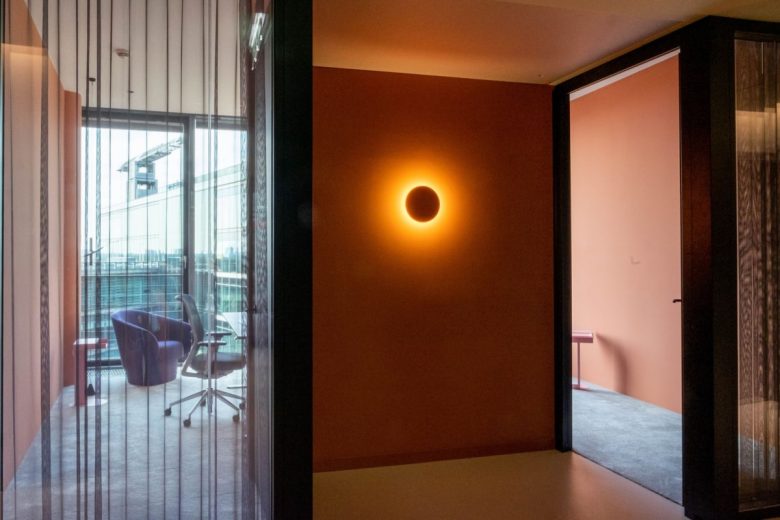
Views across Berlin – from the Tiergarten to the Bundestag – become an integral part of the concept, acting as a daily source of inspiration. Along the gently curved internal corridor, this progression becomes spatially tangible: looking through the glazed office walls, the colour scheme of the individual rooms shifts gradually. Like a walk through the seasons of the neighbouring Tiergarten.
Mindfulness in dealing with existing structures
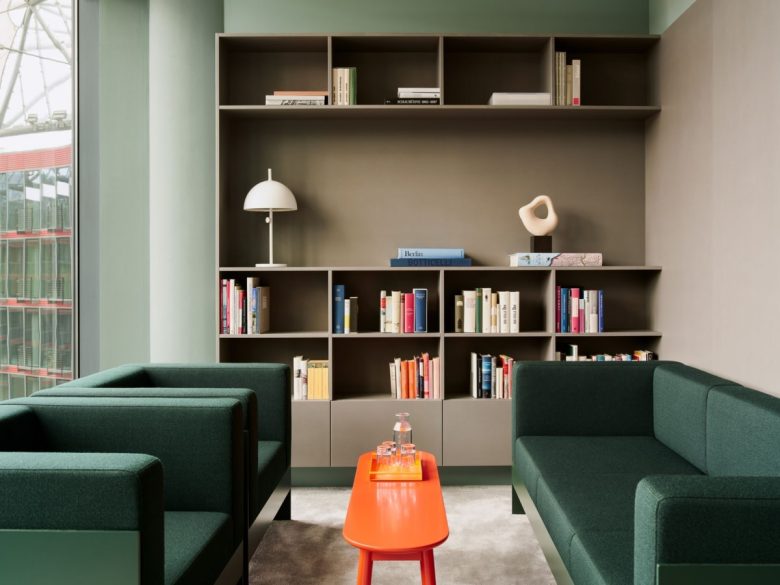
In addition to the architectural structure, deliberately positioned retreat spaces shape the concept. A small library, rooms furnished with chaises longues for frequent travellers, and planted niches expand the working landscape to include places for focus and reflection.
Many of the plants were taken from the previous office. This gesture of preservation reflects the core of the project: a mindful approach to existing resources and the confidence that spaces can grow alongside their users.
While the north side of the office offers expansive views over the Tiergarten, the southern section turns inward—towards calm and a sense of shelter.
The office is not a showcase of formal expression, but a statement of attitude: the human dimension of space, wellbeing and mindful-ness as integral elements of design.
Translating technical complexity into visual calm
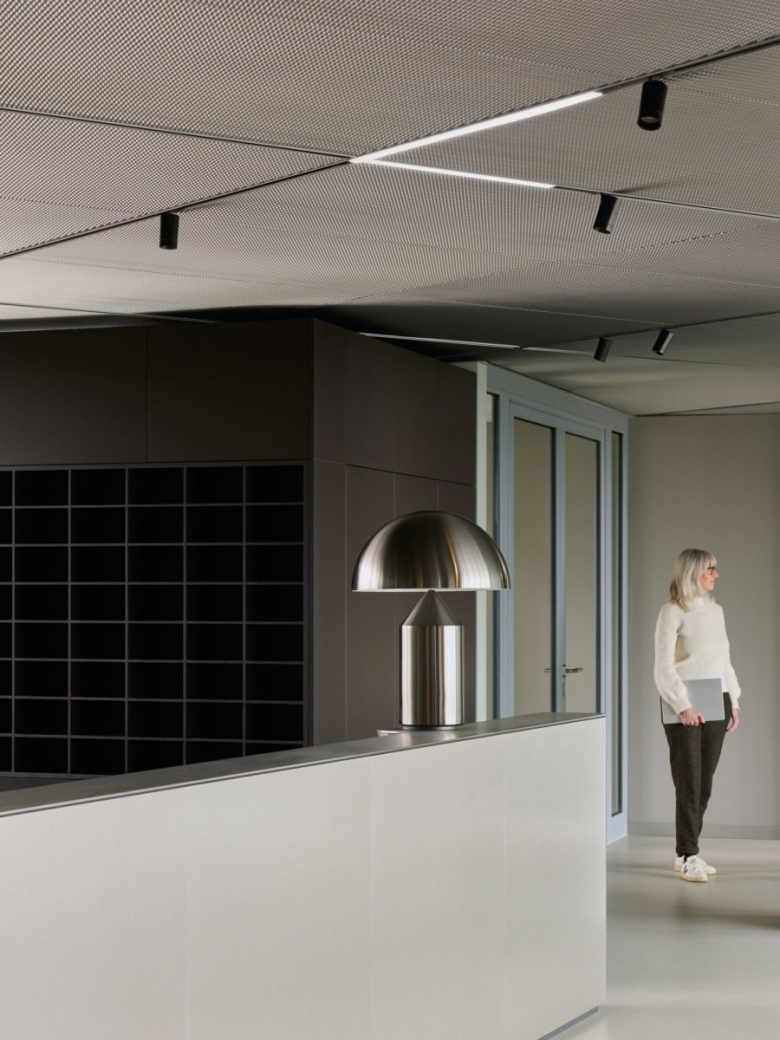
Lighting plays a key role in the project. Together with JBN jack be nimble, Kinzo developed a dynamic lighting concept aligned with the natural human biorhythm. Varying light temperatures accompany the course of the day, while an expanded metal ceiling with integrated light profiles translates technical complexity into visual calm.
Innovation is also evident in the building services. In collaboration with Timmler Technologies, the gravity-based cooling system Gravivent was integrated for the first time into an acoustically effective timber wall. This maintenance-free, power-free and fully recyclable solution combines sustainable technology with a high degree of design precision—an example of how ecological responsibility and aesthetic quality can be brought together.
The result is a workspace that expresses attitude through restraint—quiet, clear and self-evident—and whose design makes Kinzo’s understanding of a contemporary, human-centred work culture tangible.
Design: Kinzo
Design Team: Martin Jacobs, Elena Conrad, Samira Perkins, Pauline Schlautmann, Kristin Jermstad Gravdal
Lighting Design: JBN jack be nimble
MEP Engineering: Lechner + Partner Ingenieure
Photography: Robert Rieger
Add to collection