






Add to collection
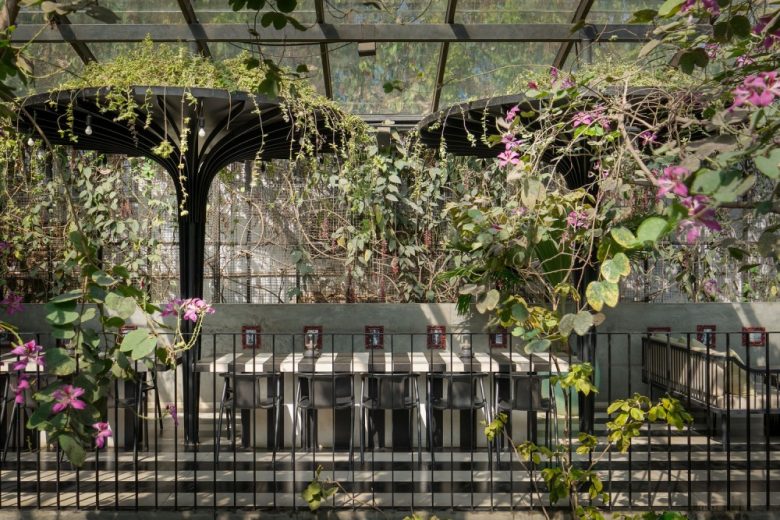
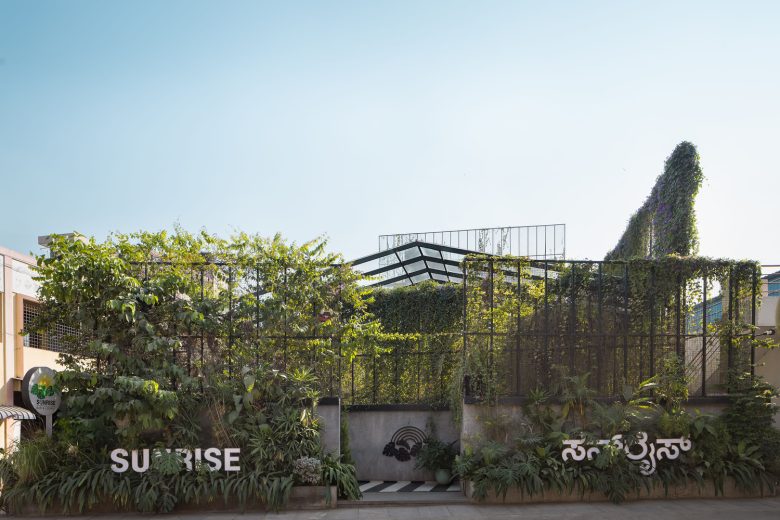
Located within an industrial suburb of Bangalore, Sunrise Garden Restaurant emerges as a quiet counterpoint to its context — transforming a previously utilitarian structure into a layered spatial experience rooted in the idea of the garden as a place of pause, gathering, and imagination. Conceived as an urban oasis, the project explores how architecture can introduce softness, greenery, and sensory calm within an otherwise rugged industrial landscape.
The primary inspiration for the project draws from the philosophical notion of the garden as both a designed and organic entity — a space poised between nature and artifice. Rather than imposing a singular architectural gesture, the design develops through a series of intimate spatial sequences that encourage wandering, discovery, and informal social interaction. Gardens historically offer moments of retreat and reflection, and the project seeks to reinterpret this archetype through a contemporary architectural language.
A key design strategy involved adaptive reuse. Parts of the existing building structure were retained and integrated into the new design to reduce construction costs and environmental impact while preserving a sense of continuity with the site’s history. The architectural intervention introduces a combination of raw materials — concrete, wood, steel, and vegetation — creating a neutral yet tactile framework that allows greenery to become the primary spatial protagonist.
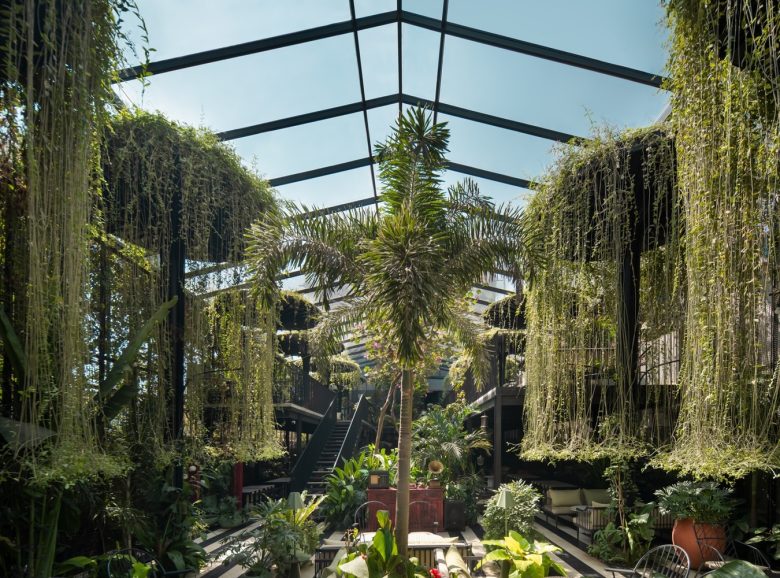
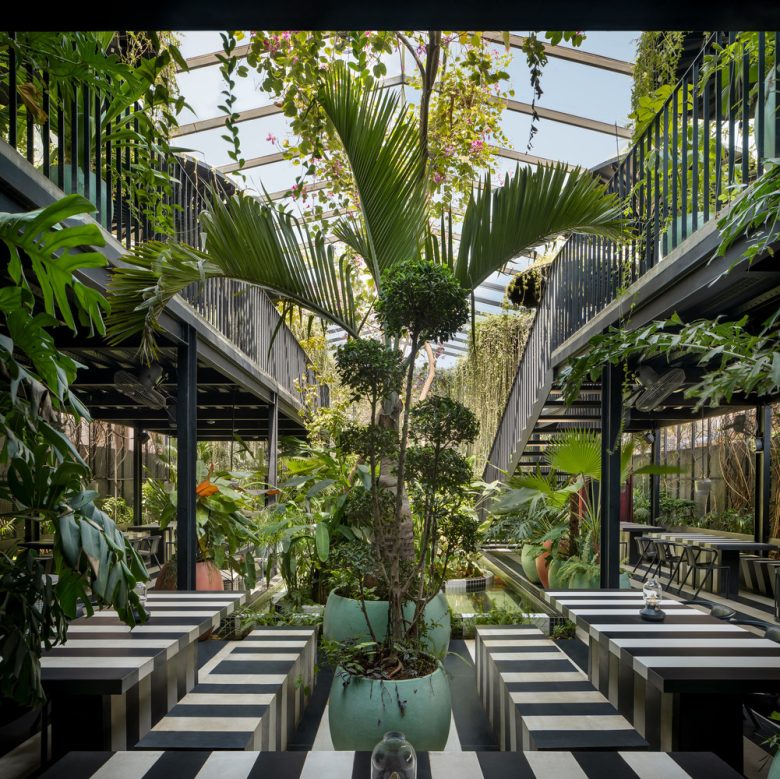
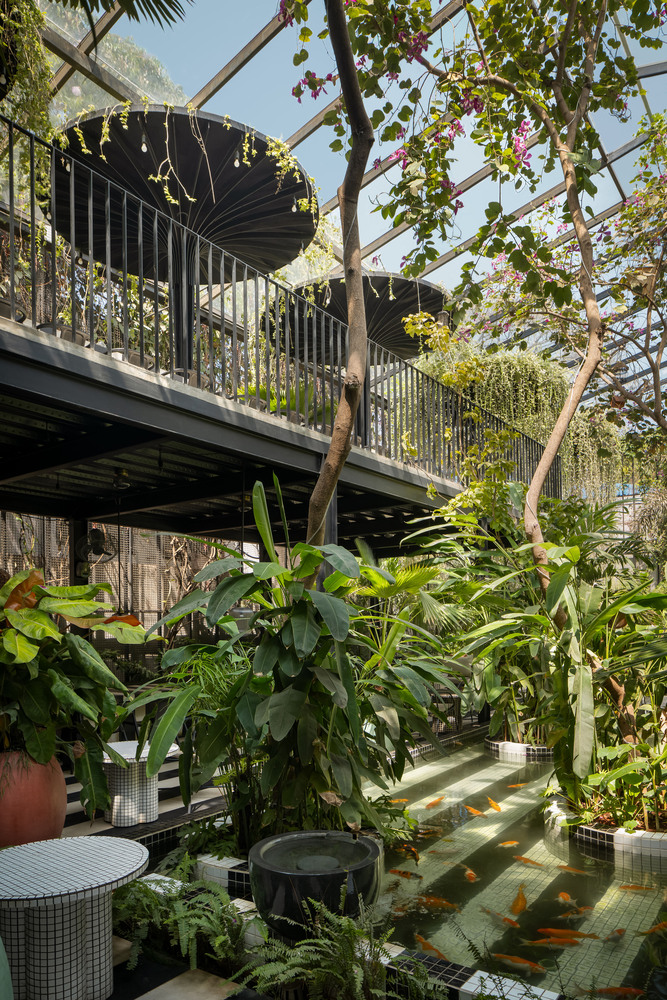
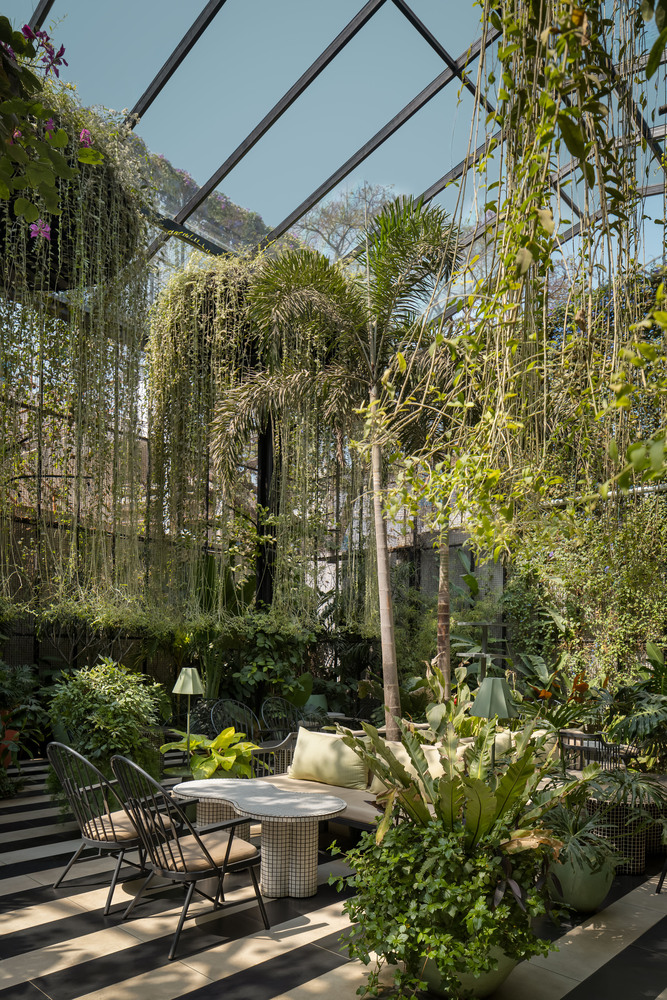
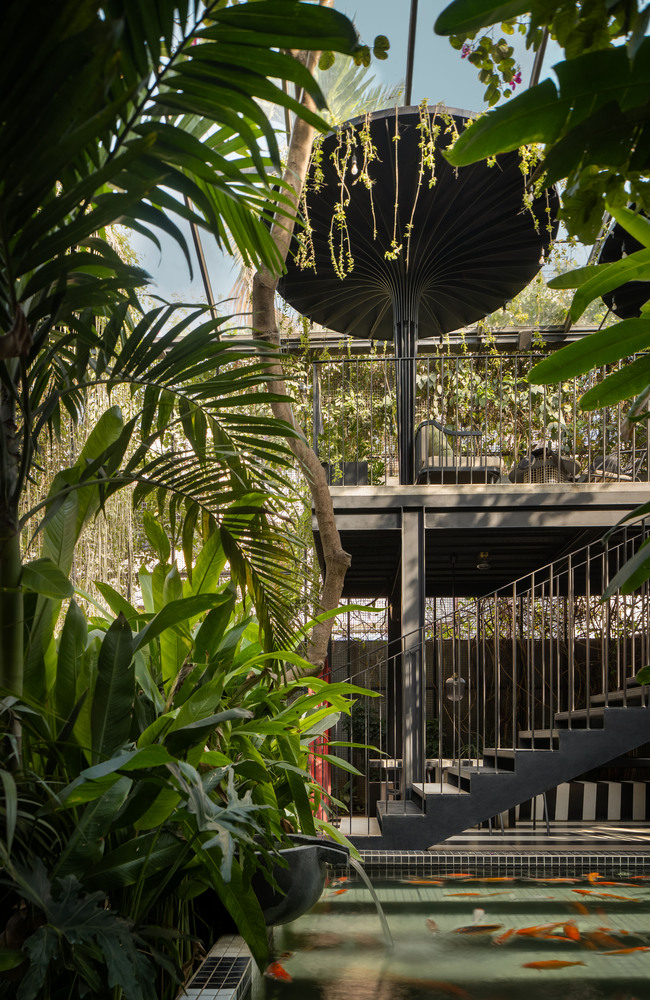
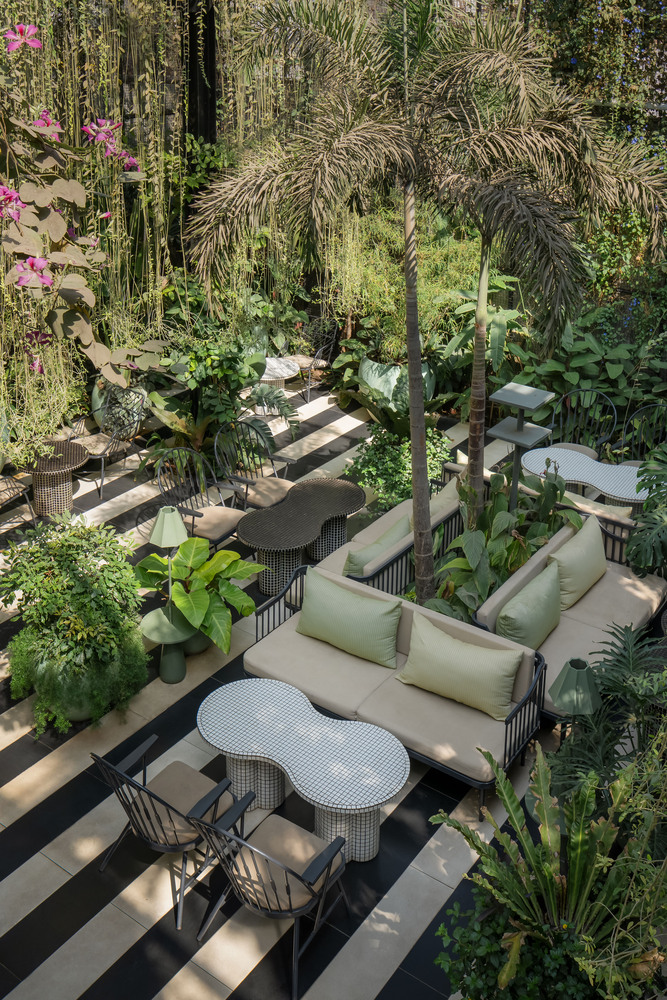
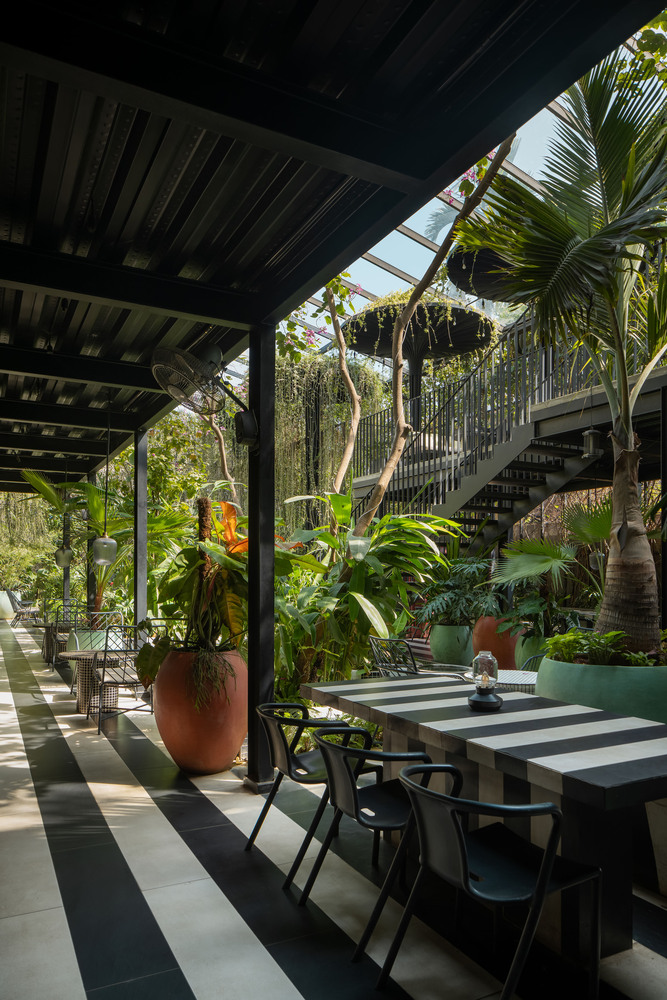
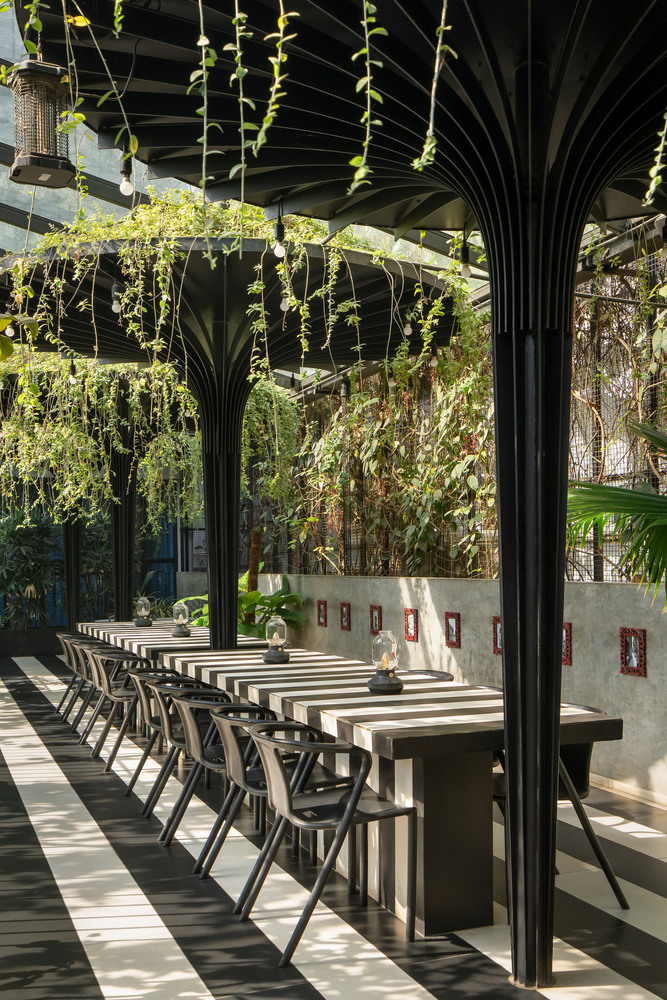
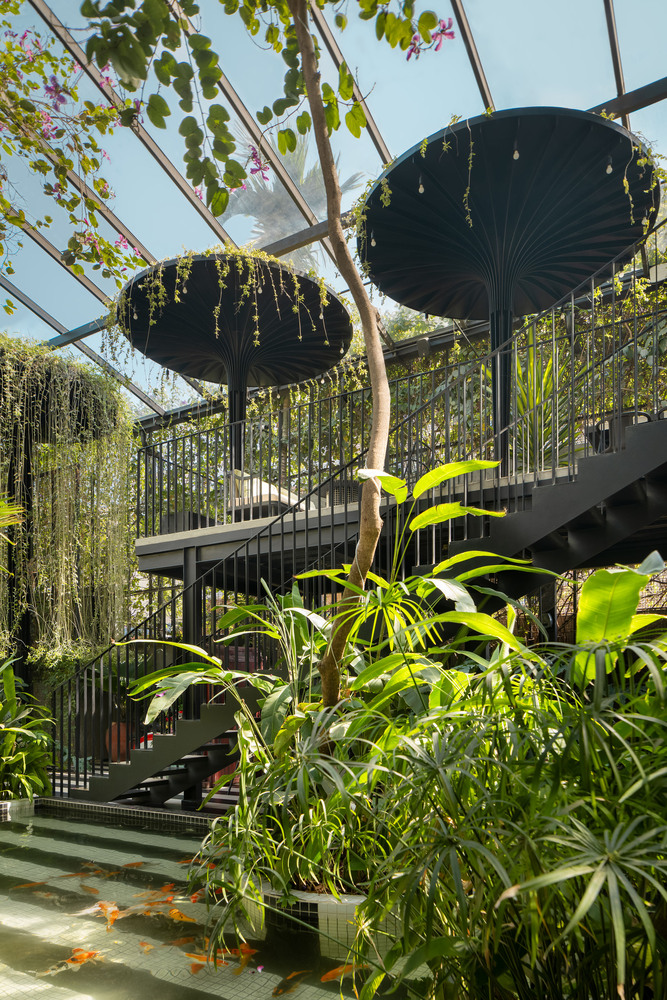
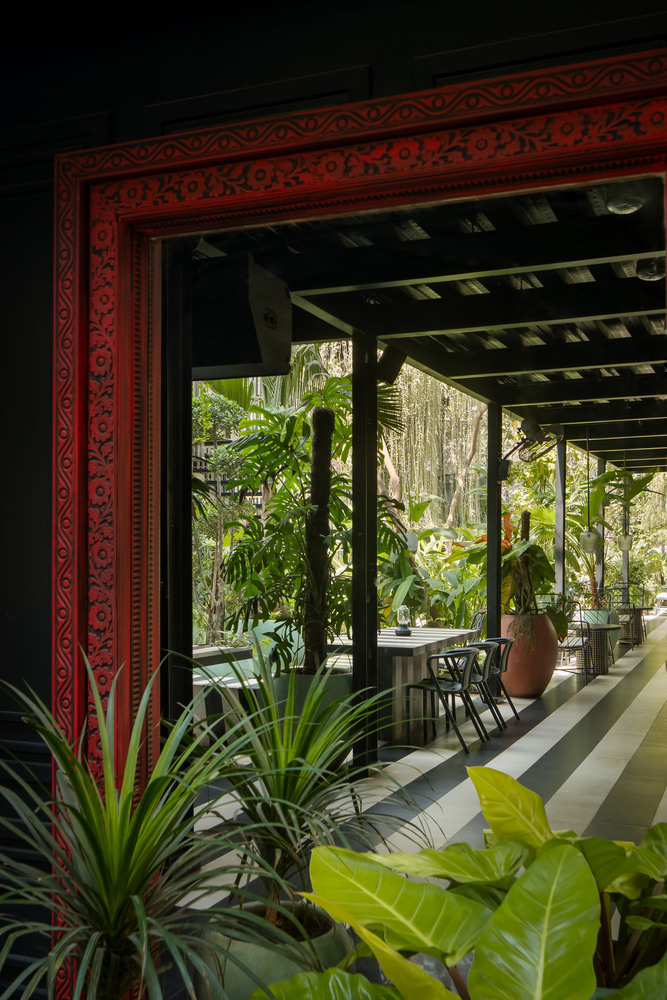
The spatial configuration revolves around a central planted courtyard that acts as both a visual anchor and an environmental moderator. Dining areas unfold around this courtyard, allowing patrons to remain connected to the landscape regardless of where they sit. Circulation becomes experiential rather than purely functional, as staircases, terraces, and elevated seating zones offer shifting perspectives of plants, sky, and light. The upper level introduces semi-covered seating sheltered by sculptural canopy elements that filter sunlight while framing open views above, reinforcing the sensation of dining within a garden.
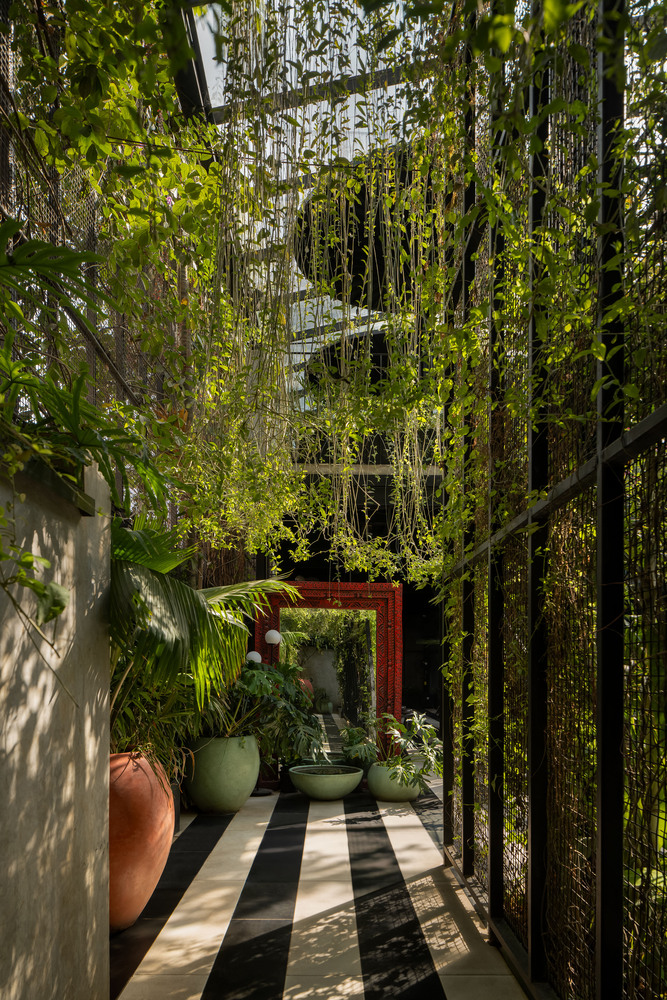
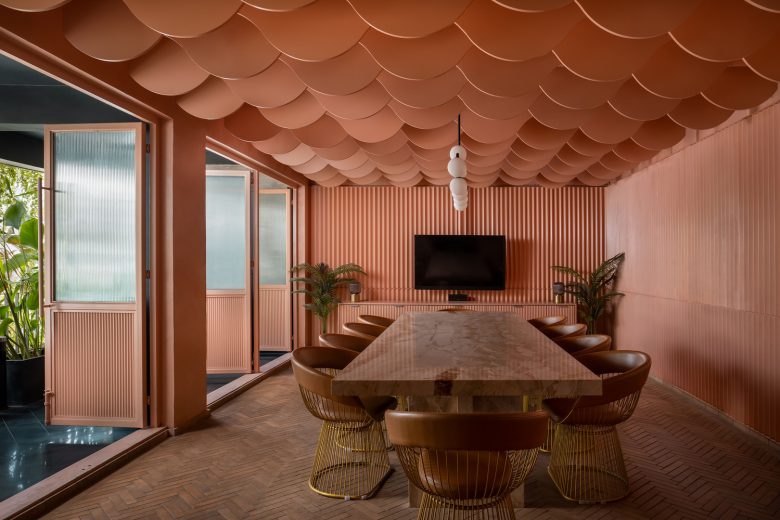
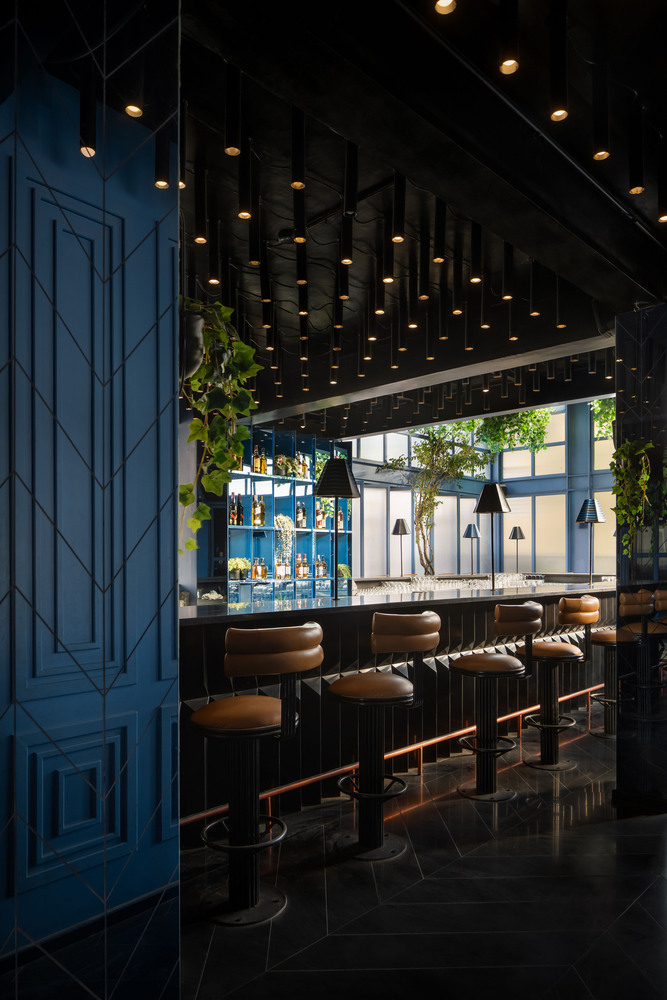
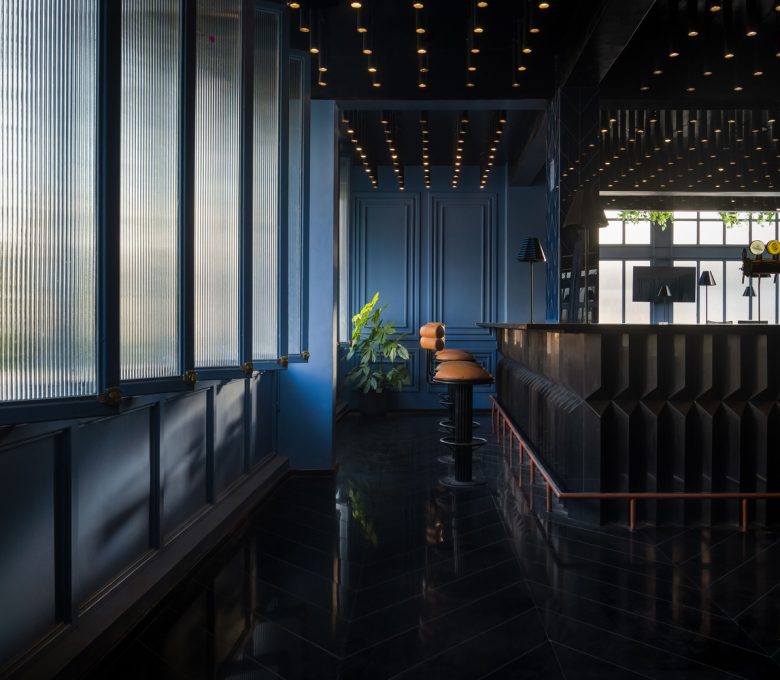
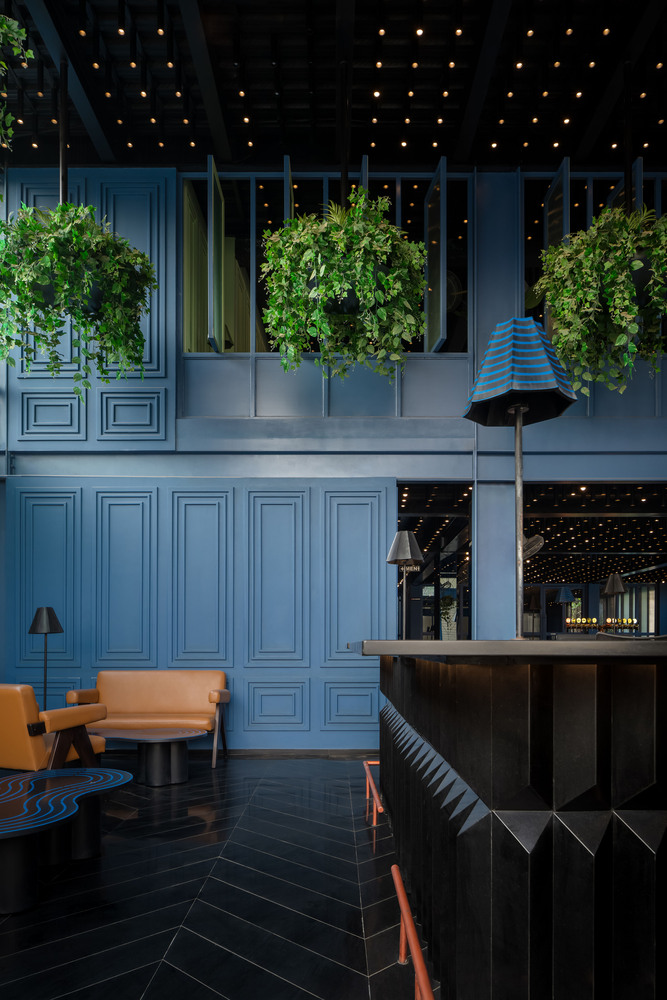
Materiality plays a crucial role in establishing atmosphere. Custom wall paneling introduces subtle texture to interior surfaces, while red/blue tones and patterned tiles create a restrained backdrop against which vegetation becomes vibrant and dynamic. Furniture elements were largely custom-designed and fabricated on site by local craftsmen, emphasizing both material authenticity and adaptability.
Light — both natural and artificial — informs the experiential quality of the space. Large openings and outdoor extensions maximize daylight, while a grid of integrated lighting towards deeper areas ensures visual continuity during evening service. The project intentionally balances openness with intimacy, enabling diverse modes of occupancy ranging from casual daytime dining to more immersive evening experiences.
Ultimately, Sunrise Garden Restaurant positions itself as more than a hospitality project; it becomes a spatial narrative about reclaiming the idea of the garden within the contemporary city. By blending modest construction techniques with thoughtful spatial choreography, the project proposes an architecture that is simultaneously understated and experiential — offering a slow, contemplative alternative to the fast-paced urban environment surrounding it.
Architects: M9 Design Studio
Lead Architects: Nischal Abhaykumar and Jesal Pathak
Photographs: Ekansh Goel




Add to collection