





Add to collection
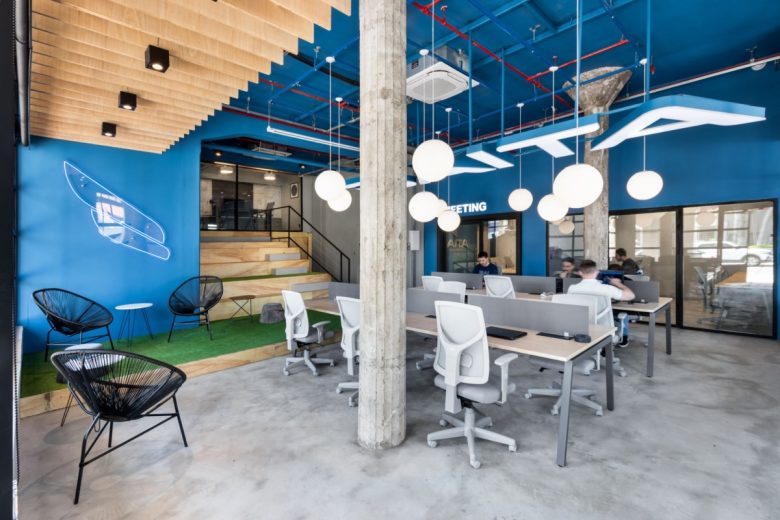
Estúdio254 transformed the historic A.J. Renner building in Porto Alegre into Baita Technology offices, seamlessly blending industrial heritage with modern workplace dynamics to foster collaboration and enhance organizational culture.
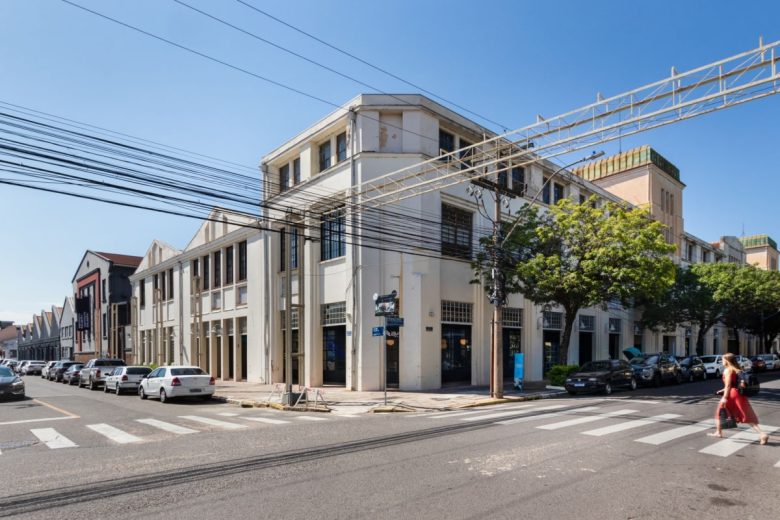
The new headquarters of Baita Technology occupies the historic building of the former A.J. Renner, a spinning and weaving company of great importance to the industrial history of Rio Grande do Sul. Designed in 1922 by engineer Carl Hartmann and built in reinforced concrete, the building is characterized by its industrial spatiality and the presence of columns with mushroom-shaped capitals. The project is based on valuing this existing structure, revealing elements that had been concealed and reinterpreting the building’s industrial memory to accommodate the company’s contemporary work dynamics.
The proposal aimed to create an environment that reflects the identity and organizational culture of Baita Technology. During the initial stages of the project, conversations were held with the company’s leadership in order to understand work routines, operational needs and institutional values. From this dialogue, the project guidelines were defined, focusing on the creation of a workplace capable of integrating collaboration, concentration and moments of pause within the daily work routine.
Before the intervention, the space was used as a storage area, a condition that allowed for a complete transformation within the available 130 square meters. With a ceiling height of nearly four meters, the spatial organization was structured across three distinct levels: the ground level, the stepped seating structure and the mezzanine.
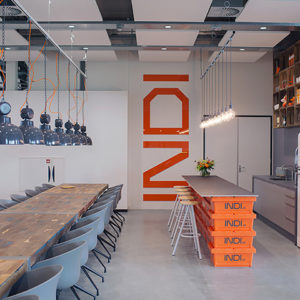
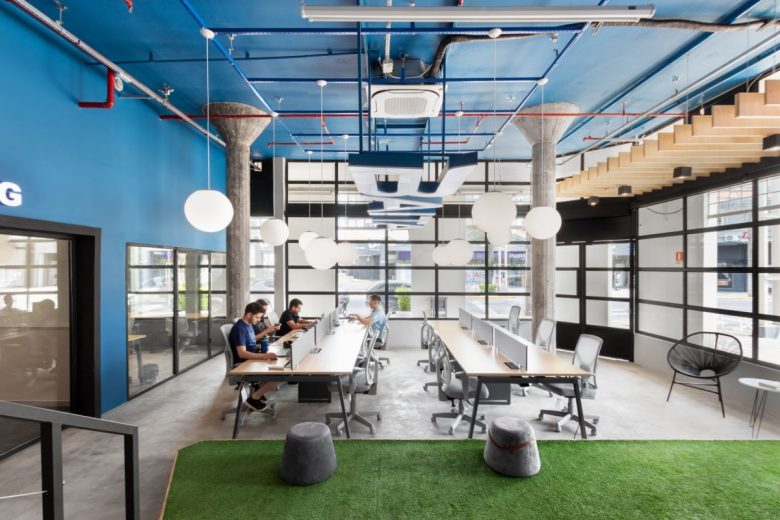
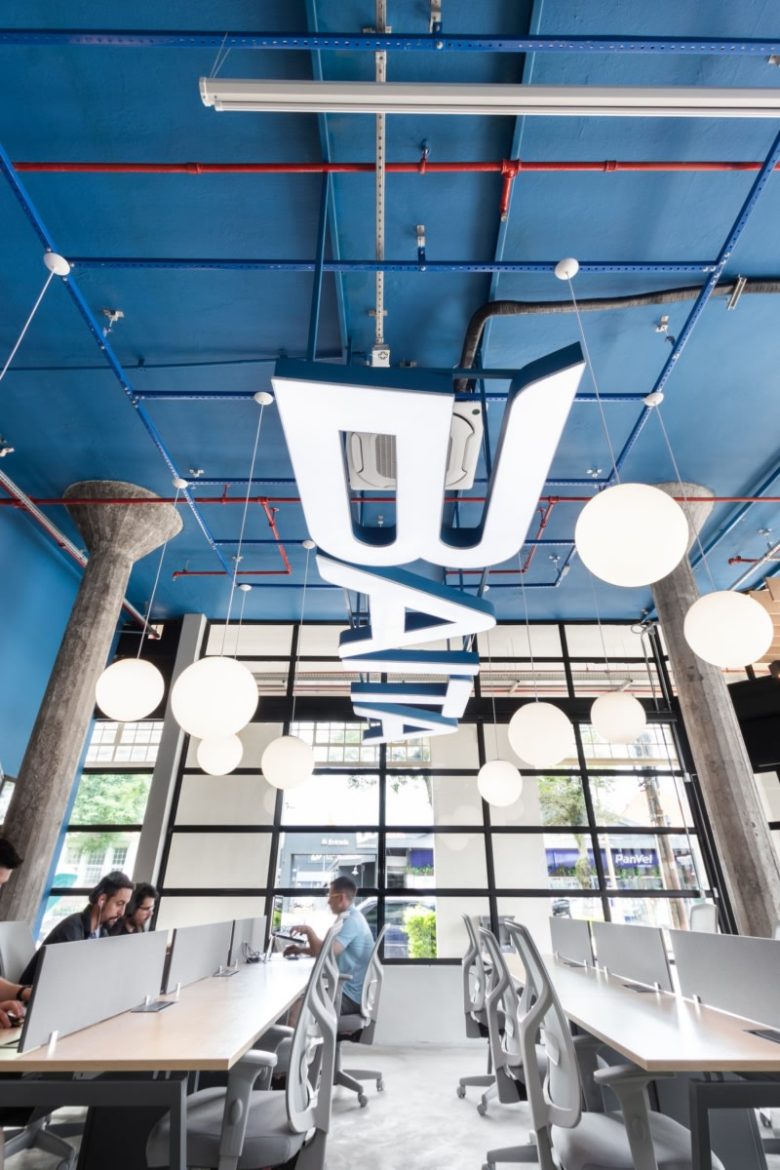
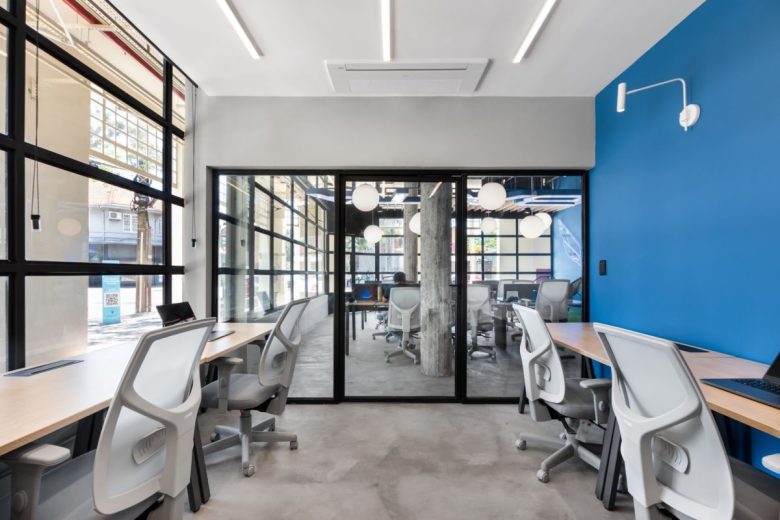
At the entrance level, the open space accommodates the area dedicated to the so-called “noise team,” where workstations are distributed between the exposed concrete columns. The presence of the original structure guides the organization of the layout, reinforcing the industrial character of the space and establishing a direct relationship between architecture and work dynamics. Within this same area, a breakout space was introduced with loose furniture and a synthetic grass floor, creating a more informal atmosphere and encouraging different ways of occupying the environment.
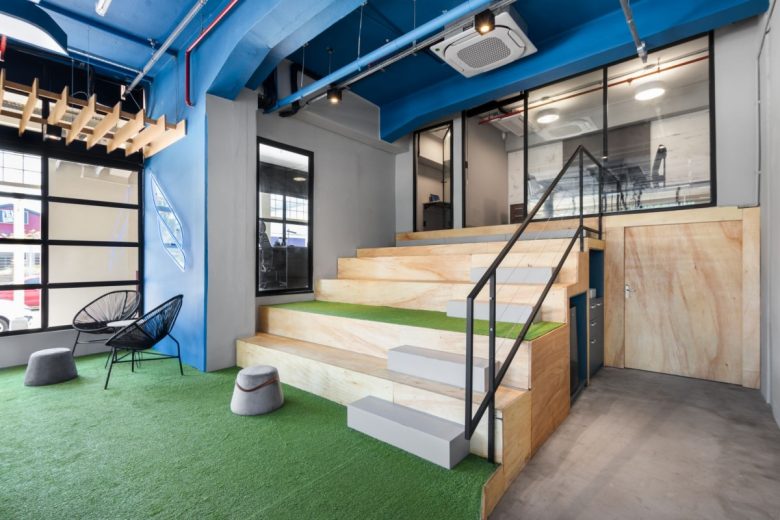
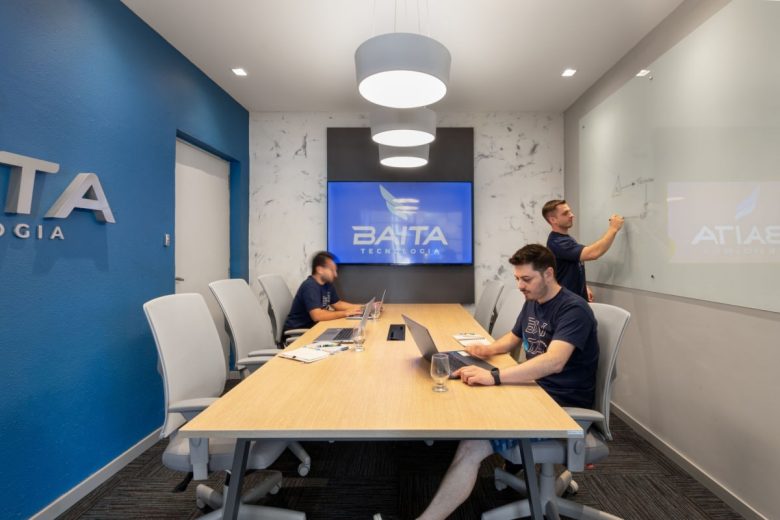
Adjacent to this central area are the rooms dedicated to activities that require greater concentration, such as the “focus team” workspace and the meeting room used for internal discussions and client meetings. Beneath the stepped seating and the mezzanine are the support areas, including the pantry and storage.
The stepped seating structure becomes a key element of the project, organizing the different levels of the office while also functioning as a space for presentations, gatherings and informal meetings. This element leads to the administrative areas and to the CEO’s office, located above the mezzanine level.
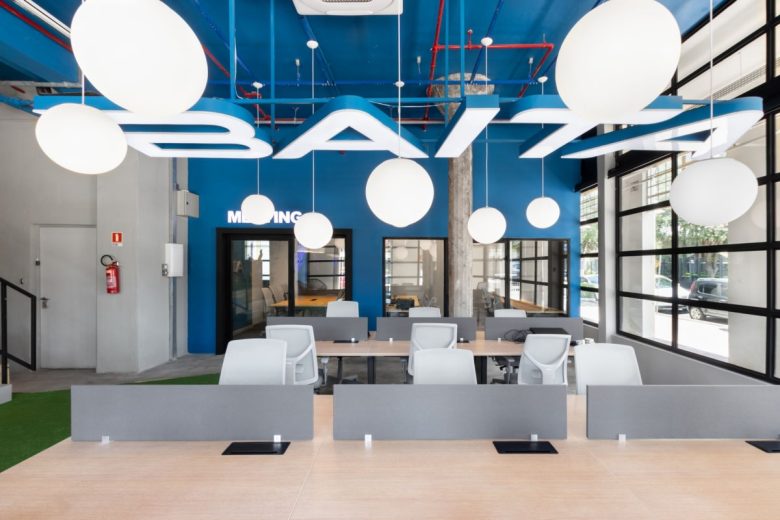
The material palette highlights the original structure while introducing contemporary elements that reinforce the company’s identity. The Baita brand was incorporated into the space as a lighting fixture positioned above the main work area, creating a direct connection between architecture and visual identity.
More than simply accommodating different functions within a single environment, the project transforms a former storage space into a dynamic and welcoming workplace capable of encouraging collaboration, strengthening company culture and reinterpreting the building’s industrial memory.
Design: estúdio254
Lead Architect: Samantha Diefenbach
Photography: Leonardo Krug
Add to collection