




Add to collection
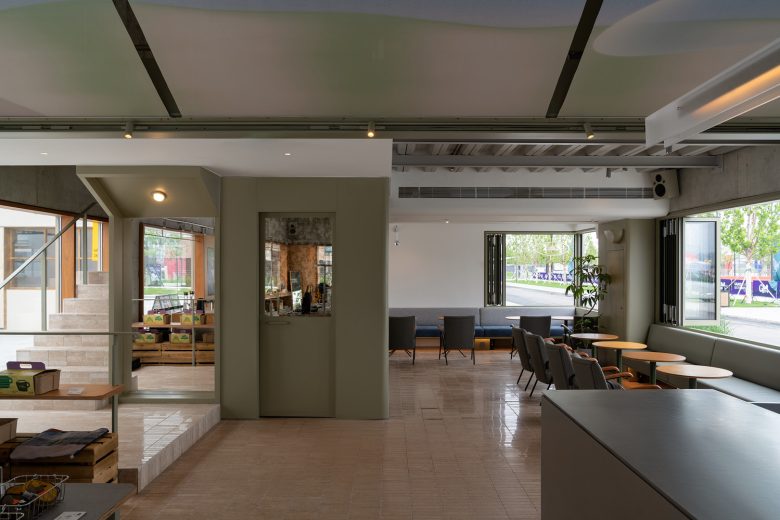
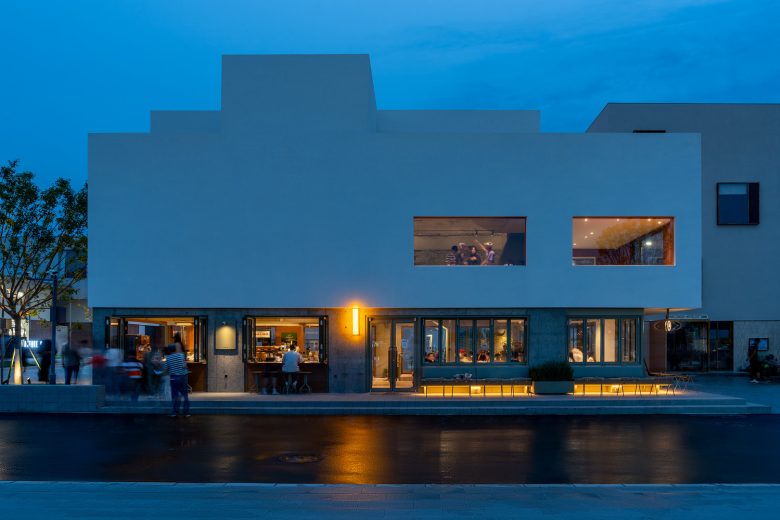
A southern brand arriving on this northern shoreline offers more than the scent of coffee—it delivers an honest answer to the question of “how to belong here.” Confronted with a two-story volume, the design orchestrates a double-layered narrative space—bustling yet immersive—structured around spatial hierarchy, communal ties, and everyday poetry.
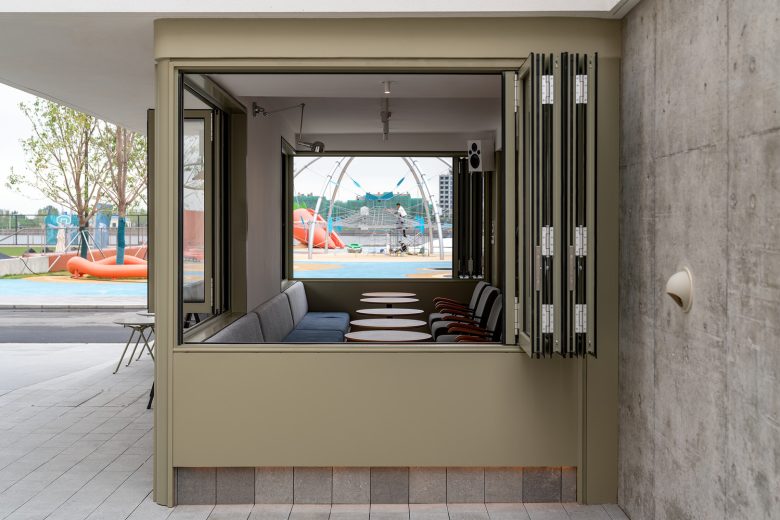
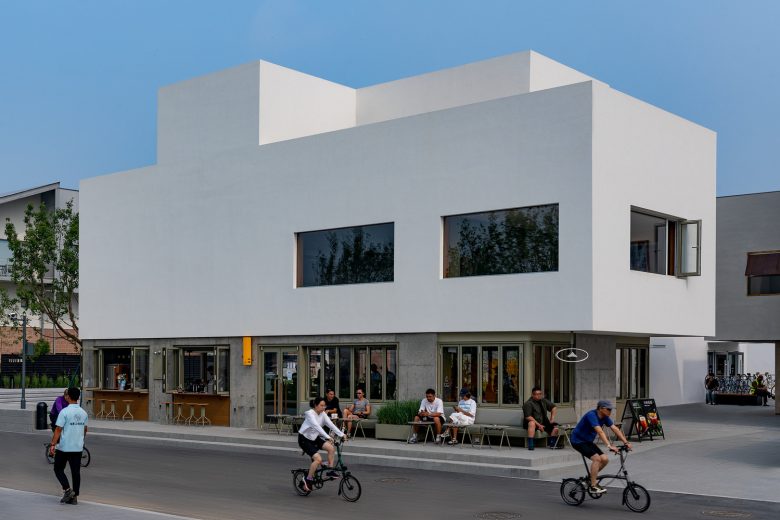
01 The Scenery Has Always Been There – The project is located in Aranya, Qinhuangdao, and involves the adaptive reuse of an existing street-front building. Originally used as a studio, the building was not perfectly suited to the coffee program. Additionally, the region’s prolonged frozen ground period made indoor insulation a core constraint. Ultimately, the design abandoned the brand’s signature fully open storefront typology, opting to open only the ground floor and incorporate a system of heavy doors and windows to address both insulation and condensation prevention under the harsh climate—ensuring year-round usability through a restrained opening-and-closing strategy.
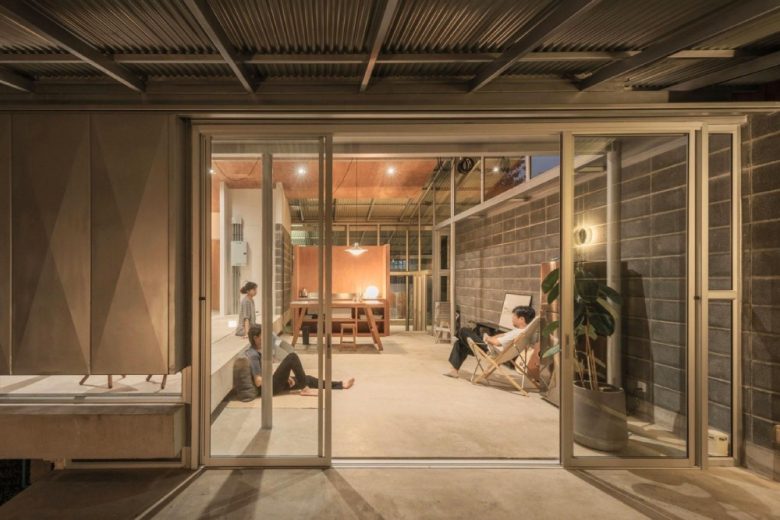
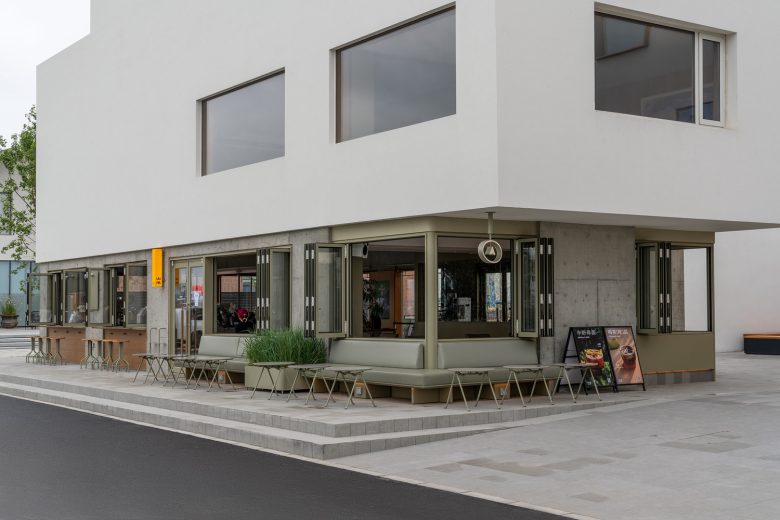
We stripped the ground floor of its original cladding to expose the load-bearing walls, revealing the honest construction of northern architecture built to withstand severe cold. The rustic texture of concrete quietly resonates with Aranya’s ethos of “quality simplicity, restrained abundance.” Following the structural logic of beams and columns, we rationalized the window-and-door system and the outdoor seating. Raw naturalism is disciplined through minimalist lines, precise proportions, and nuanced detailing—endowing the space with spiritual lightness and contemporary refinement.
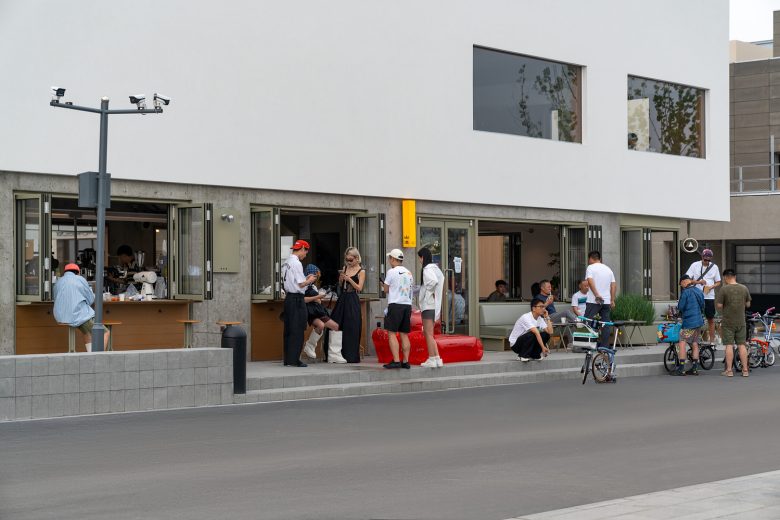
A modest two-step rise along the building’s exterior carves out a gracious social distance. Here, one may engage in the bustle of the neighborhood or retreat into a quiet moment alone. The boundary between inside and outside is softly intertwined, striking a balance between the public and the intimate. Through “interface reduction,” the senses are gently awakened—sea breeze, sunlight, greenery at the doorstep, coffee aroma, and murmured conversation. The scenery is present, here and now. One can embrace authenticity and nature without relinquishing the comfort and beauty of modern life.
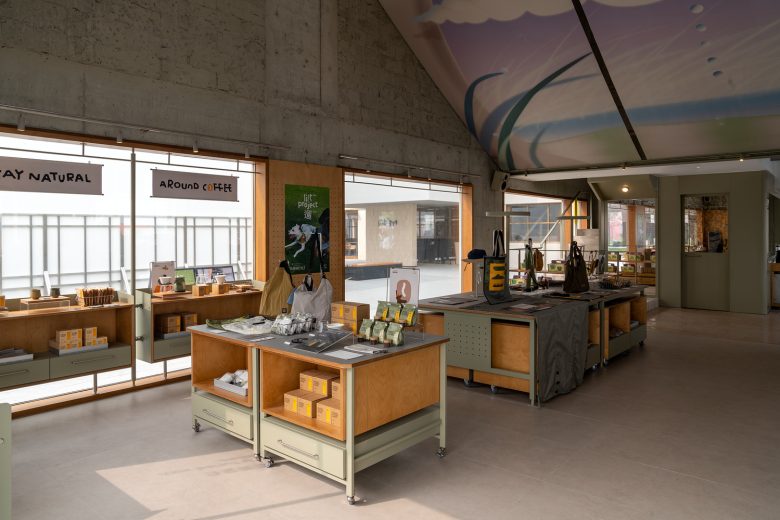
02 A Gentle Dialogue Between Inside and Outside – While commercial spaces commonly pursue maximum efficiency per square meter, the design and the brand reached a consensus: to trade some “efficiency” for deeper experiential value. The “instant monetization” of the ground floor is deliberately downplayed, intended to guide visitors clearly toward the more content-rich interior. The lowered doors and windows, together with the exposed concrete walls, create a striking visual tension, which instead makes the interior feel deeper and more expansive. Warm wood, small-scale brick paving, lightweight steel railings, and movable furniture collectively endow the space with material richness and flexibility. The staircase serves as the spatial hub, integrating retail guidance, brand presentation, and access to the second floor. Through shifts in elevation, material transitions, and the pull of light, the circulation is subtly anchored—without relying on explicit signage.
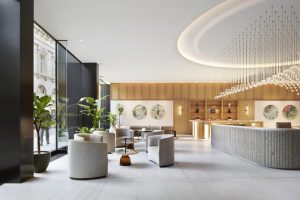
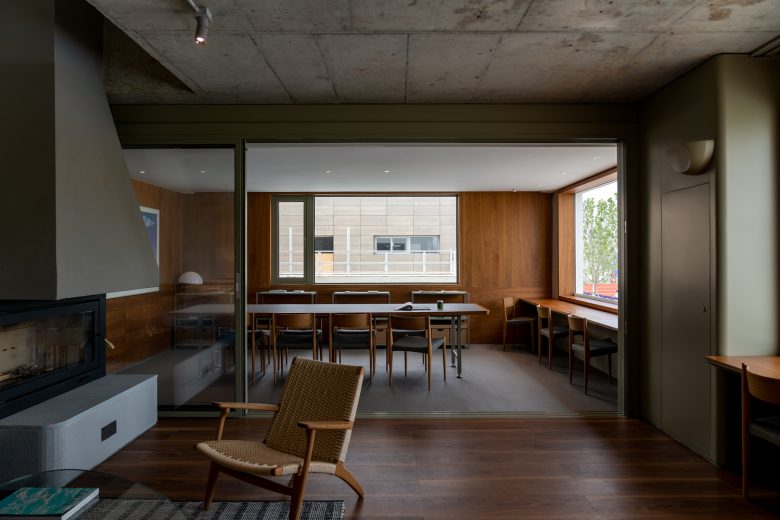
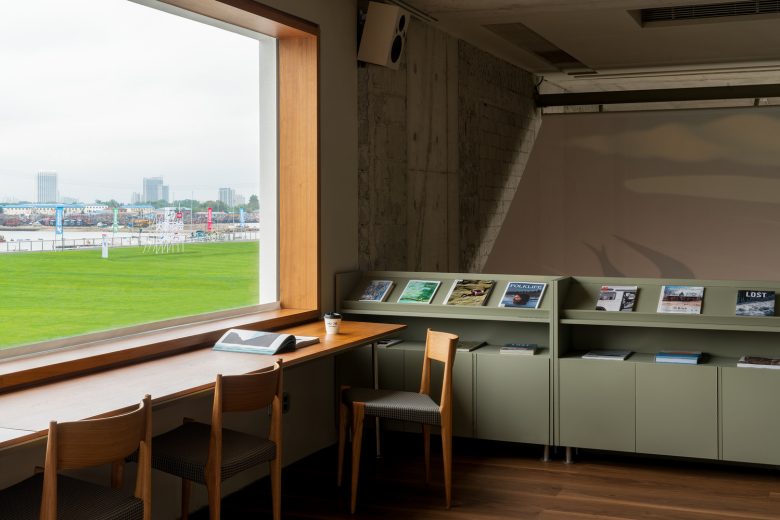
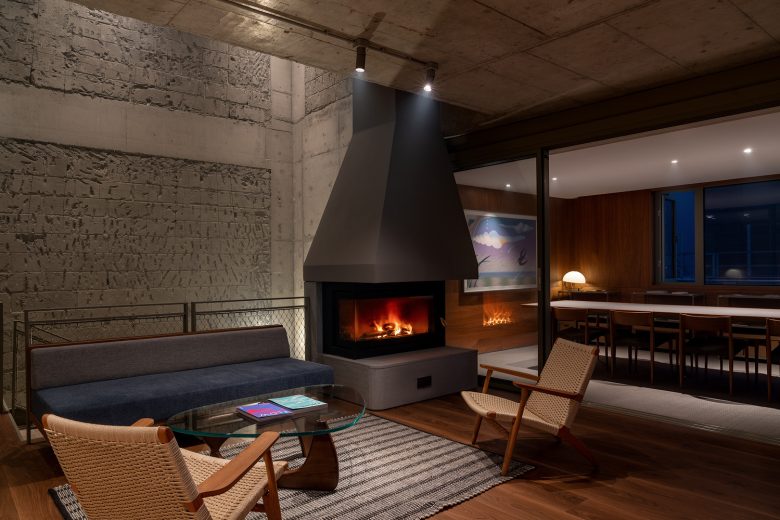
Serendipitous Poetry and Distance – The second-floor space enjoys elevated vistas and a more tranquil disposition. Expansive glazing ushers light into the interior, while the generous seating layout and unhurried circulation together define a relaxed and warm “living room” atmosphere. Within the double-height volume, the design introduces a “distant hearth” and opens a skylight in the roof, making this spot a spiritual focal point that invites people to pause and meditate.
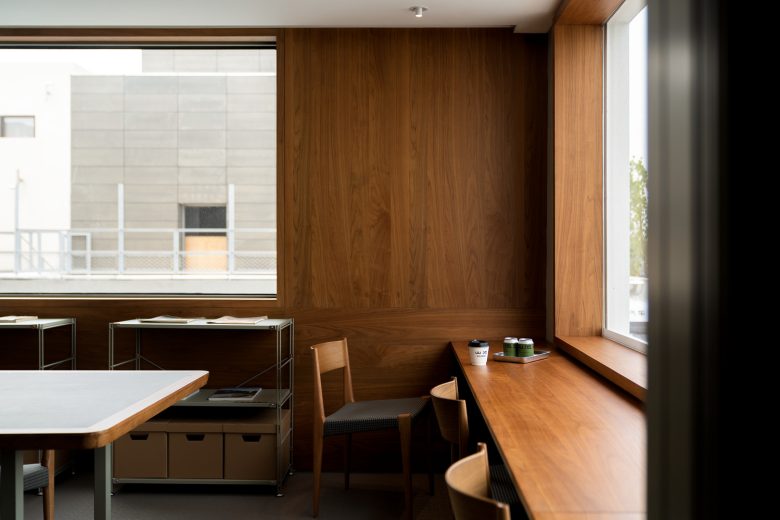
When the sea breeze touches your cheek, light drifts across the wooden walls, and your body sinks into the gentle curve of a chair—the barriers between people and the world quietly dissolve within tangible spatial language and perception. When space itself becomes a destination and a memory anchor, “good business” gains a more lasting and healthy foundation. A good life, in itself, is the most compelling business model.
Architects: NUC Studio
Lead Architect: Huang Changsong
Art Director: Ye Wenkao
Lead Copywriter: Zi Xi
Lead Designer: Huang Changsong
Design Team: Huang Changsong, Zhu Dezhong
Photographs: Shaoqing Pan
Add to collection