






Add to collection
Problem: The sauce category offers a wide range of flavours, but most products still follow the same basic logic: the taste is fixed before the sauce reaches the table. This becomes especially noticeable during shared dinners, where individual preferences can vary significantly. One guest may want more spice, another may prefer a milder flavour, while someone else may avoid certain herbs altogether.
At the same time, for a young urban audience, food is no longer only about convenience or taste. It has become part of a lifestyle shaped by experiences, aesthetics, discovery, and social interaction. People enjoy trying new cuisines, hosting dinners at home, following gastronomic content, and sharing new finds with friends and online. World cuisine becomes a way to travel through food without leaving the city.
However, many sauces remain primarily functional products. Their packaging rarely communicates the cultural character of the cuisine they represent, and the product itself offers little room for personalisation.
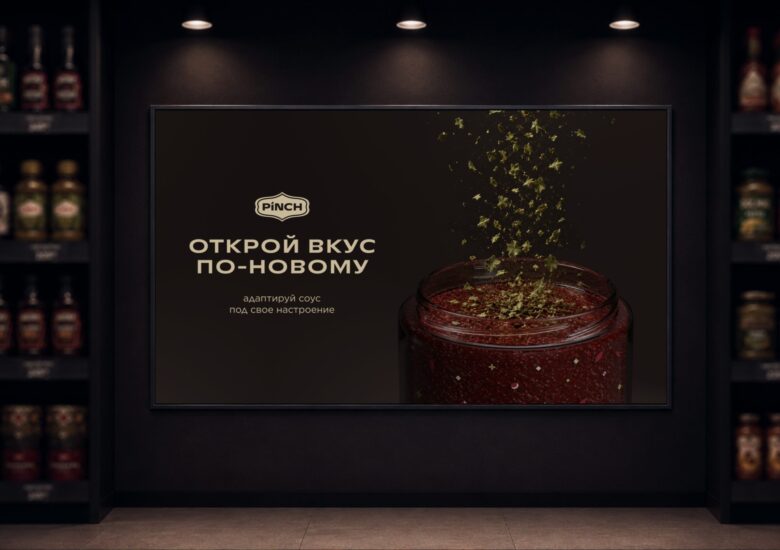
Idea: PINCH was created as a brand of world-cuisine sauces that transforms a familiar product into a small gastronomic journey. The project rethinks sauce not as a completely finished flavour, but as a gastronomic base that can be adapted directly at the table.
The idea is to preserve the experience of a shared meal while allowing each person to adjust the final taste according to their own preferences. Instead of preparing several versions of the same dish, guests can make one sauce spicier, more aromatic, or more restrained for themselves. In this way, personalisation becomes part of the dining ritual rather than a technical feature of the product.
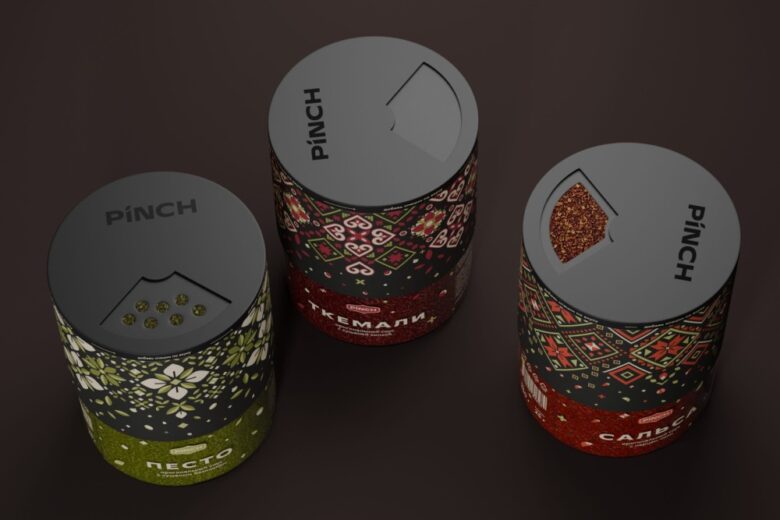
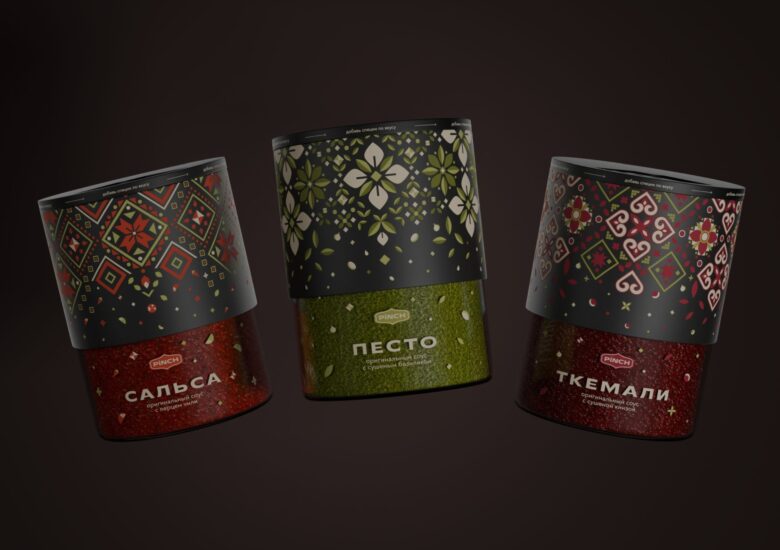
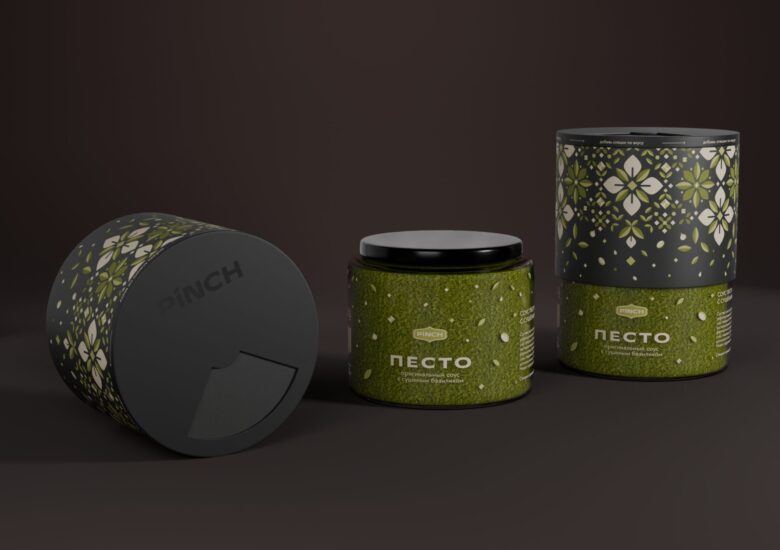
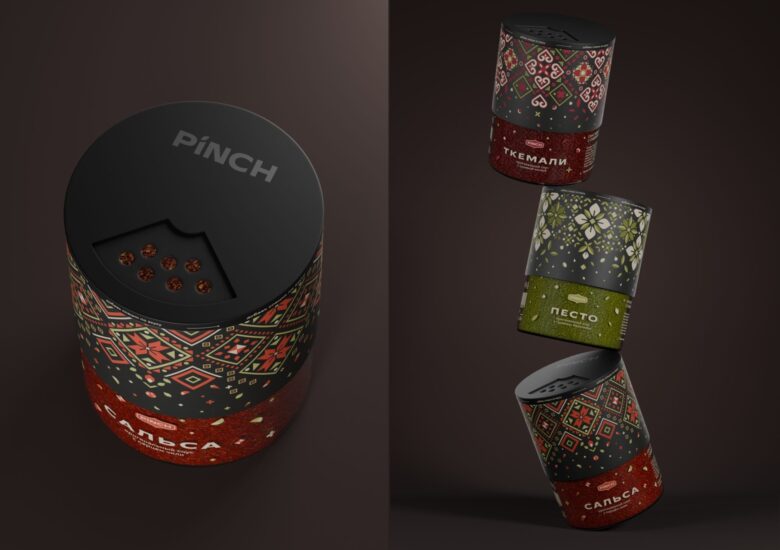
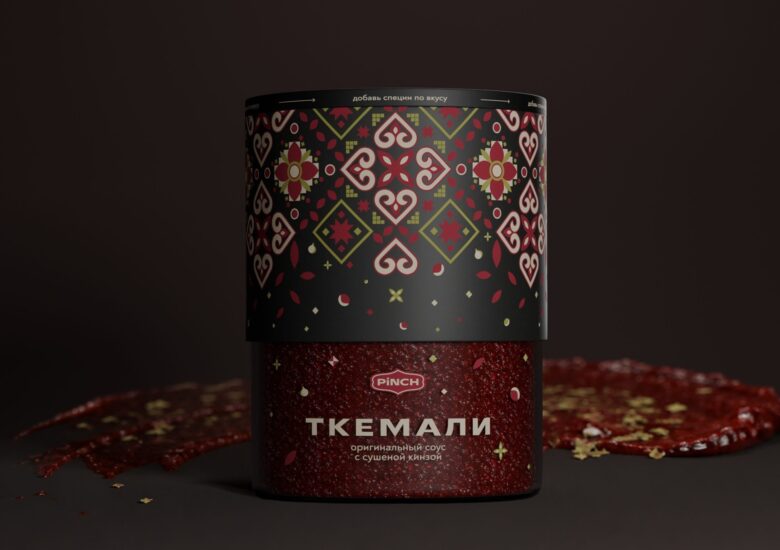
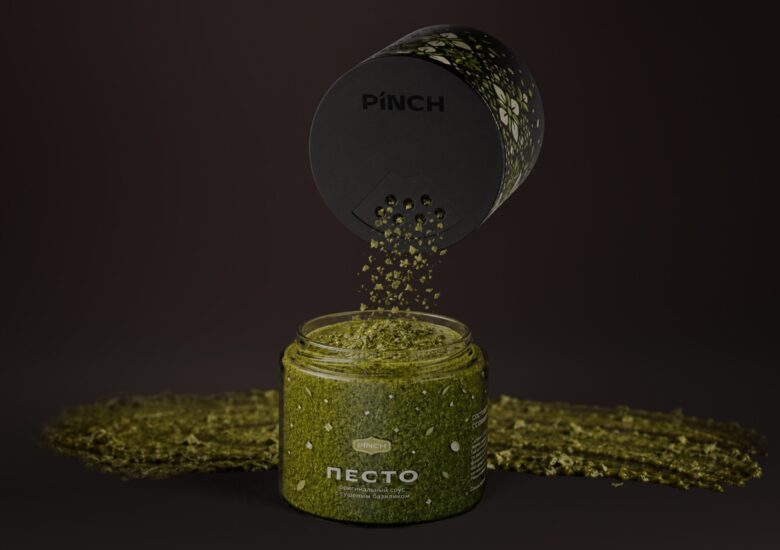
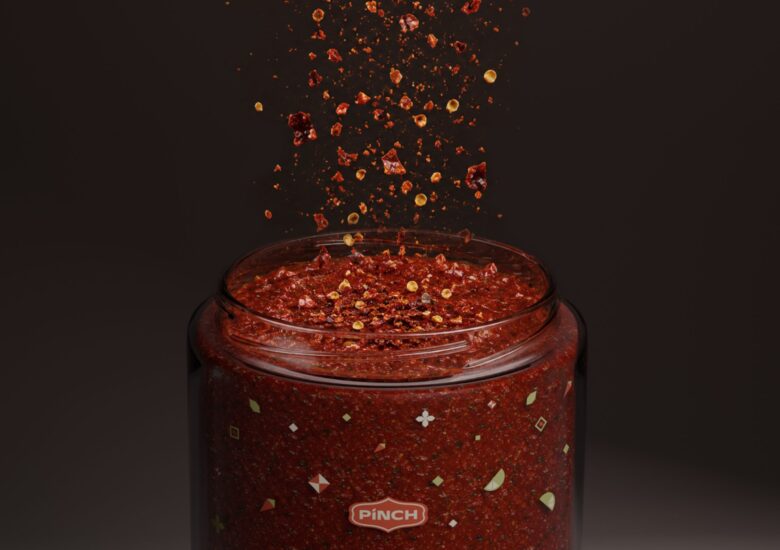
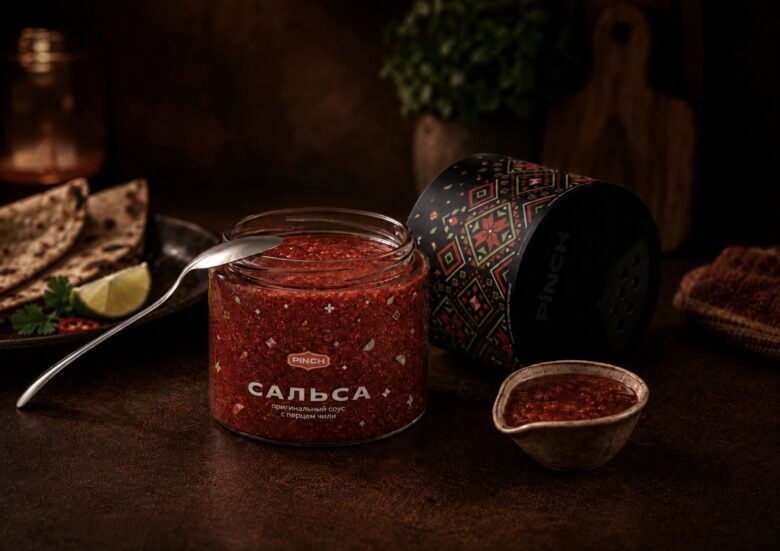
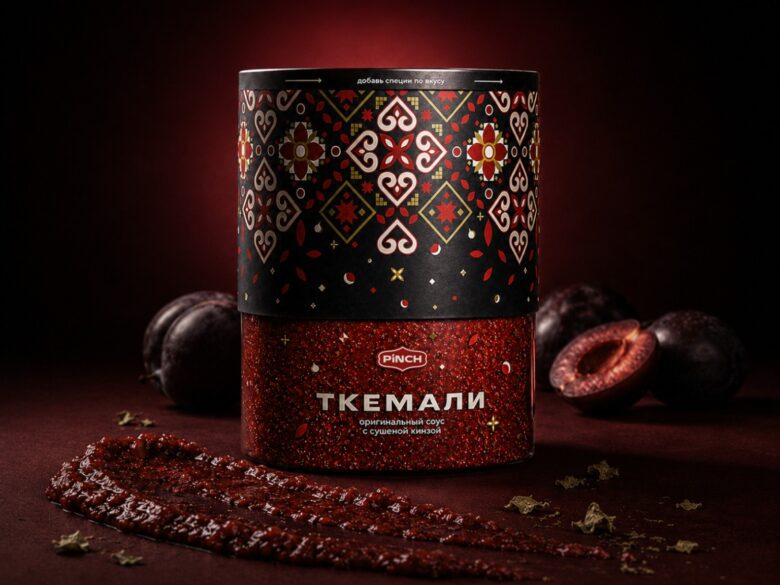
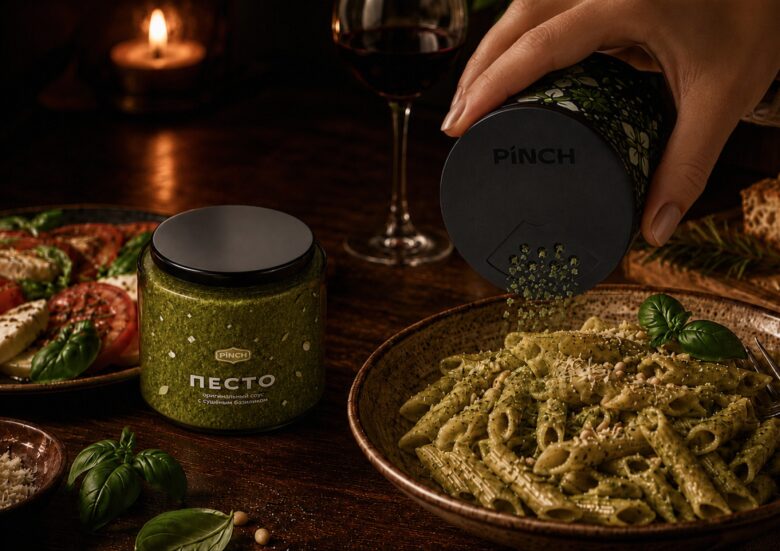
Solution: The packaging combines sauce and spices within a single format. A special compartment integrated into the lid contains a dried ingredient associated with each sauce: chilli for salsa, basil for pesto, and cilantro for tkemali. The spices can be added directly at the table, allowing people to regulate the intensity, aroma, and character of the flavour.
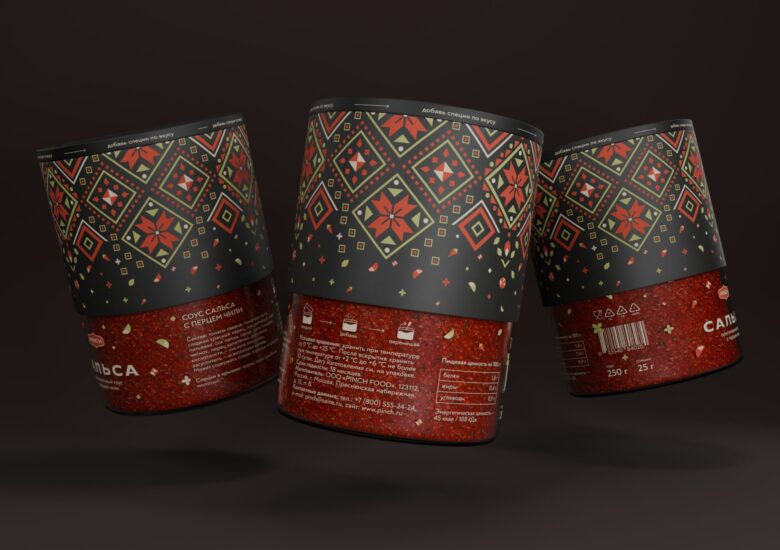
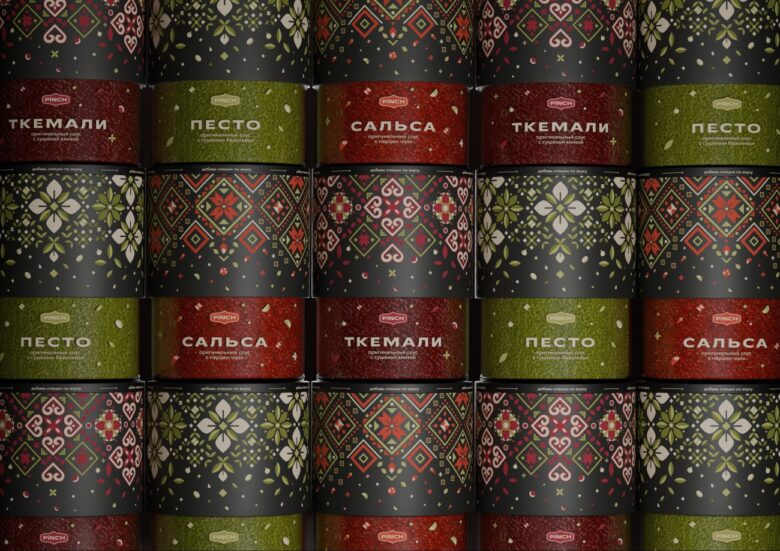
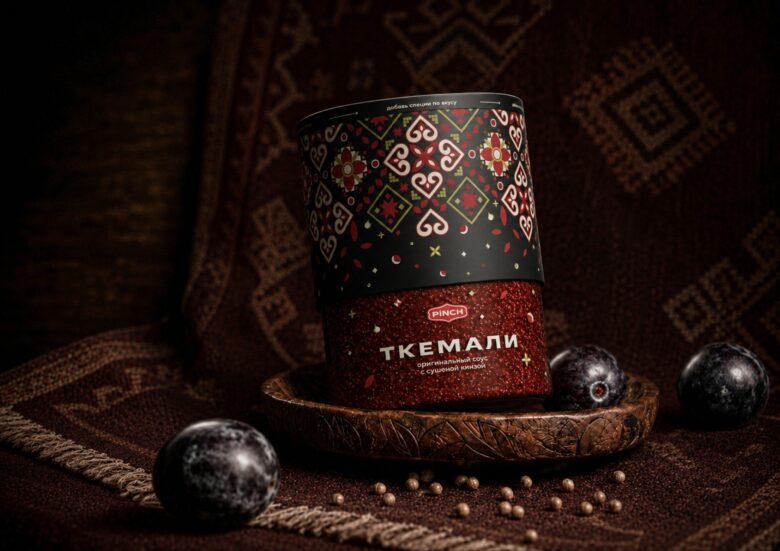
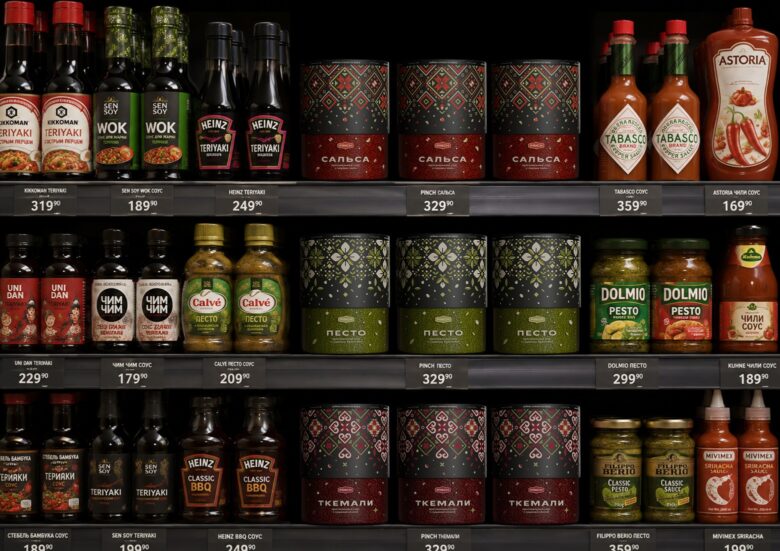
The visual identity develops the same idea. Traditional ornamental motifs associated with the cultures behind each sauce become the basis of the graphic system. Across the packaging, these patterns gradually break apart into individual elements, visually resembling spices falling from the lid and mixing with the sauce. As a result, the graphics are not simply decorative. They explain the product mechanic and connect it with the cultural context of each cuisine: culture becomes ornament, ornament becomes spice, and spice becomes flavour.
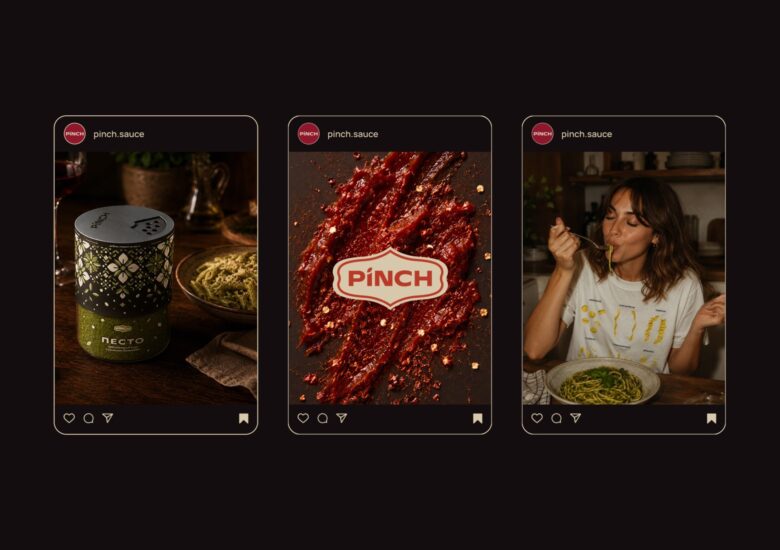
PINCH therefore functions not only as packaging, but as part of the table setting and the overall dining experience. It turns an everyday sauce into a more flexible and interactive product, giving people the opportunity to explore world cuisines while keeping the final flavour personal.
Designed by Evgenia Beresneva
School: HSE ART & DESIGN SCHOOL
Add to collection