




Add to collection
Space Matrix reimagines the Airbnb office in Singapore as a welcoming and flexible environment that prioritizes connection and hospitality, transforming conventional corporate norms into a dynamic workspace that feels both global and rooted in its local context.
Airbnb’s Asia Pacific headquarters in Singapore starts with a familiar workplace problem: how do you make a corporate office feel like a place people actually want to belong?
For a company built around hospitality and its promise of “Belonging Anywhere,” a conventional office of fixed desks, formal reception and separate visitor areas was never going to tell the right story. Space Matrix reworked the headquarters around a simple idea: the workplace should feel hosted, not occupied.
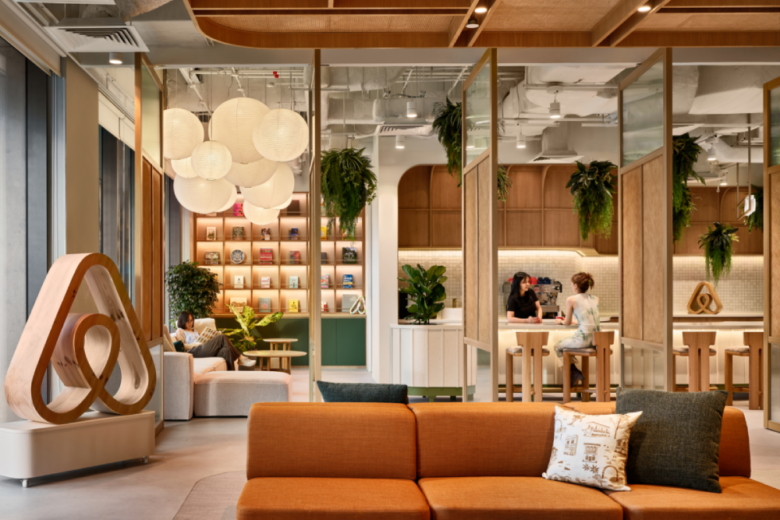
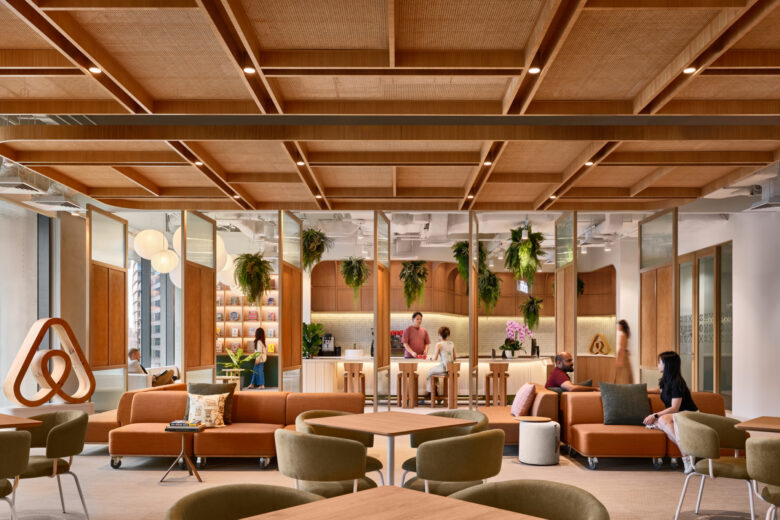
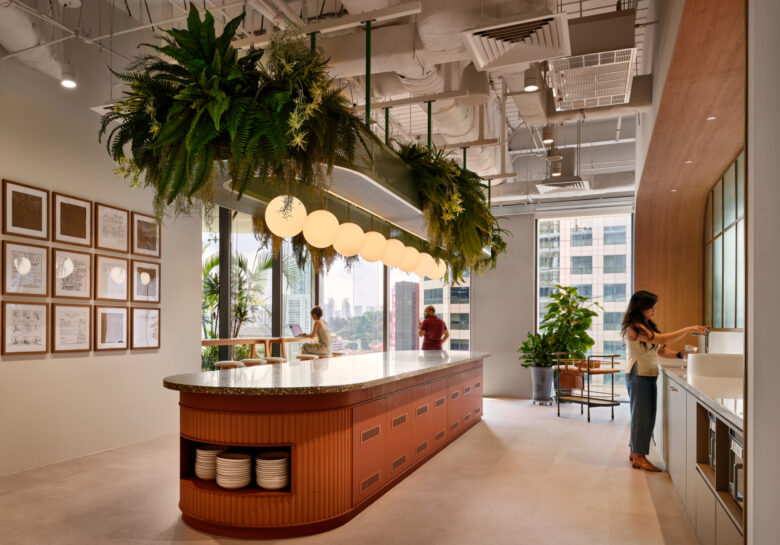
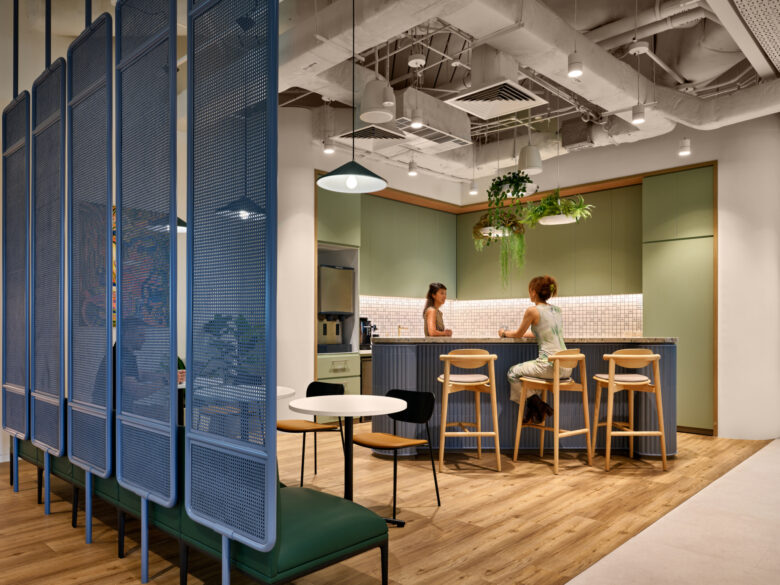
That thinking begins at the entrance. Where a conventional office might use a reception desk as a clear point of separation, Airbnb’s workplace uses a bespoke barista bar. The curved timber-and-quartz counter becomes a social anchor rather than a checkpoint, while surrounding lounge settings give employees and visitors a shared place to pause, meet and connect. Arrival becomes less about entering an office and more about being welcomed into one.
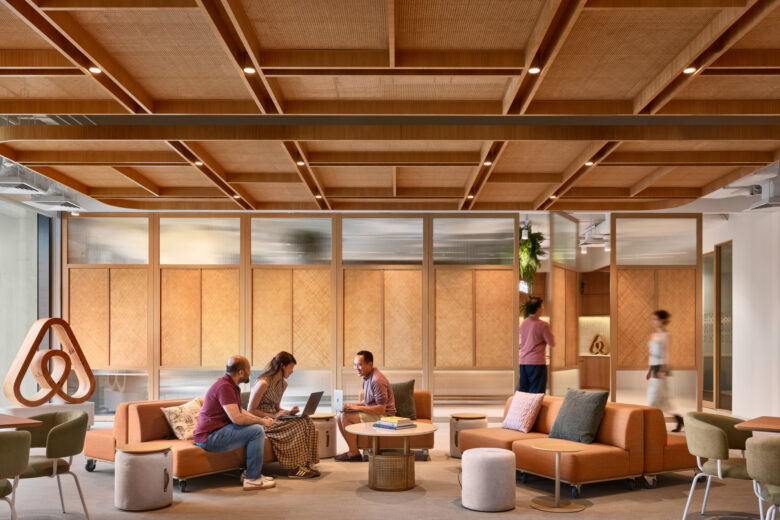
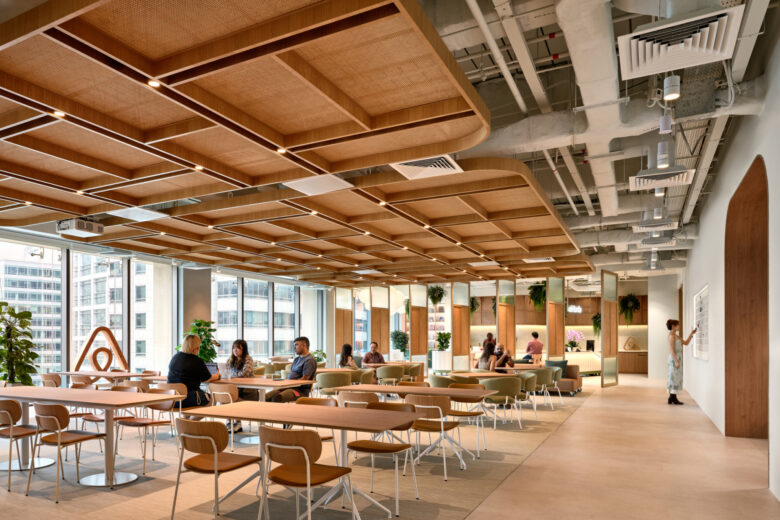
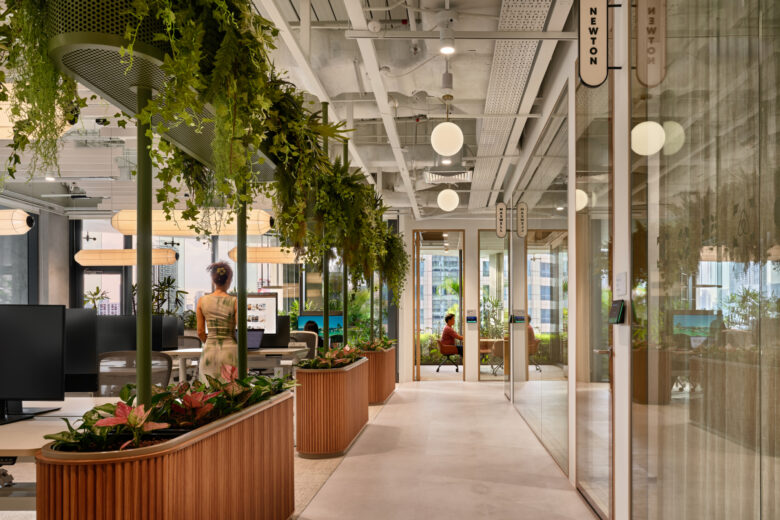
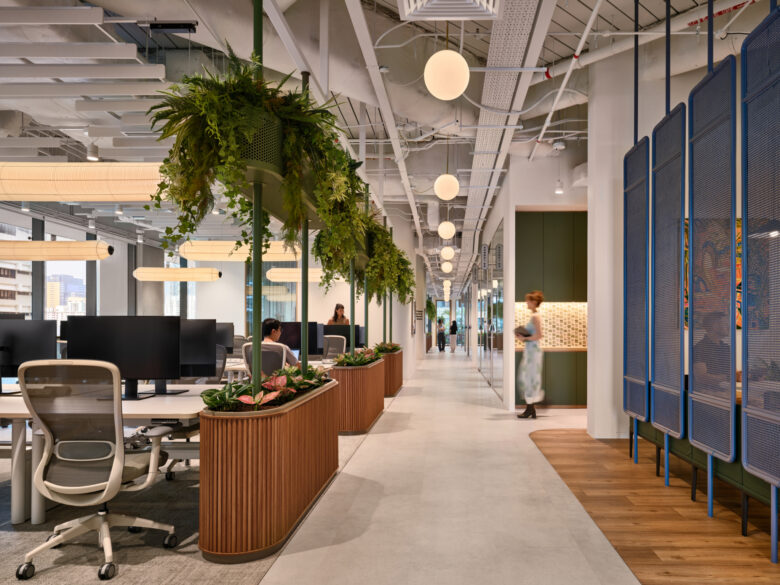
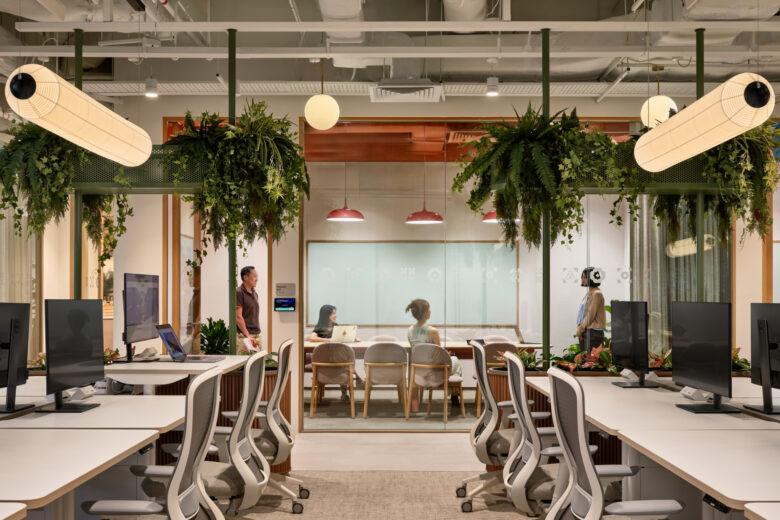
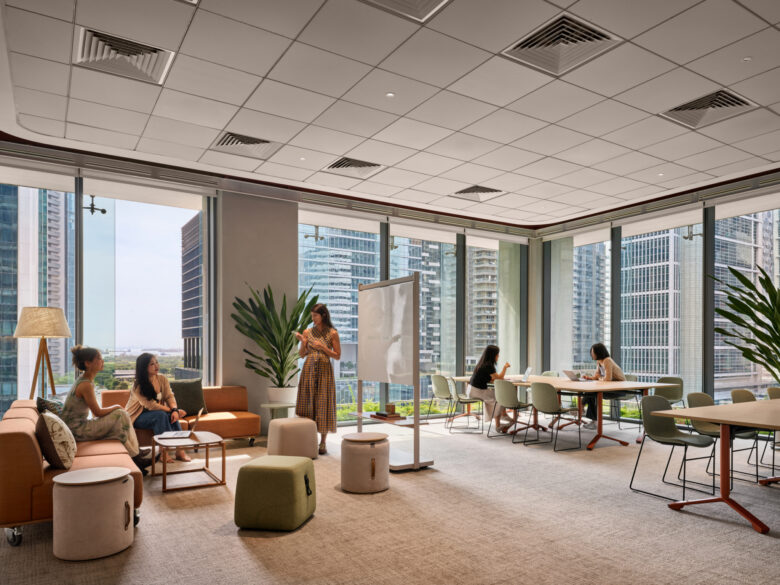
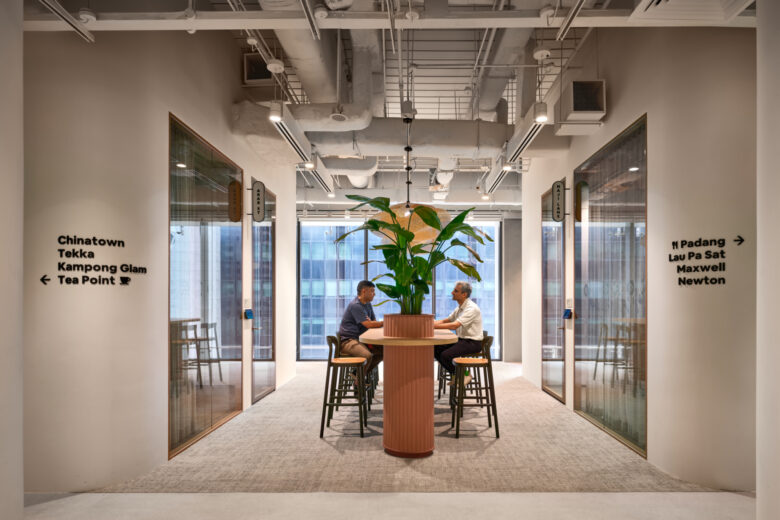
From there, the workplace unfolds as a series of connected neighbourhoods. The Neighbourhood Matrix replaces long desk banks with different settings for different ways of working. Focus booths support concentrated work. Collaborative areas bring teams together. Social hubs create places for informal interaction. Technology-enabled meeting spaces support hybrid teams. Rather than putting these functions into separate corners, the plan keeps them visually connected, with naturally lit circulation routes encouraging people to move through the workplace and encounter one another along the way.
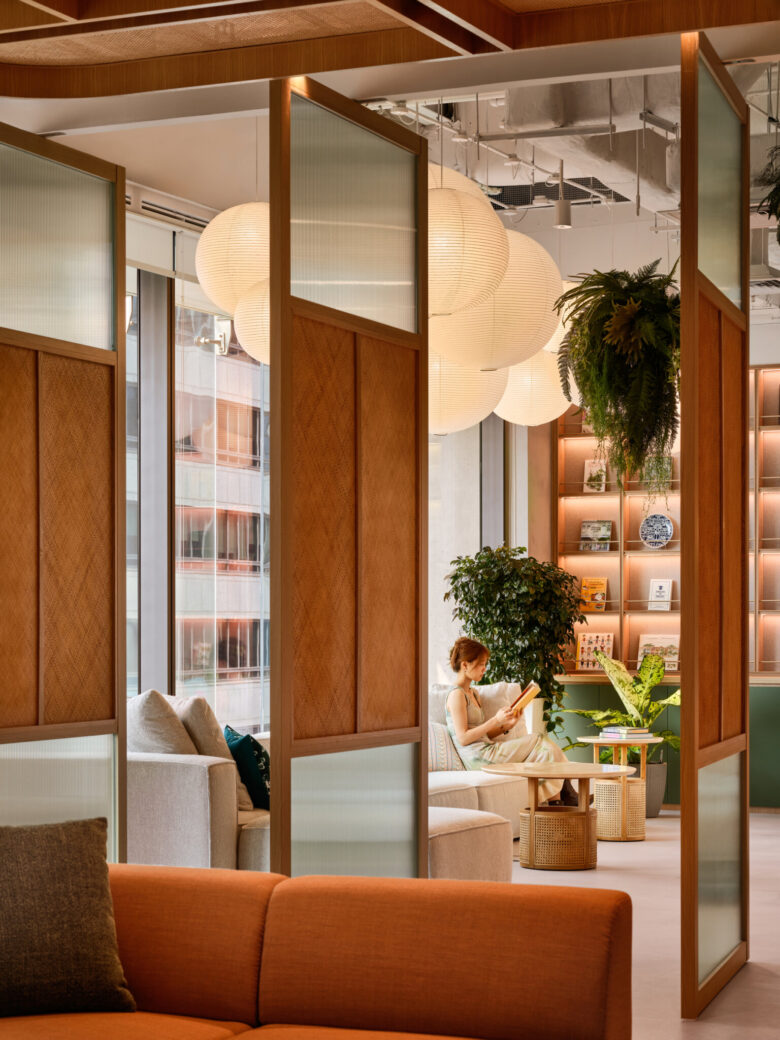
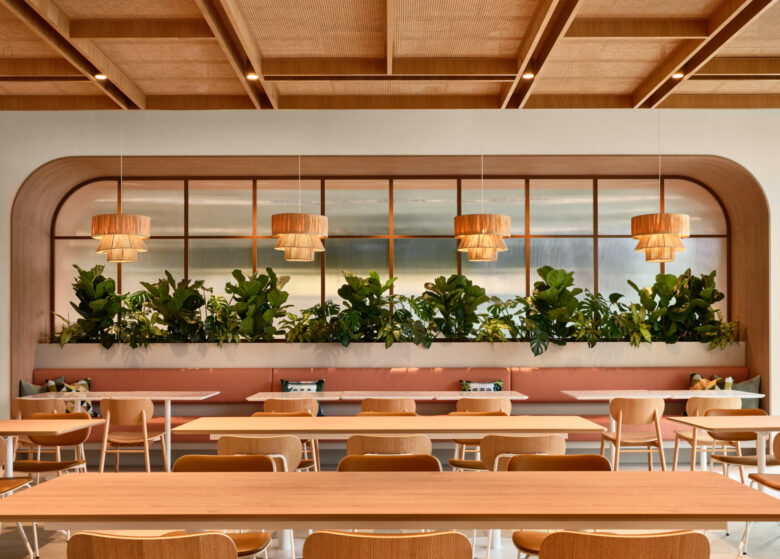
The material palette helps the workplace feel warm without losing the durability expected of a regional headquarters. Natural timber, woven rattan and handcrafted ceramic finishes bring texture and softness. Rattan screens subtly divide neighbourhoods while allowing light and sightlines to pass through. Residential-inspired sofas, solid timber tables and movable seating give teams the flexibility to change how they use spaces throughout the day.
Singapore also has a visible role in the experience. Woven materials, planting, lighting and curated local artwork give the workplace a regional character, allowing Airbnb’s global identity to feel at home in its new context rather than reproduced as a standardised corporate interior.
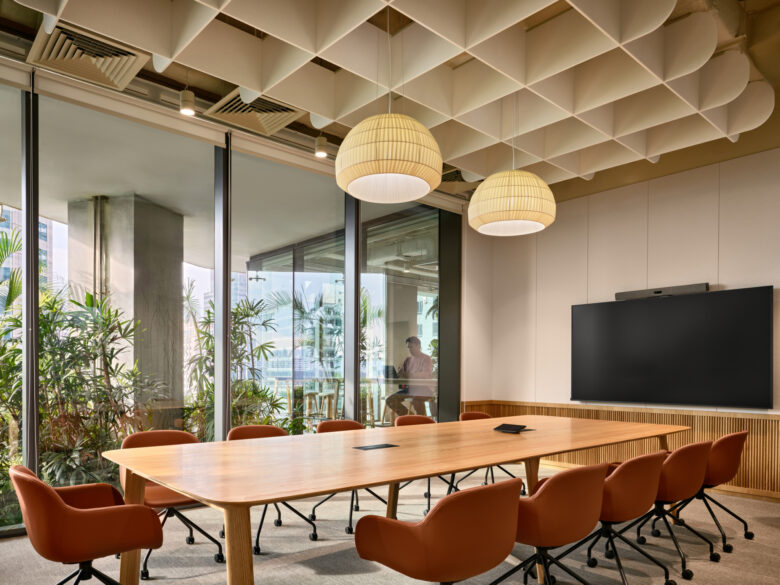
Then the workplace changes scale. Operable glazed partitions allow a meeting environment designed for 13 people to open up for gatherings of more than 100. The same space can therefore support a focused workshop in the morning and a company-wide event later in the day, without requiring a separate event venue or additional infrastructure.
The result is a workplace designed around choice and connection rather than a single prescribed way of working. Daylight and external views reach shared work settings, collaboration areas and social spaces. Acoustic treatments, soft furnishings and greenery help balance openness with the need for concentration. Built-in power, room booking and video conferencing support hybrid work without overwhelming the interiors with visible technology.
The result is distinctly Airbnb: informal but considered, social without being distracting, and global while remaining grounded in Singapore. Most importantly, the workplace does not simply tell people they belong. It is designed to make them feel it.
Design: Space Matrix
Photography: Courtesy of Space Matrix
Add to collection