





Add to collection
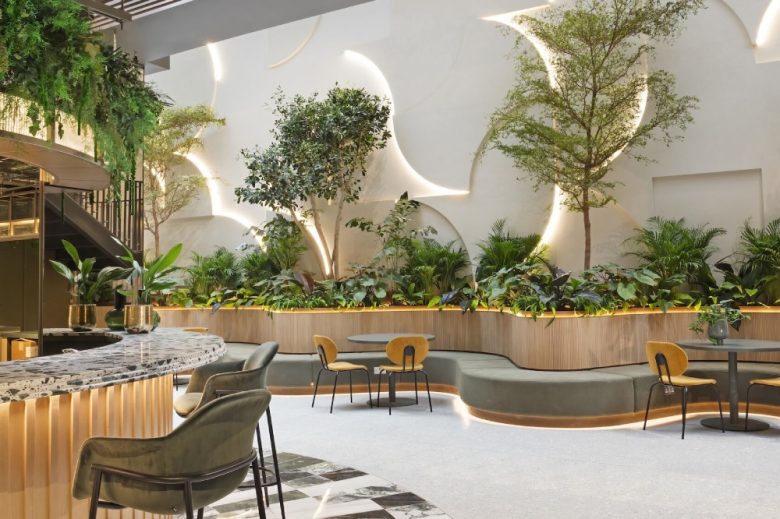
Located in central London, Uncommon Holborn transforms the existing Templar House into 85,000 square feet of office space distributed across eleven floors. Delivered by Pace Interiors in collaboration with Astudio, this design-build project repositions a commercial asset through structural retention, circular fit-out strategies, and operational efficiency upgrades. The scheme has achieved WiredScore Platinum certification, BREEAM Excellent in Refurbishment and Fit-out, and is targeting Excellent in In-Use.
Rather than pursuing demolition and reconstruction, the project focuses on upgrading and extending the life of the existing building, reducing embodied carbon and enabling flexible future use.
Structural retention and materials
The primary sustainability strategy was the reuse of the existing structural frame and grid. Retaining the concrete structure avoided emissions associated with new-build foundations, frame construction, and material transport. This approach reduces embodied carbon compared to a typical speculative office development of similar size.
Where new materials were introduced, priority was given to responsible sourcing and lifecycle transparency. The project incorporates 240 FSC®-certified bespoke timber doors. Fire-rated and acoustic-rated doors were pre-milled off-site, limiting on-site waste and installation inefficiencies.
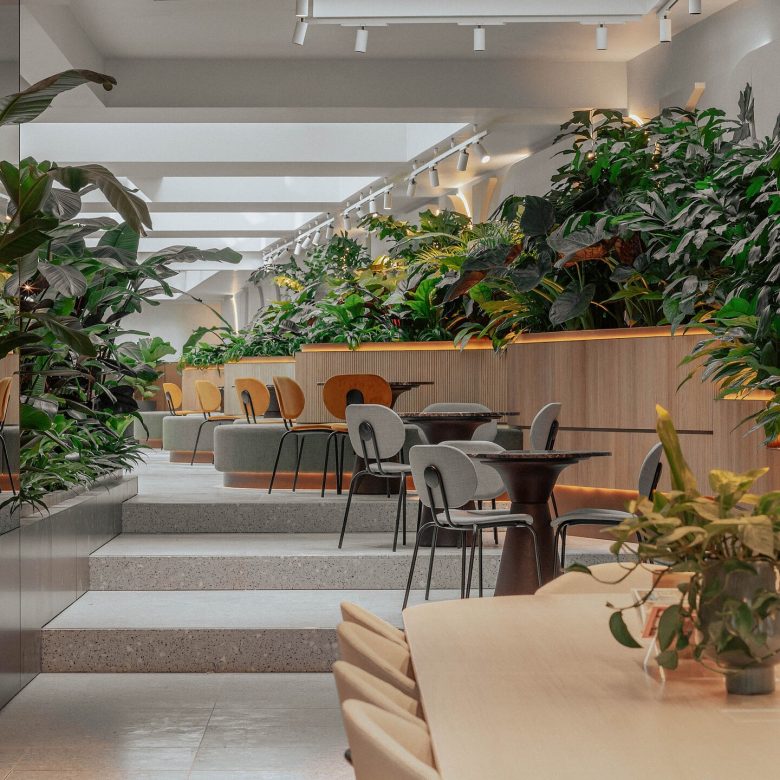
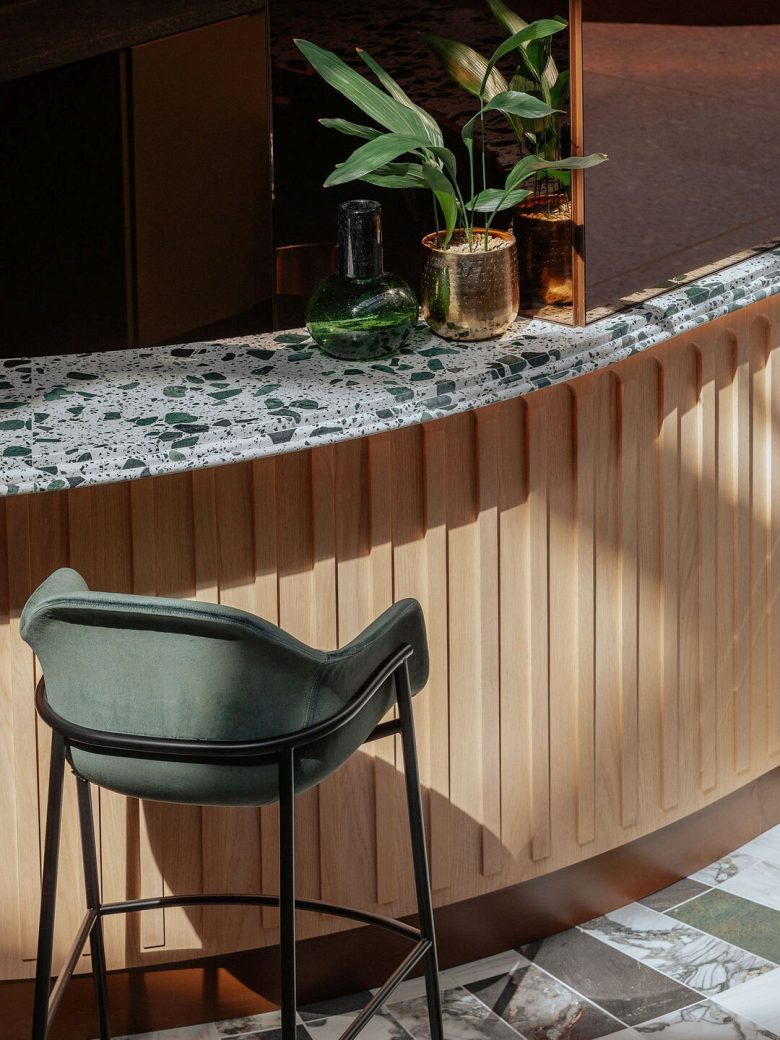
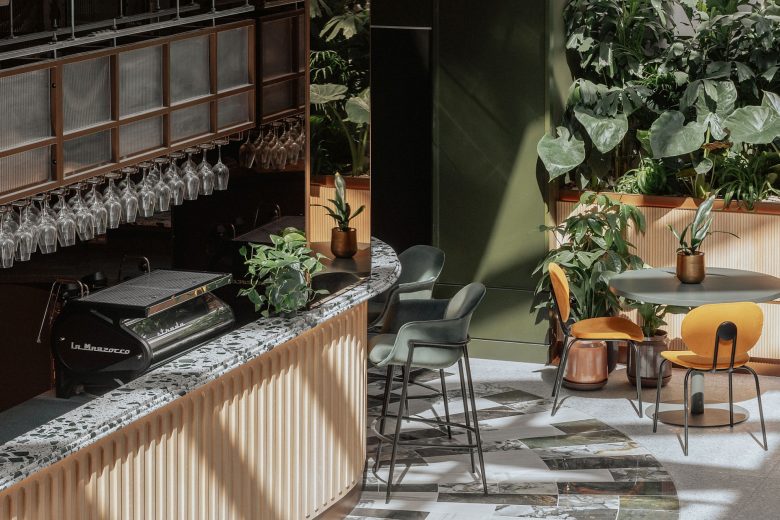
Material reuse extends to interior finishes, including the retention of terrazzo stair tiling and the integration of recycled elements such as the reception desk and selected furnishings. Volcanic ash countertops were specified as an alternative to conventional stone-based surfaces. Biogenic carbon stored in timber components contributes to temporary carbon sequestration within the building fabric.
Sustainable strategies
The project reduces carbon emissions through building reuse, material selection, energy efficiency, and carbon offsetting. The use of FSC-certified timber, volcanic ash countertops, Framery phonebooths, and recycled materials reduce the carbon footprint of material sourcing, while local craftsmanship reduces transportation emissions. Energy-efficient systems, including smart technology for lighting, heating, and cooling, reduce operational emissions.
These strategies, combined with operational practices, contributed to the project achieving a BREEAM Excellent rating.
Operational energy
Operational performance is addressed through upgraded mechanical and electrical systems combined with smart building management technology. Lighting, heating, and cooling are demand-controlled, reducing energy loads during periods of partial occupancy. Zoned services enable flexible tenancy arrangements without conditioning unused areas.
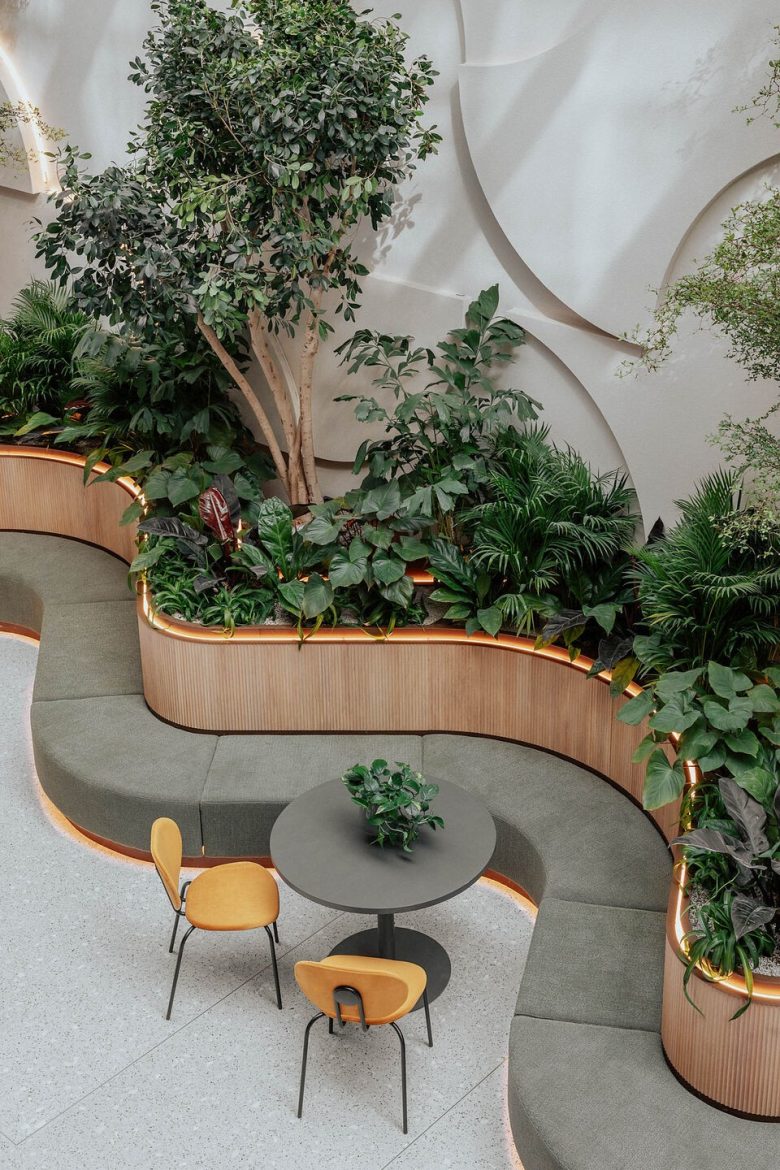
The conversion of the basement, previously used for car parking and plant, into occupiable workspace introduced new light wells and improved environmental quality without expanding the building envelope. This intervention increases usable floor area without incurring the embodied carbon cost of vertical or horizontal extension.
Flexibility and adaptive reuse
The interior fit-out minimizes long-term maintenance emissions through exposed and accessible building services, allowing for upgrades and replacements. Lightweight partitions facilitate tenant-driven reconfigurations with minimal waste.
Bespoke modular furniture enables disassembly and relocation, while durable laminate finishes in high-traffic areas extend service life. Environmental Product Declarations provide lifecycle impact transparency.
The building is arranged in three blocks with two firefighting cores, enabling flexibility in subdivision and circulation. Dual entrances allow separation of uses or phased occupation. Services zoning supports both open-plan and cellular offices, and the structural grid allows future conversion to hospitality, residential, or public uses without fundamental alteration.
Add to collection