





60 Threadneedle Street by John Robertson Architects
posted by retail design blog on 2026-05-18
London
Add to collection
John Robertson Architects (JRA), a London-based architecture practice specialising in the reimagining and retrofitting of legacy commercial assets, has completed works to repurpose parts of 60 Threadneedle Street, a prominent office building in the City of London’s Bank district. The intervention adopts a targeted retrofit approach, prioritising retention of the existing building fabric to reduce embodied carbon while extending the asset’s operational life.
Occupying a curved frontage opposite the Royal Exchange and overlooking the Bank of England at the junction of Old Broad Street and Threadneedle Street, the building sits within the Bank Conservation Area, which also includes landmarks such as Mansion House, with protected sightlines towards St Paul’s Cathedral and St Mary-le-Bow Church.
Originally designed by Eric Parry Architects and completed in 2009 for client Hammerson UK Properties PLC, the building is recognised for its façade and architectural quality, earning both the RIBA London Award in 2010 and Property Week’s City Development of the Year in 2009. Since its completion, 60 Threadneedle Street has been home to several financial institutions, including USS, the UK’s largest private pension scheme, and Berenberg Bank, the world’s oldest merchant bank.
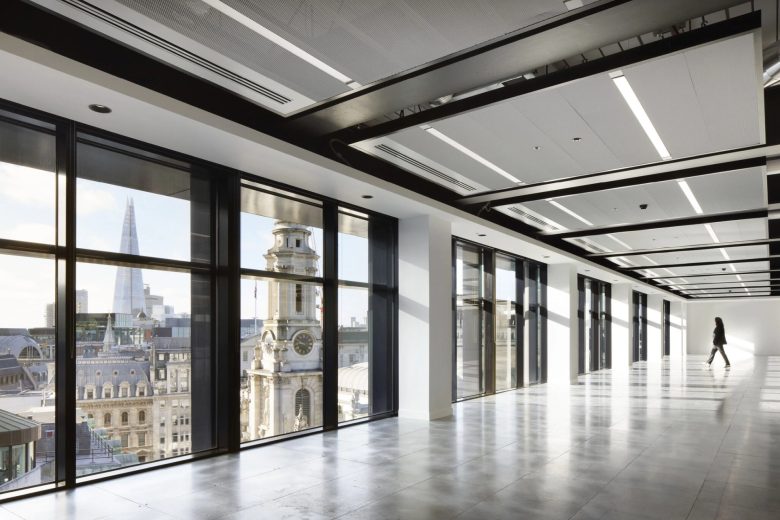
60 Threadneedle Street comprises a basement, lower ground and ground floor, and eight upper levels, providing approximately 19,810 square meters (NIA) of office space. JRA’s works focused on repurposing and upgrading key areas of the building to improve functionality, user experience, and sustainability, avoiding unnecessary structural intervention and associated carbon expenditure.
Low-impact retrofit and fabric retention
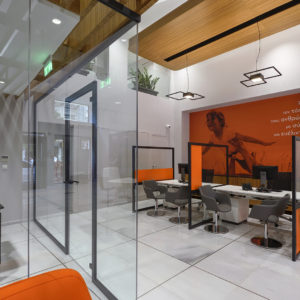
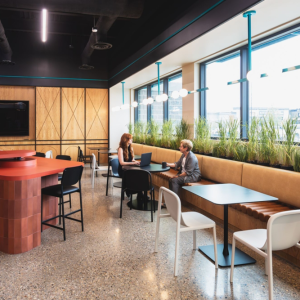
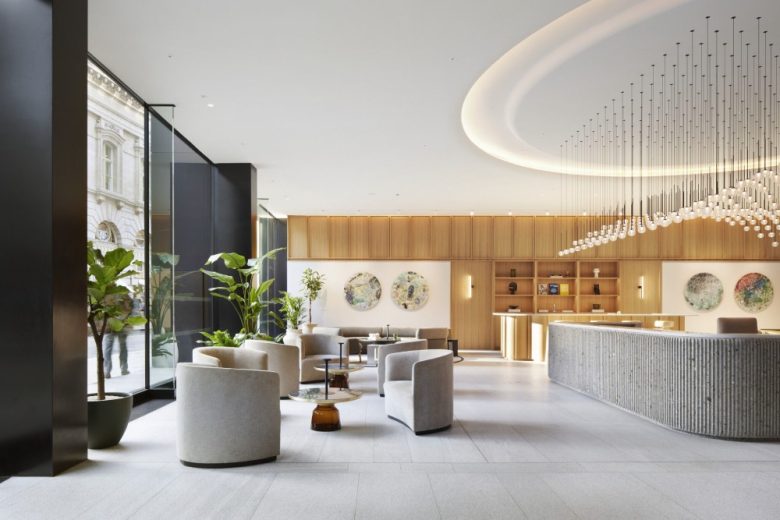
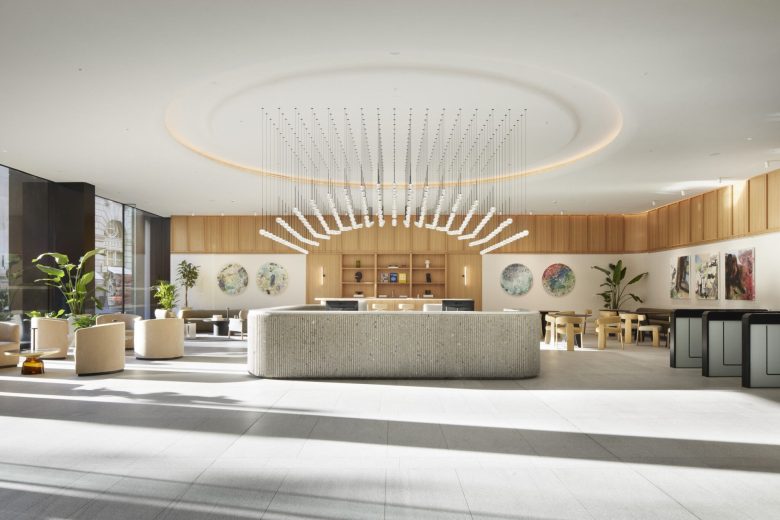
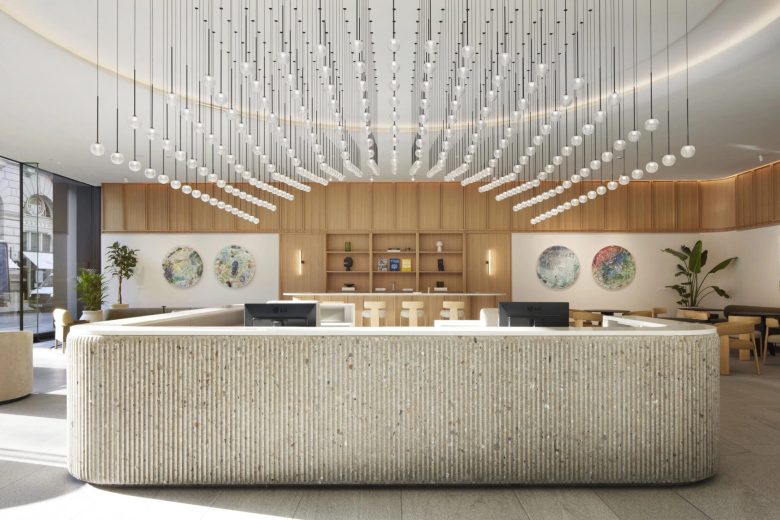
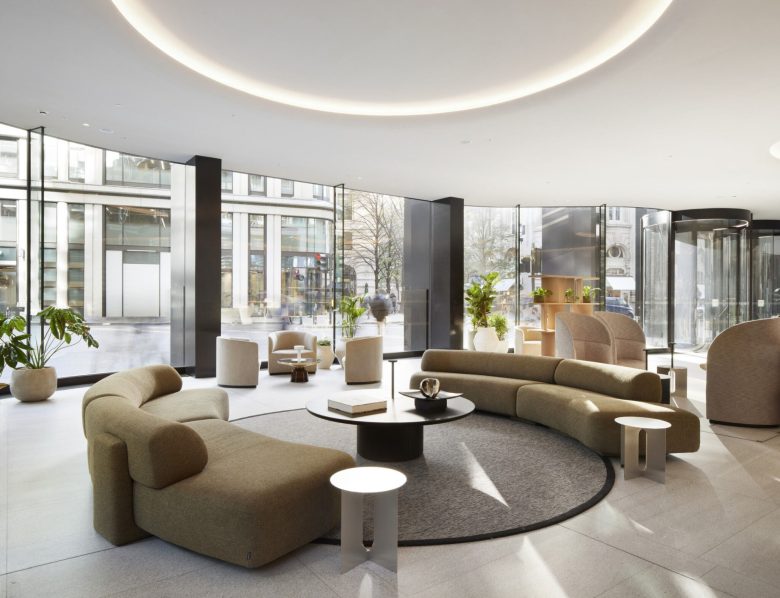
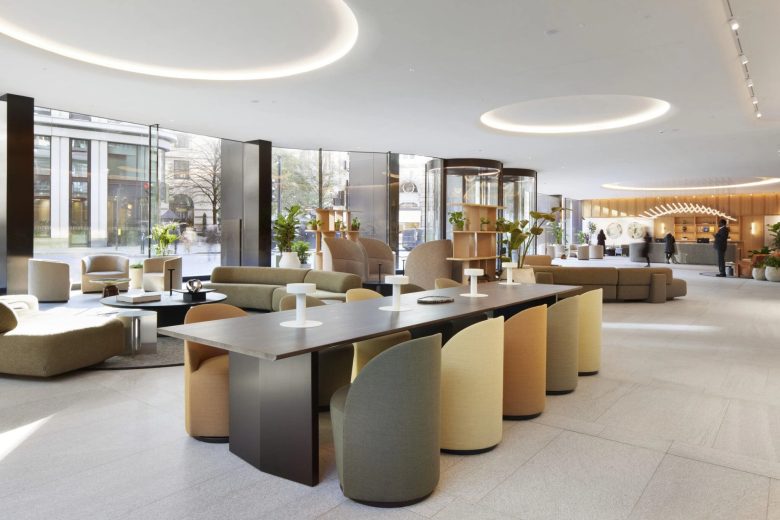
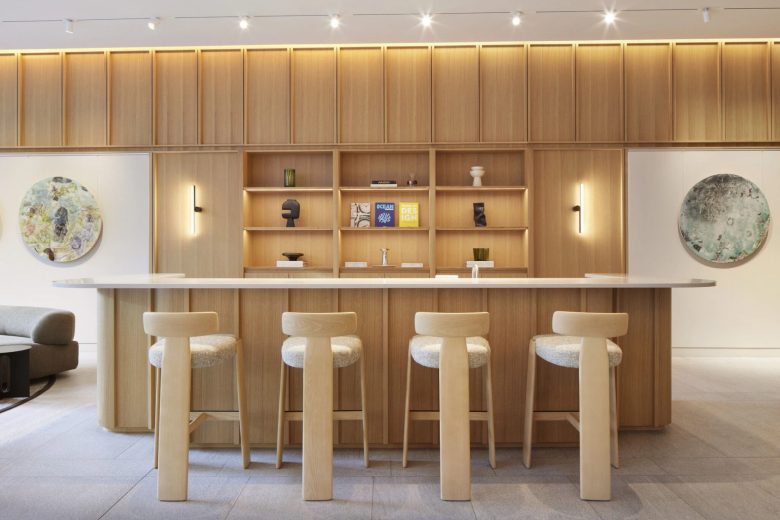
At ground level, the arrival experience has been reconfigured. The existing sliding doors and entrance cladding were replaced to improve the building’s identity and street presence, while the large reception area was redesigned to create a more versatile space for tenants and visitors. The lobby now features a relocated reception desk with speed gates, a self-service coffee bar, and an adjacent lounge area offering informal seating and co-working opportunities surrounded by planting.
The replacement of the former curved sliding doors with a revolving entrance door, along with an adjacent pass door, improves environmental control by reducing heat loss and supporting more stable internal conditions. Existing granite flooring has been retained and restored through specialist cleaning, extending material lifespan and avoiding the embodied carbon associated with replacement.
Roof terrace and biodiversity strategy
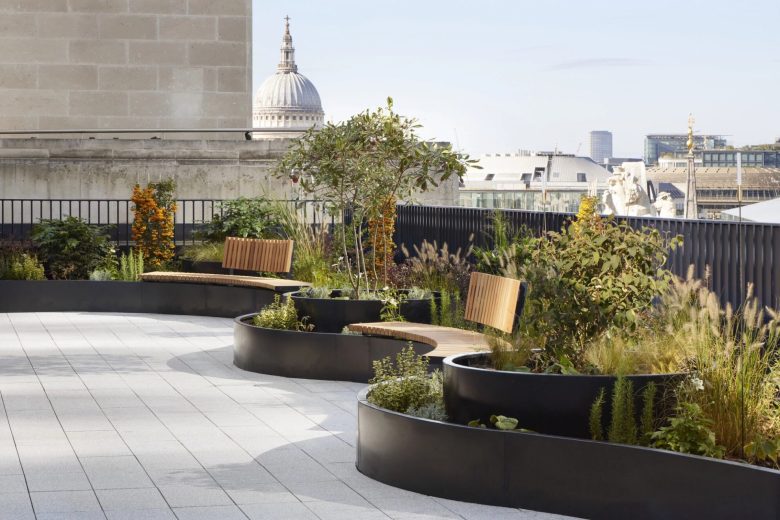
At Level 8, which was vacated before the works, JRA delivered a refurbishment including new access doors, balustrades, and internal finishes. The previously underused roof area, once limited to maintenance access and a sedum roof, has been transformed into a roof garden designed in collaboration with Giverny Flowers.
The landscaped terrace incorporates planting and seating areas and relocates part of the sedum roof to Level 9, increasing the building’s biodiversity. The planting scheme combines evergreen shrubs, trees, perennials, and ornamental grasses to attract pollinators such as butterflies and bees, while contributing to urban microclimate improvement.
The terrace construction integrates vacuum insulation panels to enhance thermal efficiency, alongside the reuse of existing raised access flooring elements, reducing material demand and supporting a more circular approach to construction. A low-impact lighting scheme minimises energy use and light pollution.
Basement retrofit and active travel facilities
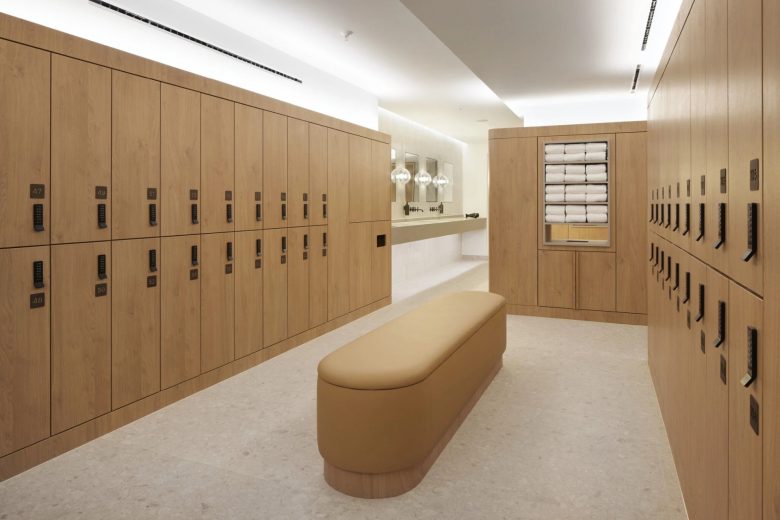
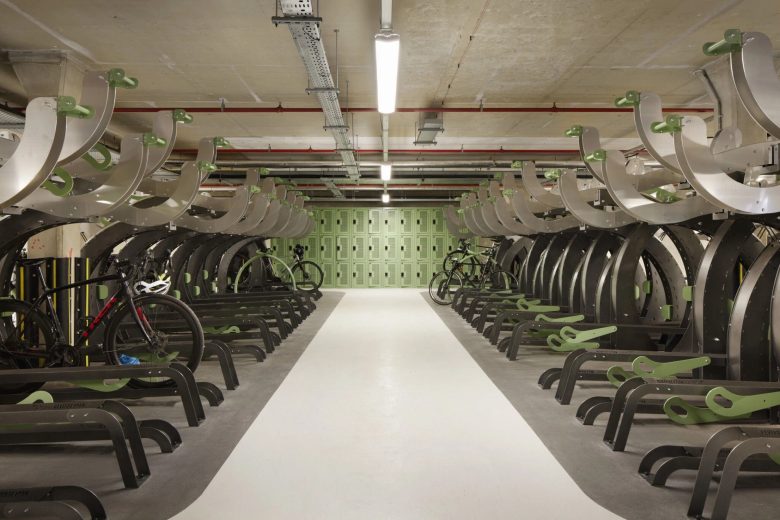
At the basement level, the former car and motorcycle parking areas have been repurposed into new end-of-journey facilities, including showers, dedicated changing rooms with lockers and ironing stations, and cycle storage. This shift from vehicle storage to cyclist infrastructure supports low-carbon commuting and aligns with wider urban decarbonisation strategies.
The reconfiguration of these underutilised spaces demonstrates an adaptive reuse approach, maximising the use of the existing structure while avoiding the environmental costs of expansion or new construction.
Material strategy and carbon considerations
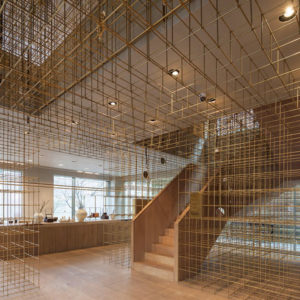
Material selection throughout the project responds to the existing architectural language, including the black façade and oak-lined atrium spaces, while prioritising durability and reduced maintenance. New interventions, such as terrazzo surfaces and FSC-certified iroko timber, were selected for longevity, contributing to lower lifecycle emissions.
The design has been developed around existing walls, structural elements, and fire-rated components to minimise demolition and associated embodied carbon. This fabric-first approach enables environmental improvements without compromising the building’s architectural integrity or heritage context.
The result is a series of targeted upgrades that improve environmental efficiency, extend material lifespans, and support the continued use of 60 Threadneedle Street as a workplace within the City of London.
Architects: John Robertson Architects
Planning Consultant: Rolfe Judd
Marketing Consultant: Cushman & Wakefield
Lighting Consultant: Hoare Lea
Project Manager & Cost Consultant: Knight Frank LLP
Structural Engineers: Parmarbrook
Photographers: Jack Hobhouse
Add to collection